


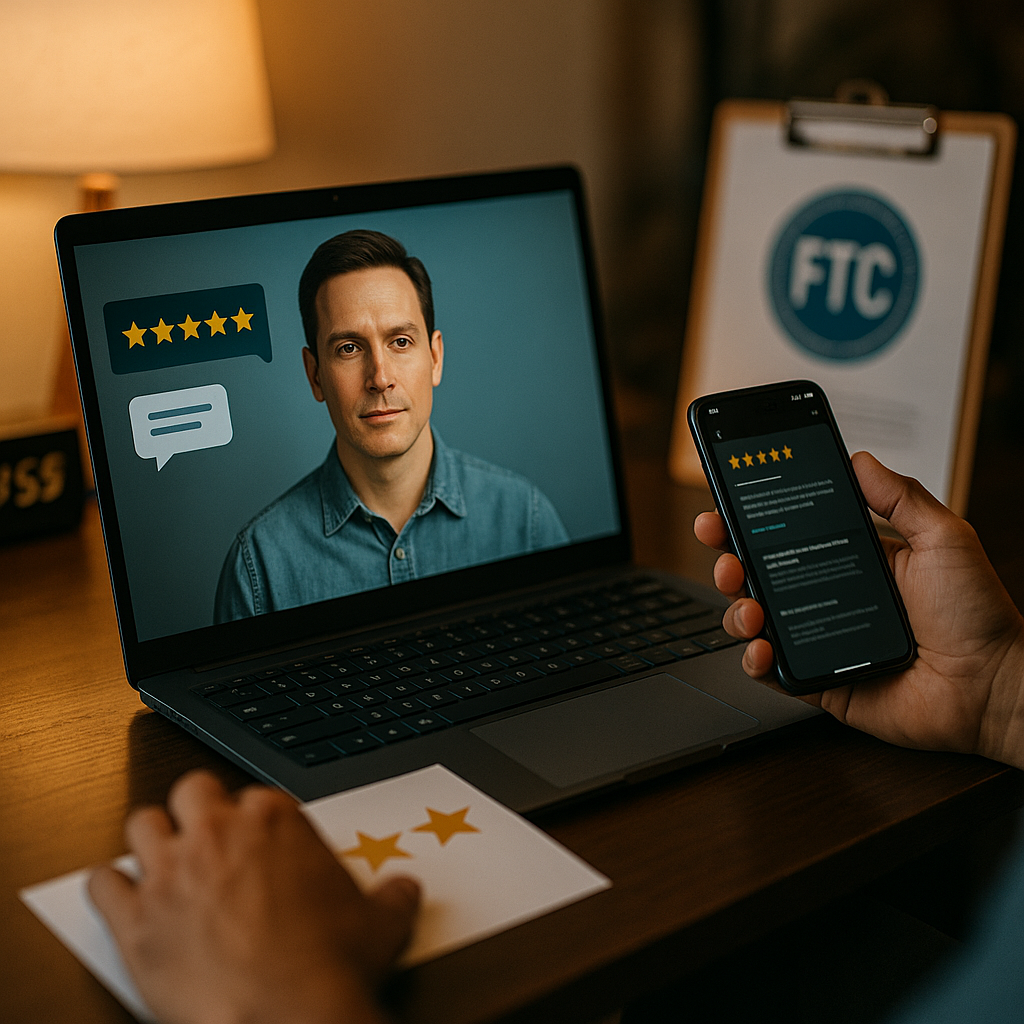
One line buried in a proposed rule could reclassify every AI-generated customer avatar, every “composite” review, and every synthetic voiceover your brand has ever shipped as a testimonial subject to full FTC endorsement law. That’s the reality brands are waking up to as the Commission finalizes its rewrite of the Endorsement Guides. If your compliance playbook still treats testimonials as “real people saying real things on camera,” it’s already obsolete.
Why the Definition Is Expanding Now
The original Endorsement Guides were written for a world of magazine ads and paid spokespeople. They assumed a human, a camera, and a product. That assumption broke down years ago, and the FTC knows it. Brands now generate synthetic customer avatars, stitch together composite reviews from hundreds of data points, and deploy AI voice clones to narrate “real” testimonials. None of that fits neatly into the old rulebook.
The 2026 rewrite closes that gap by expanding “testimonial” to include any representation — human, synthetic, or blended — that conveys a consumer’s purported experience, opinion, or belief about a product. Notice the word purported. That’s the operative shift. It no longer matters whether a real consumer said it. What matters is whether the audience reasonably believes a consumer said it.
If your audience can’t tell the difference between a real customer and an AI composite, the FTC now treats them the same way — as a testimonial requiring substantiation and disclosure.
What Counts as a Testimonial Now
The expanded definition captures three categories brands have been treating as gray areas:
- AI avatars presenting reviews. Digital spokespeople, synthetic influencers, and virtual brand ambassadors delivering product opinions now fall under testimonial rules, even if labeled as “AI-generated.”
- Composite or aggregated reviews. Marketing copy that blends multiple real reviews into a single narrative (“customers say this changed their skin in two weeks”) is now scrutinized as a testimonial unless it’s clearly disclosed as a composite and backed by data showing that outcome is typical.
- Voice-cloned or synthesized endorsements. Any AI-recreated voice attributed to a real or implied person, including employees, triggers the same consent and disclosure obligations as a live testimonial.
This isn’t a hypothetical exercise for beauty and wellness brands, where synthetic spokespeople have exploded in popularity. We’ve already covered the exposure in synthetic creators in beauty campaigns, and the new rule sharpens that risk considerably. It also lands hard on finance and health marketers, where AI-enhanced creator disclosure was already a minefield before this rewrite.
The Composite Review Problem
Composite reviews are the sleeper issue here. Brands have used them for years, quietly, because they read as more compelling than any single review. “Users report clearer skin, better sleep, and higher energy” sounds authoritative. It also sounds like it’s describing typical results, which is precisely what triggers substantiation requirements under existing FTC guidance.
Under the rewrite, unlabeled composites are presumed misleading unless the brand can prove the described outcome reflects what most users actually experience, or unless the ad clearly discloses that the testimonial is a composite and states what the generally expected result is. That second option is the safer bet operationally. It’s also the one most legal teams haven’t built templates for yet.
AI Avatars Are the Bigger Exposure
Synthetic spokespeople are where this gets expensive. A growing share of brands now use AI avatars for product reviews, tutorials, and testimonial-style content, largely because they’re fast, cheap, and infinitely scalable. eMarketer and Statista have both tracked accelerating adoption of AI-generated marketing content, and testimonial-style avatars are one of the fastest-growing subcategories.
The problem: an avatar has no personal experience with your product. It can’t have used your serum for six weeks. So any claim it makes about efficacy, taste, comfort, or results has to be substantiated exactly as if a real customer made it, and disclosed as synthetic to avoid deceiving the audience about the source of the endorsement.
This is where the FTC’s rewrite intersects with state-level synthetic performer laws already reshaping the market. New York’s statute, for instance, requires clear labeling of AI-generated performers in commercial content, and our breakdown of the NY synthetic performer law versus platform AI labels shows how inconsistent platform-level labeling already creates gaps brands fall into. The federal rewrite doesn’t replace those state laws. It stacks on top of them.
Brands operating in New York, or advertising to New York consumers, now face two overlapping disclosure regimes for synthetic testimonials. Compliance with one doesn’t guarantee compliance with the other.
Voice Cloning Adds a Consent Layer
Voice-cloned testimonials introduce a second compliance track: consent. It’s not enough to disclose that a voice is synthetic. If that voice is modeled on a real person, real employee, or real customer, the brand needs documented, revocable consent covering the specific use case. This is the same lesson we’ve hammered on repeatedly around employee advocacy programs — see our guides on AI voice cloning consent for employee advocacy and the follow-up on fixing voice cloning consent for employee testimonials.
The FTC’s rewrite essentially federalizes that logic and applies it to customer-facing testimonials too. If a brand clones a customer’s voice for a video ad, even with a signed release, the release needs to explicitly cover AI synthesis and reuse. Old-style “you may appear in our marketing” releases almost certainly won’t hold up.
What Brands Should Do Before the Rule Takes Effect
Waiting for a final published rule before acting is the wrong move. Enforcement priorities tend to leak well ahead of formal publication, and the FTC has already signaled interest in AI-driven endorsement deception through recent settlements and public statements. Start now.
- Audit every synthetic testimonial in market. Pull every AI avatar, voice-cloned ad, and composite review claim currently running. Flag anything implying a real consumer experience without disclosure.
- Rebuild consent language. Any release used for customer or employee testimonials needs explicit AI-use, voice-synthesis, and likeness-reuse clauses. Retroactive fixes to old releases are worth the legal spend.
- Standardize composite disclosure language. Build an approved template disclosure for aggregated review claims and require legal sign-off before marketing teams can deploy new composite copy.
- Update creator contracts. If creators use AI tools to generate testimonial-style content on your behalf, your contracts need language addressing disclosure obligations and substantiation ownership. Our creator contract audit framework is a useful starting point for retrofitting existing agreements.
- Train the people writing the ads, not just legal. Marketing and creative teams generate most of the exposure here. They need plain-language guidance on what triggers disclosure, not a 40-page memo nobody reads.
Where This Intersects With Existing Disclosure Rules
None of this happens in isolation. Brands already juggling FTC scripting risk, AI shopping agent disclosures, and chatbot-driven endorsements now need to layer testimonial-specific rules on top of those frameworks. If you haven’t reviewed how your brand handles FTC endorsement rules for AI chatbots or disclosure for AI shopping agents, this rewrite is the moment to do it. These systems increasingly generate testimonial-adjacent content automatically, which means compliance can’t be a one-time creative review. It has to be built into the tooling.
For a practical benchmark, HubSpot and Sprout Social have both published research on how consumers respond to AI-labeled content versus undisclosed synthetic content, generally finding trust erodes faster with the latter. That’s the commercial argument for getting ahead of this, separate from the legal one: undisclosed synthetic testimonials don’t just create regulatory exposure, they quietly damage the credibility your endorsement strategy depends on.
The Cost of Waiting
The FTC doesn’t need a finalized rule to bring an enforcement action under its existing deception authority. It’s already done so against companies using fake reviews and undisclosed AI content. The rewrite simply gives the Commission a clearer, broader definition to point to when it acts. Brands that treat this as a future problem, rather than a current one, are betting on enforcement timing they don’t control.
Review your synthetic content inventory this quarter, not next. Update consent and disclosure templates before your next major campaign launch, not after an inquiry letter arrives.
FAQs
Does the FTC’s expanded testimonial definition apply to AI avatars that disclose they’re AI-generated?
Disclosure that content is AI-generated doesn’t eliminate substantiation requirements. If the avatar makes specific claims about product performance or results, the brand still needs evidence supporting those claims, separate from the disclosure obligation.
Are composite reviews banned under the new rule?
No. Composite reviews remain permissible if clearly disclosed as aggregated and paired with accurate information about typical results. Undisclosed composites presented as if they reflect a single consumer’s experience are the primary target.
Do small and mid-size brands need to worry about this, or just major advertisers?
Enforcement resources are limited, but the rule applies regardless of company size. Smaller brands using AI-generated testimonial content at scale, particularly in beauty, wellness, and finance, carry meaningful exposure given how visible synthetic content has become to regulators and competitors alike.
What’s the difference between this rewrite and state synthetic performer laws?
The FTC rule governs deceptive endorsement practices nationally under its consumer protection authority. State laws, like New York’s synthetic performer statute, impose separate labeling requirements. Brands often need to satisfy both simultaneously, and the requirements don’t always align neatly.
What should brands do first if they haven’t started preparing?
Audit all current AI avatars, voice-cloned content, and composite review claims in market. That inventory reveals exposure faster than any policy rewrite exercise, and it tells legal and marketing teams exactly where to focus first.
Top Influencer Marketing Agencies
The leading agencies shaping influencer marketing in 2026
Agencies ranked by campaign performance, client diversity, platform expertise, proven ROI, industry recognition, and client satisfaction. Assessed through verified case studies, reviews, and industry consultations.
Moburst

-
2

The Shelf
Boutique Beauty & Lifestyle Influencer AgencyA data-driven boutique agency specializing exclusively in beauty, wellness, and lifestyle influencer campaigns on Instagram and TikTok. Best for brands already focused on the beauty/personal care space that need curated, aesthetic-driven content.Clients: Pepsi, The Honest Company, Hims, Elf Cosmetics, Pure LeafVisit The Shelf → -
3

Audiencly
Niche Gaming & Esports Influencer AgencyA specialized agency focused exclusively on gaming and esports creators on YouTube, Twitch, and TikTok. Ideal if your campaign is 100% gaming-focused — from game launches to hardware and esports events.Clients: Epic Games, NordVPN, Ubisoft, Wargaming, Tencent GamesVisit Audiencly → -
4

Viral Nation
Global Influencer Marketing & Talent AgencyA dual talent management and marketing agency with proprietary brand safety tools and a global creator network spanning nano-influencers to celebrities across all major platforms.Clients: Meta, Activision Blizzard, Energizer, Aston Martin, WalmartVisit Viral Nation → -
5

The Influencer Marketing Factory
TikTok, Instagram & YouTube CampaignsA full-service agency with strong TikTok expertise, offering end-to-end campaign management from influencer discovery through performance reporting with a focus on platform-native content.Clients: Google, Snapchat, Universal Music, Bumble, YelpVisit TIMF → -
6

NeoReach
Enterprise Analytics & Influencer CampaignsAn enterprise-focused agency combining managed campaigns with a powerful self-service data platform for influencer search, audience analytics, and attribution modeling.Clients: Amazon, Airbnb, Netflix, Honda, The New York TimesVisit NeoReach → -
7

Ubiquitous
Creator-First Marketing PlatformA tech-driven platform combining self-service tools with managed campaign options, emphasizing speed and scalability for brands managing multiple influencer relationships.Clients: Lyft, Disney, Target, American Eagle, NetflixVisit Ubiquitous → -
8

Obviously
Scalable Enterprise Influencer CampaignsA tech-enabled agency built for high-volume campaigns, coordinating hundreds of creators simultaneously with end-to-end logistics, content rights management, and product seeding.Clients: Google, Ulta Beauty, Converse, AmazonVisit Obviously →