


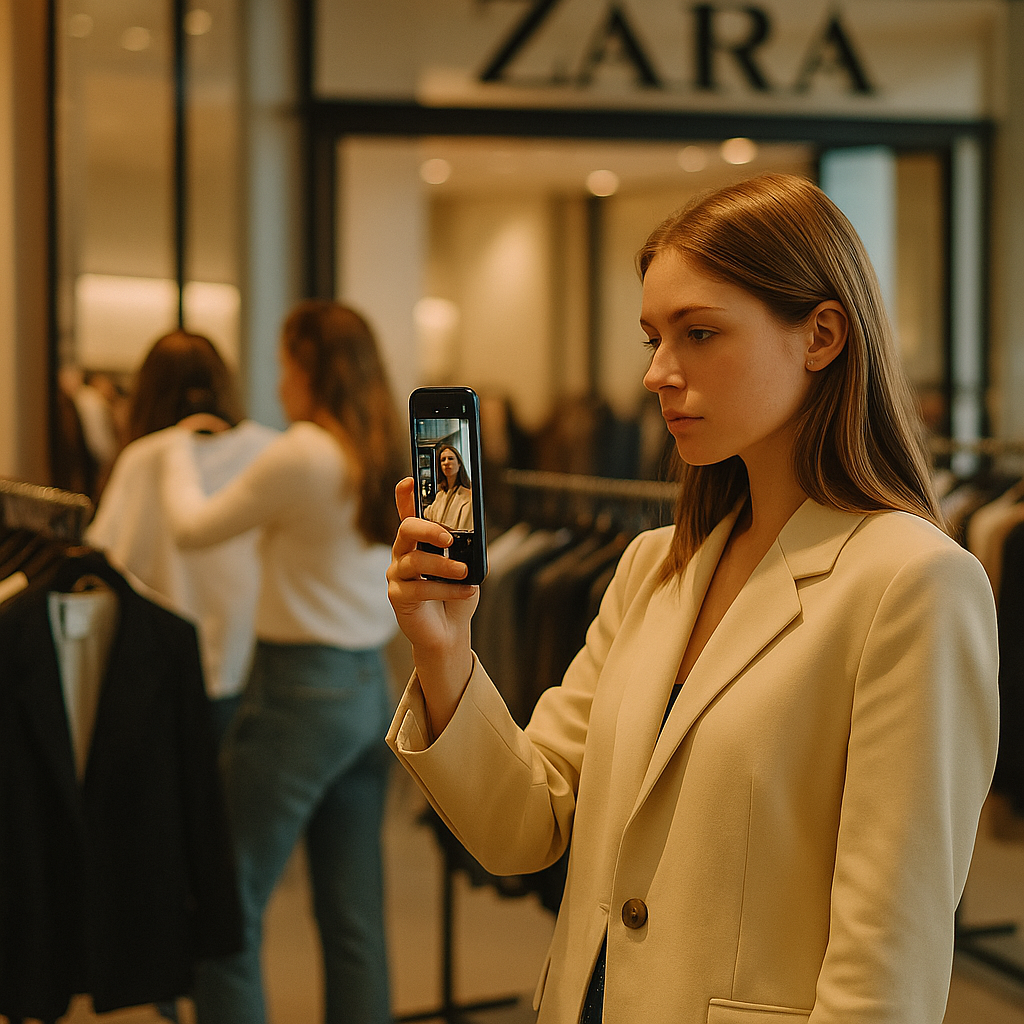
Zara spends almost nothing on traditional advertising. Never has, really. So how does a brand with over 2,000 stores keep foot traffic strong in an era when everyone shops from their couch? The answer, increasingly, involves teenagers with iPhones filming “get ready with me” hauls in fitting rooms. Zara’s nano-creator store-fit videos have quietly become one of the most efficient offline-conversion engines in retail, and it didn’t cost a media dollar to build.
The Problem: Foot Traffic Doesn’t Care About Your Instagram Grid
Retail marketers know the uncomfortable truth: polished brand content rarely moves people off the couch and into a mall. Zara’s historical strength — minimalist, editorial imagery shot by top photographers — sells aspiration. It doesn’t sell “here’s exactly what this dress looks like on a 5’4″ person with a normal body, in the actual lighting of the Oxford Street store.”
That’s a specific, unglamorous gap. And it’s exactly where nano-creators live.
Nano-creators, generally defined as accounts with 1,000 to 20,000 followers, aren’t chasing brand deals with big fees attached. They’re shopping anyway. Many already film “haul” or “try-on” content as a hobby. Zara’s approach has been less about recruiting a formal ambassador program and more about making it stupidly easy for these shoppers to become de facto store guides — then amplifying the best of what already exists organically.
Zara’s nano-creator content doesn’t sell aspiration. It sells proof: this item exists, it fits like this, and it’s on the rack right now at this specific store.
What “Store-Fit” Content Actually Looks Like
The format is deceptively simple. A creator walks into a specific Zara location, films themselves browsing, tries on 3-6 pieces, and narrates fit, fabric, and price in real time. No studio lighting. No script. Often shaky handheld footage with mall PA announcements audible in the background.
That imperfection is the point. Viewers trust it precisely because it doesn’t look like an ad.
- Videos are geotagged to the specific store location, not just “Zara” broadly
- Creators mention stock availability, sizing quirks, and whether an item runs small or large
- Content is filmed inside the store (where policy allows) rather than as a home try-on haul
- Captions often include store hours, mall name, or nearby parking details
This last point matters more than it sounds. A viewer who sees a specific pair of trousers on a specific body, in a specific store fifteen minutes from their house, has a far shorter path to purchase than someone scrolling a lookbook shot in Milan. It converts intent into a location-based errand. That’s the entire trick.
Why Zero Paid Media, and Why Now
Zara’s parent company Inditex has historically allocated a tiny fraction of revenue to marketing compared to competitors like H&M or Gap. Reports over the years have pegged Zara’s marketing spend below 1% of sales, relying instead on store location, window displays, and word of mouth. Nano-creator content fits that DNA perfectly: it’s essentially unpaid word of mouth with a camera attached.
There’s also a trust dynamic at play. According to Sprout Social’s consumer trust research, audiences consistently rate authenticity and relatability above production value when deciding whether to trust branded content. Nano-creators score highest on both metrics precisely because they have the least incentive to oversell.
Compare this to the traditional influencer marketing funnel, where a brand pays a mid-tier creator a flat fee, gets one polished video, and hopes for the best. Zara’s model flips that: dozens (sometimes hundreds) of unpaid, low-follower creators produce content organically, and the brand’s job becomes curation and amplification, not commissioning.
The Mechanics: How Zara Actually Surfaces This Content
Zara doesn’t run a formal ambassador program in the way, say, a beauty brand might. There’s no signed contract, no dashboard, no seeding calendar. Instead, the brand relies on three quieter mechanics:
- Repost and reshare on brand social channels. When a nano-creator’s store-fit video gains traction organically, Zara’s regional social teams will often reshare or duet it, giving it a second wave of reach without any payment involved.
- In-store merchandising cues that beg to be filmed. New arrivals tables, seasonal collection walls, and mannequin styling are refreshed frequently enough that creators have a reason to return weekly and film “what’s new” content.
- Hashtag and geotag consistency. Store-specific hashtags (city name plus “Zara haul,” for example) create a searchable content library that other local shoppers stumble into via TikTok’s search function, not just the algorithm.
None of this requires a media buy. It requires a retail environment worth filming and a social team paying attention to what’s already happening. That’s a very different skill set than running a paid influencer campaign, and it’s one a lot of retail marketing teams still haven’t built.
The ROI Case: Attribution Without Ad Spend
Here’s where brand teams usually get skeptical. If there’s no paid media, no affiliate links, no promo codes, how do you measure impact?
Retail marketers tracking this trend point to a few proxy signals instead of hard attribution:
- Foot traffic spikes correlated with viral store-fit posts. Several TikTok creators have posted follow-up videos showing lines or sold-out racks days after their original haul went viral, effectively self-reporting the traffic lift.
- Search volume for specific SKUs. Google Trends data around Zara product names (the brand famously doesn’t heavily promote item numbers, but creators do) shows spikes that map closely to viral video timing.
- Store-level sell-through rates on featured items. Items shown in viral hauls tend to sell out faster at the specific stores mentioned, a signal retail analysts have flagged anecdotally even without official Zara disclosure.
This is soft attribution, not a clean last-click model. But for a brand not spending on paid media in the first place, the comparison isn’t “nano-creator content vs. a $2M ad campaign.” It’s “nano-creator content vs. nothing.” Against that baseline, even directionally positive signals are a win.
When your baseline marketing spend is near zero, you don’t need perfect attribution. You need directional proof that unpaid content is doing work a paid campaign would otherwise have to do.
What Other Retailers Are Learning From This
Zara isn’t alone in figuring this out, though it may be the largest brand leaning on it without a formal program. The broader pattern shows up across categories: nano-creator strategies that won retail shelf space for CPG brands rely on a similar principle — unpaid, high-trust content that mirrors real shopping behavior rather than staged campaigns. The tactic has also shown up in footwear, with brands like Shoezone winning Gen Z attention on TikTok Shop without discounting, proving the model isn’t fashion-exclusive.
What makes fashion retail specifically suited to this format is the try-on element. Fit and drape are hard to communicate in static photography. Video, especially unscripted video, solves a genuine information gap for the shopper. That’s different from, say, a skincare brand where the product experience is harder to show on camera in thirty seconds.
The Risk Side Nobody Talks About
It would be irresponsible to frame this as a strategy with no downside. A few real risks brand and legal teams should have on their radar:
- FTC disclosure ambiguity. If Zara’s social team reshares unpaid creator content, and that creator later receives free product or store credit as a thank-you, disclosure rules under FTC endorsement guidelines may apply even without a formal contract. Retail brands leaning into organic amplification need clear internal policy on what counts as “material connection.” Other brands have already been burned here, as seen in the creator vetting gaps exposed by Sephora’s tween beauty backlash.
- Filming policy inconsistency across stores. Not every Zara location has a clear, communicated policy on in-store filming. Inconsistent enforcement creates awkward viral moments when a creator gets asked to stop filming mid-video.
- Loss of message control. Unpaid, unscripted content means creators can (and do) say unflattering things about fit, quality, or price. Zara has largely accepted this trade-off, but it’s not zero-risk for brands with less trust equity.
Brands considering a similar approach should look at how compliance-forward nano-creator programs have handled disclosure proactively, such as Chubbies building FTC compliance directly into its nano-creator drops, or how Ollie used vetted, credentialed creators to reduce regulatory exposure. Zara’s informal model works partly because of scale and brand equity most retailers don’t have. Smaller brands copying this playbook without a compliance layer are taking on more risk than they realize.
Building a Version of This Without Zara’s Scale
Most brands reading this don’t have 2,000 stores or Inditex’s balance sheet. The applicable lesson isn’t “spend nothing on media.” It’s narrower: identify the format gap where unscripted, in-context video answers a real shopper question your polished content can’t.
For fashion and retail specifically, that’s almost always fit, sizing, and in-person impression. For other categories it might be unboxing, setup, or real-world durability. The Zara model works because it targets a genuine information gap, not because nano-creators are inherently cheaper than macro-influencers (though they usually are).
A simple starting checklist for brand teams:
- Audit what shoppers are already filming in your stores, unpaid, right now
- Establish a clear, written in-store filming policy so creators and staff aren’t guessing
- Build a lightweight disclosure policy for any reshared or incentivized content, even informal thank-you gifting
- Track proxy signals (search volume, sell-through, geotagged mentions) since perfect attribution won’t exist
- Resource a social team that can spot and amplify organic content quickly, since virality windows are short
Data from eMarketer’s influencer marketing forecasts continues to show nano and micro creators outperforming larger accounts on engagement rate, even as overall creator spend rises. Zara’s approach is simply an extreme version of that trend, applied to physical retail rather than e-commerce checkout.
Next Step
If your brand has physical retail locations, don’t wait for a formal influencer program to capture this. Start by monitoring what unpaid shoppers are already filming in your stores this week, then build a simple amplification and disclosure policy around it before a competitor’s version goes viral first.
FAQs
What are nano-creator store-fit videos?
They’re short, unscripted videos filmed inside a physical retail location where a creator with a small following (typically 1,000 to 20,000) tries on products and narrates fit, sizing, and impressions in real time, often without any brand payment involved.
Does Zara pay these creators?
In most documented cases, no. Zara’s approach relies primarily on organic, unpaid content that shoppers create on their own, which the brand’s social team then reshares or amplifies rather than commissioning directly.
How does Zara measure ROI without paid media or affiliate links?
Zara and retail analysts rely on proxy signals: foot traffic spikes following viral videos, search volume for specific items, and faster sell-through rates on products featured in popular hauls, rather than clean last-click attribution.
Is this strategy replicable for smaller retail brands?
Yes, but with caveats. Smaller brands need a clear in-store filming policy and a documented disclosure approach before leaning into organic amplification, since FTC endorsement rules can still apply even without a formal paid contract.
What’s the biggest risk with unpaid nano-creator content?
Loss of message control and disclosure ambiguity. Unscripted content means creators can say unflattering things about a product, and any incentive (even free product) may trigger FTC disclosure requirements that brands need policy around in advance.
Top Influencer Marketing Agencies
The leading agencies shaping influencer marketing in 2026
Agencies ranked by campaign performance, client diversity, platform expertise, proven ROI, industry recognition, and client satisfaction. Assessed through verified case studies, reviews, and industry consultations.
Moburst

-
2

The Shelf
Boutique Beauty & Lifestyle Influencer AgencyA data-driven boutique agency specializing exclusively in beauty, wellness, and lifestyle influencer campaigns on Instagram and TikTok. Best for brands already focused on the beauty/personal care space that need curated, aesthetic-driven content.Clients: Pepsi, The Honest Company, Hims, Elf Cosmetics, Pure LeafVisit The Shelf → -
3

Audiencly
Niche Gaming & Esports Influencer AgencyA specialized agency focused exclusively on gaming and esports creators on YouTube, Twitch, and TikTok. Ideal if your campaign is 100% gaming-focused — from game launches to hardware and esports events.Clients: Epic Games, NordVPN, Ubisoft, Wargaming, Tencent GamesVisit Audiencly → -
4

Viral Nation
Global Influencer Marketing & Talent AgencyA dual talent management and marketing agency with proprietary brand safety tools and a global creator network spanning nano-influencers to celebrities across all major platforms.Clients: Meta, Activision Blizzard, Energizer, Aston Martin, WalmartVisit Viral Nation → -
5

The Influencer Marketing Factory
TikTok, Instagram & YouTube CampaignsA full-service agency with strong TikTok expertise, offering end-to-end campaign management from influencer discovery through performance reporting with a focus on platform-native content.Clients: Google, Snapchat, Universal Music, Bumble, YelpVisit TIMF → -
6

NeoReach
Enterprise Analytics & Influencer CampaignsAn enterprise-focused agency combining managed campaigns with a powerful self-service data platform for influencer search, audience analytics, and attribution modeling.Clients: Amazon, Airbnb, Netflix, Honda, The New York TimesVisit NeoReach → -
7

Ubiquitous
Creator-First Marketing PlatformA tech-driven platform combining self-service tools with managed campaign options, emphasizing speed and scalability for brands managing multiple influencer relationships.Clients: Lyft, Disney, Target, American Eagle, NetflixVisit Ubiquitous → -
8

Obviously
Scalable Enterprise Influencer CampaignsA tech-enabled agency built for high-volume campaigns, coordinating hundreds of creators simultaneously with end-to-end logistics, content rights management, and product seeding.Clients: Google, Ulta Beauty, Converse, AmazonVisit Obviously →