


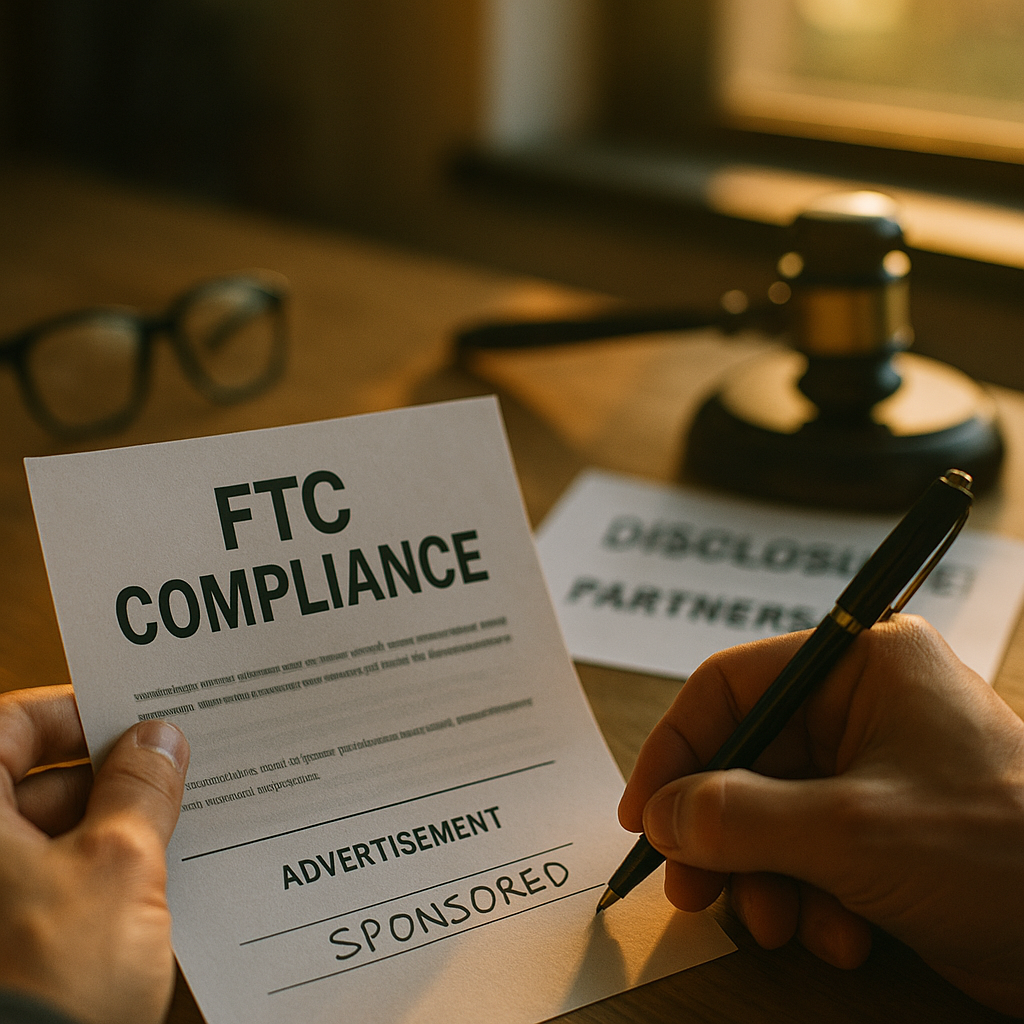
Ninety-two percent of top-performing sponsored posts still fail to meet the FTC’s “clear and conspicuous” standard, even when creators use the platform’s built-in “Paid Partnership” label. That gap is about to get expensive. The FTC compliance standard taking hold this year requires two layers of disclosure, not one, and brands that rely solely on platform tools are exposed.
If your compliance checklist stops at “did they tag it as a partnership,” you’re already behind.
Why One Disclosure Layer Was Never Enough
Platform-native tools — Instagram’s Paid Partnership label, TikTok’s Branded Content toggle, YouTube’s paid promotion flag — were built for platform transparency, not legal compliance. They tell the algorithm something. They don’t necessarily tell the human scrolling past at 2x speed.
The FTC’s Endorsement Guides have always required disclosures to be clear, conspicuous, and understood by the “ordinary consumer” in context — not buried in a metadata tag the viewer never notices. A small gray label above a video thumbnail, gone in half a second, doesn’t cut it. Neither does a disclosure that only appears if someone taps “See More” on a caption.
The FTC doesn’t care whether the platform recognized the ad. It cares whether the consumer did.
This is why the agency has increasingly signaled — through settlements, guidance updates, and enforcement sweeps — that native tools are a supplement, not a substitute. Brands that treated the Instagram badge as a compliance finish line are now being told to add plain-language captions on top of it.
The Two-Layer Standard, Explained
Here’s the structure regulators and platform policy teams are converging on for this year:
- Layer one — platform-native tool. The Branded Content toggle, paid partnership label, or “Includes Paid Promotion” flag. This satisfies platform terms of service and enables algorithmic ad tracking.
- Layer two — plain-language caption disclosure. A visible, unambiguous phrase like “#ad” or “Paid partnership with [Brand]” placed in the first three lines of the caption, before any “See more” truncation, and repeated verbally in video content within the first few seconds.
Neither layer alone satisfies the standard. Together, they create redundancy — which is exactly the point. If the platform label glitches, gets stripped by a repost, or simply goes unnoticed, the caption still does the job. Compliance teams should think of this the way engineers think about failover systems: assume one layer breaks, and make sure the other still holds.
This mirrors what we’ve seen play out in adjacent enforcement areas. Our coverage of FTC testimonial rule changes shows the same pattern: regulators keep closing gaps where automated or platform-mediated disclosure could technically exist but practically goes unseen.
What Changed to Force This Reconciliation
A few forces pushed the two-layer approach from “best practice” to “expected standard.”
First, content repurposing broke platform-native tracking. A TikTok video tagged with Branded Content gets screen-recorded and reposted to Instagram Reels, then clipped again for a YouTube Short. The native label doesn’t survive that journey. The caption, if written into the original post and copied along with it, sometimes does. Regulators noticed the disclosure was disappearing exactly where reach was multiplying.
Second, AI-generated and AI-assisted content complicated who’s actually “endorsing” what. When a synthetic avatar delivers a testimonial, or a chatbot recommends a product, there’s no human creator manually toggling a paid partnership setting. We’ve covered this collision in detail in our piece on FTC endorsement disclosure rules for AI shopping agents — the native tool infrastructure simply doesn’t exist yet for a lot of these formats, which makes plain-language disclosure the only reliable layer.
Third, state-level synthetic performer laws are stacking on top of federal rules, creating overlapping obligations that platform tools weren’t designed to satisfy. New York’s synthetic performer statute, for instance, has requirements that don’t map cleanly onto Meta’s or TikTok’s existing label categories. Our breakdown of the NY synthetic performer law versus platform AI labels is worth a close read if you run programs touching New York audiences.
Platform tools are built to a platform’s roadmap. Disclosure law is built to a regulator’s mandate. Those two roadmaps rarely ship on the same schedule.
Where Brands Are Getting This Wrong
A few recurring failure patterns show up in agency audits right now.
Relying on creators’ default settings. Many creators leave the Branded Content toggle off by habit, especially on organic-style posts meant to look unsponsored. Brands assume the toggle is on because it’s contractually required. Nobody checks until legal asks for screenshots.
Captions that disclose too late. “#ad” buried after 400 words of storytelling, past the truncation point, is functionally invisible to most viewers on mobile. The FTC has been explicit that disclosures need to appear before a reader has to take action to see them.
Treating livestream and Stories as exempt. Ephemeral content still needs disclosure, and verbal-only disclosure in a fast-talking livestream sell segment often doesn’t meet the “clear and conspicuous” bar. If you’re running Q4 shopping livestreams, pair this with our livestream script audit guidance — price-claim risk and disclosure risk tend to travel together.
No verification step in the contract. This is the operational failure that turns a creator mistake into a brand liability. If your agreements don’t require creators to submit a screenshot or draft for disclosure review before publishing, you have no enforcement mechanism. Our creator contract audit framework covers how to build that checkpoint without creating so much friction that creators route around it.
A Quick Gut-Check for Your Current Program
Ask these questions about your last ten sponsored posts:
- Was the platform-native label actually enabled, not just contractually required?
- Does the caption disclose in the first three lines, before “See more”?
- In video, is there a verbal or on-screen disclosure in the first five seconds?
- Would the disclosure survive a screen-recording repost to another platform?
- Does your contract give you the right to pull a post if disclosure is missing?
If you answered “no” or “not sure” to two or more, you have a two-layer gap worth closing before your next campaign cycle.
Building the Two-Layer Standard Into Your Workflow
This isn’t a one-time fix. It’s a workflow change. A few operational moves make the difference:
Bake caption language into creative briefs. Don’t just tell creators to “disclose per FTC guidelines.” Give them the exact phrase, the exact placement, and an example. Ambiguity is where compliance dies.
Add a pre-publish checkpoint. Whether it’s a Slack approval, a shared doc, or a formal platform like Aspire or GRIN, someone on the brand side should see the caption and the toggle status before the post goes live, not after.
Extend this to scripted talking points. If your brand supplies scripts or key messages, you may be creating additional FTC exposure around who’s actually speaking. Our analysis of brand talking points and scripting risk is directly relevant if your creator agreements involve approved messaging.
Audit AI-assisted content separately. If creators use AI tools to draft captions or scripts, verify the disclosure language survives the editing process. Our guide on AI creator scriptwriting risk walks through where brands unintentionally become the endorser of record.
Industry data backs up why this operational rigor matters. eMarketer estimates influencer marketing spend continues to climb into double-digit billions annually in the U.S. alone, and Sprout Social‘s research consistently shows consumer trust erodes fast when sponsored content feels hidden rather than disclosed. The compliance cost of getting this wrong is small compared to the trust cost.
What Enforcement Actually Looks Like
The FTC doesn’t need to sue every brand to change behavior. A handful of visible settlements, paired with warning letters sent in bulk to smaller advertisers, does the job. Expect continued warning-letter campaigns targeting categories with historically weak disclosure — beauty, supplements, finance, and fitness. If you operate in a regulated category, pair this two-layer standard with sector-specific guidance like our piece on creator disclosure in finance and health brands, where the bar is even higher.
State attorneys general are increasingly active here too, sometimes moving faster than federal regulators on synthetic content and scarcity-marketing claims. That’s a separate compliance track, but it compounds the same underlying lesson: don’t assume one rule set or one tool covers you.
The practical next step is simple. Pull your last campaign’s top ten posts this week, run them through the five-question gut-check above, and fix caption placement before your next brief goes out — that single change closes most of the two-layer gap immediately.
FAQs
What is the two-layer FTC compliance standard?
It’s the practice of combining a platform’s native disclosure tool (like Instagram’s Paid Partnership label) with a plain-language caption disclosure (like “#ad” placed prominently in the caption or spoken in video). Regulators expect both, because native tools alone often fail to meet the “clear and conspicuous” legal standard.
Is a platform’s paid partnership label legally sufficient on its own?
Generally, no. The FTC’s Endorsement Guides require disclosures that ordinary consumers actually notice and understand in context. A small platform badge that disappears quickly or gets stripped during reposting doesn’t reliably meet that bar on its own.
Where should the caption disclosure be placed?
Within the first three lines of the caption, before any “See more” truncation on mobile. For video content, disclosure should also appear verbally or on-screen within the first few seconds, not buried at the end.
Does this apply to Stories, livestreams, and other ephemeral content?
Yes. Ephemeral and live formats still require clear disclosure. Verbal-only disclosure in fast-paced livestream selling often fails to meet the standard, especially when paired with urgency or scarcity tactics.
How does this affect AI-generated or synthetic endorsements?
AI avatars, chatbots, and synthetic performers complicate disclosure because there’s often no human manually enabling a platform toggle. Brands using these formats need plain-language disclosure built into the content itself, and should review overlapping state synthetic performer laws.
What should brands change in creator contracts?
Contracts should specify exact disclosure language and placement, require pre-publish screenshots or drafts for review, and give the brand the right to pull non-compliant posts. Verification mechanisms matter more than boilerplate disclosure clauses.
FAQs
What is the two-layer FTC compliance standard?
It’s the practice of combining a platform’s native disclosure tool (like Instagram’s Paid Partnership label) with a plain-language caption disclosure (like “#ad” placed prominently in the caption or spoken in video). Regulators expect both, because native tools alone often fail to meet the “clear and conspicuous” legal standard.
Is a platform’s paid partnership label legally sufficient on its own?
Generally, no. The FTC’s Endorsement Guides require disclosures that ordinary consumers actually notice and understand in context. A small platform badge that disappears quickly or gets stripped during reposting doesn’t reliably meet that bar on its own.
Where should the caption disclosure be placed?
Within the first three lines of the caption, before any “See more” truncation on mobile. For video content, disclosure should also appear verbally or on-screen within the first few seconds, not buried at the end.
Does this apply to Stories, livestreams, and other ephemeral content?
Yes. Ephemeral and live formats still require clear disclosure. Verbal-only disclosure in fast-paced livestream selling often fails to meet the standard, especially when paired with urgency or scarcity tactics.
How does this affect AI-generated or synthetic endorsements?
AI avatars, chatbots, and synthetic performers complicate disclosure because there’s often no human manually enabling a platform toggle. Brands using these formats need plain-language disclosure built into the content itself, and should review overlapping state synthetic performer laws.
What should brands change in creator contracts?
Contracts should specify exact disclosure language and placement, require pre-publish screenshots or drafts for review, and give the brand the right to pull non-compliant posts. Verification mechanisms matter more than boilerplate disclosure clauses.
Top Influencer Marketing Agencies
The leading agencies shaping influencer marketing in 2026
Agencies ranked by campaign performance, client diversity, platform expertise, proven ROI, industry recognition, and client satisfaction. Assessed through verified case studies, reviews, and industry consultations.
Moburst

-
2

The Shelf
Boutique Beauty & Lifestyle Influencer AgencyA data-driven boutique agency specializing exclusively in beauty, wellness, and lifestyle influencer campaigns on Instagram and TikTok. Best for brands already focused on the beauty/personal care space that need curated, aesthetic-driven content.Clients: Pepsi, The Honest Company, Hims, Elf Cosmetics, Pure LeafVisit The Shelf → -
3

Audiencly
Niche Gaming & Esports Influencer AgencyA specialized agency focused exclusively on gaming and esports creators on YouTube, Twitch, and TikTok. Ideal if your campaign is 100% gaming-focused — from game launches to hardware and esports events.Clients: Epic Games, NordVPN, Ubisoft, Wargaming, Tencent GamesVisit Audiencly → -
4

Viral Nation
Global Influencer Marketing & Talent AgencyA dual talent management and marketing agency with proprietary brand safety tools and a global creator network spanning nano-influencers to celebrities across all major platforms.Clients: Meta, Activision Blizzard, Energizer, Aston Martin, WalmartVisit Viral Nation → -
5

The Influencer Marketing Factory
TikTok, Instagram & YouTube CampaignsA full-service agency with strong TikTok expertise, offering end-to-end campaign management from influencer discovery through performance reporting with a focus on platform-native content.Clients: Google, Snapchat, Universal Music, Bumble, YelpVisit TIMF → -
6

NeoReach
Enterprise Analytics & Influencer CampaignsAn enterprise-focused agency combining managed campaigns with a powerful self-service data platform for influencer search, audience analytics, and attribution modeling.Clients: Amazon, Airbnb, Netflix, Honda, The New York TimesVisit NeoReach → -
7

Ubiquitous
Creator-First Marketing PlatformA tech-driven platform combining self-service tools with managed campaign options, emphasizing speed and scalability for brands managing multiple influencer relationships.Clients: Lyft, Disney, Target, American Eagle, NetflixVisit Ubiquitous → -
8

Obviously
Scalable Enterprise Influencer CampaignsA tech-enabled agency built for high-volume campaigns, coordinating hundreds of creators simultaneously with end-to-end logistics, content rights management, and product seeding.Clients: Google, Ulta Beauty, Converse, AmazonVisit Obviously →