


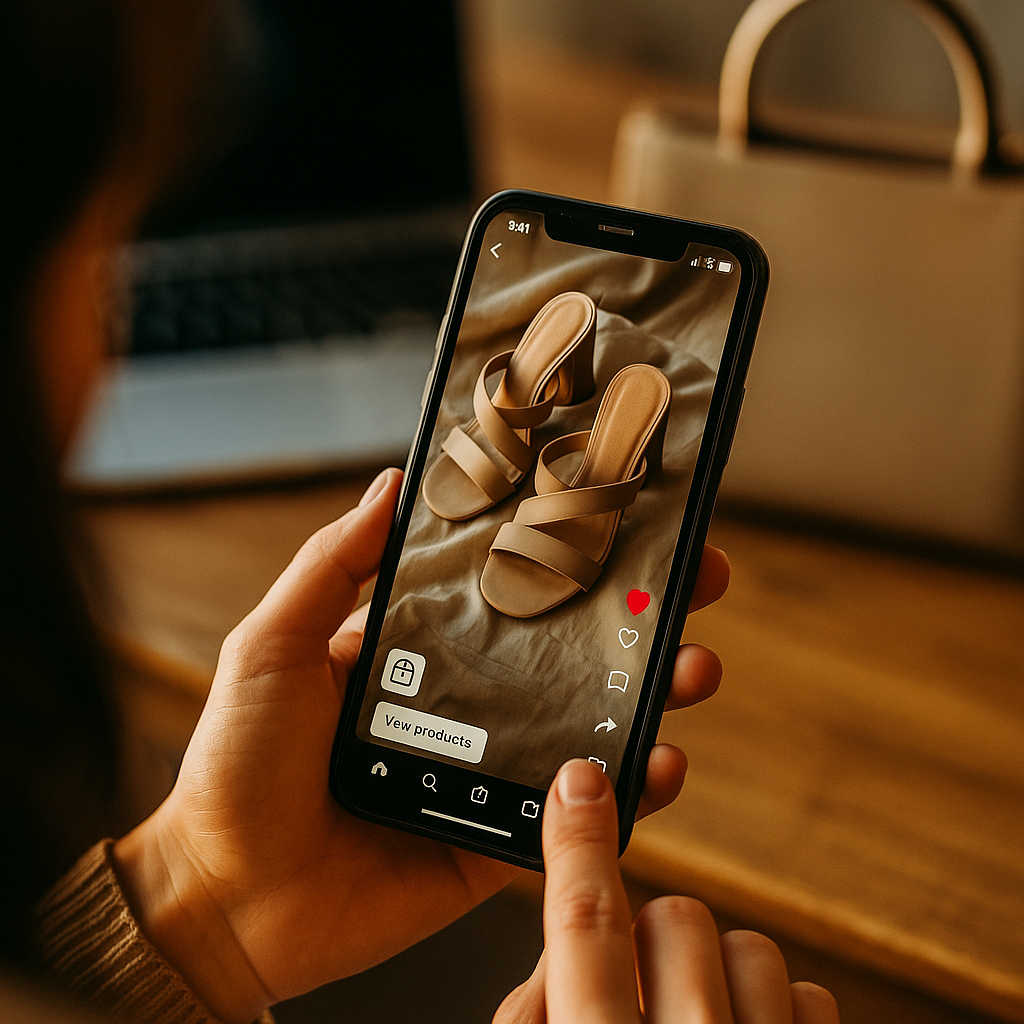
Reels without a product tag are now competing for a shrinking slice of Instagram’s distribution pie. Internal Meta commerce data shared with select advertisers this year shows shopping-tagged Reels getting materially higher reach-per-impression than untagged content in the same category. The Instagram algorithm shift toward shopping-tagged Reels isn’t a rumor from an anonymous marketer on X. It’s a structural change in how the platform ranks content, and it changes how you should brief creators starting now.
If your creative briefs still treat product tagging as an afterthought, something the creator bolts on after editing, you’re leaving distribution on the table. This piece breaks down what’s actually changed, why it happened, and how to rebuild your brief template to win the algorithm without turning every Reel into an infomercial.
What Actually Changed in Instagram’s Ranking Logic
Meta has been public about wanting Instagram to become a bigger commerce engine to compete with TikTok Shop and, increasingly, with Amazon’s influencer program. What’s less publicized is how much ranking weight shopping tags now carry in the Reels recommendation system.
Creators and agencies running side-by-side tests report that identical Reels, one with a product tag applied at publish and one without, see meaningfully different initial distribution. The tagged version gets pushed into more “shop-adjacent” surfaces: the Shop tab, product detail pages, and a new secondary feed slot Meta has been testing that surfaces tagged content to users who’ve engaged with similar products before.
Shopping-tagged Reels aren’t just easier to buy from — they’re being treated as a distinct content category with their own distribution lane, separate from the general Reels feed.
This mirrors what happened on TikTok when Shop-eligible videos started getting algorithmic priority over standard content, a shift we covered in detail in how to structure videos that convert on TikTok Shop. Meta is running the same playbook, just later and with its own commerce infrastructure (Instagram Checkout, product catalogs synced through Meta Business Suite).
Why Meta Is Doing This
Follow the money. Meta’s ad business has plateaued in some mature markets, and commerce is the growth lever it can pull without raising CPMs further. Rewarding shopping-tagged content pushes more creators and brands to build out product catalogs, which increases the surface area for Instagram Shop ads and checkout fees.
There’s also a retention angle. Users who buy something through a Reel are demonstrably stickier than users who just scroll past ads, according to Meta’s business platform documentation on commerce features. More purchases, more session time, more advertiser dollars. It’s a clean flywheel, and shopping tags are the mechanism.
The Brief Problem: Most Templates Weren’t Built for This
Here’s the uncomfortable part. Most influencer briefs still treat tagging as a post-production checkbox: “please tag the product where relevant.” That instruction is too soft for an algorithm that’s now rewarding tag placement, timing, and frequency as ranking signals.
Creators default to the path of least resistance. If your brief doesn’t specify exactly where and how tags should appear, you’ll get one tag, dropped somewhere in the caption, added as an afterthought. That’s not enough to trigger the distribution boost.
Compare this to what’s happening on Instagram’s broader ranking shift toward creator signals, where authenticity now outperforms polish. Shopping tags add a second, parallel signal layer. You need both: authentic-feeling content that still hits the commerce checkboxes the algorithm wants.
Rebuilding the Brief: Five Structural Changes
Restructuring a creative brief for shopping-tagged distribution isn’t about adding more rules. It’s about being specific where it counts and staying loose everywhere else.
- Specify tag count and placement, not just “include a tag.” Ask for tags on the primary product within the first three seconds of screen time, plus a secondary tag if a complementary product appears later in the video.
- Require catalog-linked tags, not manual product mentions. Manually typed brand names in captions don’t carry the same ranking weight as a properly linked catalog tag through Instagram Shop.
- Build in a “shoppable moment” beat in the script. Don’t just say “show the product.” Specify a 2-3 second beat where the product is framed clearly enough that Instagram’s visual recognition systems can cross-reference it against your catalog.
- Loosen the script elsewhere. Compensate for the added tagging structure by giving creators more freedom in hook style, pacing, and tone. Rigid, over-produced scripts already underperform, as we detailed in how Instagram now rewards authenticity over polish.
- Add a tagging QA step before publish. Someone on your team, or the agency, should confirm tags are live and correctly linked before the Reel goes live. A broken tag link kills the distribution benefit entirely.
This isn’t dramatically different from the structural rewrites brands have had to make on other platforms. The TikTok brief rewrite for casual content followed a similar logic: less scripted control, more precise technical requirements baked into the structure.
What This Means for Budget Allocation
If shopping-tagged Reels are getting better organic distribution, that changes your paid media math. You may be able to shift some whitelisting or boosted-post budget away from generic awareness Reels and toward tagged commerce content, since it’s already earning better reach before you spend a dollar on amplification.
This connects directly to how brands are running creator whitelisting through Meta’s MCM setup. If you’re already set up to run ads through creator handles, prioritize tagged Reels for that spend. You’re compounding an organic advantage with paid reach, rather than propping up content the algorithm was never going to favor.
Don’t spend paid amplification budget compensating for a brief that ignored tagging structure. Fix the brief first. The distribution gap is often bigger than what ad spend alone can close.
Small and mid-size brands running local or regional programs should pay attention here too. Programs modeled on local ambassador deals that beat national creator ROI often rely on organic reach precisely because budgets are tight. If tagged Reels are the new distribution currency, local ambassador briefs need the same rebuild as national campaigns, just at a smaller production scale.
Compliance Doesn’t Take a Back Seat
None of this changes your disclosure obligations. The FTC’s endorsement guidelines still apply regardless of how a product is tagged or where it sits in Instagram’s ranking system. If anything, more prominent shoppable placement raises the stakes for clear #ad or #sponsored disclosure, since these Reels are reaching larger, more purchase-intent audiences.
Brief every creator to keep disclosure language in the caption and, where possible, spoken or on-screen in the first few seconds. Regulators have shown increasing interest in commerce-adjacent content specifically because it blurs the line between entertainment and advertising. Don’t give them a reason to look at your program.
How to Test This Without Betting the Whole Program
Run a controlled split before you rewrite every brief in your program. Take a set of comparable creators, brief half with the new tagging-forward structure and half with your existing template, and compare reach, watch time, and conversion over a four-to-six week window.
Track three metrics specifically: reach per impression, add-to-cart rate from the Reel, and cost per acquisition if you’re layering paid spend on top. According to eMarketer’s social commerce forecasts, shoppable video is one of the fastest-growing ad formats industry-wide, so this isn’t a Meta-only trend worth testing in isolation. The same tagging-first logic is worth applying to how you brief creators on other shoppable formats too, including Pinterest’s shopping ad boards.
Data from your own program will tell you more than any industry benchmark. Instagram’s algorithm changes fast, and Meta doesn’t always announce ranking shifts before they roll out. Build a quarterly review into your workflow so your brief template doesn’t go stale the next time the platform recalibrates.
Next step: pull your last ten Reels briefs, check how many specified tag placement and timing versus a vague “include a tag” instruction, and rewrite the template this week. The algorithm is already rewarding creators who tag well. Make sure your brand is one of them.
Frequently Asked Questions
Does Instagram confirm that shopping-tagged Reels get more distribution?
Meta hasn’t published an official ranking factor breakdown, but agency-side testing and Meta’s own commerce feature rollouts strongly suggest tagged Reels get priority placement in Shop-adjacent surfaces and recommendation feeds.
Do I need a full product catalog set up to benefit from this shift?
Yes. Manual product mentions in captions don’t carry the same ranking weight as catalog-linked tags configured through Meta Business Suite and Instagram Shop.
Will over-tagging hurt engagement or make content feel too salesy?
It can, if tags replace storytelling instead of supporting it. The goal is one primary tag placed naturally, not five tags crammed into every frame.
How does this affect creator payment structures?
Some brands are shifting toward performance-based bonuses tied to tagged-Reel reach or conversion, on top of flat fees, since tagged content now carries measurable distribution value.
Should small brands with limited catalogs bother with this?
Yes, even a partial catalog with your top five SKUs tagged correctly will outperform untagged Reels in most tests. You don’t need a full storefront to benefit.
FAQs
Top Influencer Marketing Agencies
The leading agencies shaping influencer marketing in 2026
Agencies ranked by campaign performance, client diversity, platform expertise, proven ROI, industry recognition, and client satisfaction. Assessed through verified case studies, reviews, and industry consultations.
Moburst

-
2

The Shelf
Boutique Beauty & Lifestyle Influencer AgencyA data-driven boutique agency specializing exclusively in beauty, wellness, and lifestyle influencer campaigns on Instagram and TikTok. Best for brands already focused on the beauty/personal care space that need curated, aesthetic-driven content.Clients: Pepsi, The Honest Company, Hims, Elf Cosmetics, Pure LeafVisit The Shelf → -
3

Audiencly
Niche Gaming & Esports Influencer AgencyA specialized agency focused exclusively on gaming and esports creators on YouTube, Twitch, and TikTok. Ideal if your campaign is 100% gaming-focused — from game launches to hardware and esports events.Clients: Epic Games, NordVPN, Ubisoft, Wargaming, Tencent GamesVisit Audiencly → -
4

Viral Nation
Global Influencer Marketing & Talent AgencyA dual talent management and marketing agency with proprietary brand safety tools and a global creator network spanning nano-influencers to celebrities across all major platforms.Clients: Meta, Activision Blizzard, Energizer, Aston Martin, WalmartVisit Viral Nation → -
5

The Influencer Marketing Factory
TikTok, Instagram & YouTube CampaignsA full-service agency with strong TikTok expertise, offering end-to-end campaign management from influencer discovery through performance reporting with a focus on platform-native content.Clients: Google, Snapchat, Universal Music, Bumble, YelpVisit TIMF → -
6

NeoReach
Enterprise Analytics & Influencer CampaignsAn enterprise-focused agency combining managed campaigns with a powerful self-service data platform for influencer search, audience analytics, and attribution modeling.Clients: Amazon, Airbnb, Netflix, Honda, The New York TimesVisit NeoReach → -
7

Ubiquitous
Creator-First Marketing PlatformA tech-driven platform combining self-service tools with managed campaign options, emphasizing speed and scalability for brands managing multiple influencer relationships.Clients: Lyft, Disney, Target, American Eagle, NetflixVisit Ubiquitous → -
8

Obviously
Scalable Enterprise Influencer CampaignsA tech-enabled agency built for high-volume campaigns, coordinating hundreds of creators simultaneously with end-to-end logistics, content rights management, and product seeding.Clients: Google, Ulta Beauty, Converse, AmazonVisit Obviously →