


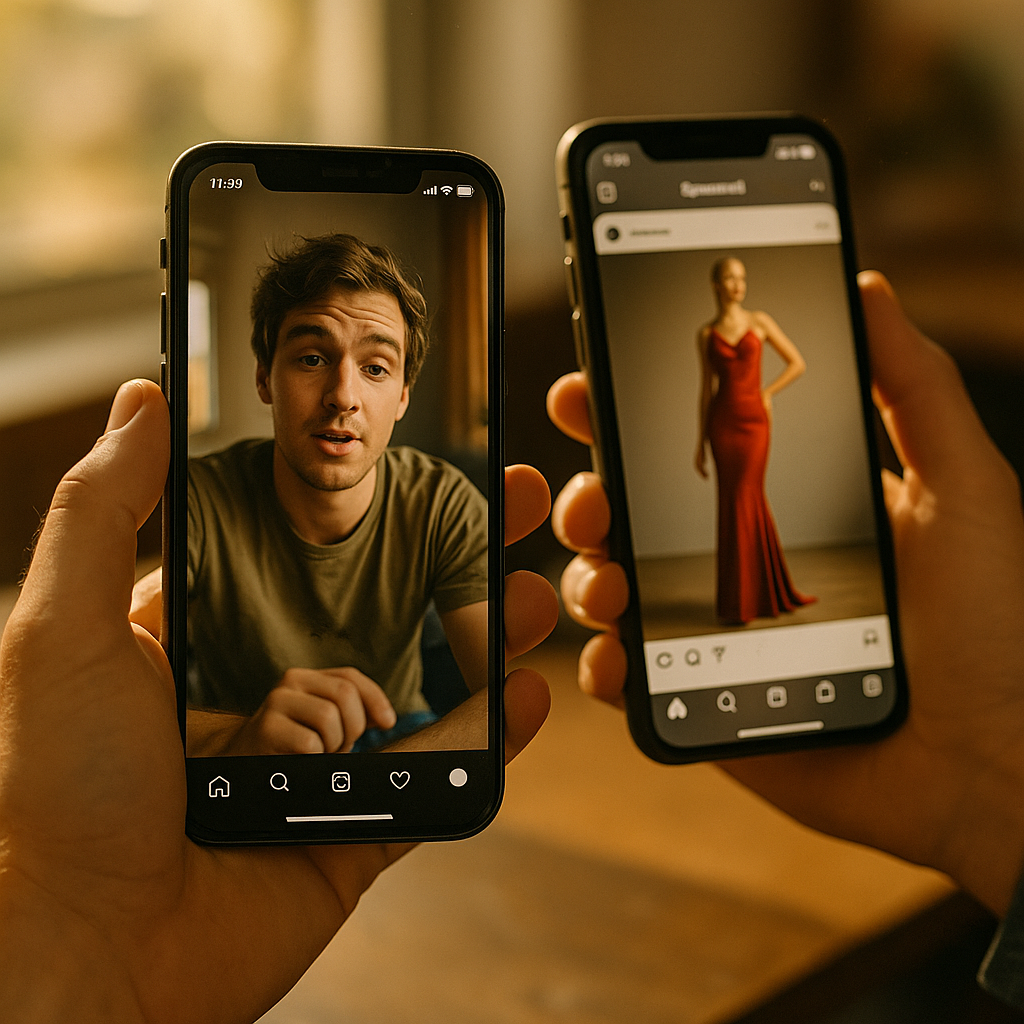
Instagram just told brands what creators have known for years: polish is a liability. Meta’s latest ranking update pushes unedited, casual-feeling content above glossy brand posts in Reels and feeds alike. The Instagram 2026 algorithm update isn’t a minor tweak — it’s a signal that the platform is done rewarding studio-grade production. If your content calendar still looks like a catalog shoot, it’s time to rethink the brief.
The Update, In Plain Terms
Meta’s internal ranking signals now weight “watch-through completion” and “re-watch” behavior far more heavily than saves or shares alone. That sounds technical, but the practical effect is simple: content that feels native to the scroll — shot on a phone, lightly captioned, imperfect — keeps people watching longer than a polished 30-second commercial ever could. Meta hasn’t published exact weightings, but creators and agencies tracking reach data since the rollout report a pattern that’s hard to ignore.
Sprout Social’s social media benchmarking research has flagged this shift for a while: engagement on branded content drops sharply once production value crosses a certain threshold, because audiences subconsciously register it as an ad and disengage. Instagram’s update simply codifies what the algorithm was already nudging toward.
Content that looks like an ad gets treated like an ad — deprioritized, skipped, and starved of the completion signals that drive reach.
Why Meta Is Making This Bet
Meta isn’t doing this out of nostalgia for the platform’s early, messier days. It’s chasing retention against TikTok, where casual, creator-first content has driven watch time for years. This mirrors a broader industry pattern: TikTok’s algorithm has favored casual content for multiple ranking cycles, and Meta is clearly borrowing the playbook. When the biggest short-form competitor proves that raw content keeps users scrolling longer, you copy the mechanic, not just the aesthetic.
There’s also a monetization angle. Instagram wants more native creator content flowing through branded partnerships, not agency-produced ads dressed up as posts. Every plain, high-completion Reel that a user watches to the end is a data point Meta can sell against. Polished ads that get skipped in the first two seconds are just noise on the platform’s own scorecard.
What “Authentic” Actually Means for Brand Content
Let’s kill the vague buzzword for a second. “Authentic” doesn’t mean sloppy, and it doesn’t mean brands should abandon strategy. It means:
- Handheld or single-take footage over multi-camera studio setups
- Real employees, founders, or creators talking to camera instead of voiceover-and-b-roll formats
- Captions that sound like a person wrote them, not legal-approved copy
- Imperfect lighting, ambient sound, and natural pacing instead of jump-cut precision
This is the same direction Instagram signaled earlier when it started favoring creator-shot content over brand polish. If you’ve read our coverage of creator signals beating brand polish or the related piece on Instagram rewarding creator authenticity, this update is a continuation, not a reversal. Meta has been building toward this for a while. The 2026 update just accelerates the timeline and raises the stakes for brands still dragging their feet.
What This Means for Budget Allocation
Here’s the uncomfortable part for CMOs: your $40,000 shoot day might now underperform a creator’s iPhone video shot in their kitchen. That’s not a knock on production quality — it’s a recognition that different formats serve different jobs. Hero campaign assets still belong on YouTube, connected TV, and your website. But for Instagram Reels specifically, the ROI math is shifting toward volume and rawness over singular, expensive polish.
Practically, this means:
- Reallocate a portion of production budget toward creator partnerships and UGC-style content rather than one large studio shoot
- Brief creators for authenticity, not just deliverables — give them talking points, not scripts
- Test lo-fi variants of existing polished assets before killing a campaign that underperforms
- Track completion rate and re-watches as primary KPIs, not just likes or follower growth
eMarketer’s creator economy forecasts (via eMarketer’s research hub) have consistently shown brands shifting spend toward creator-led content year over year — this update just gives that shift a harder algorithmic incentive.
Shopping Content Still Needs a Different Lens
One nuance brands keep missing: casual doesn’t mean unstructured, especially for commerce-driven content. Instagram’s push toward shopping-tagged Reels means product content still needs clear tagging, pricing clarity, and a path to purchase — it just needs to be wrapped in a casual presentation rather than a commercial one. Think “creator trying on a jacket in their bedroom mirror” over “model on a white backdrop.” Same shopping tag, completely different completion rate.
This is also where compliance matters more than ever. The FTC’s endorsement guidelines still apply regardless of production value — a casual-looking post is still a paid partnership if money changed hands, and disclosure requirements don’t relax just because the video looks like a friend made it. Brands leaning into “authentic” content without proper #ad or Partnership labels are courting regulatory risk, not just algorithm penalties.
The Whitelisting and Rights Question
As more brands shift spend toward creator-shot, casual content, the operational side gets messier. Who owns the footage? Can it run as a paid ad? Brands running creator content through Meta’s ad system need clean rights management — this is exactly the gap covered in our guide to MCM setup for creator whitelisting. If your legal and media teams haven’t aligned on usage rights for this new wave of casual content, you’re building a campaign on a contract gap.
The same discipline applies to disclosure hygiene on the creator side. Platforms cracking down on low-quality or unclear sponsored content — see Meta’s own moderation moves and the parallel example in LinkedIn’s AI slop flagging — suggest that “casual” is not a loophole for sloppy compliance. It’s a production style, not an excuse to skip disclosure.
How to Brief Creators Under the New Rules
Old briefs told creators what to say, shot list included. New briefs should tell creators what problem to solve and let them shoot it their way. A few practical changes:
- Swap detailed shot lists for talking-point outlines
- Approve concepts, not final cuts, unless compliance requires otherwise
- Ask for vertical, phone-shot footage as the default format
- Build in a “second take” budget for creators to test two hooks, not one
This mirrors what’s already working on TikTok Shop, where video structure directly drives conversion. The overlap between TikTok’s and Instagram’s ranking logic is no accident — both platforms are optimizing for the same behavioral signal: does a real person keep watching this, or scroll past it?
What Brands Get Wrong First
The most common mistake? Treating “casual” as an aesthetic filter applied to the same polished script. Adding a shaky-cam effect to a scripted ad doesn’t fool the algorithm or the audience. Completion and re-watch signals come from genuine pacing, tone, and unpredictability — things you can’t fake with a preset.
The second mistake is abandoning brand safety in the rush to look native. Casual doesn’t mean careless. Your legal disclosures, product claims, and creator vetting standards should be just as rigorous as they were for the polished campaign you’re replacing.
Casual content still needs a strategy behind it — the difference is the strategy now lives in the brief, not the edit suite.
HubSpot’s ongoing marketing research on content engagement backs this up: audiences reward consistency and relatability over production value, but they still punish brands that feel inauthentic or evasive about paid partnerships. Casual is a format, not a personality bypass.
Next step: Audit your last ten Reels for completion rate versus production cost, then reallocate at least 20% of your next quarter’s Instagram budget toward creator-shot, unscripted formats — and measure re-watch rate, not just reach, to see if it’s working.
Frequently Asked Questions
What exactly changed in Instagram’s algorithm?
Instagram now weights watch-through completion and re-watch behavior more heavily when ranking Reels and feed content, favoring casual, unscripted formats over highly produced brand content that users tend to skip.
Does this mean brands should stop investing in high-production content entirely?
No. High-production assets still perform well on other channels like YouTube and connected TV. For Instagram Reels specifically, brands should shift a portion of budget toward creator-shot, lo-fi content while keeping polished assets for hero campaigns elsewhere.
How does this affect influencer partnership briefs?
Briefs should move from detailed shot lists and scripts toward talking points and creative freedom, letting creators shoot in their natural style rather than mimicking a commercial format.
Does casual content still need FTC disclosure?
Yes. Paid partnerships require clear disclosure regardless of production value. Casual-looking content is still subject to FTC endorsement guidelines and Meta’s branded content policies.
What metrics should brands track under the new algorithm?
Prioritize completion rate and re-watch rate over vanity metrics like likes or follower counts, since these are the primary signals driving the updated ranking system.
Is this update similar to changes on other platforms?
Yes. TikTok’s algorithm has favored casual, native-feeling content for several update cycles, and Instagram’s shift closely mirrors that behavioral ranking logic.
FAQs
What exactly changed in Instagram’s algorithm?
Instagram now weights watch-through completion and re-watch behavior more heavily when ranking Reels and feed content, favoring casual, unscripted formats over highly produced brand content that users tend to skip.
Does this mean brands should stop investing in high-production content entirely?
No. High-production assets still perform well on other channels like YouTube and connected TV. For Instagram Reels specifically, brands should shift a portion of budget toward creator-shot, lo-fi content while keeping polished assets for hero campaigns elsewhere.
How does this affect influencer partnership briefs?
Briefs should move from detailed shot lists and scripts toward talking points and creative freedom, letting creators shoot in their natural style rather than mimicking a commercial format.
Does casual content still need FTC disclosure?
Yes. Paid partnerships require clear disclosure regardless of production value. Casual-looking content is still subject to FTC endorsement guidelines and Meta’s branded content policies.
What metrics should brands track under the new algorithm?
Prioritize completion rate and re-watch rate over vanity metrics like likes or follower counts, since these are the primary signals driving the updated ranking system.
Is this update similar to changes on other platforms?
Yes. TikTok’s algorithm has favored casual, native-feeling content for several update cycles, and Instagram’s shift closely mirrors that behavioral ranking logic.
Top Influencer Marketing Agencies
The leading agencies shaping influencer marketing in 2026
Agencies ranked by campaign performance, client diversity, platform expertise, proven ROI, industry recognition, and client satisfaction. Assessed through verified case studies, reviews, and industry consultations.
Moburst

-
2

The Shelf
Boutique Beauty & Lifestyle Influencer AgencyA data-driven boutique agency specializing exclusively in beauty, wellness, and lifestyle influencer campaigns on Instagram and TikTok. Best for brands already focused on the beauty/personal care space that need curated, aesthetic-driven content.Clients: Pepsi, The Honest Company, Hims, Elf Cosmetics, Pure LeafVisit The Shelf → -
3

Audiencly
Niche Gaming & Esports Influencer AgencyA specialized agency focused exclusively on gaming and esports creators on YouTube, Twitch, and TikTok. Ideal if your campaign is 100% gaming-focused — from game launches to hardware and esports events.Clients: Epic Games, NordVPN, Ubisoft, Wargaming, Tencent GamesVisit Audiencly → -
4

Viral Nation
Global Influencer Marketing & Talent AgencyA dual talent management and marketing agency with proprietary brand safety tools and a global creator network spanning nano-influencers to celebrities across all major platforms.Clients: Meta, Activision Blizzard, Energizer, Aston Martin, WalmartVisit Viral Nation → -
5

The Influencer Marketing Factory
TikTok, Instagram & YouTube CampaignsA full-service agency with strong TikTok expertise, offering end-to-end campaign management from influencer discovery through performance reporting with a focus on platform-native content.Clients: Google, Snapchat, Universal Music, Bumble, YelpVisit TIMF → -
6

NeoReach
Enterprise Analytics & Influencer CampaignsAn enterprise-focused agency combining managed campaigns with a powerful self-service data platform for influencer search, audience analytics, and attribution modeling.Clients: Amazon, Airbnb, Netflix, Honda, The New York TimesVisit NeoReach → -
7

Ubiquitous
Creator-First Marketing PlatformA tech-driven platform combining self-service tools with managed campaign options, emphasizing speed and scalability for brands managing multiple influencer relationships.Clients: Lyft, Disney, Target, American Eagle, NetflixVisit Ubiquitous → -
8

Obviously
Scalable Enterprise Influencer CampaignsA tech-enabled agency built for high-volume campaigns, coordinating hundreds of creators simultaneously with end-to-end logistics, content rights management, and product seeding.Clients: Google, Ulta Beauty, Converse, AmazonVisit Obviously →