


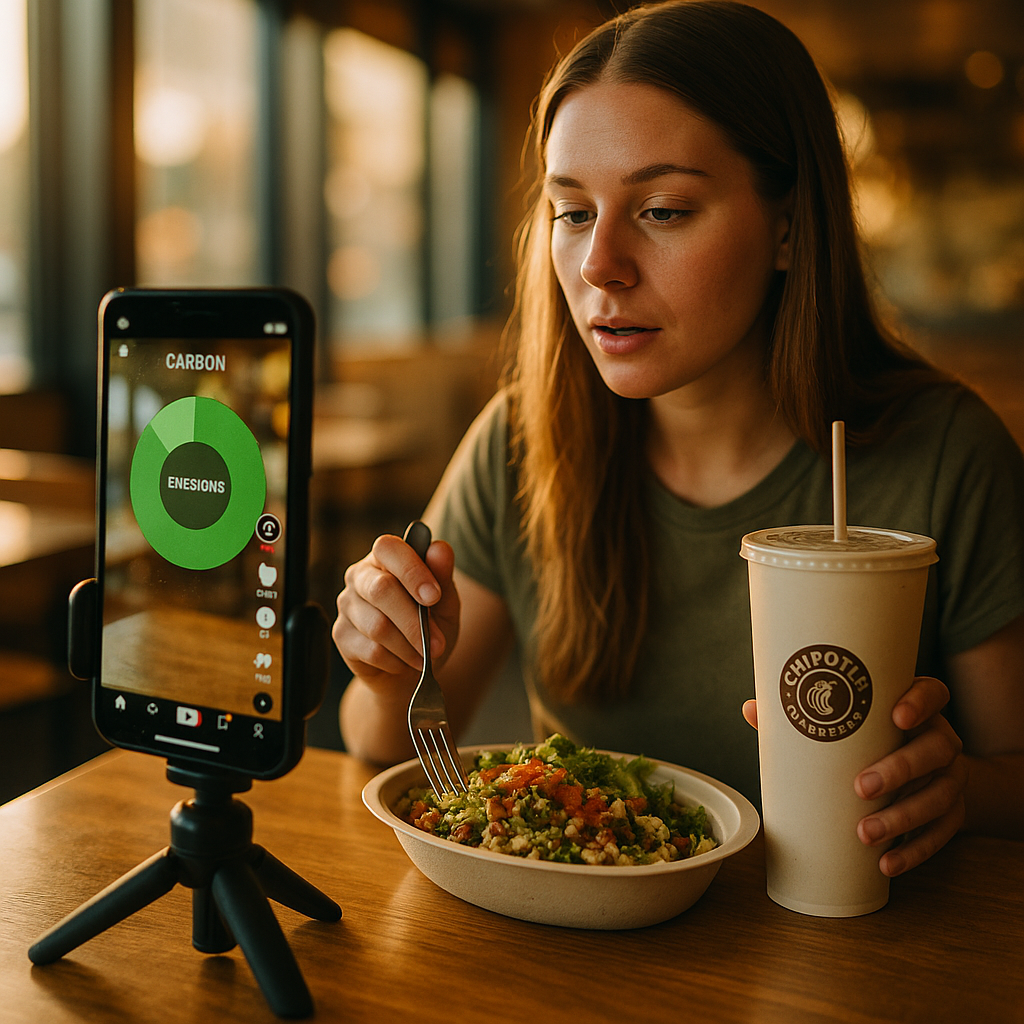
73% of consumers say they’d pay more for sustainable products, but only 27% trust brand sustainability claims. That trust gap is where most eco-marketing campaigns go to die. Chipotle’s Real Foodprint creator series didn’t just survive that skepticism gap, it turned supply chain data into some of the most shared sustainability content on TikTok, without a single unverifiable claim.
This is the case study every sustainability marketer should be studying right now.
The Problem: Sustainability Marketing Has a Credibility Deficit
Greenwashing lawsuits are up. Regulators are watching. The FTC’s Green Guides exist specifically because brands kept making vague, unsubstantiated environmental claims — “eco-friendly,” “all-natural,” “sustainably sourced” — with nothing behind them. Consumers caught on fast. Gen Z in particular treats sustainability marketing with the same skepticism they reserve for political ads.
So how do you market a genuinely good sustainability story without sounding like every other brand that slapped a leaf icon on its packaging?
Chipotle’s answer: don’t market a story. Market a number.
What Real Foodprint Actually Is
Real Foodprint is Chipotle’s proprietary tool that calculates the environmental impact of a customer’s specific order, in real time, based on ingredient sourcing. Order a bowl with organic tofu, locally-grown romaine, and responsibly-raised chicken, and the tool spits out a personalized readout: gallons of water saved, pounds of CO2 avoided, acres of organic farmland supported. It’s tied to actual supply chain data from Chipotle’s supplier network, not a generic industry average.
That distinction matters enormously. Most sustainability claims are aggregate and vague (“we reduced emissions company-wide”). Real Foodprint is granular and personal (“your order today supported these specific outcomes”). One is a brand statement. The other is a receipt.
The core insight: specificity is the antidote to greenwashing accusations. A brand claiming to be “sustainable” invites scrutiny. A brand showing a customer their individual order’s water-savings number, sourced from traceable supply data, invites screenshots.
Turning a Data Tool Into Creator Content
Here’s where most brands would have stopped: build the tool, put it on the app, call it a day. Chipotle instead treated Real Foodprint as a content engine and briefed creators to generate their own personalized readouts on camera.
The creator brief was simple by design. Order your usual. Screenshot your Real Foodprint number. React to it honestly. No script requiring creators to call Chipotle “sustainable” or “eco-conscious” — those adjectives never appeared in the brief. Creators reacted to their own data, in their own voice, which is precisely what made the content feel authentic rather than sponsored.
This mirrors a pattern seen across other data-driven creator campaigns. Blueland’s nano-creator sustainability push worked for similar reasons: creators showed receipts (literal packaging waste comparisons) instead of reciting brand copy. When the proof point is visual and personal, audiences do the persuading themselves in the comments section.
Why Nano and Micro-Creators Over Celebrity Talent
Chipotle skewed the creator mix toward nano and micro-creators (typically 10K–150K followers) rather than macro-influencers or celebrities. The logic: sustainability claims land better from someone who feels like a peer, not a paid spokesperson. A creator with 40K followers reacting genuinely to their own order’s water-savings stat reads as discovery. The same claim from a celebrity with a seven-figure brand deal reads as an ad, immediately triggering the skepticism the campaign was designed to avoid.
This is consistent with broader industry data. Research from eMarketer has repeatedly shown smaller creators generate higher trust and engagement rates per follower than mega-influencers, particularly on claims involving values or ethics. Chipotle’s team clearly built the creator tier strategy around that trust math rather than raw reach.
The Compliance Layer Nobody Talks About
Sustainability claims sit in a legally sensitive zone. The FTC has increased scrutiny on environmental marketing claims, and several major brands have faced greenwashing litigation in the past two years over unsubstantiated “carbon neutral” or “sustainable sourcing” language. Chipotle’s approach sidesteps most of that risk by design.
Because Real Foodprint numbers are generated from the brand’s actual traceable supply chain data rather than marketing copy, creators aren’t making claims — they’re reporting a calculation. That’s a meaningfully different legal posture. A creator saying “Chipotle is sustainable” is an opinion that could invite scrutiny if unsubstantiated. A creator saying “my order saved 30 gallons of water according to this tool” is relaying a data output, with the substantiation baked into the underlying methodology.
This is the kind of structural compliance thinking that separates durable creator programs from ones that end up in a regulatory inquiry. It’s similar to the vetting rigor seen in Ollie’s credentialed nano-creator model and Chubbies’ FTC-compliant nano-creator drops, where the compliance strategy is built into the content format itself, not bolted on afterward as a disclaimer.
The Results: Engagement Without the Backlash
Sustainability content on TikTok is notoriously prone to backlash. Skeptical commenters pile on fast, fact-checking claims and calling out inconsistencies. Real Foodprint content largely avoided this pattern. Because the videos centered on personal, verifiable data rather than brand assertions, the comment sections skewed toward curiosity (“wait how does this work”) rather than accusation (“this is greenwashing”).
That shift in comment sentiment is arguably the campaign’s most valuable output. Engagement volume matters, but sentiment quality determines whether a sustainability campaign builds trust or erodes it. Chipotle effectively engineered its way around the most common failure mode in category marketing.
The broader lesson: sustainability content performs best when the brand gets out of the way and lets the data speak through a credible third party — the creator. This is a subtler version of the trust-transfer mechanic that makes influencer marketing work in the first place, whether the category is skincare, coffee, or fast casual dining.
What Other Brands Get Wrong
Compare this to the standard sustainability campaign playbook: a brand produces a slick video with aspirational language, vague statistics, and stock footage of forests. No personalization. No traceability. No creator reaction, just paid media pushing a claim viewers have learned to distrust on sight.
The difference isn’t budget. It’s architecture. Chipotle built a data tool first, then let content emerge from it. Most brands build content first and retrofit data to support it. That ordering matters more than most marketing teams realize.
Brands considering a similar approach should ask three questions before greenlighting a sustainability creator campaign:
- Is the underlying data specific and traceable, or is it an industry-average estimate dressed up as a brand claim?
- Can creators generate their own version of the proof point, or are they reciting brand-approved language?
- Does the content format make the claim self-substantiating, reducing dependency on disclaimers alone?
Agencies increasingly build this kind of substantiation-first thinking into campaign architecture from day one rather than treating compliance as a final review step. Moburst, a global growth agency founded in 2013 that works with brands including Google, Uber and Samsung, positions its influencer marketing specialists around exactly this kind of structural planning, pairing creator recruitment with the KPI reporting needed to prove a campaign’s claims hold up under scrutiny rather than just hoping they do.
Where This Model Applies Beyond Fast Casual
Real Foodprint’s format generalizes well beyond restaurants. Any brand with traceable supply chain, sourcing, or impact data can build a similar personalized-data-to-creator pipeline: apparel brands with fabric sourcing data, beauty brands with ingredient traceability, CPG brands with packaging waste metrics. The mechanic isn’t restaurant-specific, it’s data-specific.
The operational lift is real, though. Building a tool like Real Foodprint requires supply chain data infrastructure most brands haven’t invested in. That’s the actual barrier to replication, not the creative concept. Brands weighing this approach should budget for the data engineering before the content strategy.
Worth noting too: this pairs well with performance media, not just organic reach. Just as L’Oréal Luxe’s attribution work shows creator content can be tracked into measurable ROI, Real Foodprint-style content is a strong candidate for whitelisting or paid amplification, since the underlying claim is defensible and repeatable at scale, unlike vaguer brand-voice sustainability messaging that risks fatigue or backlash when pushed as paid media.
Takeaway
Sustainability content earns trust when it’s built from traceable data and delivered through a creator’s own reaction, not brand copy. If your sustainability campaign can’t survive a fact-check in the comments, it’s not ready for creator distribution yet, fix the data pipeline before you fix the script.
FAQs
What made Chipotle’s Real Foodprint campaign avoid greenwashing accusations?
The campaign relied on personalized, traceable supply chain data rather than broad brand claims. Creators reacted to their own order-specific numbers instead of reciting language like “sustainable” or “eco-friendly,” which reduced the risk of unsubstantiated claims that typically draw FTC scrutiny or consumer backlash.
Why did Chipotle use nano and micro-creators instead of celebrities?
Smaller creators generate higher trust on values-based or ethical claims because their content reads as personal discovery rather than a paid endorsement. Celebrity-driven sustainability claims tend to trigger skepticism, since audiences associate high-profile talent with brand deals rather than genuine reaction.
Can other brands replicate the Real Foodprint model?
Yes, but it requires supply chain data infrastructure most brands haven’t built yet. Any company with traceable sourcing, ingredient, or impact data can adapt the format; the barrier is data engineering, not creative strategy.
How does this approach reduce legal risk compared to typical sustainability marketing?
Because creators report a calculated data output rather than making a subjective brand claim, the content is less likely to be classified as an unsubstantiated environmental assertion under FTC Green Guides. The substantiation is built into the methodology rather than added as a disclaimer afterward.
Does data-driven sustainability content perform well as paid media?
It’s a strong candidate for whitelisting and amplification, since the underlying claims are defensible and repeatable. Vaguer brand-voice sustainability messaging tends to fatigue audiences faster when pushed as paid media, while specific, personalized data holds up better under repeated exposure.
Top Influencer Marketing Agencies
The leading agencies shaping influencer marketing in 2026
Agencies ranked by campaign performance, client diversity, platform expertise, proven ROI, industry recognition, and client satisfaction. Assessed through verified case studies, reviews, and industry consultations.
Moburst

-
2

The Shelf
Boutique Beauty & Lifestyle Influencer AgencyA data-driven boutique agency specializing exclusively in beauty, wellness, and lifestyle influencer campaigns on Instagram and TikTok. Best for brands already focused on the beauty/personal care space that need curated, aesthetic-driven content.Clients: Pepsi, The Honest Company, Hims, Elf Cosmetics, Pure LeafVisit The Shelf → -
3

Audiencly
Niche Gaming & Esports Influencer AgencyA specialized agency focused exclusively on gaming and esports creators on YouTube, Twitch, and TikTok. Ideal if your campaign is 100% gaming-focused — from game launches to hardware and esports events.Clients: Epic Games, NordVPN, Ubisoft, Wargaming, Tencent GamesVisit Audiencly → -
4

Viral Nation
Global Influencer Marketing & Talent AgencyA dual talent management and marketing agency with proprietary brand safety tools and a global creator network spanning nano-influencers to celebrities across all major platforms.Clients: Meta, Activision Blizzard, Energizer, Aston Martin, WalmartVisit Viral Nation → -
5

The Influencer Marketing Factory
TikTok, Instagram & YouTube CampaignsA full-service agency with strong TikTok expertise, offering end-to-end campaign management from influencer discovery through performance reporting with a focus on platform-native content.Clients: Google, Snapchat, Universal Music, Bumble, YelpVisit TIMF → -
6

NeoReach
Enterprise Analytics & Influencer CampaignsAn enterprise-focused agency combining managed campaigns with a powerful self-service data platform for influencer search, audience analytics, and attribution modeling.Clients: Amazon, Airbnb, Netflix, Honda, The New York TimesVisit NeoReach → -
7

Ubiquitous
Creator-First Marketing PlatformA tech-driven platform combining self-service tools with managed campaign options, emphasizing speed and scalability for brands managing multiple influencer relationships.Clients: Lyft, Disney, Target, American Eagle, NetflixVisit Ubiquitous → -
8

Obviously
Scalable Enterprise Influencer CampaignsA tech-enabled agency built for high-volume campaigns, coordinating hundreds of creators simultaneously with end-to-end logistics, content rights management, and product seeding.Clients: Google, Ulta Beauty, Converse, AmazonVisit Obviously →