


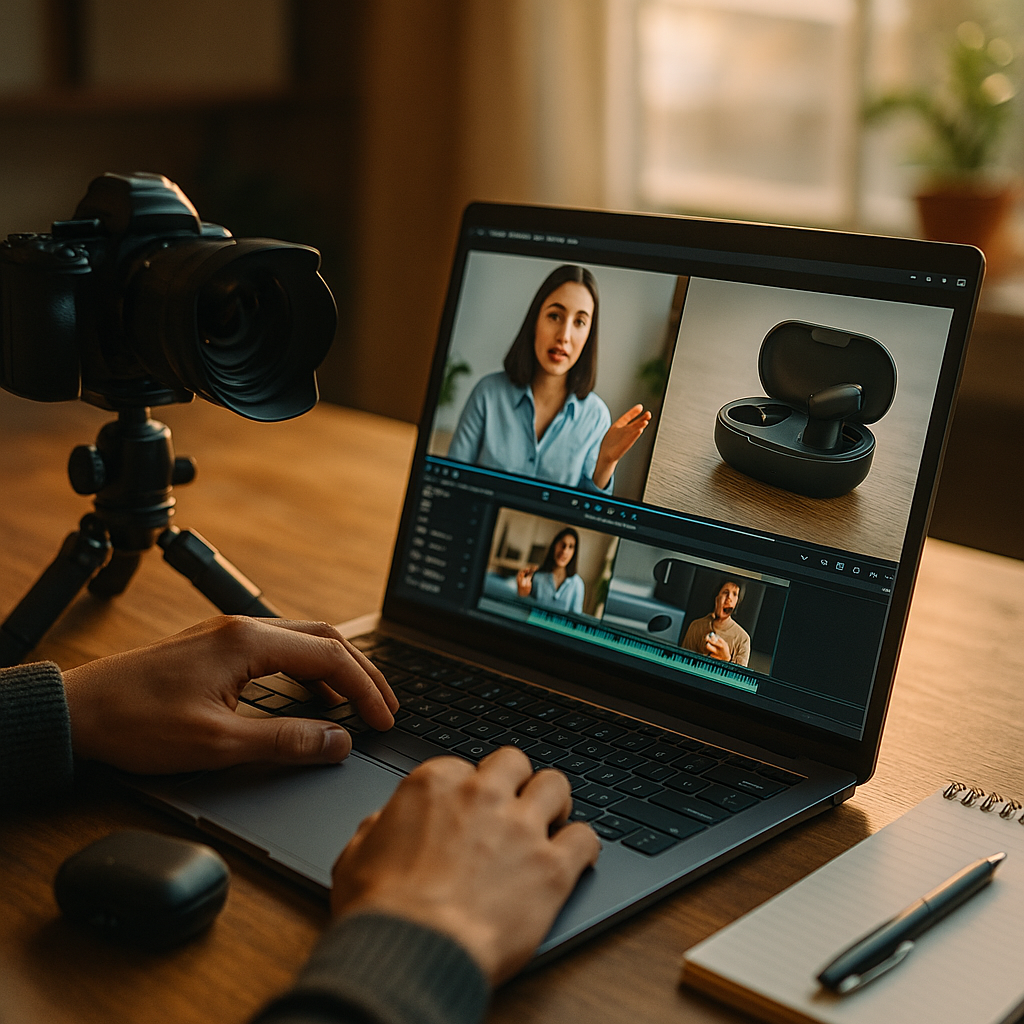
One master video, ninety localized variants, zero reshoots. That’s the pitch behind avatar-led product videos at scale, and it’s no longer vaporware. Brands running lean creative teams are watching AI avatars deliver product pitches in fourteen languages before lunch. The question isn’t whether this works. It’s which vendor actually delivers, and where the seams show.
Why This Category Exploded
Product video used to mean a shoot, a studio, and a week of edits. Now a single well-lit clip of a spokesperson, or even a fully synthetic avatar, becomes the seed asset for hundreds of derivatives: different languages, different scripts, different aspect ratios for TikTok versus Amazon versus retail media networks.
The economics are what changed everyone’s mind. Reshooting a product video for a new market can run into five figures once you account for talent, localization, and studio time. Generating a voiceover and lip-synced avatar variant from an existing asset costs a fraction of that, and turns around in hours instead of weeks. eMarketer has tracked accelerating ad spend into short-form video for several consecutive years, and brands are under real pressure to feed that demand without linearly scaling production budgets.
The real ROI story isn’t “AI makes video cheaper.” It’s “AI lets one master asset do the job of twenty separate shoots” — and that math is what’s pulling budget out of traditional production lines.
What “Avatar-Led” Actually Means Here
Worth separating two categories that get lumped together. There’s fully synthetic avatars — digital humans with no real-world counterpart, built entirely in software. And there’s digital twins — a real presenter or founder scanned once, then reused indefinitely across scripts they never actually recorded.
Most enterprise buyers land on digital twins for anything customer-facing. It preserves a recognizable brand voice, and it sidesteps some of the uncanny-valley skepticism that fully synthetic avatars still trigger with certain audiences. But fully synthetic options win when you need dozens of distinct “presenters” for A/B testing tone and demographic fit, without paying for dozens of real actors.
Either way, the workflow is the same: upload a master script and reference video, generate a voice clone, sync lip movement, then fan that single asset out across languages, aspect ratios, and even background settings. Tools like ElevenLabs, HeyGen, and Synthesia have become the reference points most procurement teams benchmark against, precisely because they’ve productized this pipeline rather than treating it as a bespoke service.
The Voiceover Layer Is Where Quality Actually Lives
Everyone obsesses over the visual avatar. That’s the wrong place to spend your evaluation time. Voice quality — prosody, emotional range, pronunciation of brand and product names — is what makes or breaks whether a viewer trusts the pitch. A slightly stiff avatar face is forgivable. A voiceover that mispronounces your SKU name or flattens every sentence into the same monotone cadence is not.
Run this test before you sign anything: feed the tool a script full of brand names, technical specs, and regional slang. See what breaks. Most vendors handle generic English fluently and fall apart on anything with unusual phonetics — pharma compound names, fintech jargon, non-Western brand names. If localization to Spanish, Portuguese, or Hindi markets matters to your roadmap, test those languages specifically. Don’t trust the demo reel; demo reels are cherry-picked.
Building the Evaluation Framework
Treat this like any other martech procurement decision, not a novelty purchase. Here’s the checklist that matters for brand and agency teams:
- Voice cloning consent chain: Does the platform require documented consent from the person whose voice or likeness is cloned, and does that consent transfer if the presenter leaves the company?
- Output fidelity across languages: Test at least three target languages, not just English and one romance language.
- Rendering speed at volume: A tool that takes ten minutes per thirty-second clip won’t survive a 200-SKU catalog refresh.
- Brand safety controls: Can you lock tone, restrict certain phrases, or flag outputs for human review before publish?
- API and DAM integration: Does it plug into your existing digital asset management system, or does it become a silo your team manually exports from?
- Licensing terms for commercial use: Some platforms restrict paid media usage or cap monthly output on lower tiers, which matters once you’re running this across a full catalog.
Don’t skip the consent question. It’s the one procurement teams underweight because it feels like a legal footnote rather than a product feature. It isn’t. The FTC has signaled increasing scrutiny of synthetic media disclosure, and getting caught without a documented consent trail for a cloned voice is the kind of risk that turns a cost-saving initiative into a PR problem.
Scale Changes the Math, Not Just the Speed
A single avatar video is a novelty. Two hundred of them, auto-generated from one master asset and pushed across regional storefronts, is an operational system — and operational systems need governance, not just a subscription. This is where most brands underestimate the lift.
You need a review workflow. Someone has to sign off on each localized variant before it goes live, because automated pronunciation errors or tone mismatches compound fast when you’re generating at volume. You need version control tied back to the master asset, so when the product spec changes, you’re not manually regenerating two hundred derivative clips one by one. And you need a way to track which model or vendor generated which asset, particularly as tools update their underlying models and output quality shifts without warning. Teams building this kind of governance layer are increasingly leaning on structured asset provenance tracking to keep audit trails intact across vendor changes.
There’s also a distribution question that’s easy to overlook. Avatar-led product videos aren’t just going to social feeds anymore. They’re feeding into shoppable formats on retail media networks, and increasingly into AI shopping agents that scrape product pages and video metadata to answer consumer queries. If your video asset library isn’t structured for that, you’re leaving discovery value on the table. It’s worth pairing your avatar video rollout with a broader look at feed and schema readiness so the same content pipeline serves both human viewers and machine-read shopping surfaces.
Where the Approach Breaks Down
Not every product category benefits from this. High-consideration purchases — enterprise software, medical devices, anything with a long sales cycle — still perform better with authentic human testimonials that carry real credibility signals. Viewers are getting sharper at spotting synthetic tells: slightly off blink timing, audio that doesn’t quite match mouth shape at the frame level, background elements that shimmer oddly.
Trust erosion is the real cost, not just occasional visual glitches. If your audience discovers a testimonial-style avatar video wasn’t a real customer, that’s a brand safety incident, not a production hiccup. Sprout Social’s consumer trust research has consistently shown that perceived authenticity drives purchase intent more than production polish, which cuts directly against over-relying on synthetic presenters for anything emotionally weighted like testimonials or founder stories.
The category also runs into diminishing returns fast if your product catalog is genuinely homogenous. Generating forty variants of a video that all say roughly the same thing about roughly the same product isn’t scale, it’s noise. Pair avatar generation with the kind of catalog-driven video generation approach that varies the actual product story, not just the language or face delivering it.
Vendor Landscape, Briefly
HeyGen and Synthesia remain the two most-cited names for enterprise avatar generation, each with different strengths: HeyGen tends to edge ahead on rendering speed and template variety, Synthesia leans into enterprise compliance features and custom avatar training. ElevenLabs dominates the voice layer specifically and gets paired with either visual platform via API rather than used standalone for video.
Smaller players are chasing niche use cases — hyper-realistic avatars for luxury brands, budget tools for SMB catalogs that prioritize volume over polish. Before committing budget, run a side-by-side pilot with your actual product scripts, not vendor demo content. The gap between demo quality and real-world output is where most procurement regret comes from.
Getting Buy-In Internally
Legal, brand, and performance marketing teams all need a seat at this table before rollout, not after. Legal cares about consent and disclosure. Brand cares about tone consistency across hundreds of auto-generated variants. Performance marketing cares about whether the output actually converts better than static creative or human-shot alternatives. Loop in whoever owns your brand safety review process early, because retrofitting approval workflows after you’ve already generated three hundred videos is a miserable exercise.
Budget-wise, treat the first quarter as a controlled pilot: one product line, two to three markets, a defined success metric like view-through rate or add-to-cart lift versus your existing creative. Resist the temptation to go catalog-wide on day one. The tools are capable of that scale. Your review and governance processes usually aren’t, yet.
Start with one hero product, three markets, and a hard cap on how many variants go live without human review — prove the workflow before you let it run unattended across the full catalog.
Frequently Asked Questions
What’s the difference between a fully synthetic avatar and a digital twin?
A fully synthetic avatar is built entirely in software with no real person behind it. A digital twin is a scanned likeness of a real presenter, reused to generate scripts that person never actually recorded. Digital twins tend to preserve brand recognition better; synthetic avatars offer more flexibility for testing different presenter styles at low cost.
How much can avatar-led video actually reduce production costs?
Costs vary by vendor and volume, but teams generating localized variants from one master asset commonly report cutting per-video localization costs by 60 to 80 percent compared to reshooting with local talent and studios, once volume passes a few dozen variants.
Do I need consent to clone a real employee’s voice or likeness?
Yes. Reputable platforms require documented consent before cloning, and that consent should specify usage scope, duration, and whether it survives if the person leaves the company. Skipping this step creates real legal and reputational exposure.
Can viewers tell when a product video uses an AI avatar?
Increasingly, yes. Audiences are getting better at spotting subtle tells like mismatched lip sync or unnatural blink timing. Disclosure and honest framing tend to protect trust better than trying to pass synthetic content off as fully human-shot.
Which use cases are a poor fit for avatar-led video?
High-consideration purchases, authentic customer testimonials, and founder-story content generally perform better with real, verifiably human presenters. Save avatar generation for high-volume, lower-emotional-stakes content like product feature walkthroughs and localized catalog videos.
Top Influencer Marketing Agencies
The leading agencies shaping influencer marketing in 2026
Agencies ranked by campaign performance, client diversity, platform expertise, proven ROI, industry recognition, and client satisfaction. Assessed through verified case studies, reviews, and industry consultations.
Moburst

-
2

The Shelf
Boutique Beauty & Lifestyle Influencer AgencyA data-driven boutique agency specializing exclusively in beauty, wellness, and lifestyle influencer campaigns on Instagram and TikTok. Best for brands already focused on the beauty/personal care space that need curated, aesthetic-driven content.Clients: Pepsi, The Honest Company, Hims, Elf Cosmetics, Pure LeafVisit The Shelf → -
3

Audiencly
Niche Gaming & Esports Influencer AgencyA specialized agency focused exclusively on gaming and esports creators on YouTube, Twitch, and TikTok. Ideal if your campaign is 100% gaming-focused — from game launches to hardware and esports events.Clients: Epic Games, NordVPN, Ubisoft, Wargaming, Tencent GamesVisit Audiencly → -
4

Viral Nation
Global Influencer Marketing & Talent AgencyA dual talent management and marketing agency with proprietary brand safety tools and a global creator network spanning nano-influencers to celebrities across all major platforms.Clients: Meta, Activision Blizzard, Energizer, Aston Martin, WalmartVisit Viral Nation → -
5

The Influencer Marketing Factory
TikTok, Instagram & YouTube CampaignsA full-service agency with strong TikTok expertise, offering end-to-end campaign management from influencer discovery through performance reporting with a focus on platform-native content.Clients: Google, Snapchat, Universal Music, Bumble, YelpVisit TIMF → -
6

NeoReach
Enterprise Analytics & Influencer CampaignsAn enterprise-focused agency combining managed campaigns with a powerful self-service data platform for influencer search, audience analytics, and attribution modeling.Clients: Amazon, Airbnb, Netflix, Honda, The New York TimesVisit NeoReach → -
7

Ubiquitous
Creator-First Marketing PlatformA tech-driven platform combining self-service tools with managed campaign options, emphasizing speed and scalability for brands managing multiple influencer relationships.Clients: Lyft, Disney, Target, American Eagle, NetflixVisit Ubiquitous → -
8

Obviously
Scalable Enterprise Influencer CampaignsA tech-enabled agency built for high-volume campaigns, coordinating hundreds of creators simultaneously with end-to-end logistics, content rights management, and product seeding.Clients: Google, Ulta Beauty, Converse, AmazonVisit Obviously →