


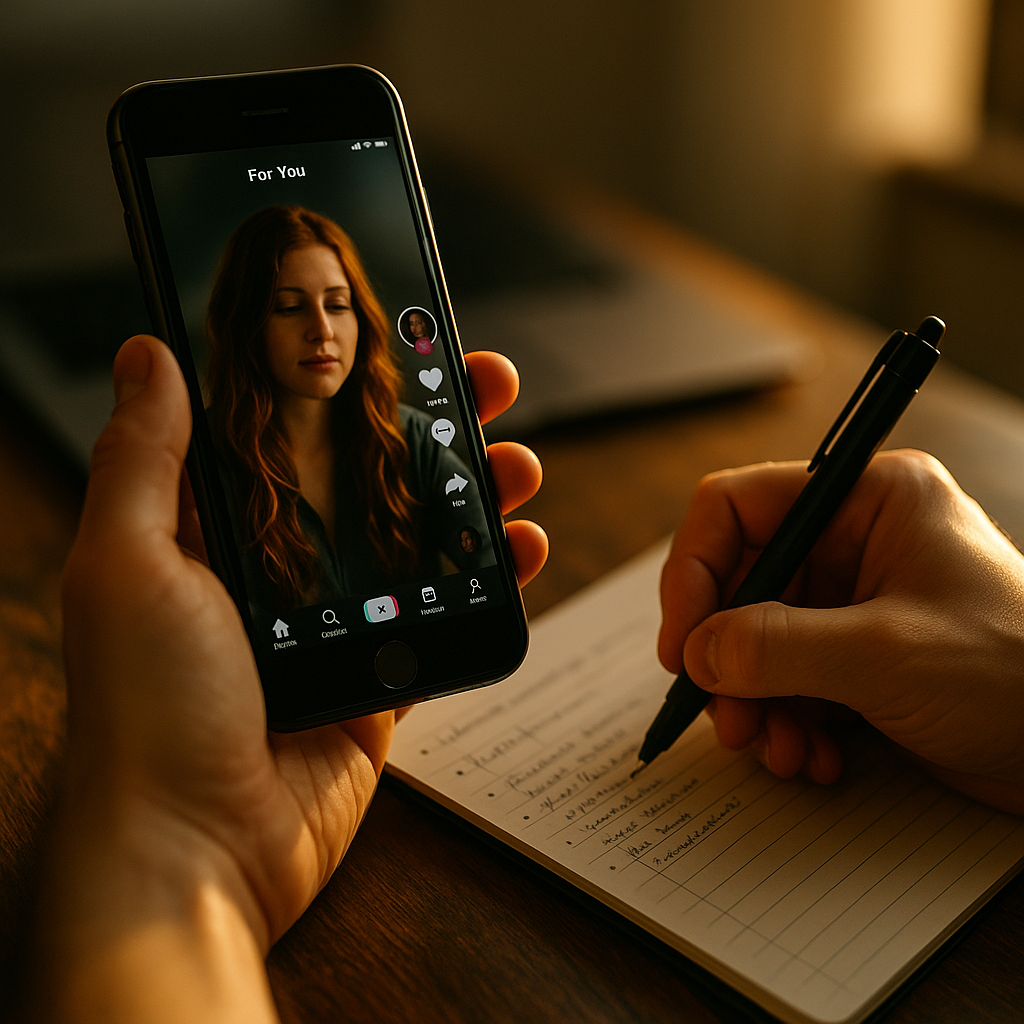
Organic reach on TikTok has quietly cratered for accounts without a paid boost or a rigid content cadence — some brand pages report reach drops of 30-40% quarter over quarter. The TikTok short-form force-feed algorithm isn’t punishing you. It’s just not choosing you. Understanding how it selects, tests, and redistributes content is now a baseline requirement for anyone managing a creator program.
What “Force-Feed” Actually Means Here
TikTok’s recommendation system has always been aggressive about pushing content to strangers rather than followers. That’s the platform’s founding trick — it made TikTok TikTok. But the “force-feed” dynamic we’re seeing now is different. It refers to the platform’s growing tendency to auto-populate feeds with algorithmically-selected content regardless of explicit user signals, prioritizing session length and ad adjacency over creator-follower relationships.
In plain terms: TikTok decides what keeps someone scrolling, then feeds it to them relentlessly, whether they follow the account or not. Following someone used to mean something. Now it’s a weak signal buried under watch-time data, completion rate, and rewatch behavior.
Follower count is becoming a vanity metric on TikTok. Watch-time density and completion rate are the real currency of distribution.
Why Organic Reach Is Sliding for Brands Specifically
Three things are compounding at once. First, TikTok Shop has pulled inventory and attention toward commerce-tagged content, which the algorithm now favors in ways detailed in our breakdown of how product tags boost reach. Second, ad load has increased, meaning fewer organic slots exist in any given session. Third, and most overlooked: the platform is rewarding “casual,” native-feeling content over polished brand assets, a shift we covered in TikTok’s shift toward casual content.
Put those together and you get a platform actively deprioritizing the exact content style most brand marketing teams were trained to produce.
This isn’t unique to TikTok. Instagram is doing something structurally similar with Reels distribution, and LinkedIn has started favoring native short video over link-outs. If you’re managing a multi-platform program, the pattern should feel familiar — see our take on Instagram’s Reels force-feed dynamic for the parallel playbook.
Decoding the Signals: What TikTok’s Algorithm Actually Weighs
TikTok has never published a full ranking formula, and it never will. But its own creator resources and independent testing from agencies point to a consistent hierarchy of signals:
- Completion rate — did viewers watch to the end, or close, of the video
- Rewatch rate — loops matter more than most brands realize
- Watch time relative to video length — a 9-second video watched fully beats a 60-second video watched halfway
- Early engagement velocity — likes, shares, and comments in the first 30-60 minutes after posting
- Session continuation — does the content keep someone scrolling, or does it prompt an exit
Notice what’s missing: follower count, hashtag stuffing, posting time astrology. Those tactics are dead weight now. TikTok’s own advertising resource hub increasingly nudges brands toward paid amplification precisely because organic signals alone won’t guarantee reach anymore.
The Structural Playbook: Building Content the Algorithm Wants
Here’s where strategy has to get concrete. Decoding the algorithm is only useful if it changes how you brief creators and structure deliverables. A few structural rules that are earning outsized reach right now:
Front-load value in the first three seconds
This isn’t new advice, but the tolerance window has shrunk. Where brands once had five seconds of grace, TikTok’s own retention data (echoed in third-party analyses from eMarketer) suggests viewers now decide to stay or swipe within two to three seconds. If your creator brief still opens with a logo animation or a “hey guys” intro, you’re bleeding reach before the message even starts.
Design for completion, not length
Shorter videos with near-100% completion consistently outperform longer videos with 60% completion. That means a tight 12-second video can beat a beautifully produced 45-second one. Brands used to optimizing for YouTube’s watch-time-equivalence model (see our piece on YouTube’s watch-time-equivalence shift) need to unlearn that instinct here. TikTok rewards efficiency, not duration.
Build in loop triggers
Videos that end on an unresolved beat, a visual callback to the opener, or a cliffhanger caption tend to get rewatched. Rewatches read as a stronger signal than a like. Structurally, this means writing endings before you write middles — reverse-engineer the loop.
Tag for commerce even when you’re not selling directly
TikTok Shop integration is bleeding into general distribution logic. Content with product tags, even soft-touch ones, appears to get modest algorithmic favor as the platform tries to normalize shoppable behavior. If you’re running livestream-adjacent campaigns, the tactics in structuring scripts for impulse buys apply just as much to standalone Shop-tagged videos.
A 12-second video with 95% completion will consistently outperform a 45-second video with 60% completion. Brief for efficiency, not runtime.
Reframing Briefs Around Distribution Mechanics, Not Just Creative
Most creator briefs are still built around brand voice, key messages, and deliverable counts. That’s necessary but no longer sufficient. Your brief needs a distribution section that specifies hook timing, pacing cues, and completion-oriented structure — the same way Instagram’s Reels playbook for hooks and pacing now demands.
Practically, that means adding requirements like: cold open within one second, no more than three cuts before the core message lands, and a visual or verbal callback in the final two seconds. Creators who’ve internalized platform mechanics will already do this instinctively. Less experienced creators need it spelled out, or you’ll pay production costs for content the algorithm quietly buries.
It also means accepting that raw, lower-fidelity content frequently outperforms polished brand-style edits — a pattern Instagram is showing too, as we detailed in why raw content is beating polish. If your creative approvals process still favors glossy over authentic, that’s costing you reach, not protecting brand safety.
Where Paid and Organic Have to Merge
Here’s the uncomfortable truth: pure organic strategy is losing viability for brand accounts at scale. TikTok’s own guidance increasingly steers larger advertisers toward Spark Ads and boosted creator content to guarantee distribution. That doesn’t mean organic is dead. It means organic content now functions as the testing ground, and paid spend is the amplifier for whatever wins that test.
Operationally, this changes budget allocation. Instead of front-loading spend on production, smart teams are reserving 20-30% of campaign budget for reactive boosting: posting multiple creator variants organically, watching completion and rewatch data over 48-72 hours, then putting media dollars behind the top one or two performers. It’s a leaner, more data-responsive model than the old “produce, post, hope” cycle, and it mirrors what platforms like Sprout Social and HubSpot are now recommending across short-form channels generally.
Compliance teams should note this shift too. As boosting becomes standard practice, disclosure requirements under FTC guidelines apply regardless of whether reach came organically or through paid amplification — a distinction some brands still get wrong when a creator’s organic post suddenly becomes a paid unit.
Measuring What Actually Matters Now
If you’re still reporting reach and impressions as headline KPIs, you’re measuring the wrong layer. Completion rate, average watch time as a percentage of total runtime, and rewatch rate predict future algorithmic favor far better than raw view counts. Build dashboards around those, and train creative teams to review them alongside engagement metrics.
This is a mindset shift for teams used to reporting vanity numbers up the chain. It’s worth the friction. A campaign with modest impressions but 80% completion is a stronger long-term asset than one with huge reach and 20% completion, because the algorithm will keep feeding the former to new audiences long after the campaign officially ends.
Test this on your next campaign: brief one creator for maximum polish, one for a raw, fast-hook cut under 15 seconds, post both organically, and let 48 hours of completion data — not your gut — decide where the ad budget goes.
FAQs
What is the TikTok force-feed algorithm?
It’s the platform’s recommendation system that distributes content based on engagement signals like completion and rewatch rate rather than follower relationships, meaning even accounts with large followings can see organic reach collapse without strong retention performance.
Why is my brand’s organic TikTok reach declining?
Increased ad load, TikTok Shop’s growing influence on distribution, and the platform’s preference for casual, native-feeling content over polished brand videos are the three biggest contributing factors right now.
How long should a TikTok video be to maximize reach?
There’s no fixed ideal length. The goal is maximizing completion rate relative to runtime, so a tight 10-15 second video with near-full completion typically outperforms a longer video that loses viewers halfway through.
Should brands rely on organic reach alone on TikTok?
No. Treat organic posting as a testing phase to identify top-performing creative, then allocate paid boost budget to amplify winners based on early completion and engagement data.
Does TikTok Shop tagging affect organic distribution?
Yes, content with product tags appears to receive modest algorithmic favor as TikTok pushes to normalize shoppable behavior across the platform, even outside dedicated livestream or Shop campaigns.
Top Influencer Marketing Agencies
The leading agencies shaping influencer marketing in 2026
Agencies ranked by campaign performance, client diversity, platform expertise, proven ROI, industry recognition, and client satisfaction. Assessed through verified case studies, reviews, and industry consultations.
Moburst

-
2

The Shelf
Boutique Beauty & Lifestyle Influencer AgencyA data-driven boutique agency specializing exclusively in beauty, wellness, and lifestyle influencer campaigns on Instagram and TikTok. Best for brands already focused on the beauty/personal care space that need curated, aesthetic-driven content.Clients: Pepsi, The Honest Company, Hims, Elf Cosmetics, Pure LeafVisit The Shelf → -
3

Audiencly
Niche Gaming & Esports Influencer AgencyA specialized agency focused exclusively on gaming and esports creators on YouTube, Twitch, and TikTok. Ideal if your campaign is 100% gaming-focused — from game launches to hardware and esports events.Clients: Epic Games, NordVPN, Ubisoft, Wargaming, Tencent GamesVisit Audiencly → -
4

Viral Nation
Global Influencer Marketing & Talent AgencyA dual talent management and marketing agency with proprietary brand safety tools and a global creator network spanning nano-influencers to celebrities across all major platforms.Clients: Meta, Activision Blizzard, Energizer, Aston Martin, WalmartVisit Viral Nation → -
5

The Influencer Marketing Factory
TikTok, Instagram & YouTube CampaignsA full-service agency with strong TikTok expertise, offering end-to-end campaign management from influencer discovery through performance reporting with a focus on platform-native content.Clients: Google, Snapchat, Universal Music, Bumble, YelpVisit TIMF → -
6

NeoReach
Enterprise Analytics & Influencer CampaignsAn enterprise-focused agency combining managed campaigns with a powerful self-service data platform for influencer search, audience analytics, and attribution modeling.Clients: Amazon, Airbnb, Netflix, Honda, The New York TimesVisit NeoReach → -
7

Ubiquitous
Creator-First Marketing PlatformA tech-driven platform combining self-service tools with managed campaign options, emphasizing speed and scalability for brands managing multiple influencer relationships.Clients: Lyft, Disney, Target, American Eagle, NetflixVisit Ubiquitous → -
8

Obviously
Scalable Enterprise Influencer CampaignsA tech-enabled agency built for high-volume campaigns, coordinating hundreds of creators simultaneously with end-to-end logistics, content rights management, and product seeding.Clients: Google, Ulta Beauty, Converse, AmazonVisit Obviously →