


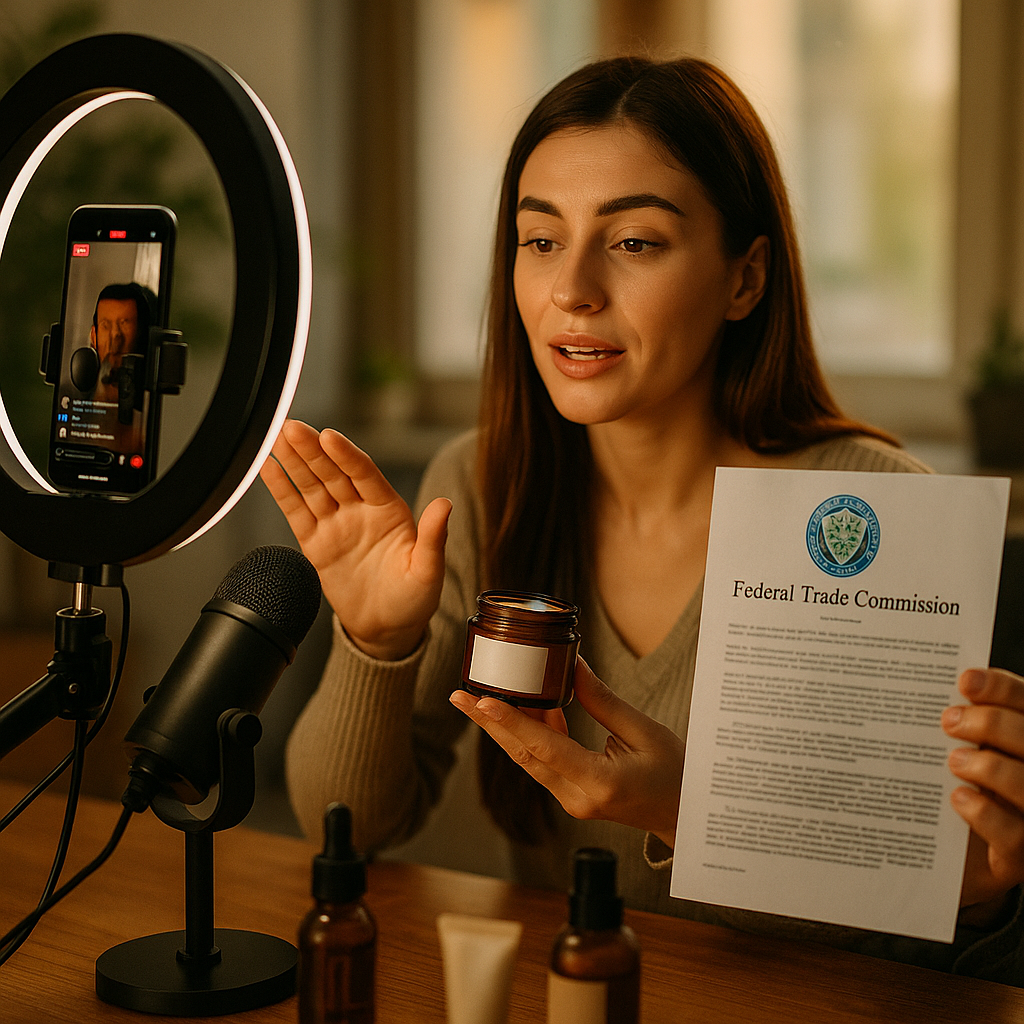
Whatnot’s hosts move $3 billion in annualized GMV by talking fast, closing faster, and hitting CAC/LTV targets that would make a growth marketer blush. Amazon Live is chasing the same playbook. But here’s the problem nobody in the hiring loop is solving: the same speed that drives conversion is exactly what triggers FTC endorsement violations. Livestream auction hosts are being hired like performance marketers and regulated like reality-TV pitchmen, and the gap between those two mandates is where brands get burned.
Two Mandates, One Host, Zero Alignment
Talent teams at livestream commerce platforms are staffed with growth marketers now, not just casting directors. They screen hosts on watch-time retention, average order value, repeat purchase rate within 30 days, and cost to acquire a paying viewer. That’s a CAC/LTV lens applied to a human being on camera. It makes sense from a unit economics standpoint — a host who converts at 8% and retains buyers for six months is worth ten times a host who converts at 2% and churns immediately.
The trouble is that the behaviors that drive those numbers — urgency language, scarcity claims, rapid-fire “going once, going twice” energy, casual asides about how a product changed the host’s life — are precisely the behaviors the FTC scrutinizes under its endorsement guidance. A host optimized purely for conversion velocity is a host optimized to skip disclosure, blur material connections, and imply results without substantiation. Nobody hired for that outcome on purpose. It happens because the incentive structure never accounted for it.
A livestream host paid on conversion lift and hired on CAC/LTV benchmarks has every financial incentive to under-disclose — and no structural reason to stop unless compliance is built into the scorecard itself.
What the FTC Actually Requires From Live Auction Hosts
The FTC’s endorsement guides don’t have a livestream carve-out. A host running a Whatnot auction or an Amazon Live shopping event is held to the same standard as a static Instagram post: clear, conspicuous disclosure of any material connection to the brand, made in a way an average viewer can’t miss. That means verbal disclosure at the start of a stream isn’t enough if the stream runs two hours and viewers drop in mid-way. It means “sponsored” or “#ad” needs to be visually persistent, not a one-time flash.
The FTC has also been explicit that fake urgency — countdown clocks that reset, “last one” claims when inventory is actually restocked — falls under deceptive practice enforcement, not just endorsement rules. If you’re running scarcity tactics in a livestream auction format, it’s worth cross-referencing how that overlaps with broader countdown-timer enforcement risk covered in our countdown timer audit piece, because auction formats are basically scarcity mechanics wearing a costume.
Amazon Live and Whatnot both publish host guidelines that reference disclosure, but publishing a guideline and enforcing it in real time during a fast-moving auction are different problems entirely. Ask any compliance lead who’s tried to review six hours of live auction footage after the fact — it’s not scalable, and by the time you catch the violation, the stream already aired.
Why “Just Add a Disclaimer” Doesn’t Solve the Real Issue
A lot of brand compliance teams treat this as a labeling problem. Slap a “paid partnership” tag on the stream, call it done. That’s necessary but not sufficient. The FTC cares about clarity and prominence, not just presence. A disclosure buried in a stream description while the host is verbally hyping “this deal disappears in 60 seconds” doesn’t meet the bar. The tag exists; the practical effect doesn’t.
This is the same pattern we’ve flagged in platform disclosure gap analysis — different platforms enforce disclosure UI differently, and hosts trained on one platform’s norms carry bad habits to another. A host who cut their teeth on TikTok Shop live selling brings TikTok-native disclosure instincts to Whatnot, where the auction format changes the risk profile entirely.
The Hiring Scorecard Is the Root Cause
Here’s the uncomfortable part. If you pull the actual hiring rubrics circulating among livestream commerce talent scouts, compliance rarely appears as a scored criterion. It’s a gate, not a metric — you check that the host hasn’t been previously banned, then move straight to evaluating conversion potential. Compliance literacy isn’t tested. Disclosure habits aren’t audited pre-hire. Nobody’s asking a candidate host to demonstrate how they’d disclose a paid partnership while running an auction countdown.
That’s a hiring design flaw, not a talent problem. You can’t expect a host to prioritize something their onboarding never measured.
- Fix the job description first. If disclosure compliance isn’t in the host’s written role requirements, it won’t survive contact with a conversion-driven pay structure.
- Score compliance in the audition. Have candidate hosts run a mock auction segment and grade disclosure clarity alongside conversion energy.
- Separate the incentive layers. Pay commission on verified compliant streams, not gross GMV. A host who converts $50k in a stream that gets flagged for deceptive scarcity claims shouldn’t out-earn a host who converts $35k cleanly.
Where LTV Math and Legal Risk Actually Intersect
Brands love LTV because it captures the compounding value of a buyer who trusts a host enough to come back. But there’s a nasty asymmetry here: an FTC enforcement action, or even a viral callout of a livestream host’s undisclosed brand relationship, can torch LTV for an entire channel overnight. One FTC enforcement notice naming a platform by name does more brand damage than a hundred underperforming streams. The LTV model brands are optimizing for doesn’t price in that tail risk at all.
Run the math honestly. If a host generates $2 million in trailing 12-month GMV but their disclosure practices carry even a 5% annual probability of triggering an FTC inquiry, what’s the expected cost of that exposure against legal fees, platform delisting risk, and brand reputation damage? Most CAC/LTV dashboards don’t have a column for that. They should.
Optimizing host hiring purely on CAC/LTV without a compliance-weighted risk adjustment is like underwriting a loan without checking credit history — the top-line number looks great until the default hits.
Personalized Deals Complicate This Further
Livestream auctions increasingly use dynamic pricing — different viewers see different starting bids or exclusive drop prices based on loyalty tier or purchase history. That’s a legitimate LTV-driving tactic. It’s also a disclosure minefield, because personalized pricing carries its own FTC and state-level transparency obligations that most livestream hosts have never been trained on. If your auction platform uses any form of tiered or personalized pricing, it’s worth reviewing the distinctions laid out in our personalized pricing disclosure guide before scaling that feature across more hosts.
Building an Operational Fix, Not a Policy PDF
Most brands respond to this tension by writing a longer compliance policy. Nobody reads it during a live auction. What actually works is operational: build disclosure into the stream production workflow the same way you’d build in a graphics overlay or a chat moderation bot.
Concretely, that looks like:
- Persistent on-screen disclosure that doesn’t rely on the host remembering to say it, refreshed every few minutes for viewers joining mid-stream.
- Pre-stream compliance briefings treated as mandatory as a sound check, covering the specific claims and offers scheduled for that session.
- Post-stream audit sampling using clip review rather than full re-watch, flagging timestamps where urgency language spikes for manual review.
- Contractual clawback clauses tying host commission to compliant delivery, not just gross sales, similar to how brands have started structuring creator contract terms around usage and ownership risk elsewhere in the content pipeline.
None of this is exotic. It’s the same operational discipline brands already apply to paid social disclosure, just ported to a live, unscripted format where the stakes are higher because the content can’t be edited after the fact.
What Amazon and Whatnot Should Be Doing on the Platform Side
Platform responsibility matters here too. Whatnot and Amazon Live control the interface hosts operate in — they can mandate persistent disclosure banners, restrict countdown-timer manipulation, and build compliance scoring directly into host analytics dashboards next to conversion metrics. Some of this is starting to happen. Amazon has tightened its live shopping content guidelines over the past year, and Whatnot has expanded seller verification. But host-level disclosure enforcement in real time remains largely unaddressed industry-wide, according to trend coverage from eMarketer on livestream commerce growth.
Brands running affiliate or sponsored campaigns on these platforms shouldn’t wait for the platform to solve this. Build your own layer of oversight into every host partnership agreement, regardless of what the platform’s default settings allow.
The Practical Next Step
Pull your current livestream host scorecards this week and check one thing: does compliance carry any weighted score, or is it purely a pass/fail gate buried in onboarding paperwork? If it’s the latter, you’re one viral clip away from an FTC inquiry that no CAC/LTV model priced in — fix the scorecard before you fix the policy.
FAQs
Do FTC endorsement rules apply differently to livestream auctions than to regular sponsored posts?
No. The core requirement — clear, conspicuous disclosure of material connections — applies the same way. What changes is the practical difficulty of enforcement, since live, unscripted auction formats make it easier for disclosure to get buried or skipped under time pressure.
Can a host be personally liable for FTC violations during a livestream auction?
Yes. The FTC has pursued action against individual influencers and hosts, not just the brands paying them. Hosts and the brands sponsoring them can both face liability, which is why disclosure training needs to happen at the hiring stage, not after a complaint.
How should brands weigh CAC/LTV metrics against compliance risk when hiring livestream hosts?
Treat compliance as a scored input in the hiring rubric, not a background check. Build a risk-adjustment factor into LTV projections that accounts for the probability and cost of enforcement action, platform delisting, or reputational fallout from a disclosure failure.
What’s the difference between scarcity marketing and deceptive urgency claims in a livestream auction?
Scarcity marketing is legitimate when the claim is true and verifiable — genuinely limited inventory or a real time-boxed offer. It becomes deceptive when timers reset, “sold out” items reappear, or urgency language implies a false deadline. This is heavily scrutinized under FTC deceptive practice standards.
Should disclosure requirements change if a livestream uses personalized or dynamic pricing?
Yes. Personalized pricing introduces additional transparency obligations beyond standard endorsement disclosure, including some state-level requirements. Hosts running dynamic bid or tiered pricing formats need separate training on these disclosure rules.
Top Influencer Marketing Agencies
The leading agencies shaping influencer marketing in 2026
Agencies ranked by campaign performance, client diversity, platform expertise, proven ROI, industry recognition, and client satisfaction. Assessed through verified case studies, reviews, and industry consultations.
Moburst

-
2

The Shelf
Boutique Beauty & Lifestyle Influencer AgencyA data-driven boutique agency specializing exclusively in beauty, wellness, and lifestyle influencer campaigns on Instagram and TikTok. Best for brands already focused on the beauty/personal care space that need curated, aesthetic-driven content.Clients: Pepsi, The Honest Company, Hims, Elf Cosmetics, Pure LeafVisit The Shelf → -
3

Audiencly
Niche Gaming & Esports Influencer AgencyA specialized agency focused exclusively on gaming and esports creators on YouTube, Twitch, and TikTok. Ideal if your campaign is 100% gaming-focused — from game launches to hardware and esports events.Clients: Epic Games, NordVPN, Ubisoft, Wargaming, Tencent GamesVisit Audiencly → -
4

Viral Nation
Global Influencer Marketing & Talent AgencyA dual talent management and marketing agency with proprietary brand safety tools and a global creator network spanning nano-influencers to celebrities across all major platforms.Clients: Meta, Activision Blizzard, Energizer, Aston Martin, WalmartVisit Viral Nation → -
5

The Influencer Marketing Factory
TikTok, Instagram & YouTube CampaignsA full-service agency with strong TikTok expertise, offering end-to-end campaign management from influencer discovery through performance reporting with a focus on platform-native content.Clients: Google, Snapchat, Universal Music, Bumble, YelpVisit TIMF → -
6

NeoReach
Enterprise Analytics & Influencer CampaignsAn enterprise-focused agency combining managed campaigns with a powerful self-service data platform for influencer search, audience analytics, and attribution modeling.Clients: Amazon, Airbnb, Netflix, Honda, The New York TimesVisit NeoReach → -
7

Ubiquitous
Creator-First Marketing PlatformA tech-driven platform combining self-service tools with managed campaign options, emphasizing speed and scalability for brands managing multiple influencer relationships.Clients: Lyft, Disney, Target, American Eagle, NetflixVisit Ubiquitous → -
8

Obviously
Scalable Enterprise Influencer CampaignsA tech-enabled agency built for high-volume campaigns, coordinating hundreds of creators simultaneously with end-to-end logistics, content rights management, and product seeding.Clients: Google, Ulta Beauty, Converse, AmazonVisit Obviously →