


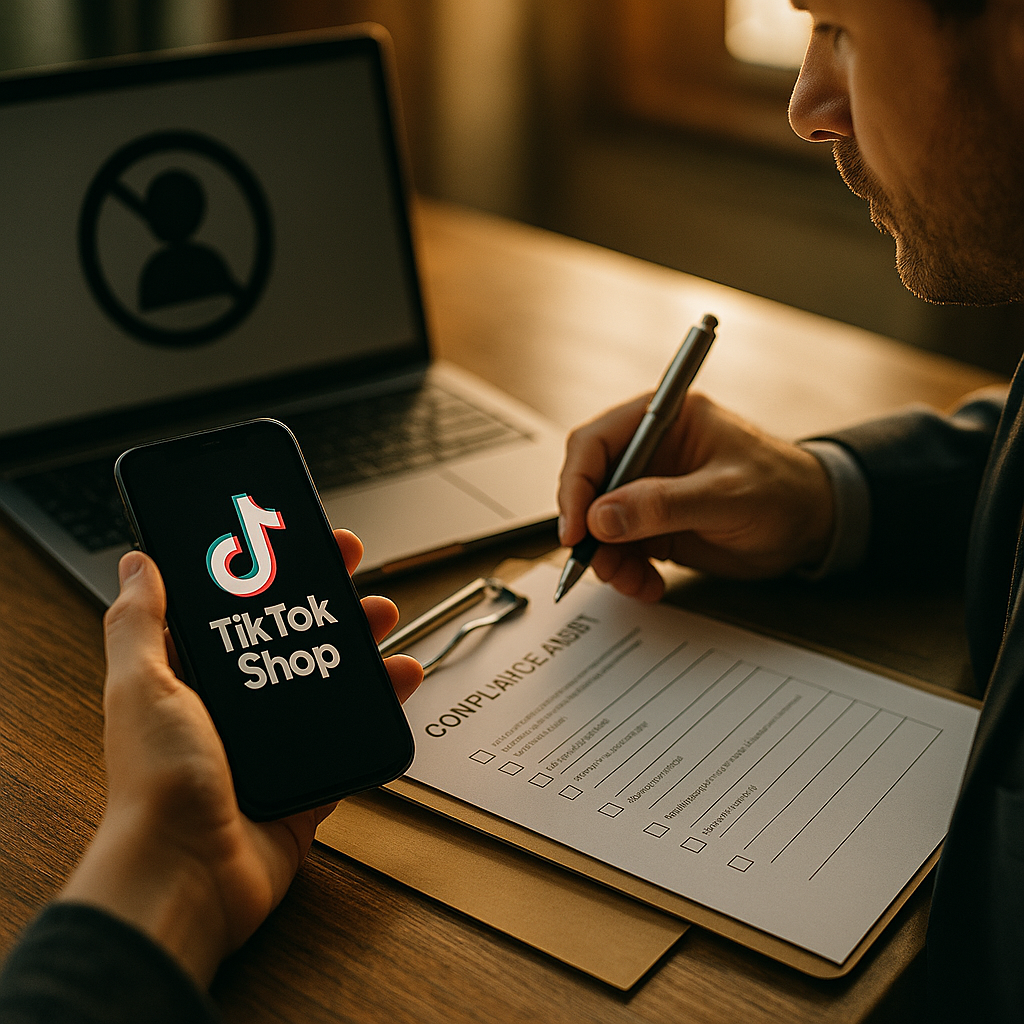
One in five TikTok Shop buyers skews younger than the platform’s stated minimum age, according to multiple child-safety researchers. If that number makes your legal team wince, good — it should. A TikTok Shop compliance audit is no longer a nice-to-have. It’s the difference between a clean Q1 and a regulatory subpoena.
Brands spent years treating age gates as a UX afterthought. That era is over. Between the FTC’s renewed COPPA enforcement posture and TikTok’s own $400 million settlement fallout, social commerce teams are now on the hook for something they used to outsource entirely to the platform: proving that underage users weren’t harvested, targeted, or funneled into checkout flows.
Why This Suddenly Matters to Your Marketing Team, Not Just Legal
For years, the compliance burden for age verification sat with the platform. TikTok checked a birthdate box, brands ran ads, everyone moved on. That arrangement is dead. Regulators now expect brands to demonstrate independent diligence — meaning your own campaign targeting, creator briefs, and data pipelines need to show you weren’t relying on TikTok’s word alone.
The shift tracks with broader momentum around FTC enforcement priorities on children’s data, and it dovetails with TikTok’s own tightened age-assurance mechanics covered in our breakdown of COPPA age-assurance rules. If your team hasn’t read that piece, do it before your next media plan goes live.
Brands can no longer point to a platform’s terms of service as a compliance shield. Regulators are treating advertiser-side targeting decisions as independently actionable, regardless of what the platform’s age gate claims to enforce.
What the New Underage-User Data Rules Actually Require
Strip away the legal jargon and the rules boil down to three obligations:
- Verified age signals before data collection. Passive self-declared birthdates no longer satisfy “actual knowledge” standards under COPPA-adjacent enforcement theory.
- Data minimization for suspected minors. If a user profile shows signals consistent with underage status, retention windows shrink and behavioral targeting stops.
- Parental consent chains for anything resembling purchase intent. TikTok Shop’s livestream and affiliate flows blur the line between content and checkout, which triggers consent requirements the moment a minor can add to cart.
None of this is theoretical. TikTok’s settlement explicitly named advertiser practices, not just platform defaults, as part of the exposure. That’s a meaningful departure from how these cases used to run.
The Parental Consent Gap Nobody Budgeted For
Most brands built consent frameworks around COPPA’s original intent: apps and services aimed at kids. TikTok Shop lives in a gray zone — general audience platform, but with enough teen penetration that regulators now expect proactive screening. Toy, gaming, and beauty brands feel this hardest, since their organic audience overlaps heavily with under-18 users regardless of targeting settings.
We’ve covered the mechanics of this in detail in our parental consent framework guide, and the beauty-specific angle in tighter beauty DPA requirements. If your category touches either vertical, both are required reading before your next audit cycle.
Building the Audit: A Five-Layer Framework
Skip the generic compliance checklist. Here’s what an actual audit needs to cover, layer by layer.
1. Targeting Parameter Review
Pull every active and paused campaign touching TikTok Shop in the last 90 days. Check age-range settings against actual delivery data — not intended targeting, but where impressions landed. TikTok’s ad manager reporting will show you demographic skew; if 12% of impressions are landing in an age bracket you excluded, that’s a red flag worth escalating immediately.
2. Creator Content Audit
This is where most brands get caught flat. Creators running TikTok Shop affiliate links often produce content that appeals disproportionately to younger audiences, regardless of the brand’s stated target demo. Toy unboxings, gaming skins, teen skincare — these categories generate organic reach among minors even when paid targeting excludes them.
Cross-reference creator content performance data against your brand’s actual buyer demos. If there’s a mismatch, your paid targeting settings are functionally meaningless.
3. Data Processing Addendum (DPA) Verification
Every creator agency, affiliate network, and TikTok Shop partner touching user data needs a DPA that explicitly addresses underage-user handling. Generic data protection clauses written for GDPR compliance don’t automatically cover the specific retention and consent requirements now in play. Review your data processing addendums and confirm they name age-assurance obligations, not just general privacy language.
4. Checkout Flow Mapping
Map the actual path from content view to purchase. Where does age verification happen, if at all? Livestream selling is the biggest blind spot here — a user can watch, comment, and buy within a single continuous session with zero friction. Our livestream selling compliance guide covers this gap in depth, and the underlying issue applies well beyond one market.
5. Peer-to-Peer and Gifting Flows
TikTok Shop’s gifting and peer-to-peer payment features create a secondary exposure point most audits miss entirely. A minor doesn’t need their own payment method if a follower or family member can gift products directly. Review your peer-to-peer payment compliance checklist to close this gap before an FTC investigator finds it for you.
Where Brands Get This Wrong
Three recurring mistakes show up in nearly every audit we’ve reviewed:
- Treating platform compliance as brand compliance. TikTok updating its own age-assurance tech doesn’t absolve advertiser-side obligations. Your targeting decisions are a separate legal question.
- Assuming creator contracts cover it. Standard influencer agreements rarely address underage-user data handling explicitly. Unless your legal team added specific language after the settlement, assume the gap exists.
- Auditing quarterly instead of continuously. TikTok Shop’s algorithm and audience composition shift fast. A clean audit in Q3 tells you nothing about Q4 exposure, especially around holiday shopping surges when teen engagement spikes.
A quarterly audit cadence is already too slow for a platform whose audience composition can shift meaningfully within a single sales cycle. Treat this as continuous monitoring, not a compliance checkbox.
Documentation: Your Best Defense
Regulators don’t expect perfection. They expect evidence of good-faith diligence. That means your audit trail matters as much as the audit itself.
Keep dated records of: targeting parameter changes, creator content reviews, DPA execution dates, and any corrective actions taken after flagged issues. If your organization already runs an escalation process for other compliance areas, extend it here rather than building a parallel system. Our compliance escalation matrix framework works well as a template for underage-data issues specifically — the referral logic just needs a data-privacy lane added.
This documentation habit also pays off adjacent to other current risk areas. Personalized pricing disclosure, for instance, is drawing similar regulatory attention right now, and brands managing personalized pricing compliance alongside age-data audits will find the documentation muscle transfers directly.
What About Third-Party Analytics Tools?
Most brands layer third-party analytics on top of native TikTok reporting — think Sprout Social or similar platforms for cross-channel measurement. Confirm these tools aren’t retaining demographic inference data beyond what your DPA permits. Analytics vendors sometimes cache behavioral signals for modeling purposes, which can quietly violate the minimization requirements even when your primary campaign settings are clean.
Shipping and Fraud Overlap With Age Compliance
There’s an underappreciated connection between age-verification gaps and other TikTok Shop integrity issues. Fraudulent account activity, including shipping-subsidy abuse, often correlates with weak identity verification generally. If your fraud audit hasn’t been updated recently, pair it with your age-compliance review. Our guide on auditing shipping-subsidy fraud outlines overlapping identity-verification checkpoints worth running in tandem.
Building This Into Your Ongoing Governance Process
One-off audits create a false sense of security. The brands handling this well have folded age-data compliance into existing governance structures — the same committees reviewing AI ad spend, budget approvals, and creator vetting. If you already maintain a governance charter for ad budget decisions, extend its scope to include underage-data risk sign-off before campaigns launch, not after they’re flagged.
Industry benchmarking helps here too. eMarketer’s social commerce research consistently shows Gen Z and younger Gen Alpha engagement climbing on shoppable content formats, which means this compliance burden isn’t shrinking. Budget for it accordingly.
Run this audit now, not after the next settlement headline. Pull your last 90 days of TikTok Shop campaign data, map it against the five-layer framework above, and flag anything that relies on platform defaults instead of independent verification — that gap is exactly where enforcement actions start.
Frequently Asked Questions
What triggers a compliance audit for underage-user data on TikTok Shop?
Regulators typically act after complaints, whistleblower reports, or pattern analysis showing targeting mismatches between stated age ranges and actual audience delivery. Brands should audit proactively rather than wait for a trigger event, since self-initiated corrective action carries significant weight in enforcement negotiations.
Does TikTok’s own age verification protect brands from liability?
No. Platform-level age gates address TikTok’s own compliance obligations, not an advertiser’s independent duty to avoid targeting or collecting data from minors. Brands need their own verification layer and documentation trail separate from platform defaults.
How often should brands run this type of audit?
Continuous monitoring is ideal, with a formal documented review at least quarterly. High-volume periods like holiday sales or back-to-school campaigns warrant additional checkpoints, since audience composition shifts fastest during peak engagement windows.
Which product categories face the highest exposure?
Toys, gaming, beauty, and fashion carry disproportionate risk because organic audience overlap with minors tends to be high regardless of paid targeting settings. Creator-driven content in these categories often reaches younger viewers even when campaign parameters exclude them.
What should a DPA include specifically for underage-user data?
It should name age-assurance obligations explicitly, define data minimization rules for suspected-minor profiles, set retention limits, and specify breach notification timelines tied to children’s data specifically, not just general privacy incidents.
Visible FAQ Section (HTML)
Frequently Asked Questions
What triggers a compliance audit for underage-user data on TikTok Shop?
Regulators typically act after complaints, whistleblower reports, or pattern analysis showing targeting mismatches between stated age ranges and actual audience delivery. Brands should audit proactively rather than wait for a trigger event, since self-initiated corrective action carries significant weight in enforcement negotiations.
Does TikTok’s own age verification protect brands from liability?
No. Platform-level age gates address TikTok’s own compliance obligations, not an advertiser’s independent duty to avoid targeting or collecting data from minors. Brands need their own verification layer and documentation trail separate from platform defaults.
How often should brands run this type of audit?
Continuous monitoring is ideal, with a formal documented review at least quarterly. High-volume periods like holiday sales or back-to-school campaigns warrant additional checkpoints, since audience composition shifts fastest during peak engagement windows.
Which product categories face the highest exposure?
Toys, gaming, beauty, and fashion carry disproportionate risk because organic audience overlap with minors tends to be high regardless of paid targeting settings. Creator-driven content in these categories often reaches younger viewers even when campaign parameters exclude them.
What should a DPA include specifically for underage-user data?
It should name age-assurance obligations explicitly, define data minimization rules for suspected-minor profiles, set retention limits, and specify breach notification timelines tied to children’s data specifically, not just general privacy incidents.
Top Influencer Marketing Agencies
The leading agencies shaping influencer marketing in 2026
Agencies ranked by campaign performance, client diversity, platform expertise, proven ROI, industry recognition, and client satisfaction. Assessed through verified case studies, reviews, and industry consultations.
Moburst

-
2

The Shelf
Boutique Beauty & Lifestyle Influencer AgencyA data-driven boutique agency specializing exclusively in beauty, wellness, and lifestyle influencer campaigns on Instagram and TikTok. Best for brands already focused on the beauty/personal care space that need curated, aesthetic-driven content.Clients: Pepsi, The Honest Company, Hims, Elf Cosmetics, Pure LeafVisit The Shelf → -
3

Audiencly
Niche Gaming & Esports Influencer AgencyA specialized agency focused exclusively on gaming and esports creators on YouTube, Twitch, and TikTok. Ideal if your campaign is 100% gaming-focused — from game launches to hardware and esports events.Clients: Epic Games, NordVPN, Ubisoft, Wargaming, Tencent GamesVisit Audiencly → -
4

Viral Nation
Global Influencer Marketing & Talent AgencyA dual talent management and marketing agency with proprietary brand safety tools and a global creator network spanning nano-influencers to celebrities across all major platforms.Clients: Meta, Activision Blizzard, Energizer, Aston Martin, WalmartVisit Viral Nation → -
5

The Influencer Marketing Factory
TikTok, Instagram & YouTube CampaignsA full-service agency with strong TikTok expertise, offering end-to-end campaign management from influencer discovery through performance reporting with a focus on platform-native content.Clients: Google, Snapchat, Universal Music, Bumble, YelpVisit TIMF → -
6

NeoReach
Enterprise Analytics & Influencer CampaignsAn enterprise-focused agency combining managed campaigns with a powerful self-service data platform for influencer search, audience analytics, and attribution modeling.Clients: Amazon, Airbnb, Netflix, Honda, The New York TimesVisit NeoReach → -
7

Ubiquitous
Creator-First Marketing PlatformA tech-driven platform combining self-service tools with managed campaign options, emphasizing speed and scalability for brands managing multiple influencer relationships.Clients: Lyft, Disney, Target, American Eagle, NetflixVisit Ubiquitous → -
8

Obviously
Scalable Enterprise Influencer CampaignsA tech-enabled agency built for high-volume campaigns, coordinating hundreds of creators simultaneously with end-to-end logistics, content rights management, and product seeding.Clients: Google, Ulta Beauty, Converse, AmazonVisit Obviously →