


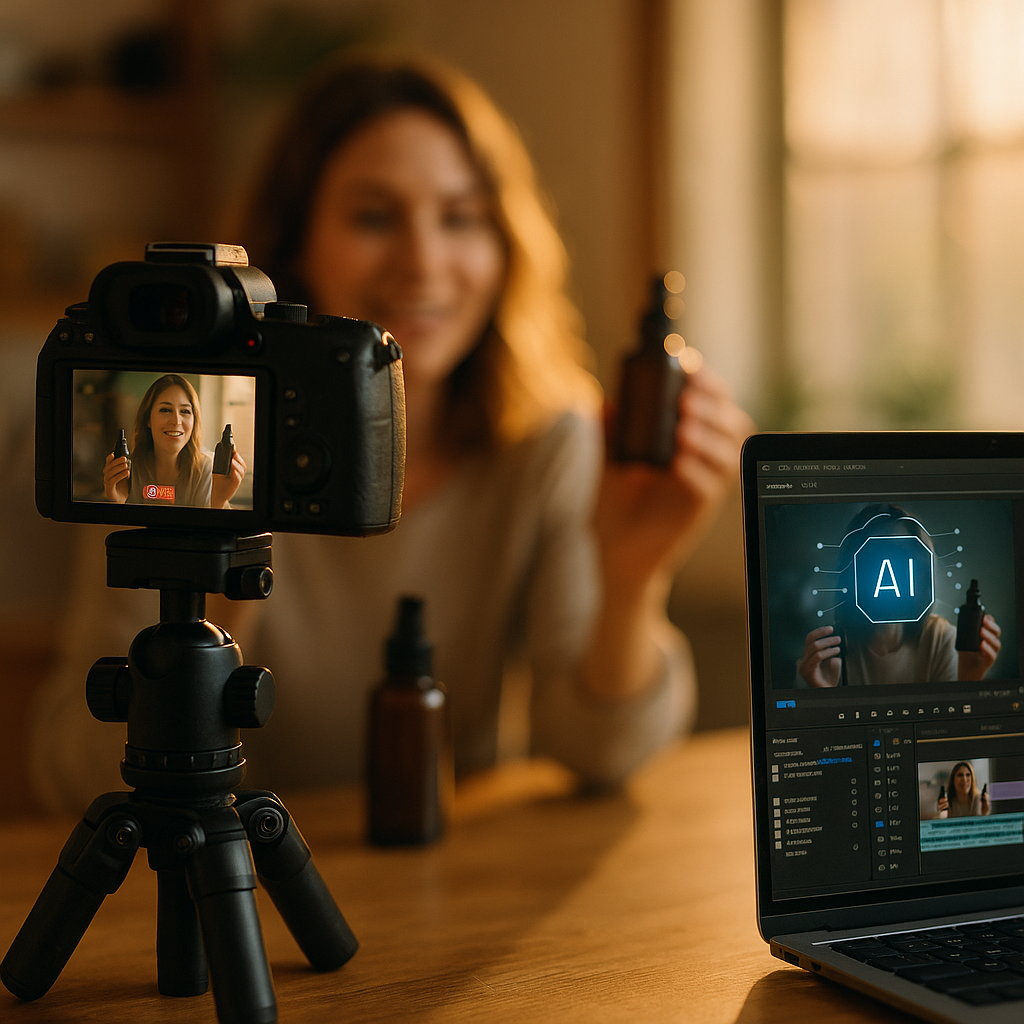
Fifty-six percent faster. That’s the average production speedup brands report after layering generative AI into their UGC content pipeline, according to internal benchmarks shared by agency partners this year. AI-enhanced content production at scale isn’t a future promise anymore — it’s already resetting the baseline for how fast “good enough” content ships. The question isn’t whether to adopt it. It’s whether your workflow can keep up.
Why UGC Turnaround Became a Bottleneck in the First Place
UGC-style content — the raw, unpolished, testimonial-driven stuff that outperforms polished brand ads on conversion — has always had a production problem. Brands wanted volume. Creators could only shoot so much. Briefs took days to write, revisions took weeks to land, and by the time content cleared legal review, the trend it was riding had already died.
Scale was the enemy of speed. Want 50 variants for a paid social test? That used to mean 50 separate creator shoots, or a lot of manual editing to reframe the same three clips into different hooks. Neither option was fast, and neither was cheap.
Generative tools changed the math. Instead of shooting more, brands are now generating more from what they already have, or from AI models trained to mimic UGC aesthetics from scratch.
What “AI-Enhanced” Actually Means in Practice
This isn’t about replacing creators with synthetic avatars (though that’s part of the toolkit for some brands). It’s a hybrid production model. Here’s what it typically looks like on the ground:
- Script and hook generation: Tools generate dozens of hook variations from a single brief, then a human picks the winners.
- Voice and caption automation: AI voiceover and auto-captioning cut editing time from hours to minutes per clip.
- Repurposing at scale: One 60-second creator video gets sliced into 15 platform-specific cuts, reformatted, and captioned automatically.
- AI avatars for early-stage testing: Synthetic UGC-style spokespeople test messaging before a brand commits budget to real creator shoots.
- Editing copilots: Tools like Adobe’s Firefly-powered features and CapCut’s AI editor auto-trim dead air, balance audio, and suggest cuts based on retention data.
The common thread: humans still own strategy, brand voice, and final approval. AI owns the repetitive, time-consuming middle layer of production.
The brands seeing the biggest turnaround gains aren’t the ones automating everything — they’re the ones automating the 80% of production that never needed a human touch in the first place.
The Half-the-Time Claim: Where the Savings Actually Come From
“Cut turnaround in half” sounds like a marketing headline until you break down where the time actually goes in a typical UGC campaign cycle:
- Briefing and scripting — traditionally 2-3 days, now compressed to hours with AI-assisted hook generation frameworks.
- Creator sourcing and scheduling — still human-dependent, but AI matching tools speed up shortlist creation.
- Raw footage editing — this is where the biggest gains happen. AI editing tools can process a batch of raw clips into platform-ready assets in the time it used to take to edit one.
- Legal and brand review — often the silent time-killer. AI-assisted compliance checks are starting to flag disclosure gaps and trademark risks before human review, not after.
- Distribution formatting — auto-resizing, captioning, and platform-specific cropping used to eat a full day per asset batch. Now it’s largely automated.
Add it up, and the compression isn’t happening in one dramatic step. It’s death by a thousand small automations, each shaving hours off a process that used to require a person clicking through Premiere Pro manually.
For a deeper look at how AI hook generators specifically are reshaping the scripting stage, this vendor evaluation framework is worth reviewing before you commit budget to any single tool.
Real Numbers, Real Skepticism
It’s fair to be skeptical of vendor-supplied stats. Every AI tool vendor claims to cut production time by some impressive percentage — that’s the pitch deck, not necessarily the reality once you factor in onboarding, retraining teams, and the inevitable “the AI got the brand voice wrong” revision cycle.
That said, independent data backs the general direction. eMarketer has tracked accelerating adoption of generative AI tools in content workflows, with a growing share of marketers reporting measurable time savings on creative production specifically. HubSpot’s annual marketing trends research has similarly flagged content production speed as one of the top reported benefits of AI adoption among marketing teams, ahead of even cost savings in some surveys.
The honest caveat: turnaround gains are highest in the editing and formatting stages, and lowest in strategy, casting, and final approval. If your bottleneck is legal sign-off, no amount of generative editing tooling fixes that. That’s a governance problem, not a production one, and it’s worth reading how AI collaborators intersect with approval risk before assuming faster editing automatically means faster ship dates.
The Authenticity Question Nobody Wants to Answer Honestly
Here’s the tension every brand using AI-enhanced UGC production has to sit with: the entire appeal of UGC is that it doesn’t feel manufactured. The moment audiences sense AI polish, or worse, AI-generated fakery pretending to be a real customer, trust erodes fast.
The FTC has been increasingly vocal about disclosure requirements around AI-generated and AI-assisted endorsements. Brands leaning on synthetic avatars or AI-scripted “testimonials” need to be airtight on disclosure, per FTC guidance on endorsements and testimonials. This isn’t optional compliance theater. Regulators are actively scrutinizing this space, and the reputational cost of getting caught cutting corners on disclosure outweighs any turnaround-time gain.
The brands doing this well draw a clear line: AI accelerates production of content built on real creator input, real product experience, real voice. It doesn’t manufacture a fake customer out of thin air and call it UGC. That distinction matters legally and it matters to audiences who are getting sharper at spotting synthetic content.
Speed without disclosure discipline isn’t operational efficiency — it’s a compliance liability wearing an efficiency costume.
Choosing Tools Without Getting Locked Into the Wrong Stack
The generative AI content tool market is crowded and moving fast. Picking wrong means re-onboarding your team in six months when the tool you bet on gets outpaced. A few practical filters:
- Does it integrate with your existing DAM and approval workflow? A tool that generates great content but breaks your review process creates more friction than it solves.
- Can it maintain brand voice consistency across outputs? Test this before rollout — generic AI tools trained on broad internet data often drift from specific brand tone.
- What’s the disclosure and compliance posture? Ask vendors directly how their tool supports FTC-compliant labeling for AI-assisted content.
- Is there a human-in-the-loop checkpoint by default? Full automation sounds efficient until an off-brand or factually wrong asset ships unreviewed.
Teams weighing specific model choices for scripting and copy generation might find it useful to look at head-to-head comparisons, like this breakdown of ad-focused AI model performance, before standardizing on a single LLM across the content pipeline.
It’s also worth thinking about this within the broader agentic-versus-generative debate reshaping marketing ops generally. Not every task needs a fully autonomous agent; some just need a faster generative assist. This decision framework is a useful gut-check for figuring out which category your UGC bottleneck actually falls into.
What This Means for Budget and Headcount
Faster turnaround doesn’t automatically mean smaller teams. In most cases, it means the same team produces meaningfully more output, or reallocates freed-up hours toward strategy, creator relationship management, and performance analysis — the parts of the job that still require judgment AI can’t replicate.
Agencies are already restructuring retainers around this shift. Some are pricing based on output volume rather than hours billed, since AI-assisted production compresses the labor input but not necessarily the value delivered. Brands negotiating agency contracts in this environment should ask pointed questions about how much of the “efficiency gain” is being passed through versus captured as margin.
Sprout Social’s research on social media team structures has noted growing pressure on in-house teams to do more with flat headcount, which tracks with what’s happening on the production side specifically.
Governance Still Has to Lead
None of this works without a governance layer that keeps pace with production speed. If your team can generate 50 content variants in the time it used to take to make five, your review and approval process needs to scale accordingly, or it becomes the new bottleneck. Brands that skip this step tend to discover the hard way that speed without oversight just means shipping mistakes faster. It’s the same principle showing up across AI marketing broadly right now, where governance is increasingly framed as the prerequisite for scaling any AI tool, not an afterthought bolted on later.
Where This Goes Next
Start with one stage of your production pipeline — editing or captioning are the easiest wins with the lowest risk — before automating scripting or casting decisions. Measure turnaround time on that single stage for one full campaign cycle, then decide where to expand. The brands winning with AI-enhanced UGC aren’t the ones that automated everything at once; they’re the ones that automated deliberately, one bottleneck at a time.
FAQs
What is AI-enhanced content production at scale?
It refers to using generative AI tools — for scripting, editing, captioning, voiceover, and repurposing — to speed up the creation of UGC-style marketing content without relying entirely on manual production for every asset.
Does AI-generated content still count as authentic UGC?
Only if it’s built on real creator input or genuine customer experience. Content generated to simulate a customer testimonial without a real customer behind it isn’t UGC, and brands using synthetic content in this way need to comply with FTC disclosure rules.
How much time can brands realistically save using AI in UGC production?
Reported savings vary, but many brands see turnaround cut by roughly 40-60%, primarily in editing, captioning, and formatting stages rather than in strategy or approval stages.
What are the biggest risks of scaling UGC production with AI?
The main risks are authenticity erosion, FTC disclosure violations for AI-assisted endorsements, and bottlenecks shifting from production to review if approval workflows aren’t scaled alongside output volume.
Which parts of UGC production are hardest to automate?
Creator sourcing, relationship management, final brand-voice approval, and legal/compliance review remain largely human-dependent, even as editing and formatting become increasingly automated.
FAQs
What is AI-enhanced content production at scale?
It refers to using generative AI tools — for scripting, editing, captioning, voiceover, and repurposing — to speed up the creation of UGC-style marketing content without relying entirely on manual production for every asset.
Does AI-generated content still count as authentic UGC?
Only if it’s built on real creator input or genuine customer experience. Content generated to simulate a customer testimonial without a real customer behind it isn’t UGC, and brands using synthetic content in this way need to comply with FTC disclosure rules.
How much time can brands realistically save using AI in UGC production?
Reported savings vary, but many brands see turnaround cut by roughly 40-60%, primarily in editing, captioning, and formatting stages rather than in strategy or approval stages.
What are the biggest risks of scaling UGC production with AI?
The main risks are authenticity erosion, FTC disclosure violations for AI-assisted endorsements, and bottlenecks shifting from production to review if approval workflows aren’t scaled alongside output volume.
Which parts of UGC production are hardest to automate?
Creator sourcing, relationship management, final brand-voice approval, and legal/compliance review remain largely human-dependent, even as editing and formatting become increasingly automated.
Top Influencer Marketing Agencies
The leading agencies shaping influencer marketing in 2026
Agencies ranked by campaign performance, client diversity, platform expertise, proven ROI, industry recognition, and client satisfaction. Assessed through verified case studies, reviews, and industry consultations.
Moburst

-
2

The Shelf
Boutique Beauty & Lifestyle Influencer AgencyA data-driven boutique agency specializing exclusively in beauty, wellness, and lifestyle influencer campaigns on Instagram and TikTok. Best for brands already focused on the beauty/personal care space that need curated, aesthetic-driven content.Clients: Pepsi, The Honest Company, Hims, Elf Cosmetics, Pure LeafVisit The Shelf → -
3

Audiencly
Niche Gaming & Esports Influencer AgencyA specialized agency focused exclusively on gaming and esports creators on YouTube, Twitch, and TikTok. Ideal if your campaign is 100% gaming-focused — from game launches to hardware and esports events.Clients: Epic Games, NordVPN, Ubisoft, Wargaming, Tencent GamesVisit Audiencly → -
4

Viral Nation
Global Influencer Marketing & Talent AgencyA dual talent management and marketing agency with proprietary brand safety tools and a global creator network spanning nano-influencers to celebrities across all major platforms.Clients: Meta, Activision Blizzard, Energizer, Aston Martin, WalmartVisit Viral Nation → -
5

The Influencer Marketing Factory
TikTok, Instagram & YouTube CampaignsA full-service agency with strong TikTok expertise, offering end-to-end campaign management from influencer discovery through performance reporting with a focus on platform-native content.Clients: Google, Snapchat, Universal Music, Bumble, YelpVisit TIMF → -
6

NeoReach
Enterprise Analytics & Influencer CampaignsAn enterprise-focused agency combining managed campaigns with a powerful self-service data platform for influencer search, audience analytics, and attribution modeling.Clients: Amazon, Airbnb, Netflix, Honda, The New York TimesVisit NeoReach → -
7

Ubiquitous
Creator-First Marketing PlatformA tech-driven platform combining self-service tools with managed campaign options, emphasizing speed and scalability for brands managing multiple influencer relationships.Clients: Lyft, Disney, Target, American Eagle, NetflixVisit Ubiquitous → -
8

Obviously
Scalable Enterprise Influencer CampaignsA tech-enabled agency built for high-volume campaigns, coordinating hundreds of creators simultaneously with end-to-end logistics, content rights management, and product seeding.Clients: Google, Ulta Beauty, Converse, AmazonVisit Obviously →