


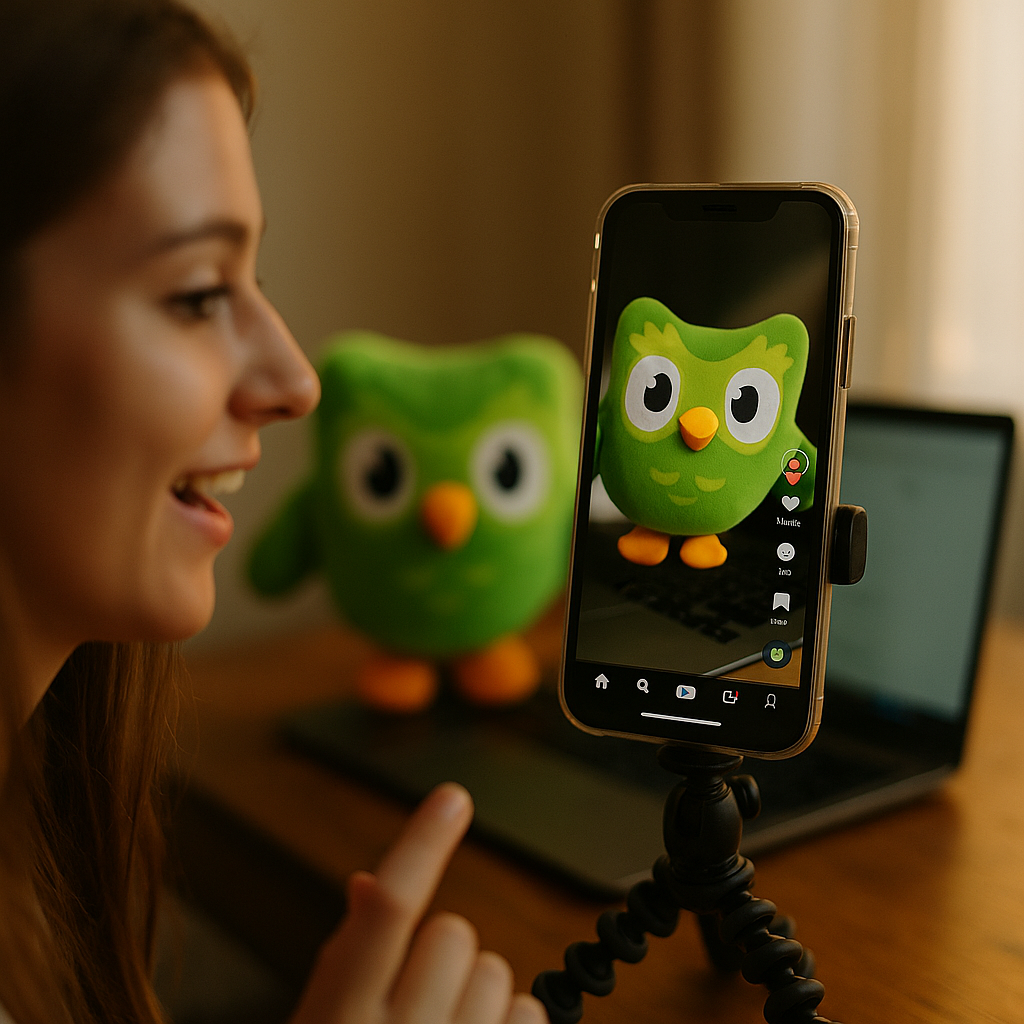
One mascot. Zero paid media budget on most posts. Three straight years atop the App Store education charts. If you think that’s luck, you haven’t looked at Duolingo’s operating model. This Duolingo TikTok case study breaks down how a green owl turned weekly trend-jacking into a durable growth engine, and what brand marketers can actually steal from it.
The Numbers Behind the Noise
Duolingo isn’t just viral, it’s structurally dominant. The app has held top rankings in the education category on both the App Store and Google Play for consecutive years, with parent company Duolingo Inc. regularly citing tens of millions of daily active users in earnings calls. Its TikTok account has amassed followers in the range of low double-digit millions, but the follower count almost undersells the story. What matters is repeatability: the brand doesn’t produce one viral hit a quarter, it produces one nearly every week.
That consistency is the actual case study. Marketers obsess over the one-hit viral moment, the Stanley Cup sellout or the Feastables unboxing that breaks the algorithm. Duolingo optimized for something harder: a cadence. That’s a fundamentally different operating problem than chasing a single spike, and it’s why this example belongs alongside other structured plays like Stanley’s 400 micro-creator waves in any serious playbook on sustained growth.
Duolingo doesn’t chase virality once a quarter. It manufactures the conditions for virality every single week, then lets the algorithm pick the winner.
Why Trend-Jacking Usually Fails (and Why the Owl Is Different)
Most brand social teams treat trend-jacking as reactive improv. Someone spots a sound trending on TikTok, panics, slaps the logo on a template, ships it 48 hours late. The result: content that reads as try-hard, because it is. Audiences smell corporate thirst instantly.
Duolingo’s team, led historically by a small in-house social crew rather than a big agency retainer, built something closer to a newsroom desk than a marketing department. They monitor trending sounds and formats continuously, not weekly. They have pre-approved creative latitude to make the mascot do borderline-unhinged things (kidnapping storylines, thirst traps, fake meltdowns) without a six-person approval chain. Speed is the entire moat. If you’re waiting on legal and three rounds of brand-safety review, the trend is dead before you post.
That operational freedom is the part most brands can’t replicate, not because they lack creativity, but because they lack the governance structure to move that fast without risk exposure. It’s worth comparing this to how the owl mascot drives virality through a character-first lens rather than a product-first one. The owl isn’t selling language lessons in most videos. It’s selling a personality audiences want to follow, which happens to be attached to an app.
The Mascot as a Risk-Managed Creative Vehicle
Here’s the underrated part: the owl is also a compliance hedge. Because Duo is a fictional character, not a paid creator or employee, Duolingo sidesteps a huge chunk of the disclosure and contract risk that comes with human-fronted influencer campaigns. There’s no FTC endorsement disclosure debate to manage in the way there would be with a paid creator post, because the “creator” is owned brand IP. Compare that to the operational headaches brands face after enforcement actions, like the lessons detailed in Poppi’s post-settlement trust rebuild. Owning your mascot outright means owning your risk profile outright too.
That doesn’t mean zero governance. Duolingo still has to navigate platform community guidelines, brand safety on edgy jokes, and cultural sensitivity across markets where the app operates. But the risk surface is narrower and more controllable than a roster of external creators posting on their own accounts.
The Weekly Trend-Jacking Machine, Deconstructed
Strip away the memes and you find a fairly disciplined production loop. It looks something like this:
- Continuous trend scanning: A dedicated social team tracks trending audio, formats, and cultural moments across TikTok in near real time, not on a weekly planning cadence.
- Rapid creative greenlighting: Concepts get approved in hours, not weeks, because the team has standing authority over tone and format within known brand guardrails.
- Low-fidelity production: Most winning videos are shot fast, on a phone, with minimal polish. Overproduction actually hurts trend-jacking content because it breaks the native feel of the platform.
- Cross-platform repurposing: Winning TikTok formats get adapted for Instagram Reels and YouTube Shorts, extending reach without rebuilding creative from scratch.
- Real-time performance reading: The team watches watch-time and completion metrics closely and kills or leans into formats based on early signal, similar in spirit to the lessons in why watch time broke this brand’s creator briefs.
None of this requires a nine-figure budget. It requires a team empowered to move fast and a brand character flexible enough to absorb whatever cultural moment is happening that week. Most brands have neither the speed nor the flexibility. Duolingo built both on purpose.
From Weekly Virality to Three Years of App Store Leadership
Trend-jacking alone doesn’t explain three years of category leadership. Virality creates awareness spikes; retention and product quality convert that awareness into ranking dominance. Duolingo’s app store position holds because the top-of-funnel noise consistently feeds a product with genuinely sticky mechanics: streaks, gamified lessons, notification nudges that occasionally reference the same unhinged owl personality from the videos.
That’s the real unlock for brand strategists: the content and the product experience are telling the same joke. Someone who watches Duo threaten their sleep schedule on TikTok, then opens the app and gets a push notification in the same voice, experiences brand consistency, not whiplash. Contrast that with brands where the social team runs a completely different personality than the product or customer service team. That disconnect is why so many viral moments fail to convert into retained users or repeat purchasers, a pattern also visible in how Graza turned one TikTok format into retail sell-through by keeping brand voice consistent from video to shelf.
Virality gets you the download. Product experience and brand-voice consistency are what get you three years on top of the charts.
What Brand Marketers Can Actually Take From This
You almost certainly don’t have Duolingo’s audience size, brand recognition, or app category tailwinds. But the operating principles transfer regardless of budget tier:
- Build a fast-approval lane for reactive content. If every piece of trend-jacking content needs full campaign-level sign-off, you’ve already lost the trend cycle.
- Invest in a consistent brand character, not just a logo. Whether it’s a mascot, a founder persona, or a recurring voice, consistency across channels compounds trust faster than one-off viral swings.
- Match content cadence to platform expectations. A monthly posting rhythm doesn’t compete on TikTok. Weekly, or more frequent, output with fast iteration is closer to the baseline for organic reach according to data cited by Sprout Social on platform algorithm behavior.
- Track completion and watch-time metrics, not just views. Platforms increasingly weight retention signals in distribution, a shift eMarketer has flagged repeatedly in short-form video reporting.
- Align social voice with product experience. The gap between what your content promises and what your app or product delivers is where retention leaks out.
None of this is exotic. It’s operational discipline applied to a channel most brands still treat as an afterthought or an intern’s side project. Compare it to how nano and micro-creator programs have scaled sustained sales lifts through similarly disciplined cadence and testing, as seen in Curology’s micro-influencer program and its 9x sales lift. Cadence and consistency beat one-off spend almost every time.
Where Brands Get This Wrong
The most common failure mode is treating trend-jacking as a tactic instead of a system. A brand posts one clever trend-riff, it does well, leadership asks for “more of that,” and the team scrambles to recreate lightning without the underlying process that made the first one work. Then the format goes stale, engagement drops, and someone concludes “TikTok doesn’t work for us.” It wasn’t the platform. It was the absence of a repeatable production and approval loop.
The second failure mode is authenticity mismatch. Brands try to borrow Duolingo’s unhinged tone without the underlying permission structure or brand fit. A financial services company doing “chaotic mascot” content reads as confused, not funny. Tone has to match brand category and audience expectations, something worth benchmarking against platform-native guidance from TikTok’s own advertiser resources before greenlighting a copycat strategy.
Building Your Own Trend-Jacking Cadence
Start smaller than you think you need to. Pick one recurring format, give a small team same-day approval authority within clear guardrails, and commit to a weekly cadence for at least a full quarter before judging results. Track completion rate and follower growth, not just impressions. If a mascot or recurring character makes sense for your brand, treat it with the same investment and continuity you’d give a hired spokesperson, because functionally, that’s what it becomes.
Frequently Asked Questions
What made Duolingo’s TikTok strategy different from typical brand trend-jacking?
Speed and governance. Duolingo’s social team had standing authority to approve and post reactive content within hours, not weeks, which let them consistently ride trends while other brands were still in review cycles.
Can smaller brands replicate the Duolingo owl approach without a big budget?
Yes, the core mechanics (fast approval, consistent character, weekly cadence, low-fidelity production) don’t require a large budget. They require organizational speed and a willingness to let a small team take creative risks.
Why does a fictional mascot reduce compliance risk compared to human creators?
A brand-owned mascot eliminates the endorsement disclosure and contract complexity that comes with paid human creators, since there’s no third-party endorser relationship the FTC would evaluate the same way.
How does trend-jacking content actually help App Store rankings?
It doesn’t directly move rankings, but it drives sustained download volume and brand search interest, both of which support category ranking algorithms over time when paired with strong retention metrics.
What metric should brands track to know if their trend-jacking is working?
Completion rate and watch time matter more than raw view counts, since most short-form platforms weight retention signals heavily in how widely content gets distributed.
Frequently Asked Questions
What made Duolingo’s TikTok strategy different from typical brand trend-jacking?
Speed and governance. Duolingo’s social team had standing authority to approve and post reactive content within hours, not weeks, which let them consistently ride trends while other brands were still in review cycles.
Can smaller brands replicate the Duolingo owl approach without a big budget?
Yes, the core mechanics (fast approval, consistent character, weekly cadence, low-fidelity production) don’t require a large budget. They require organizational speed and a willingness to let a small team take creative risks.
Why does a fictional mascot reduce compliance risk compared to human creators?
A brand-owned mascot eliminates the endorsement disclosure and contract complexity that comes with paid human creators, since there’s no third-party endorser relationship the FTC would evaluate the same way.
How does trend-jacking content actually help App Store rankings?
It doesn’t directly move rankings, but it drives sustained download volume and brand search interest, both of which support category ranking algorithms over time when paired with strong retention metrics.
What metric should brands track to know if their trend-jacking is working?
Completion rate and watch time matter more than raw view counts, since most short-form platforms weight retention signals heavily in how widely content gets distributed.
Top Influencer Marketing Agencies
The leading agencies shaping influencer marketing in 2026
Agencies ranked by campaign performance, client diversity, platform expertise, proven ROI, industry recognition, and client satisfaction. Assessed through verified case studies, reviews, and industry consultations.
Moburst

-
2

The Shelf
Boutique Beauty & Lifestyle Influencer AgencyA data-driven boutique agency specializing exclusively in beauty, wellness, and lifestyle influencer campaigns on Instagram and TikTok. Best for brands already focused on the beauty/personal care space that need curated, aesthetic-driven content.Clients: Pepsi, The Honest Company, Hims, Elf Cosmetics, Pure LeafVisit The Shelf → -
3

Audiencly
Niche Gaming & Esports Influencer AgencyA specialized agency focused exclusively on gaming and esports creators on YouTube, Twitch, and TikTok. Ideal if your campaign is 100% gaming-focused — from game launches to hardware and esports events.Clients: Epic Games, NordVPN, Ubisoft, Wargaming, Tencent GamesVisit Audiencly → -
4

Viral Nation
Global Influencer Marketing & Talent AgencyA dual talent management and marketing agency with proprietary brand safety tools and a global creator network spanning nano-influencers to celebrities across all major platforms.Clients: Meta, Activision Blizzard, Energizer, Aston Martin, WalmartVisit Viral Nation → -
5

The Influencer Marketing Factory
TikTok, Instagram & YouTube CampaignsA full-service agency with strong TikTok expertise, offering end-to-end campaign management from influencer discovery through performance reporting with a focus on platform-native content.Clients: Google, Snapchat, Universal Music, Bumble, YelpVisit TIMF → -
6

NeoReach
Enterprise Analytics & Influencer CampaignsAn enterprise-focused agency combining managed campaigns with a powerful self-service data platform for influencer search, audience analytics, and attribution modeling.Clients: Amazon, Airbnb, Netflix, Honda, The New York TimesVisit NeoReach → -
7

Ubiquitous
Creator-First Marketing PlatformA tech-driven platform combining self-service tools with managed campaign options, emphasizing speed and scalability for brands managing multiple influencer relationships.Clients: Lyft, Disney, Target, American Eagle, NetflixVisit Ubiquitous → -
8

Obviously
Scalable Enterprise Influencer CampaignsA tech-enabled agency built for high-volume campaigns, coordinating hundreds of creators simultaneously with end-to-end logistics, content rights management, and product seeding.Clients: Google, Ulta Beauty, Converse, AmazonVisit Obviously →