


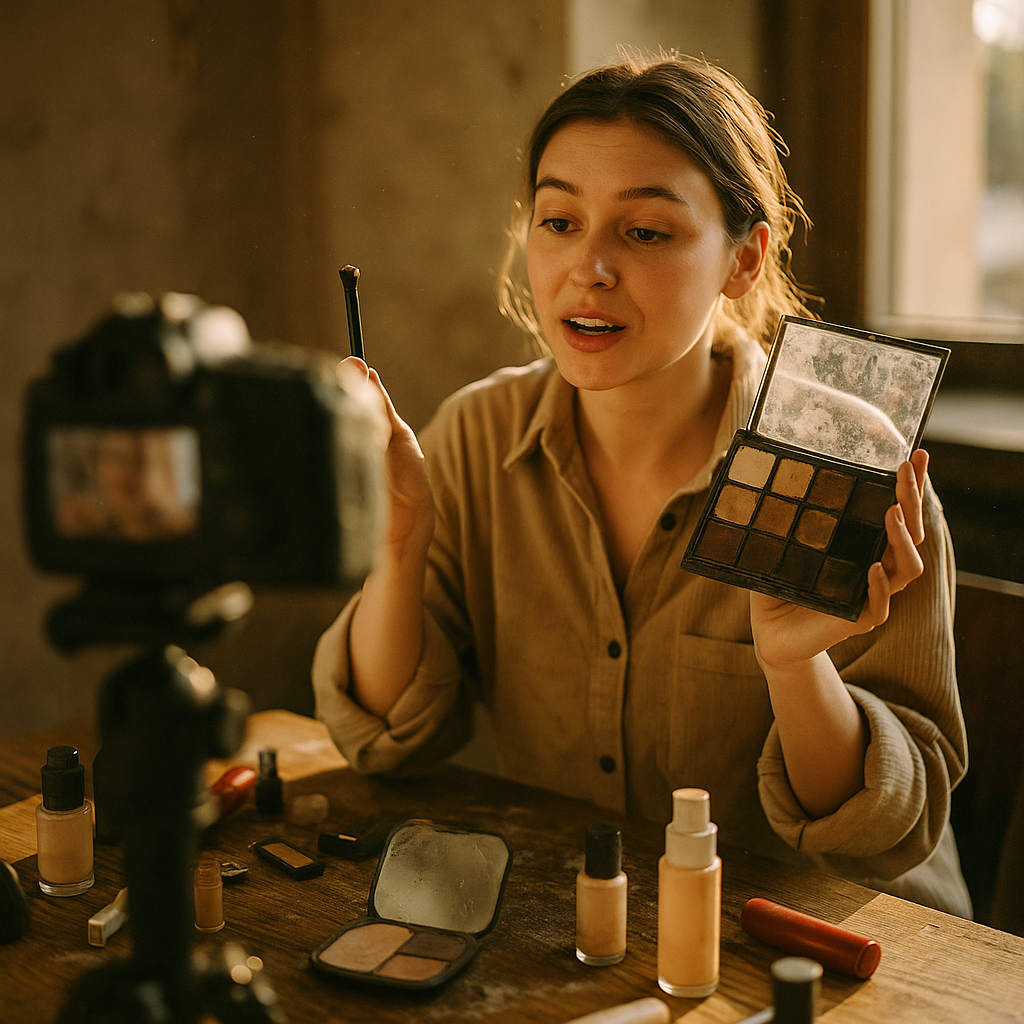
Vogue put an iPhone-shot, barely-edited creator video next to a six-figure editorial shoot, and the messy one got the engagement. That single editorial decision from one of fashion’s most polished institutions says everything about where brand content is headed. The messier content format, the snacky, unfiltered, niche-creator style that looks like it was made in a bedroom, isn’t a fringe experiment anymore. It’s becoming the default expectation for how brands earn attention, and marketers who keep greenlighting glossy campaign videos are about to find themselves paying more for less.
Why a Legacy Fashion Brand Betting on Imperfection Matters
Vogue didn’t stumble into this. The publication has spent over a century defining “polished.” When a brand with that pedigree starts publishing raw, lo-fi creator content next to its usual glossy fare, that’s not a stylistic whim. It’s a response to data. Audiences, especially those under 35, have developed something close to an allergic reaction to anything that smells like an ad. Sproutsocial’s own research on social media consumer behavior has repeatedly shown that authenticity outranks production value as a trust driver.
What Vogue understood, and what B2B marketers need to internalize, is that “premium” no longer means “produced.” Premium now means relevant, specific, and believable. A niche creator talking directly into a phone camera about why a fabric feels wrong can outperform a $50,000 shoot, because the viewer trusts the messenger more than the message.
The Snacky Format, Defined
“Snacky” content is short, low-friction, and built for scroll speed. Think 15 to 45 second clips that feel like a text from a friend rather than a brand asset. It’s rarely scripted word-for-word, often shot in one take, and frequently includes the kind of visual noise (bad lighting, background clutter, a stumble over words) that a traditional creative director would cut immediately.
That imperfection is the point. It signals “this is real” faster than any disclaimer could. Brands chasing this format aren’t lowering their standards, they’re changing what they optimize for: watch-through rate and comment sentiment instead of frame-by-frame polish.
The messier content format isn’t an aesthetic choice, it’s a trust signal. Audiences read production value as distance from the brand’s real voice, and distance kills conversion.
What’s Driving the Shift Away from Polished Production
Three forces are converging here, and none of them are going away.
- Platform algorithms reward retention over aesthetics. TikTok and Reels don’t care how many lighting rigs you used. They care whether someone watched to the end and engaged. Polished pre-roll ads get skipped; messy, curiosity-driven hooks get watched.
- Ad fatigue has a specific look. Consumers can now spot a branded shoot within the first second of a video. HubSpot’s ongoing consumer trust research via HubSpot’s marketing statistics consistently finds that recommendations from real people (creators included) outperform brand-produced content on trust metrics.
- Niche creators have smaller but stickier audiences. A creator with 8,000 followers in a hyper-specific niche often converts better than a celebrity influencer with two million, because their audience showed up specifically for that voice. This is the same logic behind nano-influencer repeat-purchase content outperforming broader reach plays.
None of this means production value is dead. It means brands need two content tracks now, not one: hero assets for brand-building, and messy, native-feeling assets for daily feed presence.
Is “Messy” Actually a Strategy, or Just an Excuse to Spend Less?
Fair question, and one that finance teams will ask before creative teams do. The honest answer: it’s both, and that’s fine.
Lower production costs are a real benefit. A phone-shot creator video costs a fraction of a studio production, and it can be turned around in days instead of weeks. But treating “messy” purely as a cost-cutting move misses the strategic upside. The format works because it performs, not just because it’s cheap. Brands that brief creators to “make it look natural” without giving them real creative latitude usually end up with content that looks staged pretending to be candid, which audiences see through instantly.
The real skill is briefing for authenticity without losing brand safety or message discipline. That’s a harder operational problem than it sounds, and it’s why briefs matter more in this format, not less. Approaches like rejected concept reveals show how brands can lean into visible imperfection as a deliberate trust mechanic rather than an accident.
Operationalizing the Messier Format Without Losing Control
Here’s where most brand teams get nervous, and reasonably so. Handing creative control to niche creators feels risky when legal, compliance, and brand guidelines all still apply. The good news: this format is actually easier to keep compliant than traditional influencer campaigns, if you structure the brief correctly.
A few operational principles that work in practice:
- Brief for outcomes, not shots. Give creators a message goal and a few guardrails, not a shot list. Over-direction is what makes “messy” content look fake.
- Build FTC-safe disclosure into the format itself. Because these videos already feel casual, a natural spoken disclosure fits better than a buried caption tag. Reference the FTC’s endorsement guidelines when training creators on disclosure language, and check formats like FTC-safe creator content briefs for structures that hold up under review.
- Use waves, not one-offs. Test the format with several niche creators before committing budget to paid amplification. The multi-creator testing wave model applies directly here.
- Keep legal review fast. Messier content still needs sign-off, but the review process should match the speed of the format. A rigid, week-long approval chain defeats the purpose. Structures from short-form sales briefs that pass legal review fast are a useful starting template.
None of this requires abandoning brand safety. It requires rebuilding the approval workflow around speed and creator trust instead of frame-by-frame control.
Where This Format Fits in the Funnel
Messier content isn’t a top-of-funnel-only play, though that’s where it’s most obviously useful. Snacky, imperfect creator content builds awareness and trust cheaply, but it also works mid-funnel when paired with more structured formats. A brand might use raw creator clips to earn attention, then follow with a founder story video or a demo video once the audience is warmed up. The mistake is assuming one format has to carry the entire customer journey. It doesn’t, and trying to make it do so is how brands end up with content that’s neither authentic nor persuasive.
Understanding funnel stage placement matters more now than it did when every asset looked roughly the same. Mismatched formats waste both budget and creator goodwill.
The Risk Nobody Talks About: Diluted Brand Voice
There’s a real downside worth naming honestly. When you hand creative control to dozens of niche creators, brand voice consistency gets harder to police. A polished campaign has one point of failure: the production team. A distributed, messy-format campaign has as many points of failure as it has creators.
The fix isn’t tighter scripts, that reintroduces the polish problem. The fix is tighter creator selection and clearer values alignment upfront. Brands that vet creators for tone fit before signing contracts spend less time fixing content after the fact. This is also where zero-party data and first-party creator relationships pay off, since repeat collaborators internalize brand voice faster than one-off hires. The zero-party data capture approach is worth studying for how it builds that longer-term creator relationship into the content model itself.
Consistency in a messy-format strategy comes from creator selection, not script control. Tighten the wrong lever and you’ll produce content that’s polished pretending to be raw, which performs worse than either extreme.
What Metrics Actually Prove This Is Working
If your reporting deck still leads with reach and impressions, you’re measuring the wrong things for this format. Snacky, imperfect content should be judged on:
- Watch-through rate and average view duration, not just views
- Comment sentiment and reply rate, which signal genuine engagement over passive scrolling
- Cost per acquisition relative to polished-format benchmarks, since production savings should show up in blended CPA
- Save and share rate, which correlates more strongly with purchase intent than likes
Brands running side-by-side tests often find that messier formats lower cost per acquisition even when raw engagement numbers look similar to polished content, a pattern documented in analyses like creator collabs cutting cost per acquisition. That’s the number finance actually cares about, so lead your next budget conversation with it.
FAQs
Frequently Asked Questions
What is the “messier content format” in influencer marketing?
It refers to short, low-production creator content that intentionally looks unpolished, such as phone-shot videos with natural lighting and unscripted delivery, used to build trust and outperform traditional branded video in engagement and cost efficiency.
Why did Vogue shift toward imperfect creator content?
Vogue’s move reflects broader audience behavior: viewers increasingly distrust highly produced brand content and respond better to formats that feel native to social platforms, even from a brand historically known for premium, polished editorial.
Does messier content mean lower production budgets?
Often yes, but that’s a side effect, not the strategic reason. The format performs better on platform algorithms and trust metrics because it feels authentic, not simply because it’s cheaper to produce.
How do brands stay FTC-compliant with unscripted creator content?
Disclosure should be built into the natural flow of the video through spoken mentions rather than buried captions, and brands should train creators using current FTC endorsement guidance before content goes live.
Which brands benefit most from this format?
Brands with a genuine product story and niche audience fit tend to benefit most, since the format relies on believability rather than visual spectacle. It works especially well for considered purchases where trust drives conversion.
How do you measure success for snacky, imperfect content?
Prioritize watch-through rate, comment sentiment, save and share rate, and blended cost per acquisition over raw impressions or reach, since those metrics better reflect genuine audience trust and intent.
Next step: Audit your next campaign brief and ask whether it’s optimized for polish or for trust. If it’s the former, pull one asset, hand it to a niche creator with minimal direction, and test it against your control before scaling the budget either way.
Top Influencer Marketing Agencies
The leading agencies shaping influencer marketing in 2026
Agencies ranked by campaign performance, client diversity, platform expertise, proven ROI, industry recognition, and client satisfaction. Assessed through verified case studies, reviews, and industry consultations.
Moburst

-
2

The Shelf
Boutique Beauty & Lifestyle Influencer AgencyA data-driven boutique agency specializing exclusively in beauty, wellness, and lifestyle influencer campaigns on Instagram and TikTok. Best for brands already focused on the beauty/personal care space that need curated, aesthetic-driven content.Clients: Pepsi, The Honest Company, Hims, Elf Cosmetics, Pure LeafVisit The Shelf → -
3

Audiencly
Niche Gaming & Esports Influencer AgencyA specialized agency focused exclusively on gaming and esports creators on YouTube, Twitch, and TikTok. Ideal if your campaign is 100% gaming-focused — from game launches to hardware and esports events.Clients: Epic Games, NordVPN, Ubisoft, Wargaming, Tencent GamesVisit Audiencly → -
4

Viral Nation
Global Influencer Marketing & Talent AgencyA dual talent management and marketing agency with proprietary brand safety tools and a global creator network spanning nano-influencers to celebrities across all major platforms.Clients: Meta, Activision Blizzard, Energizer, Aston Martin, WalmartVisit Viral Nation → -
5

The Influencer Marketing Factory
TikTok, Instagram & YouTube CampaignsA full-service agency with strong TikTok expertise, offering end-to-end campaign management from influencer discovery through performance reporting with a focus on platform-native content.Clients: Google, Snapchat, Universal Music, Bumble, YelpVisit TIMF → -
6

NeoReach
Enterprise Analytics & Influencer CampaignsAn enterprise-focused agency combining managed campaigns with a powerful self-service data platform for influencer search, audience analytics, and attribution modeling.Clients: Amazon, Airbnb, Netflix, Honda, The New York TimesVisit NeoReach → -
7

Ubiquitous
Creator-First Marketing PlatformA tech-driven platform combining self-service tools with managed campaign options, emphasizing speed and scalability for brands managing multiple influencer relationships.Clients: Lyft, Disney, Target, American Eagle, NetflixVisit Ubiquitous → -
8

Obviously
Scalable Enterprise Influencer CampaignsA tech-enabled agency built for high-volume campaigns, coordinating hundreds of creators simultaneously with end-to-end logistics, content rights management, and product seeding.Clients: Google, Ulta Beauty, Converse, AmazonVisit Obviously →