


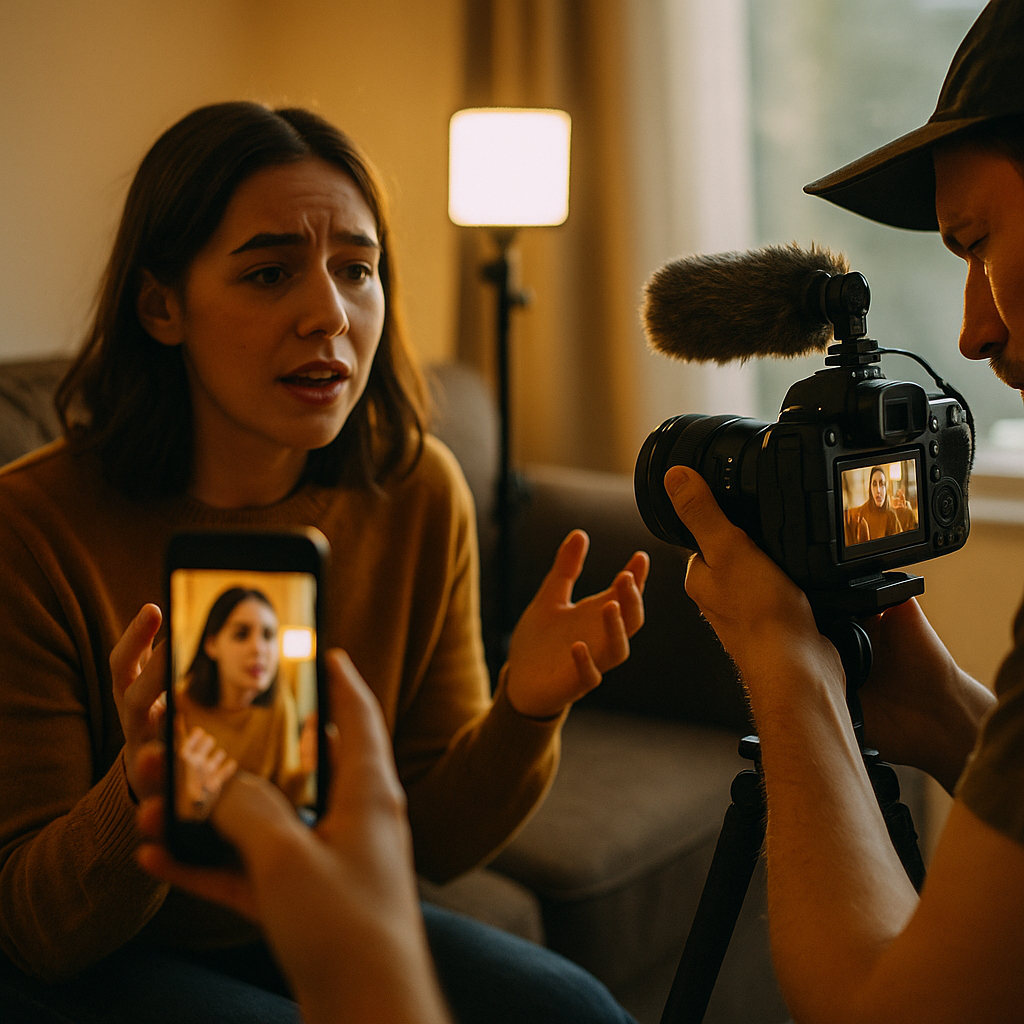
China’s micro-drama market pulled in more than $6.9 billion in 2024, outpacing the country’s box office. That single stat should stop every brand strategist mid-scroll. The micro-drama format, bite-sized vertical episodes built for mobile, cheap to produce, and engineered for cliffhangers, has quietly become one of the most efficient content structures in the creator economy. This guide breaks down how to brief one without blowing your budget or your legal team’s patience.
What Exactly Is a Micro-Drama?
A micro-drama is a serialized vertical video, usually 60 to 180 seconds per episode, released in batches of 60 to 100 episodes. Apps like ReelShort, DramaBox, and China’s original Hongguo have proven the model at scale: hook viewers in the first three seconds, end every episode on a cliffhanger, and monetize through pay-per-episode unlocks or ad breaks. It’s soap opera pacing compressed into TikTok’s attention economy.
For brands, the appeal isn’t replicating a 100-episode saga. It’s borrowing the mechanics: fast hooks, serialized stakes, low production overhead, and a format native to vertical feeds. Think of it as episodic branded content that behaves like entertainment, not an ad.
The core insight brands keep missing: micro-drama isn’t about drama at all. It’s about structural pacing that keeps viewers returning for the next installment, which is exactly what retention marketing needs.
Why This Format Fits a Tight Budget
Traditional branded video series require sound stages, multi-day shoots, and post-production timelines that stretch for weeks. Micro-drama flips that math. A single location, two or three cast members, and a phone-first camera setup can produce an entire eight-episode arc in one or two days.
- Lower per-episode cost: Because episodes are short and shot in sequence, crews reuse lighting setups, wardrobe, and blocking across multiple scenes in one session.
- Built-in repurposing: Cliffhanger endings double as natural teaser clips for paid social, meaning one shoot generates both the series and its promotional assets. This mirrors the efficiency logic in ad-syndication ready briefs built for one shoot across three platforms.
- Creator-led production: Many brands are pairing this format with part-time creator talent rather than agency casts, which keeps costs predictable. See how that structure works in briefing part-time creators for sustained output.
None of this means cheap looks cheap. The best micro-dramas lean into a slightly raw, unpolished aesthetic on purpose. Audiences have grown suspicious of over-produced brand content anyway, a shift covered in depth in Vogue’s messy creator content shift.
The Anatomy of a Brand-Safe Micro-Drama Brief
A creative brief for this format needs more structure than a typical influencer ask, precisely because it’s serialized. Miss the arc plan and you’ll end up with disconnected clips instead of a series people follow.
Start With the Hook Formula
Every episode brief should specify the first three seconds explicitly. Not “engaging opener,” but the literal line of dialogue, visual reveal, or conflict statement that appears before any branding shows up. eMarketer data on short-form video consistently shows drop-off concentrated in the opening seconds, so this isn’t optional polish, it’s the entire retention mechanism.
Map the Episode Arc Before You Shoot
Outline the full series (even if it’s only six episodes) before casting or scheduling. Each episode needs:
- A one-line conflict or question introduced
- A mid-episode beat that escalates stakes
- A cliffhanger that’s resolved, at least partially, in the next installment
This structure is what separates a micro-drama from a string of testimonial clips. If you’ve briefed genuine experience testimonials before, this is a different muscle: you’re writing for narrative momentum, not just credibility.
Product Integration Without Killing the Plot
The product should function inside the conflict, not interrupt it. A skincare brand running a micro-drama about a rocky first date shouldn’t cut to a product shot. Instead, the product becomes a plot device: a gifted item, a confidence trigger, a callback joke in episode four. This is the same discipline behind founder story briefs that convert rather than simply charm.
Compliance Isn’t Optional, Even in Fiction
Here’s where a lot of marketing teams get sloppy. Because micro-dramas are scripted and clearly fictional, some assume FTC disclosure rules don’t apply. They do. If a brand is paying for production, casting, or distribution, and the content promotes a product or service, disclosure requirements under FTC guidance still apply, fictional wrapper or not.
Practical fixes that don’t break immersion:
- Place a persistent, small on-screen disclosure tag rather than a mid-scene interruption
- Use the caption and pinned comment for full disclosure language
- Avoid scarcity or urgency language inside dialogue unless it can be substantiated, a trap covered well in live inventory countdown overlays without FTC scarcity risk
Legal review timelines can kill a series’ momentum if every episode script gets treated as a fresh submission. Building a repeatable review template up front, similar to the approach in short-form sales briefs that pass legal review fast, saves weeks across a multi-episode rollout.
Casting: Actors, Creators, or Both?
China’s micro-drama studios often use unknown actors specifically because audiences respond to novelty and relatability over celebrity polish. Brands don’t need to hire a known creator’s full audience, they need someone who can hold a character across episodes convincingly.
That said, blending an established creator’s face with scripted arc content tends to outperform either extreme. A known creator lends trust and built-in reach; the scripted structure lends retention. This hybrid approach echoes findings in blended UGC-plus-influencer briefs, where mixing formats consistently beat single-format campaigns on conversion.
Budget tip: nano and micro-tier creators are often better suited to this format than macro talent. They’re used to frequent posting cadences, comfortable with lower production budgets, and their audiences already expect a personal, semi-scripted style. If retention and repeat viewership matter more than reach, the logic in nano-influencer repeat-purchase content applies directly here.
Distribution: Where Micro-Dramas Actually Perform
TikTok, Instagram Reels, and YouTube Shorts are the obvious homes, but the platforms reward different pacing. TikTok favors faster cliffhangers and shorter episodes (under 90 seconds). Instagram audiences tolerate slightly longer builds if the visual quality is higher. YouTube Shorts works best when episodes are grouped into a playlist, mimicking binge behavior.
Posting cadence matters more than most brands expect. Dropping all episodes at once kills the serialized tension that makes the format work. A staggered release, ideally daily or every other day, keeps the “what happens next” loop active. Platforms like TikTok Ads also let you retarget viewers who watched a full episode with the next installment as a paid boost, which turns organic hooks into a funnel without extra production cost.
Brands that stagger episode releases see meaningfully higher completion rates across the series than those who batch-drop content, because anticipation is the entire engine of this format.
Measuring Success Beyond Views
View count is a vanity metric here. The numbers that actually indicate whether a micro-drama is working:
- Episode-to-episode retention rate: What percentage of episode-one viewers show up for episode three?
- Completion rate per episode: Are people watching to the cliffhanger, or dropping off mid-scene?
- Comment sentiment tied to plot, not product: Are people theorizing about what happens next? That’s the signal the narrative is working.
Tools like Sprout Social and native platform analytics can track episode-level retention if you tag each upload consistently. Without that tagging discipline, you’ll never know which episode broke the arc.
Where This Format Breaks Down
Micro-drama isn’t a fit for every brand. Categories requiring heavy regulatory disclosure (finance, pharma, alcohol) will find the fictional wrapper adds legal complexity rather than reducing it. And brands without a clear, ongoing content cadence shouldn’t start a serialized format they can’t sustain. A three-episode series that never gets a resolution reads as abandoned, not intriguing.
If your team is still building foundational testing muscle before committing to a multi-episode format, it’s worth reviewing structure first through something like multi-creator testing waves to validate hooks before scaling into a full arc.
FAQs
What is a micro-drama in marketing terms?
A micro-drama is a serialized vertical video series, typically 60 to 180 seconds per episode, that uses scripted cliffhangers to build audience retention. Brands use it to weave product integration into a fictional storyline rather than a direct ad format.
How many episodes should a brand’s first micro-drama series have?
Most brands should start with four to eight episodes. This is enough to test retention and completion metrics without overcommitting production budget before proving the format works for their audience.
Do micro-dramas need FTC disclosure if they’re scripted fiction?
Yes. If a brand funds the production or distribution and the content promotes a product, FTC disclosure rules apply regardless of the fictional format. Persistent on-screen tags and caption disclosures are the most common compliant approach.
What is the ideal length for each micro-drama episode?
Between 60 and 150 seconds works best across TikTok, Reels, and YouTube Shorts. Shorter episodes suit TikTok’s faster pacing, while slightly longer episodes perform better on Instagram and YouTube.
Can nano-influencers handle micro-drama production?
Yes, and they’re often better suited than macro talent. Nano and micro-tier creators typically have lower production expectations, faster posting cadences, and audiences already comfortable with a personal, semi-scripted style.
Next step: Pick one product feature, write a six-episode arc around a single relatable conflict, and brief it with explicit hook language for the first three seconds of episode one. Test retention before committing budget to episode seven.
FAQs
What is a micro-drama in marketing terms?
A micro-drama is a serialized vertical video series, typically 60 to 180 seconds per episode, that uses scripted cliffhangers to build audience retention. Brands use it to weave product integration into a fictional storyline rather than a direct ad format.
How many episodes should a brand’s first micro-drama series have?
Most brands should start with four to eight episodes. This is enough to test retention and completion metrics without overcommitting production budget before proving the format works for their audience.
Do micro-dramas need FTC disclosure if they’re scripted fiction?
Yes. If a brand funds the production or distribution and the content promotes a product, FTC disclosure rules apply regardless of the fictional format. Persistent on-screen tags and caption disclosures are the most common compliant approach.
What is the ideal length for each micro-drama episode?
Between 60 and 150 seconds works best across TikTok, Reels, and YouTube Shorts. Shorter episodes suit TikTok’s faster pacing, while slightly longer episodes perform better on Instagram and YouTube.
Can nano-influencers handle micro-drama production?
Yes, and they’re often better suited than macro talent. Nano and micro-tier creators typically have lower production expectations, faster posting cadences, and audiences already comfortable with a personal, semi-scripted style.
Top Influencer Marketing Agencies
The leading agencies shaping influencer marketing in 2026
Agencies ranked by campaign performance, client diversity, platform expertise, proven ROI, industry recognition, and client satisfaction. Assessed through verified case studies, reviews, and industry consultations.
Moburst

-
2

The Shelf
Boutique Beauty & Lifestyle Influencer AgencyA data-driven boutique agency specializing exclusively in beauty, wellness, and lifestyle influencer campaigns on Instagram and TikTok. Best for brands already focused on the beauty/personal care space that need curated, aesthetic-driven content.Clients: Pepsi, The Honest Company, Hims, Elf Cosmetics, Pure LeafVisit The Shelf → -
3

Audiencly
Niche Gaming & Esports Influencer AgencyA specialized agency focused exclusively on gaming and esports creators on YouTube, Twitch, and TikTok. Ideal if your campaign is 100% gaming-focused — from game launches to hardware and esports events.Clients: Epic Games, NordVPN, Ubisoft, Wargaming, Tencent GamesVisit Audiencly → -
4

Viral Nation
Global Influencer Marketing & Talent AgencyA dual talent management and marketing agency with proprietary brand safety tools and a global creator network spanning nano-influencers to celebrities across all major platforms.Clients: Meta, Activision Blizzard, Energizer, Aston Martin, WalmartVisit Viral Nation → -
5

The Influencer Marketing Factory
TikTok, Instagram & YouTube CampaignsA full-service agency with strong TikTok expertise, offering end-to-end campaign management from influencer discovery through performance reporting with a focus on platform-native content.Clients: Google, Snapchat, Universal Music, Bumble, YelpVisit TIMF → -
6

NeoReach
Enterprise Analytics & Influencer CampaignsAn enterprise-focused agency combining managed campaigns with a powerful self-service data platform for influencer search, audience analytics, and attribution modeling.Clients: Amazon, Airbnb, Netflix, Honda, The New York TimesVisit NeoReach → -
7

Ubiquitous
Creator-First Marketing PlatformA tech-driven platform combining self-service tools with managed campaign options, emphasizing speed and scalability for brands managing multiple influencer relationships.Clients: Lyft, Disney, Target, American Eagle, NetflixVisit Ubiquitous → -
8

Obviously
Scalable Enterprise Influencer CampaignsA tech-enabled agency built for high-volume campaigns, coordinating hundreds of creators simultaneously with end-to-end logistics, content rights management, and product seeding.Clients: Google, Ulta Beauty, Converse, AmazonVisit Obviously →