


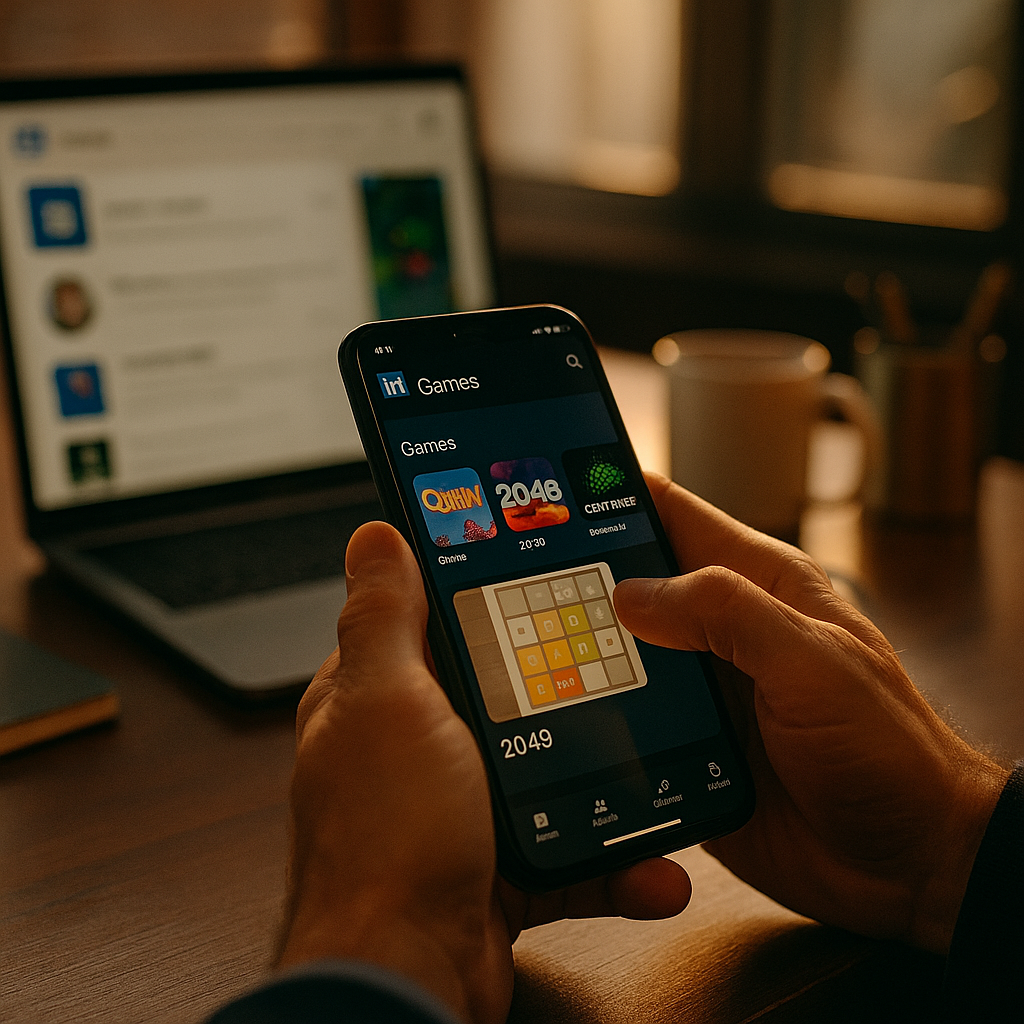
LinkedIn users spend an average of just seven minutes per session on the platform, according to eMarketer benchmarks tracked over the past two years. That’s a tight window for brands fighting for attention. Now imagine a portion of that time going to a crossword or a mini puzzle instead of your sponsored post. The LinkedIn Games Tab is quietly becoming one of the platform’s stickiest features, and B2B marketers who ignore it are leaving a new attention pocket entirely to competitors.
The Games Tab Isn’t a Gimmick, It’s a Feed Hack
LinkedIn rolled out its Games Tab with titles like Queens, Crossword, Pinpoint, and Zip, all clearly borrowed from the playbook that made The New York Times Games section a daily habit for millions. The bet is simple: give professionals a reason to open the app outside of job hunting or posting a humblebrag about a promotion, and you extend session time across the board.
For brand marketers, that extended session time matters more than the games themselves. Every minute a user spends completing a puzzle is a minute they’re inside LinkedIn’s ecosystem, scrolling past the feed before and after, engaging with notifications, and building the kind of daily habit loop that platforms like Duolingo mastered years ago. This isn’t about brands sponsoring the puzzles directly yet. It’s about understanding a behavioral shift that changes when and how your audience shows up.
Puzzle features rarely move the needle through direct sponsorship first. They move the needle by changing user habits, and habits change when and where your content actually gets seen.
Who’s Actually Playing?
Early adoption data is thin since LinkedIn hasn’t published formal engagement numbers, but anecdotal signals from social teams and internal LinkedIn communications point to games driving repeat daily visits among mid-career professionals, the exact demographic most B2B brands target. That’s a meaningfully different cohort than the casual mobile gamer LinkedIn might have expected.
Think about who has five minutes to spare mid-workday and a LinkedIn app already open: sales directors between calls, HR leaders waiting on a meeting, marketing managers procrastinating before a deck review. These are decision-makers, not interns. That alone should make the Games Tab worth watching even before any formal ad product launches around it.
What “Engagement” Even Means Here
Traditional LinkedIn engagement metrics (likes, comments, shares, dwell time on a post) don’t map cleanly onto puzzle behavior. If a user spends four minutes on Queens and never touches your sponsored content, did your campaign benefit? Not directly. But if that habit loop keeps them opening the app three extra times a week, your organic and paid reach both climb over time.
Brands should treat the Games Tab the way smart marketers treated instant play view metrics on YouTube: as a signal that platform-level attention mechanics are shifting, requiring a rethink of what counts as a meaningful KPI before locking in Q3 or Q4 media plans.
A Practical Way to Test This Now
- Track your brand page’s session-adjacent metrics (impressions per active user, not just impressions) before and after LinkedIn’s games gained traction in your target market.
- Ask your agency or in-house social team to log anecdotal spikes in app open rates among your follower base, using LinkedIn’s native analytics dashboard.
- Watch for LinkedIn’s own signals. Platforms almost always monetize sticky features within 12 to 18 months of launch, and sponsorship or leaderboard placement is the likely next step here.
Building a Puzzle-Adjacent Content Brief
There’s no native ad unit inside the Games Tab yet, so brands can’t buy their way into a crossword clue. What you can do is build content strategy around the behavior shift. That means shorter, punchier post formats timed to when users are most likely mid-puzzle-break, and it means experimenting with LinkedIn’s own quiz and poll formats, which sit adjacent to the games ecosystem and already carry native engagement lift.
This is a similar operational challenge to what teams faced when YouTube Playables launched and brands had to rewrite creator briefs to account for a genuinely new content format. The lesson carries over: don’t force your existing content into a puzzle-shaped hole. Build something native to the behavior, even if it’s just a lightweight interactive poll that mimics the low-stakes, quick-win feeling of a daily puzzle.
The brands that win on LinkedIn’s Games Tab won’t be the ones who sponsor a crossword first. They’ll be the ones who understood the attention shift six months before the ad product existed.
Compliance Isn’t an Afterthought Here
Any future sponsorship or branded puzzle integration on LinkedIn will fall under the same disclosure expectations that govern every other paid partnership on the platform. If LinkedIn does introduce sponsored puzzle content, whether through branded word banks, logo placement, or leaderboard prizes, brands need to apply the same rigor they’d use for a sponsored post. That means clear “#ad” or “Paid Partnership” labeling consistent with FTC endorsement guidance, and it means aligning internal legal review before launch, not after a complaint.
Teams that already built disclosure workflows for LinkedIn’s broader algorithm changes have a head start. If you haven’t reviewed your process recently, our LinkedIn sponsorship disclosure playbook covers the labeling requirements likely to extend to any future games integration.
Where This Fits in the Broader B2B Content Mix
Puzzle content won’t replace thought leadership posts, employee advocacy programs, or paid sponsorship deals with industry creators. It’s a supplementary attention channel, not a replacement strategy. The smartest budget allocation right now is small and experimental: a fraction of your content calendar testing quiz and poll formats, paired with close tracking of whether your target accounts show measurable session lift.
Compare this to how brands approached ad syndication compliance on TikTok Shop: nobody bet the full budget on day one, but the teams that ran small structured tests were ready when the platform formalized the ad product. LinkedIn’s Games Tab will likely follow the same arc. Platforms like Sprout Social and HubSpot already track engagement pattern shifts across LinkedIn, so pull those reports into your quarterly review rather than waiting for LinkedIn’s own case studies to arrive.
One more thing worth noting: LinkedIn’s own business resources haven’t yet published formal games advertising guidance, which means the early-mover advantage here is real but temporary. Once LinkedIn documents a sponsorship product, every competitor gets the same playbook simultaneously.
Frequently Asked Questions
What is the LinkedIn Games Tab?
It’s a dedicated section within the LinkedIn app offering puzzle games like Queens, Crossword, Pinpoint, and Zip, designed to increase daily app opens and session frequency among professional users.
Can brands sponsor content inside the LinkedIn Games Tab?
Not yet through a native ad unit. LinkedIn hasn’t launched formal sponsorship or advertising placements inside the Games Tab, though the platform’s history suggests monetization typically follows engagement traction within a year or two of a feature’s launch.
How should B2B marketers measure Games Tab impact?
Track session frequency and impressions per active user among your target audience segments rather than looking for direct engagement on puzzle content itself, since the effect is behavioral and indirect rather than a click-through metric.
Does puzzle content require FTC disclosure on LinkedIn?
Any future paid or sponsored integration would need to follow the same endorsement and disclosure guidance the FTC applies to all paid partnerships, including clear labeling regardless of the content format.
Should small B2B teams invest resources in this now?
A light, experimental test (tracking engagement shifts and trying adjacent formats like polls and quizzes) makes sense for most teams. A full budget reallocation isn’t warranted until LinkedIn formalizes a sponsorship product.
Start small: pick one target account segment, track their app-open frequency for four weeks, and pair that data with a lightweight poll or quiz test before LinkedIn’s inevitable sponsorship product arrives and every competitor gets the same brief.
Top Influencer Marketing Agencies
The leading agencies shaping influencer marketing in 2026
Agencies ranked by campaign performance, client diversity, platform expertise, proven ROI, industry recognition, and client satisfaction. Assessed through verified case studies, reviews, and industry consultations.
Moburst

-
2

The Shelf
Boutique Beauty & Lifestyle Influencer AgencyA data-driven boutique agency specializing exclusively in beauty, wellness, and lifestyle influencer campaigns on Instagram and TikTok. Best for brands already focused on the beauty/personal care space that need curated, aesthetic-driven content.Clients: Pepsi, The Honest Company, Hims, Elf Cosmetics, Pure LeafVisit The Shelf → -
3

Audiencly
Niche Gaming & Esports Influencer AgencyA specialized agency focused exclusively on gaming and esports creators on YouTube, Twitch, and TikTok. Ideal if your campaign is 100% gaming-focused — from game launches to hardware and esports events.Clients: Epic Games, NordVPN, Ubisoft, Wargaming, Tencent GamesVisit Audiencly → -
4

Viral Nation
Global Influencer Marketing & Talent AgencyA dual talent management and marketing agency with proprietary brand safety tools and a global creator network spanning nano-influencers to celebrities across all major platforms.Clients: Meta, Activision Blizzard, Energizer, Aston Martin, WalmartVisit Viral Nation → -
5

The Influencer Marketing Factory
TikTok, Instagram & YouTube CampaignsA full-service agency with strong TikTok expertise, offering end-to-end campaign management from influencer discovery through performance reporting with a focus on platform-native content.Clients: Google, Snapchat, Universal Music, Bumble, YelpVisit TIMF → -
6

NeoReach
Enterprise Analytics & Influencer CampaignsAn enterprise-focused agency combining managed campaigns with a powerful self-service data platform for influencer search, audience analytics, and attribution modeling.Clients: Amazon, Airbnb, Netflix, Honda, The New York TimesVisit NeoReach → -
7

Ubiquitous
Creator-First Marketing PlatformA tech-driven platform combining self-service tools with managed campaign options, emphasizing speed and scalability for brands managing multiple influencer relationships.Clients: Lyft, Disney, Target, American Eagle, NetflixVisit Ubiquitous → -
8

Obviously
Scalable Enterprise Influencer CampaignsA tech-enabled agency built for high-volume campaigns, coordinating hundreds of creators simultaneously with end-to-end logistics, content rights management, and product seeding.Clients: Google, Ulta Beauty, Converse, AmazonVisit Obviously →