


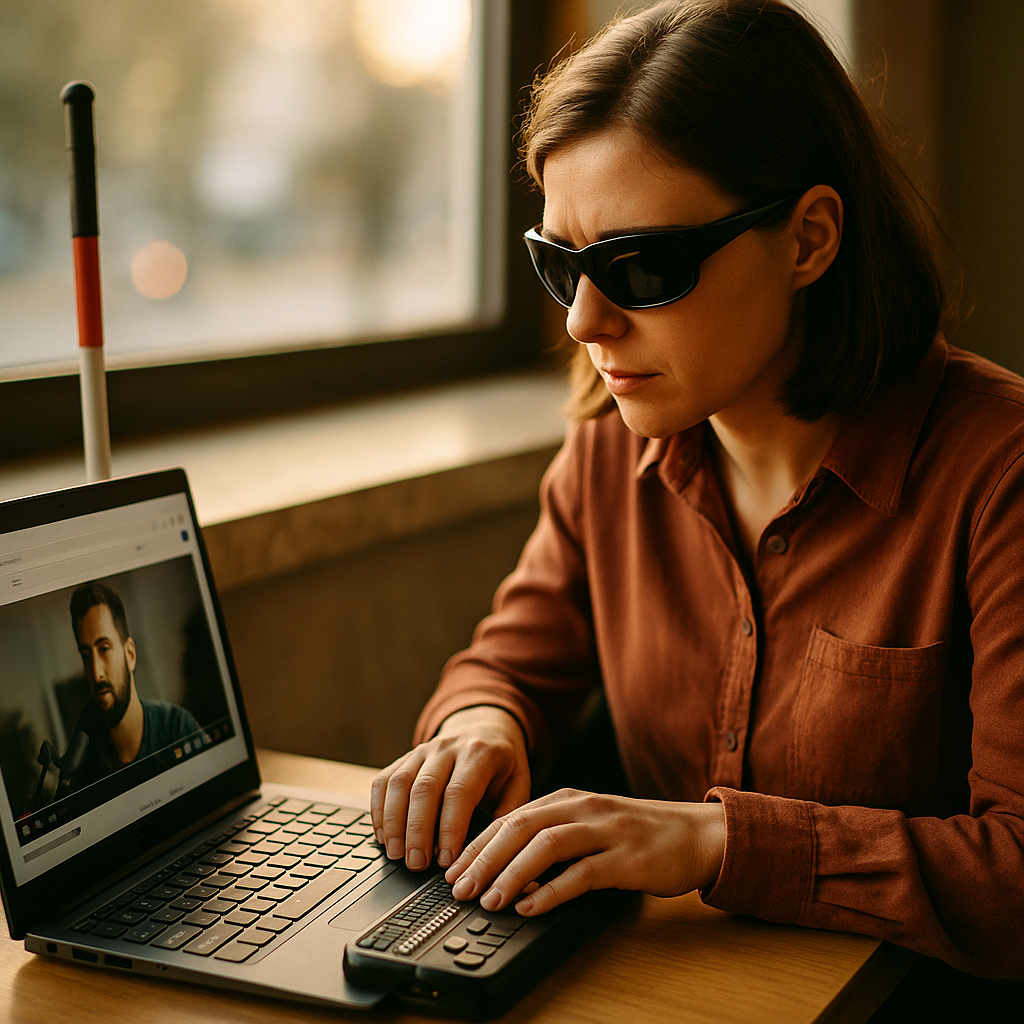
More than 4,000 ADA digital accessibility lawsuits landed in federal court last year, and a growing share named brands over content their influencer partners posted, not just their owned websites. Accessibility compliance for creator content used to be an afterthought buried in a brand guidelines PDF. It’s now a line item on legal’s risk register. If your creator program has no caption standard, no alt text requirement, and no audit trail, you’re not behind on trends. You’re exposed.
Why This Suddenly Matters to Marketing, Not Just Legal
Accessibility used to live in web development. Title II of the ADA, website accessibility overlay lawsuits, WCAG conformance, all of it felt like a technical problem for the IT team. Creator content changed the equation. When a brand runs paid partnerships across Instagram Reels, TikTok, and YouTube Shorts, that content functions as marketing collateral the same way a landing page does. Plaintiffs’ attorneys have noticed. Demand letters now cite un-captioned branded video and missing alt text on sponsored posts as evidence of discriminatory access.
The legal theory is straightforward, even if courts are still working out the edges. If a brand pays for content, directs its distribution, and profits from it, the brand shares responsibility for making that content accessible. That’s a different standard than “the creator posted it, so it’s their problem.” Agencies and in-house teams that still operate under that assumption are running on outdated advice.
A single un-captioned sponsored video posted across five creator accounts isn’t one risk. It’s five separate instances a plaintiff’s attorney can cite, each with its own timestamp and reach metric.
The Three Gaps Auditors Keep Finding
Run an internal audit of your last quarter of creator content and you’ll likely find the same three gaps, regardless of vertical or budget size.
- Missing or auto-generated captions with no review. Platform auto-captions are notoriously unreliable for brand names, product terms, and accented speech. Nobody is checking accuracy before publish.
- No alt text on static image posts. Instagram and Facebook both support custom alt text fields, but most creators never touch them, and most brand briefs never mention them.
- No documented accessibility standard in the creator brief. If accessibility isn’t a written requirement with a defined format, it won’t happen consistently, no matter how many times you ask nicely in a Slack thread.
None of these gaps require exotic fixes. They require someone owning the checklist and a workflow that catches the miss before content goes live, not after a demand letter arrives.
Captions Are Not Optional Anymore, and Auto-Generated Isn’t the Same as Compliant
Here’s the distinction that trips up a lot of brand teams: turning on TikTok’s or YouTube’s auto-caption feature is not the same as meeting an accessibility standard. Auto-captions frequently mangle brand names, misread numbers in promo codes, and drop entire phrases in fast-paced speech. A caption that says “50% off” when the creator said “15% off” isn’t just an accessibility failure, it’s a pricing accuracy problem that touches FTC disclosure obligations too.
The practical standard most legal teams are landing on: closed captions must be human-reviewed or professionally generated, synced correctly, and accurate to spoken content including brand and product names. That’s a small lift per asset, usually a few minutes of review or a low-cost captioning tool, but it needs to be a mandatory step in your content approval workflow, not a nice-to-have.
This is the same discipline brands are already applying to other parts of the creator pipeline. If you’ve built out approval workflows for compliance on disclosure language, adding a caption accuracy checkpoint is a natural extension, not a new system.
Alt Text: The Field Everyone Forgets and Nobody Enforces
Alt text is a short written description that screen readers use to convey what’s in an image. It takes maybe thirty seconds to write per post. And yet, across the creator content most brands audit, alt text is either blank, auto-generated with generic garbage like “image may contain: person, outdoors,” or missing entirely.
The fix is procedural, not technical. Brief creators to write descriptive alt text as part of their deliverable checklist, same as you’d require a specific hashtag or tag. For carousel posts with multiple images, each slide needs its own alt text, not one generic description copied across all of them. Build a short template creators can adapt: describe the product, the setting, and any visible text in the graphic. It’s a small ask that removes a real liability.
Where the ADA Risk Actually Lives in a Creator Contract
Most influencer agreements are silent on accessibility. That silence is the risk. If your contract doesn’t specify caption and alt text requirements as a deliverable condition, you have no contractual basis to require a fix, and no documentation showing you made a good-faith effort if a complaint surfaces.
Brands serious about closing this gap are adding accessibility language directly into the statement of work, alongside existing disclosure and FTC clauses. That means specifying caption accuracy standards, alt text requirements for image posts, and a review checkpoint before content is approved for paid amplification. This mirrors the approach brands have already taken with other emerging risk categories, like the deepfake liability language covered in contract clauses closing the deepfake gap. Accessibility deserves the same explicit treatment rather than an assumption that it’s covered under generic “compliance with applicable law” boilerplate.
Insurance is the other piece brands underestimate. General liability policies rarely contemplate accessibility claims tied to influencer content specifically. If your program has scaled past a handful of creators, it’s worth revisiting coverage the same way you’d evaluate coverage for creator partnerships more broadly.
Building the Audit Workflow: Five Checkpoints
An accessibility audit doesn’t need a new department. It needs five checkpoints layered into the process you already run for disclosure and brand safety review.
- Brief stage: Specify caption and alt text requirements as deliverable conditions, in writing, before content is produced.
- Draft review: Check caption accuracy against the actual audio, not just presence of captions. Verify alt text exists and is descriptive, not generic.
- Pre-publish approval: Add an accessibility checkbox to your existing content approval gate, the same gate you likely use for FTC disclosure language.
- Paid amplification review: If content is being boosted as an ad, confirm platform-native captions and alt text carry over correctly. Ad formats sometimes strip organic accessibility metadata.
- Quarterly spot audit: Sample live creator content across your active roster and score it against your standard. Document findings. This is your evidence of good-faith effort if a complaint ever surfaces.
That documentation matters more than people realize. Regulators and plaintiffs’ attorneys treat a documented, enforced standard very differently from a policy that exists on paper but nobody follows. The same logic applies to the broader compliance workflows brands are building around AI-generated and creator content, as outlined in the AI marketing pre-flight checklist.
An audit trail showing you enforced an accessibility standard is worth more in a legal dispute than the standard itself. Policies without enforcement records don’t hold up.
What About Video Platforms and Livestreams?
Static posts and pre-recorded video are the easier half of the problem. Livestream commerce, a format brands are pouring budget into, raises harder questions. Real-time captioning tools exist on platforms like TikTok Live and YouTube Live, but accuracy during fast, unscripted commerce segments is inconsistent, and pricing claims made live compound the risk, as covered in the discussion of livestream pricing audit compliance.
For now, the pragmatic approach is to treat livestream replays as the accessibility checkpoint. Require captions to be corrected and finalized before a stream is archived or repurposed as an ad asset, even if live captions during the broadcast itself are imperfect. It’s not a perfect solution, but it closes the gap where the content has the longest shelf life and the widest paid distribution.
Platform Tools Worth Knowing
You don’t need custom software to fix most of this. Instagram and Facebook support manual alt text entry per image through Meta’s business tools. TikTok’s ad manager includes caption controls through TikTok’s advertising platform. YouTube allows uploaded caption files that override auto-generated text, documented in Google’s support resources. None of these require engineering resources. They require someone on the brand or agency side actually using them and checking that creators do too.
Sprout Social and similar platforms increasingly build accessibility checks into content scheduling workflows, flagging missing alt text before a post goes live, a trend worth watching as vendors covered by Sprout Social and eMarketer continue building compliance features into creator tooling.
The ROI Argument, Because Compliance Alone Won’t Move Budget
Framing accessibility purely as risk mitigation undersells it. Captioned video gets watched with sound off, which is most social video consumption on mobile. Accurate captions improve completion rates and comprehension of the actual offer, which matters when the video is carrying a promo code or CTA. Alt text is indexed content, quietly supporting discoverability. Accessibility compliance and content performance aren’t competing priorities. They’re the same investment measured two different ways.
That reframe tends to get budget approved faster than a legal risk memo alone. Pair both arguments when you pitch the audit workflow internally: here’s the litigation exposure data from the FTC and accessibility case trackers, and here’s the completion-rate lift from properly captioned video. Legal signs off on the first argument. Marketing leadership signs off on the second.
FAQs
Does the ADA legally apply to social media posts?
Courts are still divided, but a growing number of rulings treat brand-sponsored digital content, including social posts, as subject to accessibility obligations when it functions as a place of public accommodation extension or as paid marketing material. Brands should not wait for full legal clarity before acting.
Who is liable if a creator posts inaccessible content, the brand or the creator?
Both can be named, but brands carry independent exposure when they pay for, direct, or amplify the content, particularly through paid ad spend. Contractual language shifting responsibility to the creator doesn’t eliminate brand liability in practice.
Are platform auto-captions good enough for compliance?
No. Auto-captions frequently misread brand names, numbers, and fast speech. A defensible standard requires human review or correction before publish, especially for paid or boosted content.
Does alt text need to be unique for every image in a carousel post?
Yes. Each image should have its own descriptive alt text. Reusing one generic description across all slides fails to convey what’s actually shown in each image and doesn’t meet a reasonable accessibility standard.
How often should brands audit creator content for accessibility?
A quarterly spot audit across your active creator roster, combined with pre-publish checkpoints on every piece of paid content, is a reasonable baseline for most mid-size to enterprise programs.
Next step: Add a caption accuracy and alt text checkbox to your existing creator content approval gate this week, and require it as a contractual deliverable in your next round of briefs. The audit trail you build now is the defense you’ll need later.
FAQs
Does the ADA legally apply to social media posts?
Courts are still divided, but a growing number of rulings treat brand-sponsored digital content, including social posts, as subject to accessibility obligations when it functions as a place of public accommodation extension or as paid marketing material. Brands should not wait for full legal clarity before acting.
Who is liable if a creator posts inaccessible content, the brand or the creator?
Both can be named, but brands carry independent exposure when they pay for, direct, or amplify the content, particularly through paid ad spend. Contractual language shifting responsibility to the creator doesn’t eliminate brand liability in practice.
Are platform auto-captions good enough for compliance?
No. Auto-captions frequently misread brand names, numbers, and fast speech. A defensible standard requires human review or correction before publish, especially for paid or boosted content.
Does alt text need to be unique for every image in a carousel post?
Yes. Each image should have its own descriptive alt text. Reusing one generic description across all slides fails to convey what’s actually shown in each image and doesn’t meet a reasonable accessibility standard.
How often should brands audit creator content for accessibility?
A quarterly spot audit across your active creator roster, combined with pre-publish checkpoints on every piece of paid content, is a reasonable baseline for most mid-size to enterprise programs.
Top Influencer Marketing Agencies
The leading agencies shaping influencer marketing in 2026
Agencies ranked by campaign performance, client diversity, platform expertise, proven ROI, industry recognition, and client satisfaction. Assessed through verified case studies, reviews, and industry consultations.
Moburst

-
2

The Shelf
Boutique Beauty & Lifestyle Influencer AgencyA data-driven boutique agency specializing exclusively in beauty, wellness, and lifestyle influencer campaigns on Instagram and TikTok. Best for brands already focused on the beauty/personal care space that need curated, aesthetic-driven content.Clients: Pepsi, The Honest Company, Hims, Elf Cosmetics, Pure LeafVisit The Shelf → -
3

Audiencly
Niche Gaming & Esports Influencer AgencyA specialized agency focused exclusively on gaming and esports creators on YouTube, Twitch, and TikTok. Ideal if your campaign is 100% gaming-focused — from game launches to hardware and esports events.Clients: Epic Games, NordVPN, Ubisoft, Wargaming, Tencent GamesVisit Audiencly → -
4

Viral Nation
Global Influencer Marketing & Talent AgencyA dual talent management and marketing agency with proprietary brand safety tools and a global creator network spanning nano-influencers to celebrities across all major platforms.Clients: Meta, Activision Blizzard, Energizer, Aston Martin, WalmartVisit Viral Nation → -
5

The Influencer Marketing Factory
TikTok, Instagram & YouTube CampaignsA full-service agency with strong TikTok expertise, offering end-to-end campaign management from influencer discovery through performance reporting with a focus on platform-native content.Clients: Google, Snapchat, Universal Music, Bumble, YelpVisit TIMF → -
6

NeoReach
Enterprise Analytics & Influencer CampaignsAn enterprise-focused agency combining managed campaigns with a powerful self-service data platform for influencer search, audience analytics, and attribution modeling.Clients: Amazon, Airbnb, Netflix, Honda, The New York TimesVisit NeoReach → -
7

Ubiquitous
Creator-First Marketing PlatformA tech-driven platform combining self-service tools with managed campaign options, emphasizing speed and scalability for brands managing multiple influencer relationships.Clients: Lyft, Disney, Target, American Eagle, NetflixVisit Ubiquitous → -
8

Obviously
Scalable Enterprise Influencer CampaignsA tech-enabled agency built for high-volume campaigns, coordinating hundreds of creators simultaneously with end-to-end logistics, content rights management, and product seeding.Clients: Google, Ulta Beauty, Converse, AmazonVisit Obviously →