


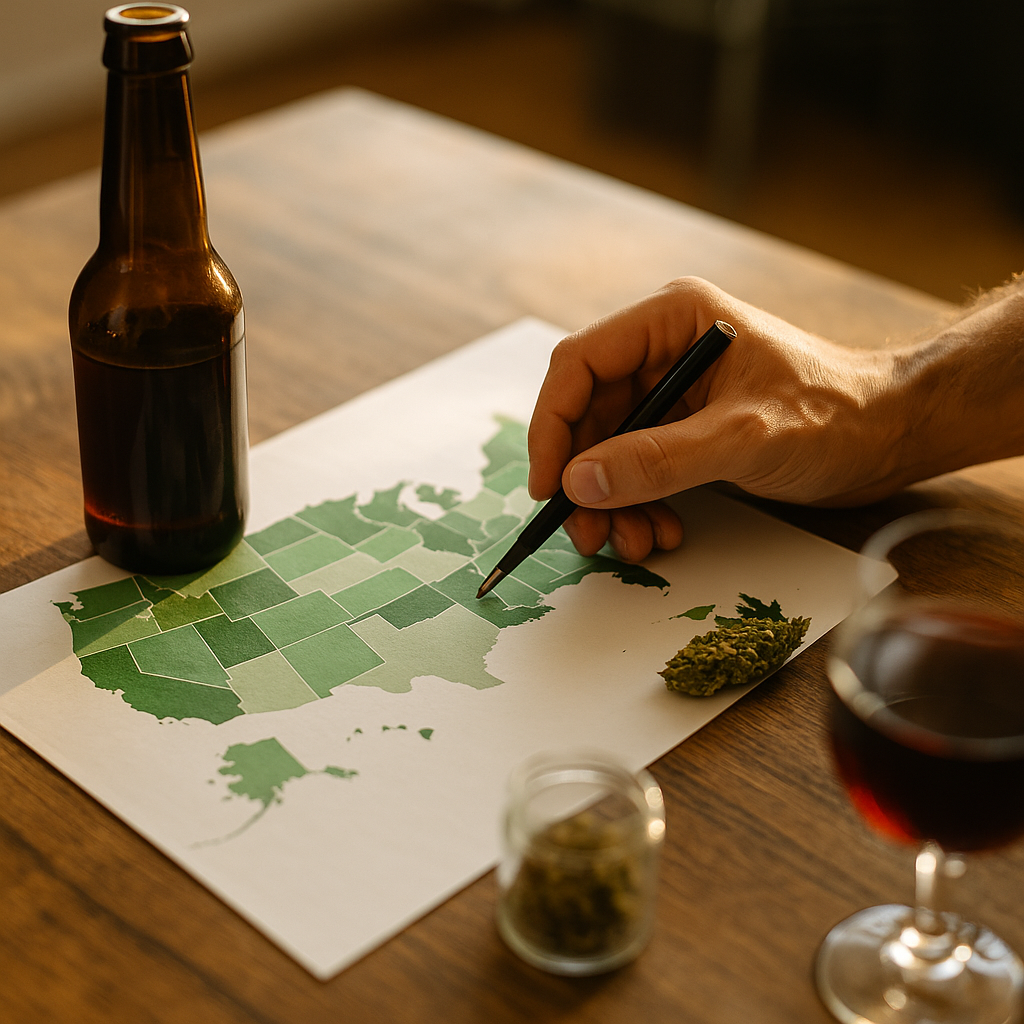
One wrong hashtag, one underage follower screenshot, one state regulator with a grudge against out-of-state marketers: that’s all it takes to turn an alcohol or cannabis influencer campaign into a six-figure legal problem. Alcohol and cannabis brand compliance in creator marketing campaigns isn’t a checkbox exercise anymore. It’s the difference between a campaign that scales and one that gets a cease-and-desist letter.
The Regulatory Patchwork Nobody Warned You About
Alcohol advertising is regulated at the federal level by the Federal Trade Commission and, depending on the product, the Alcohol and Tobacco Tax and Trade Bureau. But the real complexity lives at the state level. Some states require specific disclaimers on any paid promotion. Others restrict who can legally appear in alcohol ads based on age, regardless of whether that person is the creator or just visible in the background of a bar scene.
Cannabis is worse. It’s still federally illegal, which means there’s no unified federal ad framework to lean on, only a state-by-state maze that changes every legislative session. A campaign that’s perfectly compliant in Colorado can be a criminal exposure risk in Texas. Brands that treat cannabis marketing like a national campaign with local flavor are setting themselves up for a compliance nightmare.
The states where a product is legal to sell are not automatically the states where it’s legal to advertise, and creator content doesn’t respect state lines the way brand teams wish it did.
This is why legal teams are now involved earlier in influencer selection than ever before. Not just to review captions, but to map creator audience geography against a state-legality matrix before a single contract gets signed. It’s tedious work, but it’s cheaper than a regulatory inquiry.
Why Platform Policy Matters More Than the Law Some Days
Here’s the uncomfortable truth: platforms often enforce stricter rules than regulators do. Meta and TikTok both prohibit cannabis product promotion outright, even in states where it’s fully legal. Alcohol content is allowed but heavily restricted, with age-gating requirements and, in some markets, outright bans on influencer-style endorsements.
Violate a platform’s terms of service and the consequence isn’t a fine, it’s a suspended account, sometimes the brand’s, sometimes the creator’s, sometimes both. A single flagged post can trigger an algorithmic penalty that tanks organic reach across an entire brand page for weeks. That’s a business cost most CMOs never see coming until it happens.
Smart brands build a “platform policy first” filter into their creator vetting process, checking each platform’s advertising policy alongside state law before a campaign brief goes out. Tools that track policy changes across Meta’s advertising standards and TikTok’s ad policies have become as essential as legal review for regulated categories.
Age Verification Isn’t Optional: Auditing Creator Audiences
Both alcohol and cannabis marketing regulations generally require that at least a set percentage of a targeted audience be of legal age, often 71.6% for alcohol under industry self-regulatory codes, with similar thresholds emerging in cannabis-legal states. That means brands can’t just pick a creator based on engagement rate. They need actual audience demographic data, verified, not estimated.
This is where a lot of programs fail quietly. A creator might have a personal following that skews adult, but a viral post can pull in a much younger audience overnight. Brands that don’t monitor audience composition in near real time are flying blind on a legal requirement, not just a brand safety preference.
- Pull platform-verified audience age data before signing, not after the campaign launches.
- Set contractual triggers requiring creators to disclose sudden audience shifts (a viral moment, a cross-platform repost).
- Re-audit audience composition mid-campaign for anything running longer than 30 days.
The parallels to youth privacy compliance in other regulated categories are worth studying. Brands running age-restricted shoppable content have already built audit frameworks that alcohol and cannabis marketers can borrow directly.
Disclosure Rules Still Apply, Even When the Product Can’t Be Advertised Everywhere
Federal endorsement guidance from the FTC doesn’t take a break because a product category is regulated more heavily. Every paid or gifted alcohol or cannabis post still needs a clear, unavoidable disclosure. #ad buried in a hashtag pile at the bottom of a caption doesn’t cut it, and it never has, regardless of category.
What’s changed is the layering. A single alcohol post might need to satisfy FTC disclosure rules, state alcohol board disclaimer language, and platform-specific labeling tools simultaneously. That’s three different compliance standards stacked on one piece of content, and getting any one of them wrong invites scrutiny on the whole post.
Regulated categories don’t get a disclosure exemption, they get a disclosure multiplier: more rules, more overlap, less room for a creator to freelance the wording.
Brand teams handling multi-layered disclosure requirements should look closely at how other regulated verticals structure their creator briefs. The framework laid out in this breakdown of overlapping disclosure standards maps almost directly onto alcohol and cannabis campaigns, where federal, state, and platform requirements all apply to the same sixty seconds of video.
Contract Terms That Actually Protect the Brand
Standard influencer agreements were not written with Schedule I substances or state liquor authority enforcement actions in mind. Legal teams working in these categories need to build in language that a generic creator contract template simply doesn’t have.
At minimum, contracts should specify permitted states for content distribution, require creators to geo-restrict posts where necessary, and include indemnification language covering regulatory penalties triggered by creator noncompliance, not just brand noncompliance. Brands should also require creators to retain and archive proof of age verification steps taken before appearing in content, since regulators can ask for this documentation years after a campaign ends.
Non-disparagement and morality clauses matter more here too, since a creator’s off-brand behavior in a regulated category tends to draw regulatory attention faster than in a general consumer category. The recent rewrite of non-disparagement language in creator contracts is a useful template for what airtight, enforceable language looks like when regulators are watching.
Payment structures deserve a second look as well. Some cannabis-adjacent creators operate through entities in multiple jurisdictions, which raises sanctions and payout screening questions that most marketing teams aren’t equipped to catch. The same due diligence process outlined in creator payout screening guidance applies directly to high-risk category payouts.
Fake Reviews and Astroturfing: A Growing Enforcement Target
The FTC’s fake review rule has teeth now, and regulated categories are an obvious enforcement priority. Cannabis dispensaries and alcohol brands running “surprise favorite product” style campaigns, or leaning on generative engine optimization tactics to inflate perceived popularity, are walking into a specific kind of trouble. If a creator implies organic enthusiasm for a product they were paid to promote, and that framing shows up in AI-generated summaries or search results, the brand owns that exposure.
Brands running review-heavy or GEO-influenced campaigns in these categories should read through the enforcement patterns detailed in recent GEO and fake review rule analysis. The same logic that applies to a supplement brand’s inflated reviews applies, with higher stakes, to a THC beverage’s influencer buzz.
Insurance and Crisis Planning Aren’t Luxuries Here
Most standard marketing liability policies exclude regulated substance categories, or cap coverage in ways that leave a brand exposed if a campaign triggers a state investigation or a platform-wide takedown. Given how fast a single flagged post can escalate into a PR situation involving underage exposure claims, brands running alcohol or cannabis creator programs should treat crisis coverage as a line item, not an afterthought.
The coverage gaps most CMOs discover only after an incident, detailed in this analysis of creator crisis insurance gaps, are especially relevant for regulated categories where the downside of a compliance failure includes both reputational damage and direct regulatory penalties.
Building a Compliance Workflow That Scales
None of this works as a one-time legal review. Alcohol and cannabis creator programs need a repeatable workflow: audience audit, state-legality check, platform policy check, disclosure template approval, contract execution, and post-launch monitoring. Skip a step and the whole chain is only as strong as its weakest link.
Industry data from sources like eMarketer and Statista consistently shows cannabis and alcohol brands increasing creator spend year over year, even as regulatory scrutiny intensifies. That growth only makes sense if the compliance infrastructure scales alongside the budget. A brand running five influencer partnerships can manage compliance manually. A brand running fifty needs software, standardized briefs, and a legal sign-off gate built into the workflow itself, not bolted on afterward.
Community management teams also need training here. A comment thread full of underage followers tagging friends to “get some” isn’t the brand’s fault legally in most cases, but ignoring it in real time looks bad to regulators and consumers alike. Tools recommended by platforms like Sprout Social for social listening can double as an early warning system for exactly this kind of audience drift.
FAQs
Do alcohol brands need FTC disclosure on influencer posts even if state alcohol boards already require a disclaimer?
Yes. FTC endorsement disclosure requirements are separate from state alcohol board disclaimers, and both must appear. Meeting one standard does not satisfy the other.
Can cannabis brands legally run influencer campaigns on Instagram or TikTok?
Generally no. Both platforms prohibit paid promotion of cannabis products regardless of state legality, though some educational or lifestyle content that doesn’t directly promote a product may be permitted under narrower guidelines.
What audience age threshold applies to alcohol influencer content?
Industry self-regulatory codes commonly reference a threshold requiring at least roughly 71.6% of an audience to be of legal drinking age, though brands should confirm current thresholds with legal counsel since guidance can shift.
Who is liable if a creator’s post reaches an underage audience unexpectedly?
Liability typically falls on the brand as the party controlling the campaign, which is why contracts should include audience monitoring obligations and indemnification clauses covering creator-driven audience shifts.
Does cannabis being legal in a creator’s home state protect a brand running a national campaign?
No. Content distribution isn’t limited by the creator’s location, and brands remain exposed in any state where the content is viewable and the product isn’t legal to advertise.
Next step: before launching another alcohol or cannabis creator campaign, run a compliance audit across state legality, platform policy, audience age verification, and contract language, in that order, and don’t greenlight content until all four are documented and signed off.
FAQs
Do alcohol brands need FTC disclosure on influencer posts even if state alcohol boards already require a disclaimer?
Yes. FTC endorsement disclosure requirements are separate from state alcohol board disclaimers, and both must appear. Meeting one standard does not satisfy the other.
Can cannabis brands legally run influencer campaigns on Instagram or TikTok?
Generally no. Both platforms prohibit paid promotion of cannabis products regardless of state legality, though some educational or lifestyle content that doesn’t directly promote a product may be permitted under narrower guidelines.
What audience age threshold applies to alcohol influencer content?
Industry self-regulatory codes commonly reference a threshold requiring at least roughly 71.6% of an audience to be of legal drinking age, though brands should confirm current thresholds with legal counsel since guidance can shift.
Who is liable if a creator’s post reaches an underage audience unexpectedly?
Liability typically falls on the brand as the party controlling the campaign, which is why contracts should include audience monitoring obligations and indemnification clauses covering creator-driven audience shifts.
Does cannabis being legal in a creator’s home state protect a brand running a national campaign?
No. Content distribution isn’t limited by the creator’s location, and brands remain exposed in any state where the content is viewable and the product isn’t legal to advertise.
Top Influencer Marketing Agencies
The leading agencies shaping influencer marketing in 2026
Agencies ranked by campaign performance, client diversity, platform expertise, proven ROI, industry recognition, and client satisfaction. Assessed through verified case studies, reviews, and industry consultations.
Moburst

-
2

The Shelf
Boutique Beauty & Lifestyle Influencer AgencyA data-driven boutique agency specializing exclusively in beauty, wellness, and lifestyle influencer campaigns on Instagram and TikTok. Best for brands already focused on the beauty/personal care space that need curated, aesthetic-driven content.Clients: Pepsi, The Honest Company, Hims, Elf Cosmetics, Pure LeafVisit The Shelf → -
3

Audiencly
Niche Gaming & Esports Influencer AgencyA specialized agency focused exclusively on gaming and esports creators on YouTube, Twitch, and TikTok. Ideal if your campaign is 100% gaming-focused — from game launches to hardware and esports events.Clients: Epic Games, NordVPN, Ubisoft, Wargaming, Tencent GamesVisit Audiencly → -
4

Viral Nation
Global Influencer Marketing & Talent AgencyA dual talent management and marketing agency with proprietary brand safety tools and a global creator network spanning nano-influencers to celebrities across all major platforms.Clients: Meta, Activision Blizzard, Energizer, Aston Martin, WalmartVisit Viral Nation → -
5

The Influencer Marketing Factory
TikTok, Instagram & YouTube CampaignsA full-service agency with strong TikTok expertise, offering end-to-end campaign management from influencer discovery through performance reporting with a focus on platform-native content.Clients: Google, Snapchat, Universal Music, Bumble, YelpVisit TIMF → -
6

NeoReach
Enterprise Analytics & Influencer CampaignsAn enterprise-focused agency combining managed campaigns with a powerful self-service data platform for influencer search, audience analytics, and attribution modeling.Clients: Amazon, Airbnb, Netflix, Honda, The New York TimesVisit NeoReach → -
7

Ubiquitous
Creator-First Marketing PlatformA tech-driven platform combining self-service tools with managed campaign options, emphasizing speed and scalability for brands managing multiple influencer relationships.Clients: Lyft, Disney, Target, American Eagle, NetflixVisit Ubiquitous → -
8

Obviously
Scalable Enterprise Influencer CampaignsA tech-enabled agency built for high-volume campaigns, coordinating hundreds of creators simultaneously with end-to-end logistics, content rights management, and product seeding.Clients: Google, Ulta Beauty, Converse, AmazonVisit Obviously →