


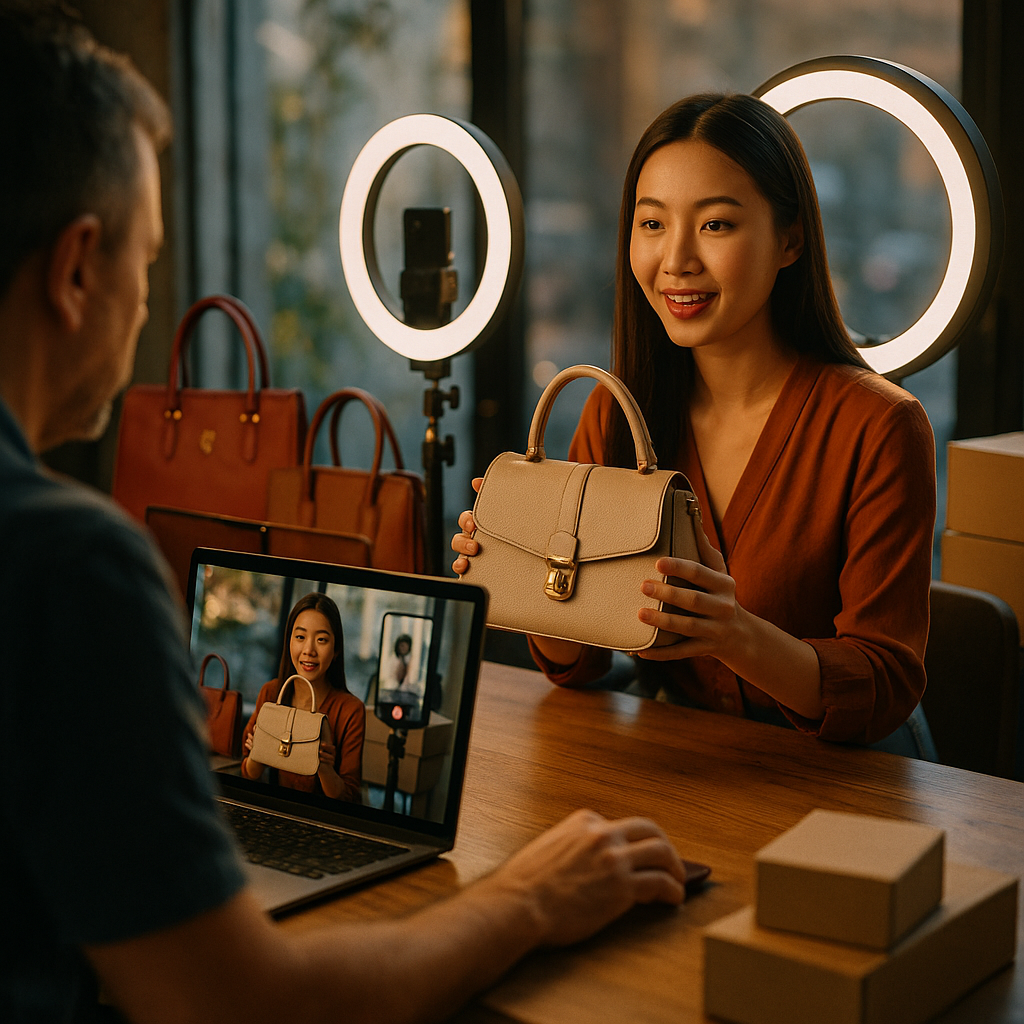
China’s livestream commerce market moved north of $500 billion in annual GMV years before most Western brands had a TikTok Shop strategy. That gap didn’t close on its own. It closed because Alibaba, Douyin, and a wave of logistics and fulfillment vendors built the plumbing first and let commerce follow. Now that same live commerce infrastructure is landing in Western markets, and it’s quietly rewriting how CMOs allocate budget across paid media, influencer retainers, and platform tech stacks.
If you’re still budgeting for social commerce the way you did three years ago, static product tags, quarterly influencer campaigns, siloed affiliate tracking, you’re planning for a market that no longer exists.
What “Live Commerce Infrastructure” Actually Means
It’s easy to conflate live commerce with “doing a livestream.” That’s not infrastructure, that’s an event. Real infrastructure is the stack underneath: real-time inventory sync, one-tap checkout inside the stream, creator affiliate attribution baked into the platform layer, and logistics networks that can fulfill an order placed mid-broadcast within 48 hours.
Asian platforms built this backward from Western norms. Douyin and Taobao Live didn’t bolt commerce onto a social feed, they built social discovery onto a commerce backbone that already had warehousing, courier networks, and payment rails solved. As we covered in our analysis of livestream commerce logistics, the fulfillment layer is the actual differentiator, not the streaming tech. TikTok Shop’s Western expansion is essentially an attempt to import that backbone piece by piece, and brands that ignore the fulfillment side keep getting burned by return rates and delayed shipping that tank their creator ROI.
The Budget Line Nobody Wants to Talk About
Here’s the uncomfortable part for finance teams. Live commerce infrastructure isn’t a marketing line item, it’s a supply chain investment disguised as a marketing channel. Brands that treat it purely as a content budget keep underfunding the fulfillment and returns-management side, then wonder why conversion drops after the initial livestream spike.
Social commerce GMV has roughly doubled in under two years, yet most Western brand budgets still allocate live commerce as a rounding error inside the broader influencer line. That mismatch is the single biggest planning gap in social commerce right now.
This tracks with what we found in our budget planning gap analysis: spend growth is outpacing the internal financial models built to justify it. Marketing leaders are asking for more budget using GMV numbers that finance departments still categorize as experimental.
Why Western Platforms Are Racing to Copy the Model
TikTok Shop, Amazon Live, and Instagram’s checkout features are all reverse-engineering pieces of the Asian playbook, but none of them have the vertically integrated logistics that made the original model work. Amazon comes closest because of its warehouse density. TikTok is compensating by subsidizing creator commissions and pushing aggressive seller incentives, which is why CPMs and affiliate rates in shoppable video have been climbing, not falling, despite the platform maturing.
That subsidy period won’t last forever. Brands locking in creator and affiliate rates now, while TikTok Shop is still buying market share, are getting a better deal than they will in eighteen months. It’s the same dynamic we’ve seen in nano creator rate inflation in beauty, early movers lock favorable economics before the category gets crowded.
Live Commerce Is a Trust Play, Not Just a Sales Channel
Something interesting happens when a creator does a live product demo versus a polished pre-recorded ad: the audience treats it as closer to a peer recommendation than an advertisement. That perceived authenticity is exactly why trust scores are outperforming reach metrics in recent purchase intent data. Live formats compress the distance between discovery and purchase in a way that static feed content structurally can’t, because the viewer is watching a real-time, unscripted interaction with the product.
This is also why synthetic avatars and AI-generated hosts have struggled to gain traction in live commerce specifically. Viewers can tolerate an AI spokesperson in a 15-second ad. They’re far less forgiving of one hosting a 45-minute live shopping event where questions go unanswered or reactions feel canned. The data on this is fairly stark, as we detailed in our reporting on synthetic avatar trust gaps.
The Operational Risk Brands Keep Underestimating
Live commerce vendors sourced from Asian infrastructure providers are, in some cases, financially thin operations riding a growth wave. Before you sign a multi-year contract with a livestream tech vendor or fulfillment partner, run the same due diligence you’d run on any critical vendor. Check their funding runway, their client concentration, their contractual exit terms. Vendor financial health has become a standard part of creator platform due diligence, and live commerce infrastructure providers deserve the same scrutiny, arguably more, since your fulfillment continuity depends on them staying solvent.
There’s also a compliance dimension that’s easy to miss. Live, unscripted selling raises disclosure questions the FTC has already flagged in its influencer guidance, and UK brands need to keep an eye on how the ICO treats real-time data capture during checkout flows embedded in livestreams. A creator improvising claims about a product on a live broadcast, with no delay or review step, is a bigger legal exposure than a pre-approved static post.
Attribution Gets Harder Before It Gets Easier
Multi-platform live commerce means a customer might discover a product on a Douyin-style feed, watch a comparison stream on TikTok, and complete the purchase on the brand’s own site three days later. Stitching that journey together is exactly the kind of gap that API-driven publishing layers are starting to close, but most Western brands still don’t have the infrastructure to track cross-platform live commerce the way they track paid social. Expect this to be the next major martech spending category, and it dovetails with the broader trend of AI martech investment scaling toward the billions as brands buy their way out of attribution blind spots.
According to data referenced by eMarketer, live shopping adoption in the US and UK has been climbing steadily even as platforms iterate on format, which suggests this isn’t a fad brands can wait out. It’s an infrastructure buildout, and buildouts reward whoever moves first.
What This Means for Your Next Budget Cycle
Three practical shifts are worth making now:
- Reclassify live commerce spend. Stop burying it inside “influencer marketing” and give it its own line that includes fulfillment, returns handling, and platform fees, not just creator fees.
- Lock creator and affiliate rates early. Platforms are still subsidizing growth. That window is closing as competition increases, similar to what happened with live stream hours jumping as brands chase real-time selling.
- Audit your logistics partners before your creator roster. A great livestream host can’t save a broadcast that ends in a two-week shipping delay and a return spike.
None of this requires abandoning your existing influencer strategy. It requires layering live commerce infrastructure underneath it, the same way brands eventually had to layer Meta’s shopping tools and TikTok’s advertising platform under what used to be organic-only creator partnerships.
Frequently Asked Questions
What is live commerce infrastructure?
It refers to the combined technology and logistics stack that makes real-time shoppable video work: inventory syncing, in-stream checkout, creator affiliate tracking, and fast fulfillment networks. It’s distinct from simply hosting a livestream on a social platform.
Why is Asian live commerce infrastructure influencing Western budgets?
Platforms like Douyin and Taobao Live built commerce-first infrastructure years before Western equivalents, and Western platforms like TikTok Shop are now importing pieces of that model. Brands are having to reallocate budget toward fulfillment and attribution tech that didn’t previously sit inside a marketing budget.
Is live commerce more effective than standard influencer posts?
Live formats tend to build higher purchase intent because they feel closer to a peer recommendation than scripted content, but they require stronger operational support behind the scenes, particularly fulfillment speed and return handling.
What’s the biggest risk brands overlook in live commerce partnerships?
Vendor financial stability and fulfillment continuity. Many live commerce tech and logistics providers are relatively young companies riding rapid growth, so contract due diligence matters as much as creator selection.
Should smaller brands invest in live commerce infrastructure now?
Yes, primarily because affiliate and creator rates are still lower while platforms subsidize adoption. Waiting typically means paying higher rates once the format matures and competition for creator slots increases.
Next step: pull your live commerce spend out of the general influencer budget line this quarter, and run a vendor financial health check on your fulfillment and platform partners before you renew anything.
Top Influencer Marketing Agencies
The leading agencies shaping influencer marketing in 2026
Agencies ranked by campaign performance, client diversity, platform expertise, proven ROI, industry recognition, and client satisfaction. Assessed through verified case studies, reviews, and industry consultations.
Moburst

-
2

The Shelf
Boutique Beauty & Lifestyle Influencer AgencyA data-driven boutique agency specializing exclusively in beauty, wellness, and lifestyle influencer campaigns on Instagram and TikTok. Best for brands already focused on the beauty/personal care space that need curated, aesthetic-driven content.Clients: Pepsi, The Honest Company, Hims, Elf Cosmetics, Pure LeafVisit The Shelf → -
3

Audiencly
Niche Gaming & Esports Influencer AgencyA specialized agency focused exclusively on gaming and esports creators on YouTube, Twitch, and TikTok. Ideal if your campaign is 100% gaming-focused — from game launches to hardware and esports events.Clients: Epic Games, NordVPN, Ubisoft, Wargaming, Tencent GamesVisit Audiencly → -
4

Viral Nation
Global Influencer Marketing & Talent AgencyA dual talent management and marketing agency with proprietary brand safety tools and a global creator network spanning nano-influencers to celebrities across all major platforms.Clients: Meta, Activision Blizzard, Energizer, Aston Martin, WalmartVisit Viral Nation → -
5

The Influencer Marketing Factory
TikTok, Instagram & YouTube CampaignsA full-service agency with strong TikTok expertise, offering end-to-end campaign management from influencer discovery through performance reporting with a focus on platform-native content.Clients: Google, Snapchat, Universal Music, Bumble, YelpVisit TIMF → -
6

NeoReach
Enterprise Analytics & Influencer CampaignsAn enterprise-focused agency combining managed campaigns with a powerful self-service data platform for influencer search, audience analytics, and attribution modeling.Clients: Amazon, Airbnb, Netflix, Honda, The New York TimesVisit NeoReach → -
7

Ubiquitous
Creator-First Marketing PlatformA tech-driven platform combining self-service tools with managed campaign options, emphasizing speed and scalability for brands managing multiple influencer relationships.Clients: Lyft, Disney, Target, American Eagle, NetflixVisit Ubiquitous → -
8

Obviously
Scalable Enterprise Influencer CampaignsA tech-enabled agency built for high-volume campaigns, coordinating hundreds of creators simultaneously with end-to-end logistics, content rights management, and product seeding.Clients: Google, Ulta Beauty, Converse, AmazonVisit Obviously →