


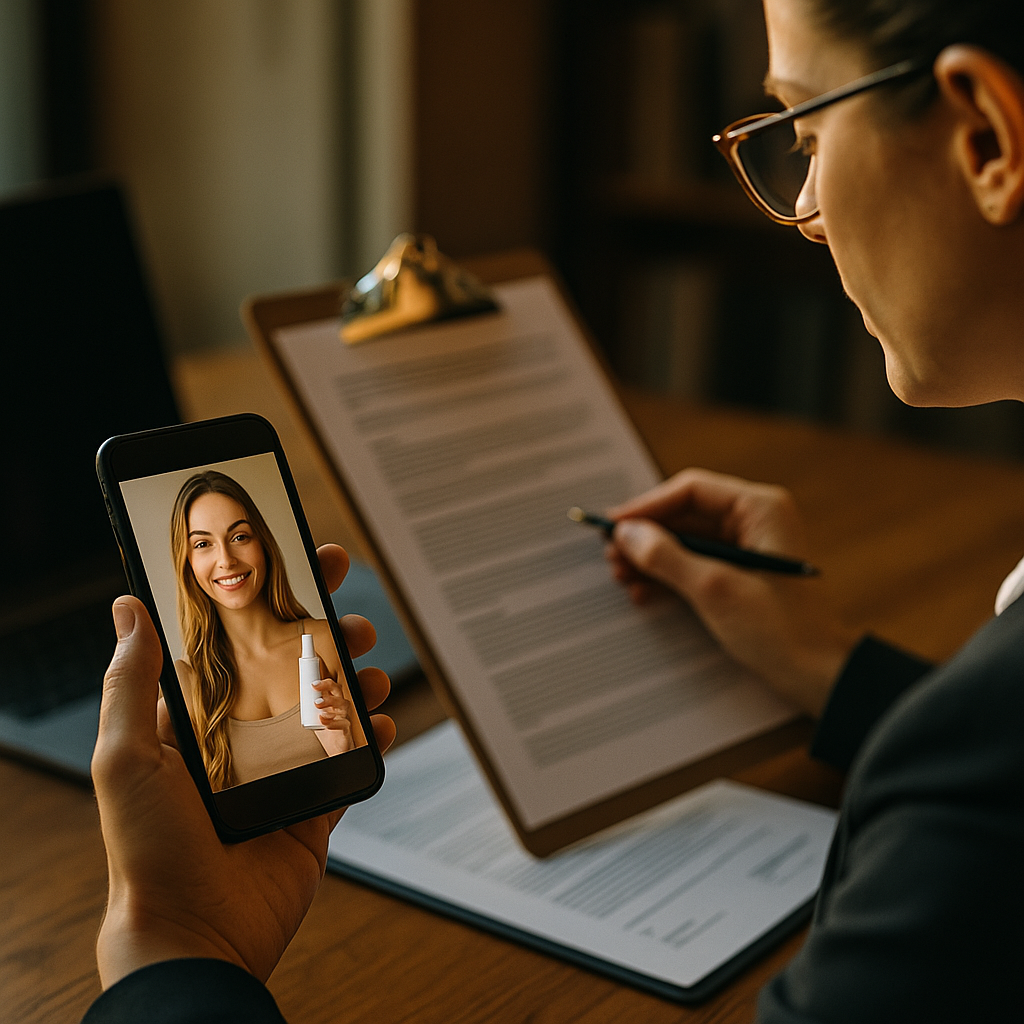
Ninety percent of consumers say they can’t reliably tell AI-generated content from real footage, according to recent industry surveys, and Meta just paid a settlement proving what happens when brands don’t build safeguards around that gap. AI generated influencer ads are no longer a novelty experiment. They’re a legal exposure line item, and the Meta settlement just moved that line item to the top of every general counsel’s inbox.
What the Meta Settlement Actually Signals
The details matter less than the pattern. A wave of AI-generated ads used synthetic likenesses of public figures and, in some cases, fabricated “influencer” personas to sell products those people never endorsed. Meta absorbed liability for distributing them, and the settlement effectively confirmed that platforms and, by extension, the brands running the campaigns, can’t hide behind “the AI made it” as a defense.
That’s the part brand marketers keep missing. Regulators and courts are treating synthetic endorsement the same way they treat a fake human endorsement: as a deceptive practice if it misleads consumers about who is actually speaking and why. The FTC’s guidance on endorsements already covers this ground, it just hadn’t been tested against fully synthetic creator content at scale until now.
If your AI generated influencer ad could plausibly be mistaken for a real person’s genuine opinion, you now carry the same disclosure and truthfulness obligations you would with a live human creator, plus an extra layer of risk around likeness rights.
Why “AI Generated” Became Its Own Liability Category
Traditional influencer compliance programs were built around a simple question: did the creator disclose the paid relationship? AI generated content breaks that model in three ways.
- No human to hold accountable. When a synthetic spokesperson makes a claim, there’s no creator to indemnify the brand or absorb reputational blowback. The brand owns it entirely.
- Likeness ambiguity. Fully synthetic “creators” can still resemble real people closely enough to trigger right of publicity claims, even without intentional copying.
- Disclosure format is undefined. Most platforms still don’t have a standardized label for “this creator does not exist” the way they do for “paid partnership.”
Brands that treated AI generated influencer ads as a production shortcut rather than a compliance category are the ones now scrambling. This is similar territory to what we covered in AI voice cloning in ads, where the underlying issue isn’t the technology, it’s the absence of a disclosure standard keeping pace with it.
Building the Liability Review Checklist
Here’s the practical part. If your team is running, testing, or even considering AI generated influencer ads, this checklist should sit in front of every campaign before it goes live, not after legal gets a cease and desist letter.
Stage One: Origination Review
- Is the “creator” fully synthetic, a digital twin of a real person, or an AI-enhanced version of genuine footage? Each carries different risk tiers.
- If any real person’s likeness, voice, or mannerisms were used as training reference, do you have documented, signed consent covering commercial use?
- Has the vendor or in-house team logged the generation process, prompts, and source material used to create the asset?
Stage Two: Claims and Disclosure Audit
- Does the ad make any factual claim (health, financial, performance) that a synthetic persona cannot substantiate through real experience?
- Is there a clear, unmissable disclosure that the persona or content is AI generated, placed before the viewer forms an impression, not buried in a caption?
- Does the disclosure language match current platform policy and regional advertising law, not just US FTC standards?
Stage Three: Contractual and Insurance Check
- Does your vendor contract explicitly assign liability for likeness disputes, defamation, or misrepresentation claims arising from the synthetic content?
- Does your media liability or errors and omissions policy actually cover AI-generated ad content, or does it carry an exclusion?
- Is there a documented sign-off chain (legal, brand safety, marketing lead) with timestamps, not just a verbal green light?
Stage Four: Post-Launch Monitoring
- Who is tracking complaint volume, platform flags, or regulatory inquiries tied to the specific asset?
- Is there a kill switch process to pull the ad within hours, not days, if a likeness or deception complaint surfaces?
- Are you archiving the full production trail (prompts, consents, approvals) for a minimum retention period matching your jurisdiction’s statute of limitations for deceptive advertising claims?
None of this is theoretical process for its own sake. It mirrors what smart teams already built for human creator disclosure gaps, covered in depth in our piece on consent logging audit trails. AI generated content just raises the stakes because there’s no creator to share the blame.
Where Legal Teams Get Blindsided
The mistake almost every brand makes is assuming the AI vendor’s terms of service handle liability. They don’t, usually. Most generative AI tool contracts explicitly disclaim responsibility for how the output is used downstream, pushing all commercial liability back onto the brand that publishes the ad.
Compare that to how brands already structure risk in exclusive creator relationships, where usage rights, indemnification, and morality clauses get spelled out in detail (see our breakdown of exclusive creator contracts). AI vendor agreements rarely get the same scrutiny, even though the financial exposure can be just as severe. If your procurement team is signing AI ad generation tool contracts without legal review, that’s the first gap to close.
There’s also a data question lurking underneath. If an AI tool trained on your CRM data or past creator content to generate “personalized” synthetic ads, you may have triggered obligations similar to those covered in creator CRM access data agreements. Data provenance for AI generated ads is quickly becoming its own audit category.
Vendor Contracts Need New Language, Not Boilerplate
Standard production agreements weren’t written with synthetic personas in mind. Update your vendor paper to include:
- Explicit warranties that no real person’s likeness was used without documented consent.
- Indemnification clauses specifically naming AI-generated content disputes, not just generic IP infringement language.
- Audit rights letting your compliance team inspect the generation process on request.
- Retention requirements for training data and prompt logs tied to the specific campaign.
Agencies producing AI generated influencer ads at scale should expect this level of scrutiny to become standard within the next procurement cycle. Brands that get ahead of it now avoid the renegotiation scramble later.
Who Actually Signs Off?
Most brands don’t have a defined approval chain for AI generated ad content yet. That’s the operational gap the Meta settlement exposed. Build a sign-off matrix with three checkpoints: legal (claims and likeness risk), brand safety (platform policy and disclosure compliance), and a senior marketing lead (business risk tolerance). No AI generated influencer ad should launch without all three checkpoints logged with a timestamp and a name attached.
This isn’t bureaucracy for its own sake. It’s the same discipline that separates brands who sail through an FTC compliance audit from those who get named in an enforcement action. Documentation is the entire defense.
For teams benchmarking spend and platform performance data, eMarketer’s advertising research and Statista’s digital ad spend data are useful references for justifying the resourcing this review process requires to finance.
Frequently Asked Questions
What counts as an AI generated influencer ad for compliance purposes?
Any ad using a synthetic persona, an AI-generated voice, an AI-enhanced likeness of a real creator, or a fully fabricated spokesperson falls into this category. If a reasonable viewer could mistake the content for a genuine human endorsement, it needs the same disclosure rigor as human-led influencer content.
Did the Meta settlement create new legal requirements for brands?
Not directly through new statute, but it confirmed that existing deceptive advertising law applies fully to AI-generated endorsement content. Brands should treat it as a signal that enforcement is coming, not as a one-off platform issue.
Who is liable if an AI generated influencer ad misleads consumers, the brand or the AI vendor?
In most current vendor agreements, liability defaults to the brand publishing the ad. Vendor terms of service typically disclaim responsibility for downstream use, which is exactly why contract language needs updating before, not after, a campaign launches.
Does an AI generated influencer need to disclose that it isn’t human?
Yes, if there’s any reasonable chance a viewer would believe the content came from a real, unpaid opinion. Regulators are applying the same “clear and conspicuous” disclosure standard used for paid human endorsements.
How long should brands retain records for AI generated ad campaigns?
At minimum, retain generation logs, consent documentation, and approval sign-offs for the length of your jurisdiction’s statute of limitations on deceptive advertising claims, often several years. Treat it the same way you’d treat contract retention for human creator deals.
Don’t wait for a regulator or a plaintiff’s attorney to define your AI ad policy for you. Pull this checklist into your next campaign brief template, assign the three-checkpoint sign-off chain, and audit every AI generated influencer ad currently live against it this week.
Top Influencer Marketing Agencies
The leading agencies shaping influencer marketing in 2026
Agencies ranked by campaign performance, client diversity, platform expertise, proven ROI, industry recognition, and client satisfaction. Assessed through verified case studies, reviews, and industry consultations.
Moburst

-
2

The Shelf
Boutique Beauty & Lifestyle Influencer AgencyA data-driven boutique agency specializing exclusively in beauty, wellness, and lifestyle influencer campaigns on Instagram and TikTok. Best for brands already focused on the beauty/personal care space that need curated, aesthetic-driven content.Clients: Pepsi, The Honest Company, Hims, Elf Cosmetics, Pure LeafVisit The Shelf → -
3

Audiencly
Niche Gaming & Esports Influencer AgencyA specialized agency focused exclusively on gaming and esports creators on YouTube, Twitch, and TikTok. Ideal if your campaign is 100% gaming-focused — from game launches to hardware and esports events.Clients: Epic Games, NordVPN, Ubisoft, Wargaming, Tencent GamesVisit Audiencly → -
4

Viral Nation
Global Influencer Marketing & Talent AgencyA dual talent management and marketing agency with proprietary brand safety tools and a global creator network spanning nano-influencers to celebrities across all major platforms.Clients: Meta, Activision Blizzard, Energizer, Aston Martin, WalmartVisit Viral Nation → -
5

The Influencer Marketing Factory
TikTok, Instagram & YouTube CampaignsA full-service agency with strong TikTok expertise, offering end-to-end campaign management from influencer discovery through performance reporting with a focus on platform-native content.Clients: Google, Snapchat, Universal Music, Bumble, YelpVisit TIMF → -
6

NeoReach
Enterprise Analytics & Influencer CampaignsAn enterprise-focused agency combining managed campaigns with a powerful self-service data platform for influencer search, audience analytics, and attribution modeling.Clients: Amazon, Airbnb, Netflix, Honda, The New York TimesVisit NeoReach → -
7

Ubiquitous
Creator-First Marketing PlatformA tech-driven platform combining self-service tools with managed campaign options, emphasizing speed and scalability for brands managing multiple influencer relationships.Clients: Lyft, Disney, Target, American Eagle, NetflixVisit Ubiquitous → -
8

Obviously
Scalable Enterprise Influencer CampaignsA tech-enabled agency built for high-volume campaigns, coordinating hundreds of creators simultaneously with end-to-end logistics, content rights management, and product seeding.Clients: Google, Ulta Beauty, Converse, AmazonVisit Obviously →