


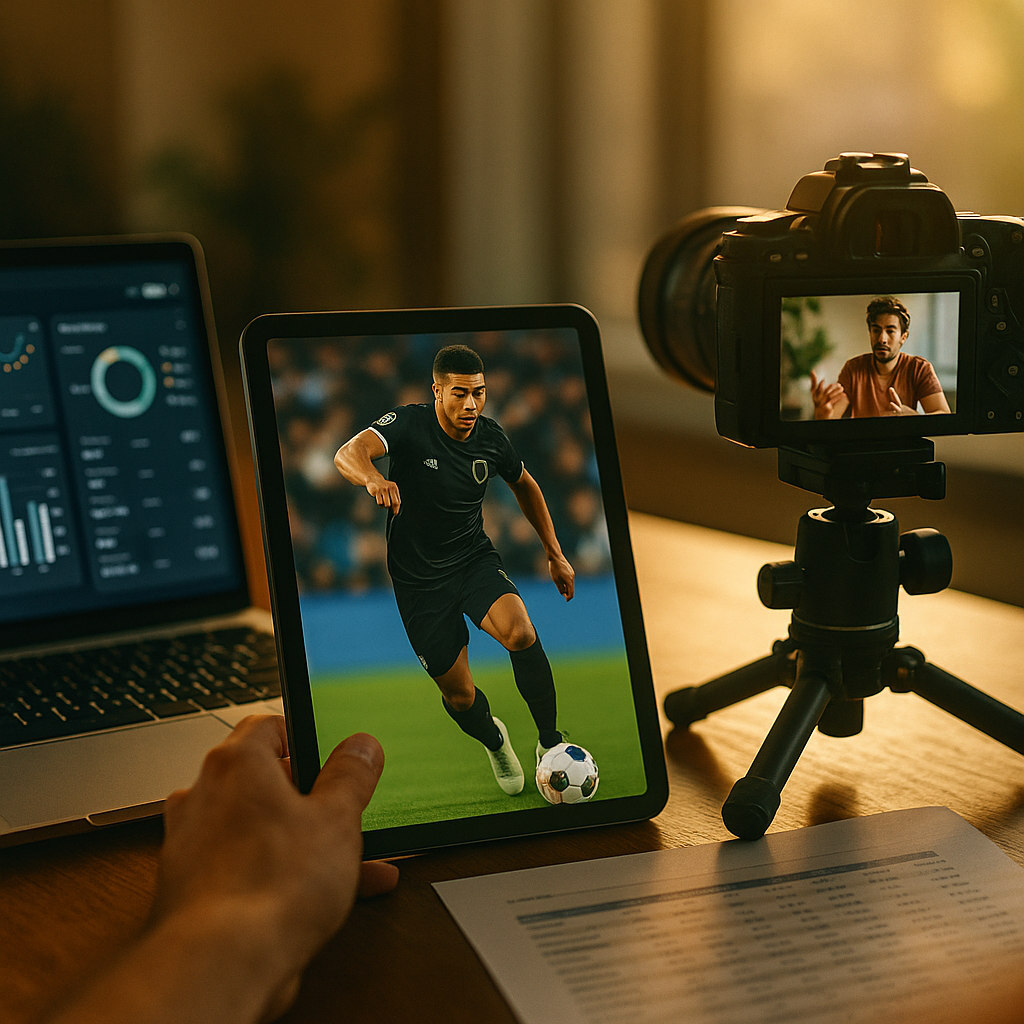
Sports media rights deals used to be measured in eyeballs. Now they’re measured in engagement graphs, purchase signals, and creator collaboration rates. Foxtel’s rebrand to DAZN Media+ is the clearest signal yet that sports broadcasting and creator advertising are merging into one commercial asset, and brands that treat them as separate line items are already behind.
This isn’t a logo change. It’s a structural bet that live sports data, second by second viewership behavior, betting patterns, fan sentiment, can be fused with creator content to build advertising products that neither a streaming platform nor a talent agency could sell alone. For marketing leaders managing sponsorship budgets, this changes how you plan, buy, and measure sports adjacent influencer work.
What Actually Changed When Foxtel Became DAZN Media+
Foxtel, long Australia’s dominant pay TV operator, had been bleeding subscribers to streaming for years. DAZN, the global sports streaming platform, has spent the last several years building a different kind of asset: a proprietary data layer on how fans actually watch sport, not just what they watch. The merger and rebrand consolidates that under one banner, DAZN Media+, positioning the combined entity less as a broadcaster and more as a media and advertising infrastructure company.
The “+” in the name isn’t decorative. It signals an expanded ad product suite that sits on top of the content, including creator partnership tools, real time audience segmentation, and sponsorship packages that bundle broadcast inventory with influencer distribution. Think of it as the sports equivalent of what retail media networks did to ecommerce: turning a viewing experience into a addressable, measurable ad channel.
The rebrand matters less as a naming exercise and more as proof that sports data and creator content are now sold as a single package, not two separate budget lines.
Why Sports Viewership Data Is Becoming Creator Currency
Here’s the practical shift for brand strategists: DAZN Media+ can now tell an advertiser not just how many people watched a match, but which creators’ audiences overlapped with that viewership, how sentiment shifted during key moments, and which fan segments engaged with second screen content during the broadcast. That’s a level of granularity sports sponsorship has rarely offered.
For years, sports marketing and influencer marketing lived in different departments with different KPIs. Sponsorship teams bought media weight and brand lift studies. Influencer teams bought reach and engagement rate. DAZN Media+’s model forces them into the same spreadsheet, because the platform is selling a single audience graph that spans both.
This mirrors a broader trend across the creator economy. Brands like Coty have already rebuilt their entire influencer spend model around sales attribution rather than vanity reach metrics. DAZN Media+ is essentially applying that same attribution logic to sports sponsorship, where it has historically been weakest.
The Programmatic Layer Nobody Expected From a Sports Broadcaster
What’s genuinely novel is the programmatic matching layer DAZN Media+ has built to pair sponsors with sport adjacent creators in near real time. Instead of a brand manually negotiating with a handful of football or rugby influencers, the platform can algorithmically match sponsorship intent (say, a fintech brand targeting fans of a specific league) with creators whose audience data proves overlap, then auto generate performance benchmarks.
Brands already familiar with programmatic creator matching in retail contexts, like the model behind Chipotle’s 700+ creator tier system, will recognize the mechanics immediately. DAZN Media+ has just applied it to live sports rights, where inventory is time bound and far more expensive.
Where This Gets Risky for Brand Teams
Merging broadcast data with creator advertising sounds efficient on a slide deck. In practice, it opens up compliance questions that most sponsorship contracts weren’t written for.
- Disclosure ambiguity: When a creator’s content is served programmatically alongside licensed sports footage, who is responsible for FTC style disclosure compliance, the creator, the brand, or the platform?
- Data provenance: Fan viewership and betting adjacent data sits in a legally sensitive category in many markets. Brands need to confirm how DAZN Media+ sources and anonymizes that data before building campaigns on top of it.
- Rights stacking: Licensing sports IP, creator likeness, and platform distribution rights simultaneously creates a three way rights negotiation that’s easy to get wrong. NBCUniversal’s approach to licensed IP and creator distribution offers a useful template for how to structure this cleanly.
- Attribution overclaiming: A shared audience graph doesn’t automatically mean causal lift. Brands should demand the same rigor they’d apply to any ROI validation process before trusting DAZN Media+’s reported overlap metrics.
None of this is a reason to avoid the platform. It’s a reason to negotiate contracts with the same specificity you’d use for a retail media partnership, not the looser terms sports sponsorship deals have historically carried.
What This Signals About the Broader Creator Advertising Market
DAZN Media+ isn’t operating in isolation. eMarketer’s recent forecasts have repeatedly flagged sports media as one of the fastest growing categories for creator collaboration spend, and Statista data shows advertisers increasingly favor platforms that can prove cross channel attribution over those selling reach alone. Sports broadcasters watched retail media networks turn first party purchase data into a multibillion dollar ad category and clearly decided fan viewership data deserves the same treatment.
It also fits a pattern seen across other sectors. Beauty and CPG brands have spent the last several product cycles restructuring how they think about creator ops, as seen in Estee Lauder’s AI everywhere strategy and its broader AI shopping bet. Sports media companies are now running the same playbook: fuse proprietary data with creator distribution, then sell the combination as a premium, defensible ad product rather than commodity inventory.
If your sponsorship team and your influencer team still operate off separate dashboards, DAZN Media+’s model just made that separation a competitive disadvantage, not just an internal inefficiency.
What Brand and Agency Teams Should Do Now
Don’t wait for a formal case study deck from DAZN Media+’s sales team. Start asking these questions in your next sponsorship renewal conversation:
- Request the exact audience overlap methodology behind any creator plus broadcast bundle before committing budget.
- Insist on attribution reporting that separates correlation (audience overlap) from causation (actual purchase or brand lift behavior), similar to standards being adopted in retail creator campaigns.
- Clarify disclosure responsibility in the contract, not as an afterthought. Reference FTC endorsement guidance explicitly in your creator agreements tied to sports content.
- Pilot small before scaling. Treat any DAZN Media+ style bundled sponsorship as a test cell against your existing influencer spend, not a wholesale replacement.
Marketing leaders who’ve already restructured spend around measurable outcomes, rather than reach for reach’s sake, will adapt fastest. Everyone else has some catching up to do.
Frequently Asked Questions
What is DAZN Media+ and how is it different from Foxtel?
DAZN Media+ is the rebranded entity formed from Foxtel’s integration into DAZN’s global sports streaming and data infrastructure. Unlike traditional Foxtel, it positions itself as an advertising and data platform first, bundling live sports broadcast inventory with creator advertising tools and audience overlap analytics.
Why are sports broadcasters merging viewership data with creator advertising?
Sports broadcasters are following the retail media playbook: they’re monetizing first party audience data by pairing it with creator distribution, allowing advertisers to buy a combined package with clearer attribution than traditional sponsorship or influencer deals offered separately.
What compliance risks should brands watch for with DAZN Media+ style bundles?
Key risks include unclear disclosure responsibility between creators, brands, and the platform, ambiguous data provenance around fan and viewership data, and rights stacking issues when sports IP, creator likeness, and platform distribution rights all apply to the same campaign.
How should brands measure ROI on sports and creator bundled sponsorships?
Brands should separate audience overlap metrics from proven causal lift, request transparent attribution methodology from the platform, and pilot bundled sponsorships as a controlled test against existing influencer spend before scaling budget commitments.
Is this model relevant outside of sports media?
Yes. The underlying strategy, fusing proprietary first party data with creator advertising to sell a premium bundled product, is already visible in retail media, beauty, and CPG marketing, suggesting sports media is simply the latest sector to adopt it.
The takeaway for budget holders: audit your next sports sponsorship or creator bundle contract for attribution methodology and disclosure clauses before signing, not after the campaign ships.
Top Influencer Marketing Agencies
The leading agencies shaping influencer marketing in 2026
Agencies ranked by campaign performance, client diversity, platform expertise, proven ROI, industry recognition, and client satisfaction. Assessed through verified case studies, reviews, and industry consultations.
Moburst

-
2

The Shelf
Boutique Beauty & Lifestyle Influencer AgencyA data-driven boutique agency specializing exclusively in beauty, wellness, and lifestyle influencer campaigns on Instagram and TikTok. Best for brands already focused on the beauty/personal care space that need curated, aesthetic-driven content.Clients: Pepsi, The Honest Company, Hims, Elf Cosmetics, Pure LeafVisit The Shelf → -
3

Audiencly
Niche Gaming & Esports Influencer AgencyA specialized agency focused exclusively on gaming and esports creators on YouTube, Twitch, and TikTok. Ideal if your campaign is 100% gaming-focused — from game launches to hardware and esports events.Clients: Epic Games, NordVPN, Ubisoft, Wargaming, Tencent GamesVisit Audiencly → -
4

Viral Nation
Global Influencer Marketing & Talent AgencyA dual talent management and marketing agency with proprietary brand safety tools and a global creator network spanning nano-influencers to celebrities across all major platforms.Clients: Meta, Activision Blizzard, Energizer, Aston Martin, WalmartVisit Viral Nation → -
5

The Influencer Marketing Factory
TikTok, Instagram & YouTube CampaignsA full-service agency with strong TikTok expertise, offering end-to-end campaign management from influencer discovery through performance reporting with a focus on platform-native content.Clients: Google, Snapchat, Universal Music, Bumble, YelpVisit TIMF → -
6

NeoReach
Enterprise Analytics & Influencer CampaignsAn enterprise-focused agency combining managed campaigns with a powerful self-service data platform for influencer search, audience analytics, and attribution modeling.Clients: Amazon, Airbnb, Netflix, Honda, The New York TimesVisit NeoReach → -
7

Ubiquitous
Creator-First Marketing PlatformA tech-driven platform combining self-service tools with managed campaign options, emphasizing speed and scalability for brands managing multiple influencer relationships.Clients: Lyft, Disney, Target, American Eagle, NetflixVisit Ubiquitous → -
8

Obviously
Scalable Enterprise Influencer CampaignsA tech-enabled agency built for high-volume campaigns, coordinating hundreds of creators simultaneously with end-to-end logistics, content rights management, and product seeding.Clients: Google, Ulta Beauty, Converse, AmazonVisit Obviously →