


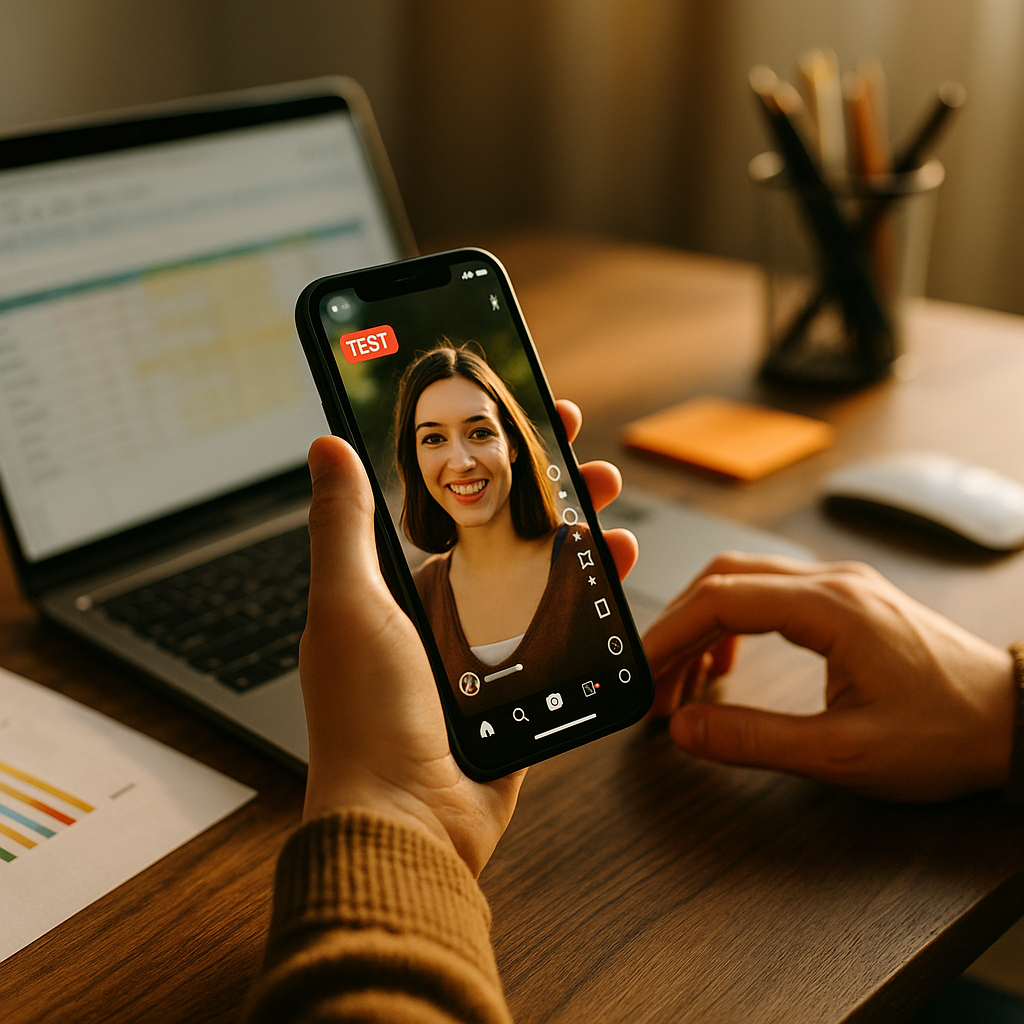
Only 20% of Reels a brand posts ever get real traction, and the rest just sit there quietly dragging down the account’s average engagement rate. That’s the unspoken math behind Instagram Trial Reels, Meta’s feature that lets you publish content to non-followers only, without it ever touching your grid or your loyal audience’s feed. If you’re still testing creative live on your main feed and hoping for the best, you’re burning reach and risking brand equity for no reason.
What Trial Reels Actually Do
Trial Reels publish to Instagram’s Explore and Reels surfaces, shown exclusively to accounts that don’t already follow you. The content doesn’t appear on your profile grid, doesn’t hit your followers’ feeds, and doesn’t count toward your regular engagement history unless you manually promote it afterward. Meta built this specifically as a low-stakes way to test formats, hooks, and messaging before committing to a full rollout.
For brand marketers, that’s a meaningful shift. Previously, testing meant either running paid dark posts through Meta’s ad platform (which costs money before you know if the creative works) or publishing organically and hoping a flop doesn’t tank your account’s average view time. Trial Reels sit in between: free, organic, but shielded from the audience whose trust you’ve already earned.
Trial Reels remove the binary choice between “risk your feed” and “pay to find out.” That middle ground is where most brand testing budgets should live.
Why Follower Risk Is a Real Cost, Not a Vague Fear
Instagram’s algorithm weighs recent engagement heavily when deciding future reach. Post three weak Reels in a row and the platform quietly throttles your next ten, even if that eleventh video is genuinely great. This is the same mechanic covered in our breakdown of the Instagram Reels algorithm: watch depth compounds, and a bad run of test content can suppress reach for weeks.
Brand accounts feel this more acutely than creators do. A creator can post something weird, get a mediocre response, and move on because their audience expects experimentation. A brand account posting a confusing or off-brand test to its actual followers risks unfollows, muted notifications, or worse: a follower quietly deciding the brand’s feed isn’t worth checking anymore. That erosion doesn’t show up in a single day’s analytics. It shows up three months later as declining organic reach across everything you post.
Trial Reels sidestep this entirely because the people seeing the test have no existing relationship with the brand to damage. If the content flops, nobody who already trusts you ever saw it fail.
Setting Up a Trial Reels Testing Program
Treat Trial Reels like a lightweight A/B testing lab, not a one-off gimmick. Here’s a workable structure for teams running consistent creative output:
- Batch your variants. Shoot three to five hook variations of the same core message. Test the first three seconds against each other since that’s what determines scroll-through on Explore.
- Run for 48 to 72 hours minimum. Explore distribution takes time to normalize. Judging a Trial Reel after four hours gives you noise, not signal.
- Track completion rate over likes. Non-follower audiences don’t like content the way followers do. Watch time and shares are the metrics that predict whether wider release will work.
- Promote the winner to your main grid. Once a Trial Reel proves itself, republish it as a standard post or feed it into paid boosting for amplification.
That last step matters. Once you’ve validated creative through trial testing, the natural next move is paid amplification behind the winning version. Our guide on Instagram paid boosting covers how to structure spend so you’re not throwing budget at unproven creative, which is exactly the mistake Trial Reels are meant to prevent.
Where Brands Get This Wrong
The most common mistake: treating Trial Reels as a permanent home for “safe” content instead of a genuine testing ground. If you never graduate anything to your main feed, you’re not testing, you’re just posting into a void. The feature only creates value when it feeds a decision, either “scale this” or “kill this and try something else.”
Second mistake: testing too many variables at once. If you change the hook, the music, the CTA, and the visual style all in one Trial Reel, you learn nothing when it performs well or badly. Isolate one variable per test batch. This is basic conversion rate optimization thinking, borrowed straight from landing page testing, and it applies just as directly to short-form video.
Third: ignoring the audience mismatch. Trial Reels show your content to people who don’t follow you, meaning the algorithm is optimizing for cold-audience appeal. A hook that performs brilliantly with non-followers might underperform with your existing base, who already know your brand voice and don’t need the same attention-grabbing opener. Don’t assume a Trial Reel win translates one-to-one to your grid without at least a small follow-up check.
How This Fits Into a Broader Creator Strategy
Trial Reels aren’t just for brand-owned accounts. If you’re briefing creators as part of a partnership, ask whether their content can run through a trial phase before the paid partnership label goes live. This is particularly useful when you’re locking in usage rights for paid media, a process we detail in Meta Partnership Ads setup. Testing creator content cold, before it’s tagged as a paid partnership, gives you a cleaner read on organic appeal without the label itself skewing perception.
It also pairs well with affiliate and shopping-driven content. If a brand is deciding which product angle to push through affiliate storefront collections, running a few Trial Reels first can indicate which product framing resonates before committing creator resources to a full campaign push.
Measuring Success Without Follower Metrics
Because Trial Reels don’t touch your follower base, standard engagement rate calculations (engagement divided by follower count) are useless here. You need a different scorecard:
- Average watch time as a percentage of total video length. This is the single best predictor of algorithmic favor on Reels specifically.
- Shares per thousand views. Trial Reels that get shared by strangers indicate genuinely resonant content, not just curiosity clicks.
- Comment sentiment, not comment volume. A handful of thoughtful comments beats fifty low-effort emoji replies.
- Explore page click-through to profile. If people are visiting your profile after watching, that’s a strong buying-intent signal worth noting for future funnel work.
Data from platforms like Sprout Social consistently shows that video completion rate correlates more tightly with downstream reach than any vanity metric. Build your Trial Reels scorecard around that principle and you’ll make better creative calls faster.
If your team is still greenlighting Reels based on gut feel and a Monday morning glance at likes, Trial Reels give you an actual testing mechanism instead of a guessing game.
Compliance and Brand Safety Notes
Trial Reels don’t carry a paid partnership label by default since they’re organic, not sponsored, content. But if the creative includes a creator under contract, or if it’s later boosted with paid spend, standard disclosure rules from the FTC still apply once it moves into a monetized or partnership context. Don’t let the “just a test” framing become an excuse to skip disclosure review, especially once a Trial Reel graduates to full publication or paid promotion. Meta’s own guidance through Meta for Business is worth checking periodically since testing feature rules tend to shift as the platform iterates.
FAQs
Frequently Asked Questions
What are Instagram Trial Reels?
Trial Reels are a publishing option that shows a Reel only to non-followers on Explore and Reels surfaces, keeping it off your profile grid and away from your existing follower base until you choose to publish it more broadly.
Do Trial Reels affect my regular engagement rate?
No. Trial Reels are excluded from your profile grid and don’t factor into the engagement metrics followers see, so a weak test doesn’t drag down your account’s public performance history.
How long should I run a Trial Reel before judging results?
Give it at least 48 to 72 hours. Explore distribution needs time to stabilize, and early hour data tends to be noisy and unreliable for decision-making.
Can I use Trial Reels for creator partnership content?
Yes, and it’s a smart use case. Testing creator content before it carries a paid partnership label gives you a cleaner signal on organic appeal before committing to a full campaign or paid boost.
What metrics matter most for Trial Reels?
Focus on average watch time percentage, shares per thousand views, and comment sentiment rather than raw like counts, since these predict algorithmic reach far more reliably than vanity metrics.
Should every Reel go through Trial testing first?
Not necessarily. Reserve Trial Reels for content with real creative risk, like a new hook style, unfamiliar messaging, or an unproven format, rather than routine posts that follow a formula you’ve already validated.
Start small: pick your next three unproven creative concepts, run them as Trial Reels before anything touches your main grid, and let watch time decide what earns your follower’s attention. The teams that build this into a weekly habit stop guessing and start compounding wins.
Top Influencer Marketing Agencies
The leading agencies shaping influencer marketing in 2026
Agencies ranked by campaign performance, client diversity, platform expertise, proven ROI, industry recognition, and client satisfaction. Assessed through verified case studies, reviews, and industry consultations.
Moburst

-
2

The Shelf
Boutique Beauty & Lifestyle Influencer AgencyA data-driven boutique agency specializing exclusively in beauty, wellness, and lifestyle influencer campaigns on Instagram and TikTok. Best for brands already focused on the beauty/personal care space that need curated, aesthetic-driven content.Clients: Pepsi, The Honest Company, Hims, Elf Cosmetics, Pure LeafVisit The Shelf → -
3

Audiencly
Niche Gaming & Esports Influencer AgencyA specialized agency focused exclusively on gaming and esports creators on YouTube, Twitch, and TikTok. Ideal if your campaign is 100% gaming-focused — from game launches to hardware and esports events.Clients: Epic Games, NordVPN, Ubisoft, Wargaming, Tencent GamesVisit Audiencly → -
4

Viral Nation
Global Influencer Marketing & Talent AgencyA dual talent management and marketing agency with proprietary brand safety tools and a global creator network spanning nano-influencers to celebrities across all major platforms.Clients: Meta, Activision Blizzard, Energizer, Aston Martin, WalmartVisit Viral Nation → -
5

The Influencer Marketing Factory
TikTok, Instagram & YouTube CampaignsA full-service agency with strong TikTok expertise, offering end-to-end campaign management from influencer discovery through performance reporting with a focus on platform-native content.Clients: Google, Snapchat, Universal Music, Bumble, YelpVisit TIMF → -
6

NeoReach
Enterprise Analytics & Influencer CampaignsAn enterprise-focused agency combining managed campaigns with a powerful self-service data platform for influencer search, audience analytics, and attribution modeling.Clients: Amazon, Airbnb, Netflix, Honda, The New York TimesVisit NeoReach → -
7

Ubiquitous
Creator-First Marketing PlatformA tech-driven platform combining self-service tools with managed campaign options, emphasizing speed and scalability for brands managing multiple influencer relationships.Clients: Lyft, Disney, Target, American Eagle, NetflixVisit Ubiquitous → -
8

Obviously
Scalable Enterprise Influencer CampaignsA tech-enabled agency built for high-volume campaigns, coordinating hundreds of creators simultaneously with end-to-end logistics, content rights management, and product seeding.Clients: Google, Ulta Beauty, Converse, AmazonVisit Obviously →