


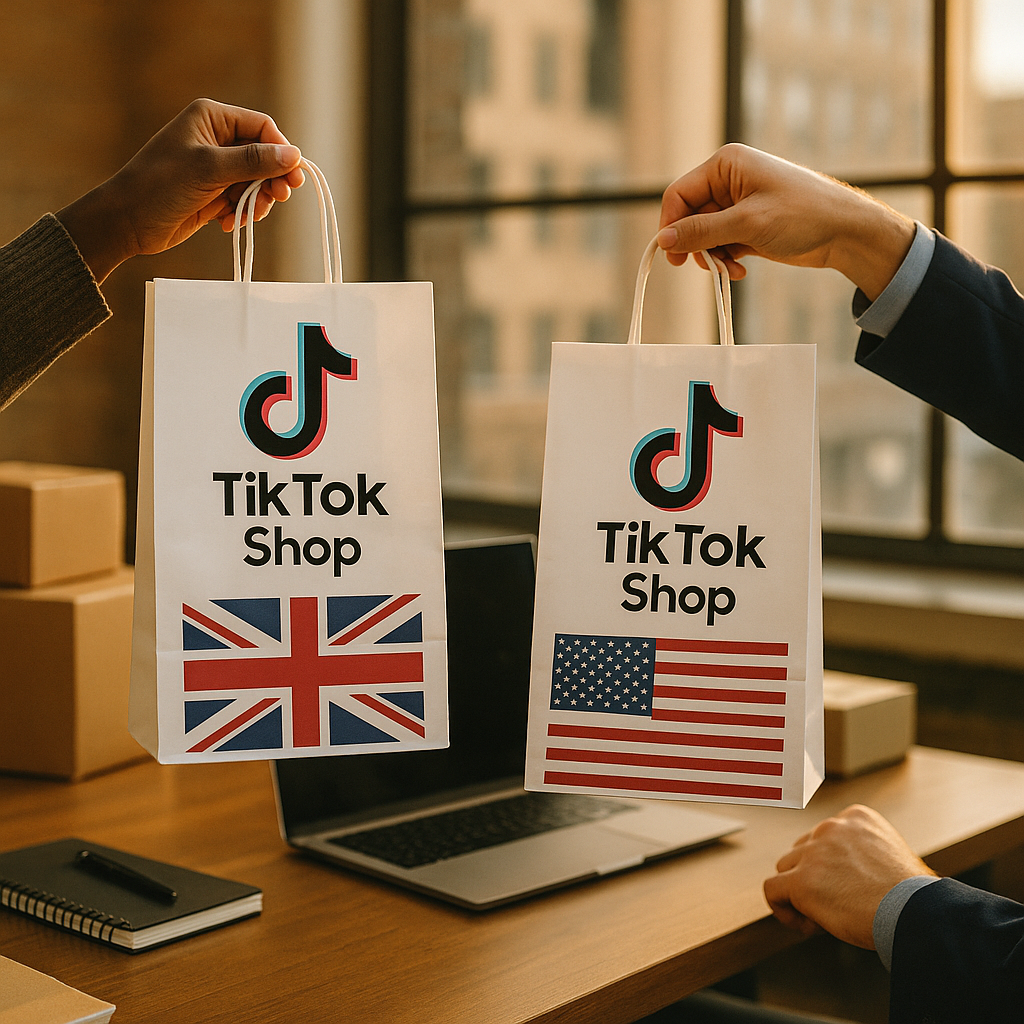
TikTok Shop in the UK is converting at rates the US market has never touched, and most brands still haven’t asked why. While American marketers debate whether TikTok Shop is worth the operational headache, UK retailers are quietly building it into their core commerce stack. The gap isn’t about market size. It’s about strategy, and it’s a masterclass US brands are ignoring.
The Numbers Tell an Uncomfortable Story
TikTok Shop launched in the UK well before its US counterpart matured, giving British brands a head start on live shopping formats, affiliate creator networks, and shoppable content workflows. That head start has compounded. UK conversion rates on TikTok Shop routinely outperform US benchmarks, and average order values in categories like beauty and fashion have climbed steadily even as the US market wrestles with return fraud and creator vetting issues.
Part of this comes down to timing. The UK rollout coincided with a cultural moment when TikTok Live shopping was still novel, not saturated. Brands that moved early captured audience trust before the platform got crowded. US brands, by contrast, entered a market already skeptical of live shopping gimmicks, thanks to years of QVC-style fatigue and a more cynical Gen Z consumer base wary of overt selling.
UK TikTok Shop sellers report conversion rates nearly double the US average in comparable categories, driven largely by tighter creator-to-commerce integration rather than raw ad spend.
This mirrors a pattern covered in our breakdown of TikTok Shop’s winning categories, where beauty, fashion, and home goods consistently outperform electronics and high-consideration purchases. The UK’s head start simply let brands optimize within those categories longer.
Why UK Brands Got the Playbook Right
Ask any UK-based social commerce manager what changed their results, and you’ll hear the same answer: they stopped treating TikTok Shop as a media buy and started treating it as a distribution channel. That’s a subtle but critical shift. Media buys chase impressions. Distribution channels demand inventory planning, creator relationship management, and return logistics baked into the marketing budget from day one.
UK retailers like those in the fashion and beauty verticals built dedicated TikTok Shop teams months before their US parent companies did. They negotiated affiliate commission structures directly with creators instead of routing everything through agencies. They tested live shopping slots during off-peak hours to find underpriced inventory in TikTok’s algorithm. None of this is glamorous. It’s operational discipline, and it’s exactly what separates brands that scale from brands that plateau.
- Early adoption of TikTok Shop’s affiliate marketplace before it became crowded with competing offers
- In-house creator sourcing rather than outsourcing every relationship to a third-party agency
- Live shopping cadence tested and refined over multiple quarters, not one-off campaigns
- Return and fulfillment logistics integrated with existing UK warehousing rather than bolted on later
This operational-first mindset echoes what we’ve seen in electronics brands cutting agency costs to own their customer data directly. The pattern holds across categories: brands that internalize the mechanics of a platform outperform brands that rent expertise quarter to quarter.
US Brands Are Still Fighting the Wrong Battle
Here’s the uncomfortable truth for American marketing teams: much of the US struggle with TikTok Shop has nothing to do with the platform and everything to do with organizational structure. Many US brands still run TikTok Shop through the same agency relationships handling their broader influencer program, which means creator selection, contract terms, and commerce integration all move at agency speed rather than platform speed.
That lag matters enormously on a platform where trends shift weekly. A UK team with an in-house creator manager can greenlight a live shopping event in 48 hours. A US brand routing the same decision through an agency and legal review might take three weeks, by which point the trend has moved on and the creator has already partnered with a competitor.
We’ve written before about how spreadsheet-based creator programs expose brands to compliance risk, and TikTok Shop amplifies that exposure. Every live shopping event, every affiliate link, every product claim made on camera carries FTC disclosure obligations. Brands managing this through disconnected spreadsheets and email threads are one audit away from a real problem.
Speed to decision, not creative quality, is the single biggest differentiator between UK and US TikTok Shop performance.
There’s also a compliance dimension unique to each market. UK brands operate under ICO data protection guidance that, frankly, forces more disciplined data handling than many US teams practice voluntarily. That discipline seems to translate into cleaner customer data pipelines, which in turn feed better targeting and retargeting on TikTok Shop itself.
What Should US Brands Actually Do About It?
Copying the UK playbook wholesale won’t work because market conditions differ. US consumers, US regulatory guidance from the FTC, and US creator economics all pull in different directions. But three structural lessons transfer cleanly.
First, bring decision-making in house. Brands that internalized influencer acquisition have already shown measurable ROI gains, as we detailed in brands bringing influencer acquisition in house. TikTok Shop rewards speed, and speed requires ownership, not another layer of agency approval.
Second, stop chasing celebrity creators for commerce content. The UK’s success on TikTok Shop leans heavily on mid-tier and micro creators who post consistently rather than occasionally. This tracks with the broader shift we’ve covered where small creators outperform celebrity reach on algorithmic platforms. TikTok Shop’s algorithm favors engagement velocity and consistent posting cadence over follower count, full stop.
Third, build compliance into the workflow, not after it. Live shopping and affiliate commerce generate disclosure obligations at a volume traditional influencer marketing never did. A single live event might involve a dozen product mentions, each needing proper disclosure under FTC guidelines. Brands still tracking this manually are gambling with regulatory exposure, a risk we’ve flagged in our coverage of data mishandling fallout.
The Talent Structure Gap
One under-discussed factor: UK creator agencies negotiated TikTok Shop affiliate terms more aggressively and earlier than their US counterparts. Boutique agencies in London built entire practices around TikTok Shop optimization while many US agencies were still treating the platform as a secondary channel behind Instagram and YouTube.
This aligns with what we’ve tracked in boutique talent agency growth, where smaller, specialized shops are outmaneuvering larger generalist agencies on platform-specific expertise. If your agency partner can’t speak fluently about TikTok Shop’s affiliate commission tiers or live shopping algorithm mechanics, that’s a signal, not a minor gap.
US brands should also watch how creator contracts are evolving. Performance-based compensation tied directly to Shop conversions is becoming standard in the UK, a shift mirrored in broader industry data on performance pay overtaking flat fees. Paying creators a flat fee for TikTok Shop content misaligns incentives entirely. Paying for conversion performance aligns creator effort with brand ROI, which is the entire point.
A Note on Timing and Market Maturity
It’s tempting to write off the UK’s advantage as simply “they got there first.” That’s part of it, but not the whole story. Market research from eMarketer and Statista consistently shows that social commerce adoption correlates more strongly with platform trust than with raw market size. The UK’s smaller, denser consumer base allowed trust to build faster and word-of-mouth to travel through creator networks more efficiently.
The US market is larger, more fragmented, and more skeptical by default, which means brands need to work harder to earn the same conversion trust UK sellers built almost by accident. That’s not a reason to deprioritize TikTok Shop. It’s a reason to invest more deliberately in creator relationships and consistent presence rather than sporadic campaign bursts.
Where This Leaves Brand Strategists
The UK’s TikTok Shop performance isn’t a fluke of geography. It’s the result of operational choices that any brand can replicate: in-house speed, mid-tier creator focus, and compliance built into the workflow from day one. US brands that keep treating TikTok Shop as an experimental side channel will keep losing ground to competitors who treat it as core commerce infrastructure. Start by auditing how fast your team can greenlight a creator partnership today. If the answer is measured in weeks, you already know where to focus.
FAQs
Why is TikTok Shop performing better in the UK than the US?
UK brands adopted TikTok Shop earlier, built in-house creator management teams faster, and integrated compliance and fulfillment into their commerce workflow from the start. US brands often still route decisions through slower agency structures, which costs them speed and conversion on a platform where trends move weekly.
Should US brands copy the UK’s TikTok Shop strategy exactly?
Not exactly. Market conditions, consumer skepticism, and regulatory guidance differ between the two markets. However, the structural lessons, including in-house decision speed, mid-tier creator focus, and built-in compliance, transfer directly regardless of market.
What role do micro and mid-tier creators play in TikTok Shop success?
TikTok Shop’s algorithm rewards consistent posting cadence and engagement velocity over raw follower count. Mid-tier and micro creators who post regularly about products tend to outperform celebrity creators who post sporadically, which is why UK brands have leaned heavily on this creator tier.
What compliance risks does TikTok Shop create for brands?
Live shopping events and affiliate links generate frequent product claims and endorsements, each carrying FTC disclosure obligations. Brands managing these relationships through spreadsheets or disconnected systems face meaningful regulatory exposure, particularly at scale.
How should brands structure creator pay for TikTok Shop campaigns?
Performance-based compensation tied to actual conversions, rather than flat fees, aligns creator incentives with brand ROI. This model is becoming the standard in more mature TikTok Shop markets like the UK.
Top Influencer Marketing Agencies
The leading agencies shaping influencer marketing in 2026
Agencies ranked by campaign performance, client diversity, platform expertise, proven ROI, industry recognition, and client satisfaction. Assessed through verified case studies, reviews, and industry consultations.
Moburst

-
2

The Shelf
Boutique Beauty & Lifestyle Influencer AgencyA data-driven boutique agency specializing exclusively in beauty, wellness, and lifestyle influencer campaigns on Instagram and TikTok. Best for brands already focused on the beauty/personal care space that need curated, aesthetic-driven content.Clients: Pepsi, The Honest Company, Hims, Elf Cosmetics, Pure LeafVisit The Shelf → -
3

Audiencly
Niche Gaming & Esports Influencer AgencyA specialized agency focused exclusively on gaming and esports creators on YouTube, Twitch, and TikTok. Ideal if your campaign is 100% gaming-focused — from game launches to hardware and esports events.Clients: Epic Games, NordVPN, Ubisoft, Wargaming, Tencent GamesVisit Audiencly → -
4

Viral Nation
Global Influencer Marketing & Talent AgencyA dual talent management and marketing agency with proprietary brand safety tools and a global creator network spanning nano-influencers to celebrities across all major platforms.Clients: Meta, Activision Blizzard, Energizer, Aston Martin, WalmartVisit Viral Nation → -
5

The Influencer Marketing Factory
TikTok, Instagram & YouTube CampaignsA full-service agency with strong TikTok expertise, offering end-to-end campaign management from influencer discovery through performance reporting with a focus on platform-native content.Clients: Google, Snapchat, Universal Music, Bumble, YelpVisit TIMF → -
6

NeoReach
Enterprise Analytics & Influencer CampaignsAn enterprise-focused agency combining managed campaigns with a powerful self-service data platform for influencer search, audience analytics, and attribution modeling.Clients: Amazon, Airbnb, Netflix, Honda, The New York TimesVisit NeoReach → -
7

Ubiquitous
Creator-First Marketing PlatformA tech-driven platform combining self-service tools with managed campaign options, emphasizing speed and scalability for brands managing multiple influencer relationships.Clients: Lyft, Disney, Target, American Eagle, NetflixVisit Ubiquitous → -
8

Obviously
Scalable Enterprise Influencer CampaignsA tech-enabled agency built for high-volume campaigns, coordinating hundreds of creators simultaneously with end-to-end logistics, content rights management, and product seeding.Clients: Google, Ulta Beauty, Converse, AmazonVisit Obviously →