


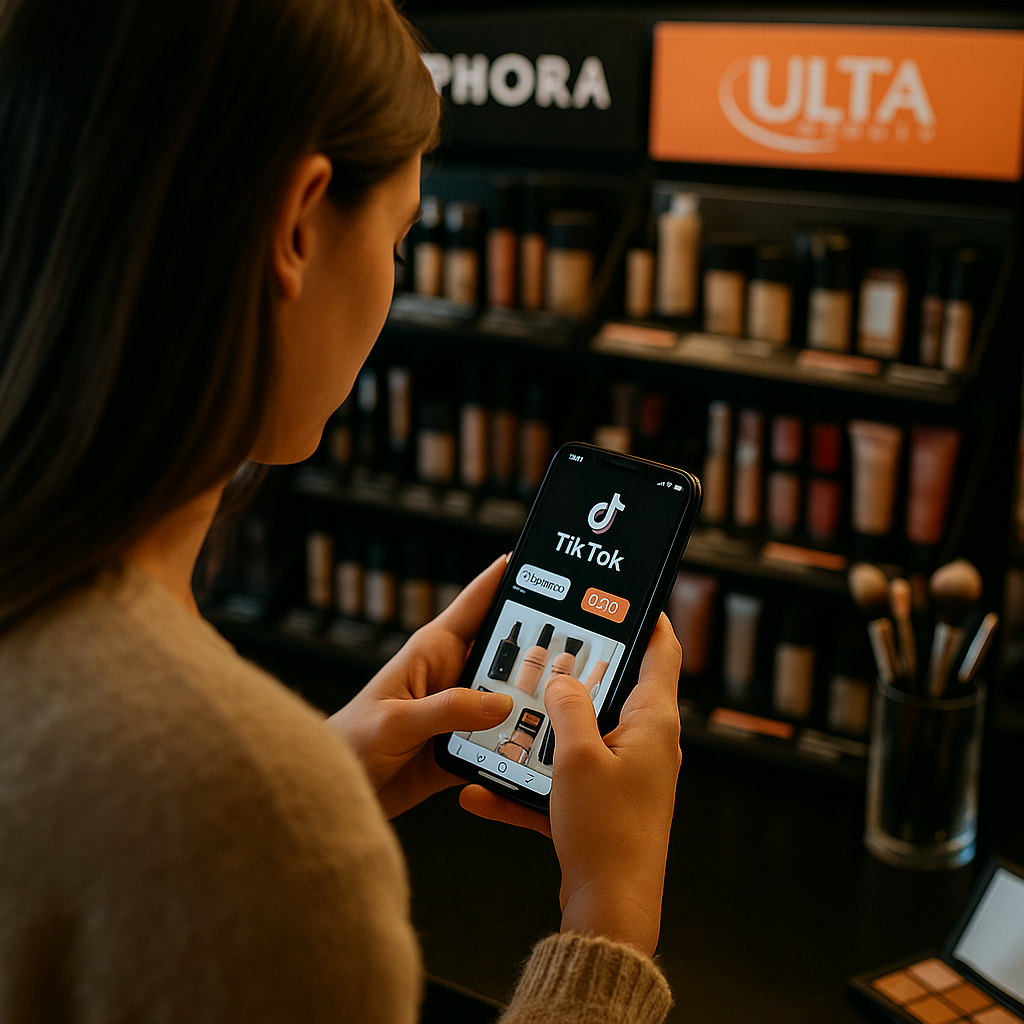
Two beauty retail giants that spent years guarding their walled gardens just handed the keys to TikTok. Sephora and Ulta’s TikTok Shop launch isn’t a minor channel expansion, it’s a signal that even the most brand-controlled retail experiences now have to compete inside a swipeable, creator-led feed. If you sell beauty, personal care, or adjacent lifestyle products, the question isn’t whether this matters. It’s whether your team is ready to operate at the speed this format demands.
Why This Launch Is Different From Every Other TikTok Shop Beauty Play
Beauty brands have been selling on TikTok Shop for a while now. Independent labels, DTC challengers, even mass-market names have run live shopping events and affiliate programs with real success. What changes with Sephora and Ulta entering directly is the retail layer itself. These aren’t single-brand storefronts pushing one SKU line. They’re multi-brand marketplaces with hundreds of vendor relationships, loyalty programs tied to points and perks, and decades of merchandising data about what sells together.
That complexity is the whole story. A retailer storefront on TikTok Shop has to reconcile inventory feeds across dozens of brand partners, honor existing MAP pricing agreements, and decide how loyalty points translate (or don’t) into a social commerce environment. Sephora’s Beauty Insider and Ulta’s Ultamate Rewards programs are core retention levers. If those points don’t sync to TikTok purchases, you risk training loyal shoppers to buy elsewhere for the rewards and use TikTok only for discovery. That’s a leakage problem, not a growth story.
When a retailer with hundreds of vendor SKUs launches on TikTok Shop, the real test isn’t traffic. It’s whether loyalty, pricing, and inventory systems can survive contact with a live commerce feed.
The Brand Playbook: What Vendors Selling Through Sephora and Ulta Need to Know
If your products sit on Sephora or Ulta shelves, you’re now facing a three-tier distribution question you probably haven’t had to answer before: do you sell direct on your own TikTok Shop storefront, ride the retailer’s storefront, or run both simultaneously?
- Retailer storefront advantage: Instant trust signal. Shoppers who already associate Sephora or Ulta with authenticity are more likely to complete checkout without second-guessing the seller.
- Direct storefront advantage: Full margin control, no MAP conflicts, and direct access to first-party purchase data you’d otherwise never see.
- The hybrid risk: Running both creates price competition with yourself. If a creator links your product through the retailer storefront while another links it through your own, you’re bidding against your own inventory in the affiliate marketplace.
Most vendors will land on a hybrid model out of necessity, but it needs governance. Set clear rules with your TikTok Shop account team about which storefront gets priority placement in Shop tabs and which one creators are briefed to link. Leaving this to chance means your own supply chain competes against itself for the same conversion.
For brands already running affiliate and bidding strategies in this category, the mechanics of cost control haven’t changed just because two major retailers entered the arena. Our category CPA optimization approach still applies, and vendors need to model how retailer-driven demand shifts their blended acquisition costs.
Creator Strategy Shifts When Retailers Enter the Chat
Independent creators who built beauty content careers reviewing products honestly now have a new incentive structure to navigate. Sephora and Ulta bring massive affiliate commission pools and exclusive early-access product drops that smaller brands simply can’t match dollar for dollar. Expect a consolidation effect: top-tier beauty creators will prioritize retailer partnerships because the commission volume and product variety beat single-brand deals.
This doesn’t mean individual beauty brands lose creator access entirely. It means the pitch has to change. Brands need to offer something retailers can’t: deeper creative collaboration, exclusive formulations, or long-term ambassador arrangements rather than one-off affiliate links. Retailers will win on breadth. Brands still win on depth, if they lean into it.
It’s also worth studying how creator-to-paid conversion pipelines shift once retailer storefronts flood the affiliate marketplace with options. The creator to paid CAC framework we’ve outlined previously becomes more relevant here, since brands will need to spark-ad boost creator content just to stay visible against retailer-backed campaigns with bigger budgets.
Compliance Gets More Complicated, Not Less
Retailer-scale TikTok Shop operations amplify every existing compliance headache in influencer marketing. When Sephora or Ulta run affiliate programs at volume, hundreds of creators will post content weekly without brand-side review of each disclosure. The FTC’s endorsement guidelines still apply regardless of scale, and a retailer’s compliance failure can drag every vendor’s products down with it in a platform-level enforcement action.
TikTok’s own systems already flag suspicious disclosure patterns automatically. Brands relying on retailer storefronts for distribution should understand how that flagging works, because a wave of non-compliant creator posts tied to your SKU can trigger review even if your own direct storefront is spotless. Our breakdown of TikTok’s automatic flagging system is a useful reference for legal and brand safety teams building internal audit checklists ahead of Q1 planning.
A retailer’s compliance failure at scale doesn’t stay contained to their storefront. It can ripple across every vendor SKU associated with flagged content.
What Happens to Livestream Shopping in Beauty
Live shopping has been the format beauty brands underestimate the most in the West, even as it dominates commerce in other markets. Sephora and Ulta both have physical store advantages that translate surprisingly well to livestream: trained beauty advisors, in-store demo experience, and existing relationships with dermatologists and makeup artists who can host authoritative sessions.
Expect both retailers to lean heavily into scheduled livestream events tied to product launches, seasonal collections, and loyalty member exclusives. This is where the retailer advantage compounds. A single livestream can feature products from twenty different vendor brands, creating a shopping experience closer to a QVC segment than a single-brand demo. Vendors who get featured in these multi-brand livestreams gain exposure they couldn’t buy on their own, but they also lose control over how their product gets presented alongside competitors.
Brands should negotiate specific placement and speaking-time guarantees before agreeing to appear in retailer-hosted livestreams. Get it in writing. A thirty-second mention buried in a ninety-minute stream isn’t the same value as a dedicated five-minute segment, even if both technically count as “featured.”
Data You Don’t Own Anymore
Here’s the uncomfortable part vendors need to plan for: when a shopper buys your product through the Sephora or Ulta TikTok Shop storefront, that purchase data belongs to the retailer, not you. You lose the first-party relationship that direct-to-consumer channels give you. This is the same tradeoff wholesale brands have made with physical retail for decades, just now happening in a channel that felt, until recently, like an open marketplace.
Brands serious about owning their customer data long-term should treat their own TikTok Shop storefront as a strategic priority, not an afterthought, even if it generates less immediate volume than the retailer partnership. Attribution modeling across both channels is essential. Tools built for cross-platform reconciliation, like the frameworks discussed in our creator commerce attribution guide, help teams see the full picture instead of optimizing for whichever storefront reports numbers first.
Budget Reallocation: Where the Money Should Move
Marketing leaders should expect internal pressure to shift co-op marketing dollars toward retailer-led TikTok Shop campaigns, since Sephora and Ulta will likely package sponsored placement within their storefronts as part of vendor agreements. Before agreeing to those terms, model the actual return against what you’d get running an equivalent budget through your own creator program.
Retailer sponsored placement buys visibility. It doesn’t necessarily buy the kind of creator relationship that produces repeatable, on-brand content over time. According to eMarketer’s ongoing coverage of social commerce, platform-level retail integrations tend to boost short-term conversion volume while brand-level engagement metrics stay flat or decline, because the retailer’s brand equity, not the vendor’s, is doing the trust-building work.
That’s not necessarily bad. It just means budget allocation needs a clear-eyed split: retailer placement for volume and reach, direct creator investment for brand-building and long-term audience ownership. Treating them as interchangeable line items is how brands end up with strong sales quarters and weak brand equity a year later.
FAQs
FAQ Visible Section
Do vendor brands lose control over pricing when sold through Sephora or Ulta’s TikTok Shop storefront?
Largely yes. Retailers set the pricing and promotional cadence within their own storefronts, and vendors typically operate under existing MAP agreements. Brands running their own parallel TikTok Shop storefront retain pricing control there, but need to manage the risk of internal price competition across both channels.
Can beauty brands still succeed on TikTok Shop without a retailer partnership?
Yes. Independent brands running direct storefronts can compete on creative depth, exclusive product drops, and closer creator relationships. The retailer advantage is breadth and trust, not exclusivity, so brands with strong niche positioning still have room to win.
How does loyalty program integration work with retailer TikTok Shop storefronts?
This varies by retailer and is still evolving. Brands and consumers should verify current terms directly, since points accrual and redemption rules for social commerce purchases may differ from in-store or website purchases.
What compliance risks should vendor brands watch for in retailer-run affiliate programs?
The main risk is disclosure inconsistency across a large volume of affiliate creators posting without brand-side review. FTC endorsement guidelines apply regardless of scale, and platform enforcement action tied to flagged content can affect vendor products even when the vendor’s own marketing is fully compliant.
Should brands prioritize their own TikTok Shop storefront or the retailer’s?
Most brands benefit from running both with clear internal governance on creator briefing and placement priority. Brands focused on long-term customer data ownership should treat their direct storefront as a strategic priority rather than a secondary channel.
Next step: Before your next planning cycle, audit which of your SKUs are live in Sephora’s or Ulta’s TikTok Shop storefront right now, then map that against your own direct storefront performance to catch price conflicts and attribution gaps before they compound.
Frequently Asked Questions
Do vendor brands lose control over pricing when sold through Sephora or Ulta’s TikTok Shop storefront? Largely yes. Retailers set the pricing and promotional cadence within their own storefronts, and vendors typically operate under existing MAP agreements. Brands running their own parallel TikTok Shop storefront retain pricing control there, but need to manage the risk of internal price competition across both channels.
Can beauty brands still succeed on TikTok Shop without a retailer partnership? Yes. Independent brands running direct storefronts can compete on creative depth, exclusive product drops, and closer creator relationships. The retailer advantage is breadth and trust, not exclusivity, so brands with strong niche positioning still have room to win.
How does loyalty program integration work with retailer TikTok Shop storefronts? This varies by retailer and is still evolving. Brands and consumers should verify current terms directly, since points accrual and redemption rules for social commerce purchases may differ from in-store or website purchases.
What compliance risks should vendor brands watch for in retailer-run affiliate programs? The main risk is disclosure inconsistency across a large volume of affiliate creators posting without brand-side review. FTC endorsement guidelines apply regardless of scale, and platform enforcement action tied to flagged content can affect vendor products even when the vendor’s own marketing is fully compliant.
Should brands prioritize their own TikTok Shop storefront or the retailer’s? Most brands benefit from running both with clear internal governance on creator briefing and placement priority. Brands focused on long-term customer data ownership should treat their direct storefront as a strategic priority rather than a secondary channel.
Top Influencer Marketing Agencies
The leading agencies shaping influencer marketing in 2026
Agencies ranked by campaign performance, client diversity, platform expertise, proven ROI, industry recognition, and client satisfaction. Assessed through verified case studies, reviews, and industry consultations.
Moburst

-
2

The Shelf
Boutique Beauty & Lifestyle Influencer AgencyA data-driven boutique agency specializing exclusively in beauty, wellness, and lifestyle influencer campaigns on Instagram and TikTok. Best for brands already focused on the beauty/personal care space that need curated, aesthetic-driven content.Clients: Pepsi, The Honest Company, Hims, Elf Cosmetics, Pure LeafVisit The Shelf → -
3

Audiencly
Niche Gaming & Esports Influencer AgencyA specialized agency focused exclusively on gaming and esports creators on YouTube, Twitch, and TikTok. Ideal if your campaign is 100% gaming-focused — from game launches to hardware and esports events.Clients: Epic Games, NordVPN, Ubisoft, Wargaming, Tencent GamesVisit Audiencly → -
4

Viral Nation
Global Influencer Marketing & Talent AgencyA dual talent management and marketing agency with proprietary brand safety tools and a global creator network spanning nano-influencers to celebrities across all major platforms.Clients: Meta, Activision Blizzard, Energizer, Aston Martin, WalmartVisit Viral Nation → -
5

The Influencer Marketing Factory
TikTok, Instagram & YouTube CampaignsA full-service agency with strong TikTok expertise, offering end-to-end campaign management from influencer discovery through performance reporting with a focus on platform-native content.Clients: Google, Snapchat, Universal Music, Bumble, YelpVisit TIMF → -
6

NeoReach
Enterprise Analytics & Influencer CampaignsAn enterprise-focused agency combining managed campaigns with a powerful self-service data platform for influencer search, audience analytics, and attribution modeling.Clients: Amazon, Airbnb, Netflix, Honda, The New York TimesVisit NeoReach → -
7

Ubiquitous
Creator-First Marketing PlatformA tech-driven platform combining self-service tools with managed campaign options, emphasizing speed and scalability for brands managing multiple influencer relationships.Clients: Lyft, Disney, Target, American Eagle, NetflixVisit Ubiquitous → -
8

Obviously
Scalable Enterprise Influencer CampaignsA tech-enabled agency built for high-volume campaigns, coordinating hundreds of creators simultaneously with end-to-end logistics, content rights management, and product seeding.Clients: Google, Ulta Beauty, Converse, AmazonVisit Obviously →