


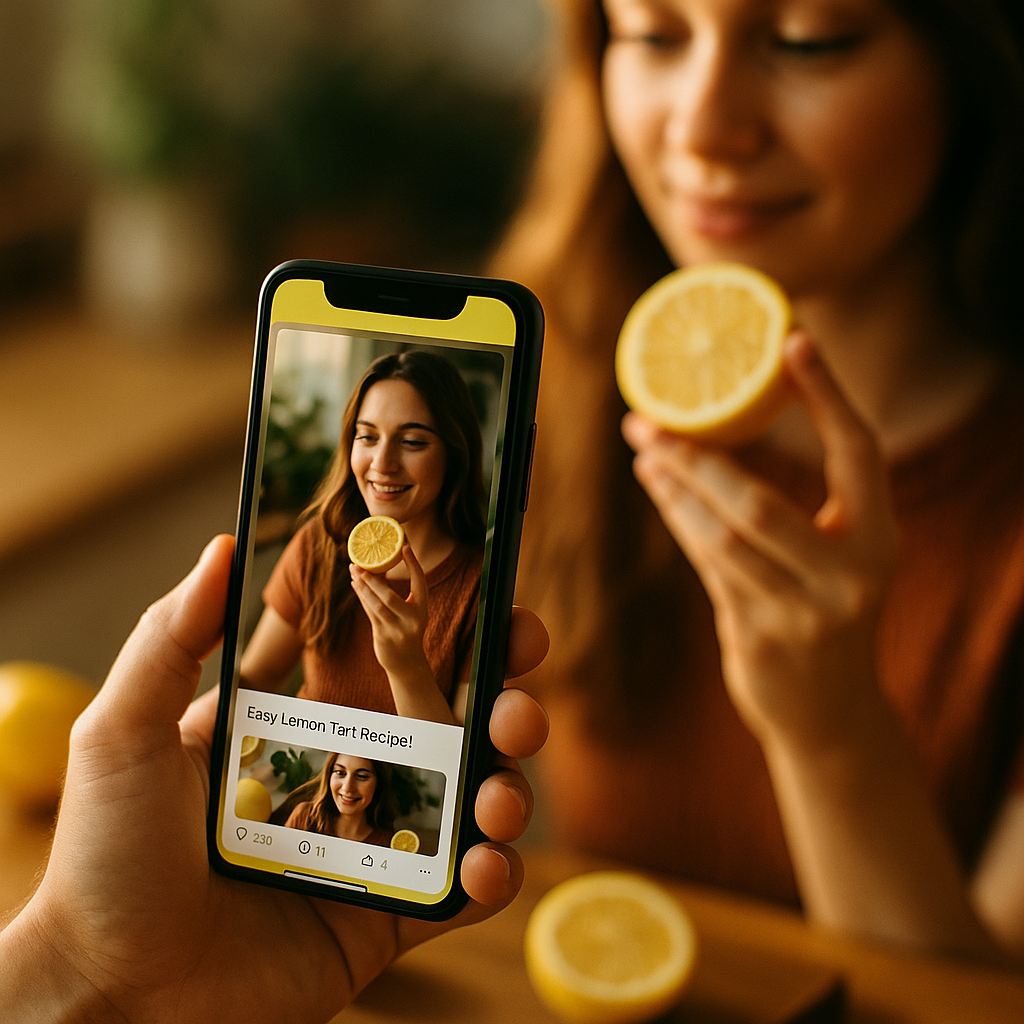
Lemon8 crossed 22 million monthly active users faster than Pinterest did in its first three years, according to eMarketer tracking of app growth curves. Yet most brands still ship the same 8 minute YouTube vlog, chopped down and pasted in. That’s the wrong move. The micro vlog format Lemon8 rewards is a different animal entirely, closer to a photo essay with motion than a talking head diary. Get the format wrong and the algorithm simply stops showing your content.
Lemon8 Isn’t TikTok With a Filter
Bytedance built Lemon8 to sit somewhere between Pinterest’s discovery engine and Instagram’s aspirational feed. The result is a platform that rewards curated stillness over raw motion. Users scroll for outfit breakdowns, apartment tours, skincare routines, and “day in my life” content, but they want it packaged in bite sized cards with heavy text overlay and a soft, magazine editorial tone.
That changes everything about how a vlog gets built. On YouTube, retention lives in narrative arc: hook, tension, payoff. On Lemon8, retention lives in visual rhythm. Swipe, swipe, swipe. Each frame has to justify itself in under two seconds or the user moves on. Brands that treat Lemon8 as a dumping ground for Reels leftovers see engagement rates a fraction of what native creators pull, based on patterns Sprout Social has flagged across emerging app benchmarking.
A 90 second vlog cut into a 10 slide Lemon8 card story often outperforms the original video, because the platform’s audience consumes lifestyle content like a magazine, not a broadcast.
What the Micro Vlog Format Actually Looks Like
Strip a Lemon8 vlog down and you’ll find a consistent skeleton across top creators:
- A cover card with a promise. Text overlay states the payoff before the swipe even starts (example: “5 things I stopped buying at Sephora”).
- 6 to 12 image or short clip slides. Each one carries a caption, not just a vibe. Text does the narrative heavy lifting, not voiceover.
- Micro clips under 5 seconds. When video appears, it’s a beat, not a scene. Think a hand reaching for a product, not a 20 second demo.
- A closing card with a soft CTA. “Save this for later” or “Follow for part two” performs better than hard sell language.
Compare that to a standard lifestyle vlog script and the gap is obvious. There’s no room for a 15 second intro monologue. There’s no room for filler b-roll. Every slide earns its place or gets cut.
Repurposing Existing Vlog Footage Without Reshooting
Here’s the good news for brands sitting on a backlog of YouTube or TikTok lifestyle content: you don’t need new production budget to enter Lemon8, you need a new edit philosophy. Pull the strongest visual beats from existing footage, drop them into a card sequence, and rewrite the narrative as text overlay instead of spoken script.
This is exactly the kind of repurposing workflow covered in multi platform edit strategies, where one shoot day feeds five different platform cuts. Lemon8 just needs to be one of the destinations baked into that plan from the start, not an afterthought. Tools built for fast turnaround, like the templates covered in our speed edit template breakdown, translate well here because Lemon8’s card format rewards quick, templated production over polished cinematography.
A practical workflow looks like this: shoot lifestyle content once with Lemon8 in mind (static beauty shots, tight product close ups, natural light apartment scenes), then batch produce three formats from the same footage. Long form for YouTube, vertical video for TikTok and Reels, and a card sequence for Lemon8. The incremental cost of the third format is minutes of editing time, not a new shoot.
Why Text Overlay Carries More Weight Than Voiceover
Lemon8 users often browse muted, in bed, on transit, in waiting rooms. Audio dependent storytelling loses half its audience before the message lands. Brands that lean on text driven narrative see higher save and share rates, because the content works whether sound is on or off.
This mirrors a pattern already documented in low cost text formats outperforming video on cost per engagement across other platforms. Lemon8 pushes this further by making text overlay a core aesthetic choice, not a compliance workaround. Fonts, color palettes, and caption placement become part of the brand’s visual identity on the app.
Targeting the Interest Graph, Not the Follower Count
Lemon8’s discovery model, like TikTok’s, leans on interest graph matching rather than pure follower reach. A creator with 4,000 followers posting sharp beauty content can outperform a 200,000 follower lifestyle account that posts off niche. Brands running influencer briefs on Lemon8 need to select creators based on topical consistency, not vanity metrics.
This same principle drives the approach outlined in interest graph targeting for product content elsewhere. On Lemon8, that means briefing creators to stay tightly within their established niche (skincare, home decor, budget fashion) rather than stretching into a broad lifestyle vlog that dilutes the account’s signal to the algorithm.
A niche 5,000 follower Lemon8 account with a consistent aesthetic often beats a diversified 100,000 follower influencer, because Bytedance’s recommendation engine optimizes for topical trust signals over raw audience size.
Rights, Disclosure, and the Compliance Layer Brands Skip
Because Lemon8 content often gets repurposed across multiple platforms and licensed for paid boosting, rights management can’t be an afterthought. A card sequence built from a creator’s original footage needs the same usage clarity as any UGC asset. Brands that skip this step end up scrambling when a piece performs well enough to justify paid amplification but the creator agreement never covered it.
The workflow detailed in our UGC rights registry piece applies directly here. Track usage rights at the asset level, not the campaign level, so a Lemon8 card sequence built from a TikTok shoot doesn’t trigger a legal review every time marketing wants to reuse it. And regardless of format, FTC disclosure rules still apply the same way they do on any platform. The Federal Trade Commission doesn’t care that a sponsored post looks like a lifestyle diary card instead of a video, disclosure language still needs to be clear and unavoidable, not buried in a fifth slide caption.
Measuring What Actually Matters
Standard video KPIs (watch time, completion rate) don’t translate cleanly to a card based format. Lemon8 performance tracks closer to Pinterest: saves, shares, and profile visits carry more signal than raw views. A brand judging Lemon8 content by view count alone will consistently undervalue what’s actually working.
Build a simple scorecard: save rate per post, follower growth attributable to a specific series, and click through to any linked product page. HubSpot’s guidance on content attribution offers a reasonable framework for weighting these softer engagement signals against harder funnel metrics. If a Lemon8 series is driving saves but no downstream traffic, that’s a signal to tighten the CTA card, not to abandon the platform.
For brands running a broader content ecosystem, Lemon8 shouldn’t sit in isolation. It works best as one stage in a larger fandom funnel, feeding audiences from discovery into deeper platform relationships. That’s the logic behind the multi format fandom funnel approach, where a lightweight, aesthetic first platform like Lemon8 seeds interest that converts on YouTube or a brand’s owned channels later.
The Practical Brief: What to Hand Your Creators
Skip the traditional video script. Instead, brief creators with a card outline: cover hook, 6 to 10 content beats, closing CTA, and a required aesthetic reference (color palette, font style, mood board). Ask for still heavy content with short video accents, not the reverse. And build in a save worthy element, a tip, a list, a resource, something worth bookmarking, because saves are the clearest performance signal Lemon8 offers right now.
Budget wise, this format is cheap relative to full video production. That’s the real advantage for brands watching content costs climb everywhere else. A well briefed creator can turn around a Lemon8 series in a fraction of the time a scripted vlog requires, because half the “production” happens in the caption writing, not the camera work.
Next step: Pull your last three lifestyle video shoots, identify the strongest 8 to 10 visual beats from each, and test them as native Lemon8 card sequences before commissioning a single new shoot. The data from that low cost test will tell you more about fit than any deck ever could.
Frequently Asked Questions
What makes the Lemon8 micro vlog format different from a standard lifestyle vlog?
Lemon8 rewards short card sequences with heavy text overlay and brief video accents, closer to a photo essay than a narrated video. Standard vlogs rely on spoken narrative and longer scenes, which underperform on Lemon8’s swipe based discovery feed.
Can brands repurpose existing video content for Lemon8 instead of shooting new material?
Yes. Most successful Lemon8 content comes from re-editing existing footage into a card format with new text overlay, rather than filming original content specifically for the app. This keeps production costs low.
Does follower count matter for Lemon8 creator selection?
Less than niche consistency does. Lemon8’s discovery algorithm favors creators whose content stays tightly aligned to a topic, so a smaller, focused account often outperforms a larger, more general lifestyle influencer.
What metrics should brands track for Lemon8 campaigns?
Prioritize saves, shares, and profile visits over view count. These signals correlate more closely with Lemon8’s recommendation engine than raw watch time does.
Do FTC disclosure rules apply differently on Lemon8?
No. Sponsored content on Lemon8 must meet the same clear and conspicuous disclosure standards required on any other platform, regardless of the card based format.
Top Influencer Marketing Agencies
The leading agencies shaping influencer marketing in 2026
Agencies ranked by campaign performance, client diversity, platform expertise, proven ROI, industry recognition, and client satisfaction. Assessed through verified case studies, reviews, and industry consultations.
Moburst

-
2

The Shelf
Boutique Beauty & Lifestyle Influencer AgencyA data-driven boutique agency specializing exclusively in beauty, wellness, and lifestyle influencer campaigns on Instagram and TikTok. Best for brands already focused on the beauty/personal care space that need curated, aesthetic-driven content.Clients: Pepsi, The Honest Company, Hims, Elf Cosmetics, Pure LeafVisit The Shelf → -
3

Audiencly
Niche Gaming & Esports Influencer AgencyA specialized agency focused exclusively on gaming and esports creators on YouTube, Twitch, and TikTok. Ideal if your campaign is 100% gaming-focused — from game launches to hardware and esports events.Clients: Epic Games, NordVPN, Ubisoft, Wargaming, Tencent GamesVisit Audiencly → -
4

Viral Nation
Global Influencer Marketing & Talent AgencyA dual talent management and marketing agency with proprietary brand safety tools and a global creator network spanning nano-influencers to celebrities across all major platforms.Clients: Meta, Activision Blizzard, Energizer, Aston Martin, WalmartVisit Viral Nation → -
5

The Influencer Marketing Factory
TikTok, Instagram & YouTube CampaignsA full-service agency with strong TikTok expertise, offering end-to-end campaign management from influencer discovery through performance reporting with a focus on platform-native content.Clients: Google, Snapchat, Universal Music, Bumble, YelpVisit TIMF → -
6

NeoReach
Enterprise Analytics & Influencer CampaignsAn enterprise-focused agency combining managed campaigns with a powerful self-service data platform for influencer search, audience analytics, and attribution modeling.Clients: Amazon, Airbnb, Netflix, Honda, The New York TimesVisit NeoReach → -
7

Ubiquitous
Creator-First Marketing PlatformA tech-driven platform combining self-service tools with managed campaign options, emphasizing speed and scalability for brands managing multiple influencer relationships.Clients: Lyft, Disney, Target, American Eagle, NetflixVisit Ubiquitous → -
8

Obviously
Scalable Enterprise Influencer CampaignsA tech-enabled agency built for high-volume campaigns, coordinating hundreds of creators simultaneously with end-to-end logistics, content rights management, and product seeding.Clients: Google, Ulta Beauty, Converse, AmazonVisit Obviously →