


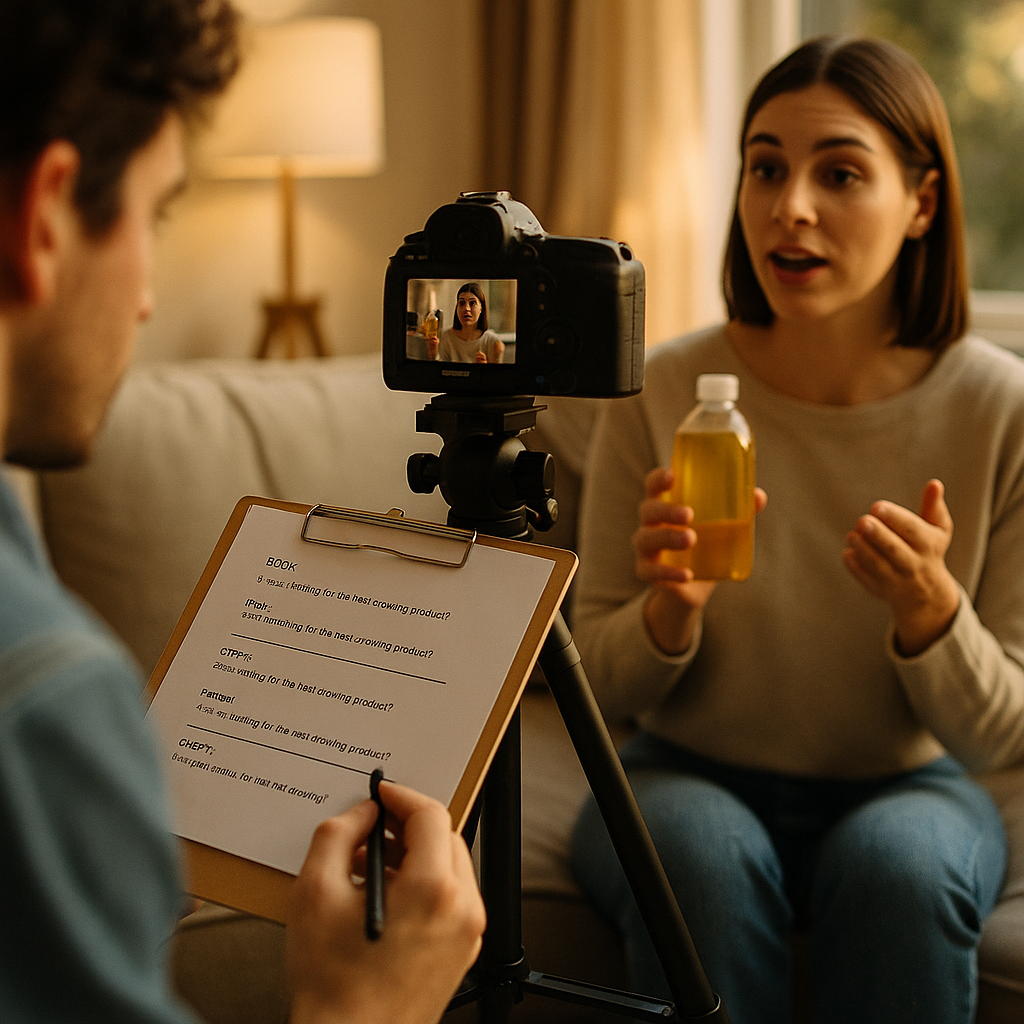
Three seconds. That is how long a Canvas UGC ad has to earn a thumb stop before the scroll wins. Yet most brand briefs still spend four paragraphs on “brand voice” and one throwaway line about the hook. Teams that flip that ratio, treating creators like actors delivering a script instead of influencers freestyling a vibe, are the ones posting lower CPAs on Meta’s Advantage+ campaigns and TikTok Spark Ads. A hook first creative brief is not a nice to have anymore. It is the difference between a media budget that works and one that quietly leaks money.
Why “Be Yourself” Briefs Are Costing You Money
The old influencer brief said something like: “Talk about the product in your own words, keep it authentic.” That approach made sense when the goal was organic reach and brand affinity. But Canvas UGC (the paid, whitelisted, performance-driven cousin of organic influencer content) has a different job. It exists to stop a scroll and drive a click, not to build a parasocial relationship over months.
When you tell a creator to “be authentic,” you are outsourcing your hook strategy to someone who has never seen your funnel data. Some creators are brilliant improvisers. Most are not. The result is a pile of usable but forgettable footage, and a media buyer stuck testing thirty variations because nobody nailed the first three seconds on set.
Brands that write hook-first briefs, treating the first line as a scripted performance rather than a suggestion, consistently see faster creative testing cycles because the raw footage arrives already sorted by hook strength.
The Actor Mindset: What It Actually Means
Directing a creator like an actor does not mean stripping out personality. It means giving them a script with intent behind every beat, the way a commercial director would, then letting their delivery style fill in the texture. The creator still sounds like themselves. But the words, pacing, and camera direction are yours.
Think of it like this: a casting director does not tell an actor to “just talk about the character.” They hand over lines, a motivation, and blocking notes. The actor brings nuance, timing, and believability. That is exactly the split you want in a Canvas UGC brief. You own the structure. The creator owns the delivery.
This is also where Canvas style hook testing earns its keep. If you are scripting hooks deliberately, you can produce five or six hook variants per shoot day instead of hoping one creator riff lands. That volume is what feeds a real testing pipeline.
What Goes Into a Hook First Brief
- The hook line, written verbatim. Not a bullet point, an actual sentence the creator reads or performs close to word for word.
- The hook’s job. Is it a pattern interrupt, a bold claim, a problem callout, or a “wait, what?” visual? Name it so the creator understands the mechanic, not just the words.
- Camera and pacing direction. Handheld and jumpy for the first two seconds, then a cut to a steadier frame. Actors need blocking. So do creators.
- Three to five hook variants per shoot. You are casting for a testing matrix, not a single ad.
- A “no” list. Phrases, claims, or tones that are off limits, especially anything that could trip FTC disclosure rules or platform ad policy.
Scripting Without Sounding Scripted
The biggest objection brand teams raise: won’t a tightly scripted hook sound stiff and killer the whole point of UGC? Fair concern. The fix is writing dialogue the way TV commercial writers do, in the creator’s actual speech patterns, not corporate copy.
Before you write the hook, pull three to five clips of the creator’s past content. Note how they start sentences, their filler words, their comedic timing. Then write the hook in that cadence. A creator who says “okay so” before every sentence should get a hook that starts with “okay so.” A creator who talks fast and interrupts themselves should get short, punchy fragments, not a paragraph of dialogue.
This is also where briefs benefit from thinking about sound off viewing. Most feed traffic scrolls muted, so your hook needs to work as a visual beat and a caption line, not just spoken words. The silent autoplay cuts approach to editing pairs well here: script the spoken hook, but also script the on-screen text overlay that carries the same weight if the sound is off.
What Actors’ Scripts Teach Us About Structure
Screenwriters use a simple rule: every scene needs a want, an obstacle, and a turn. Apply that to a fifteen second UGC ad and you get a workable template.
- Want (0 to 2 seconds): The creator states a problem or desire directly to camera. “I was so tired of my skin looking dull every morning.”
- Obstacle (2 to 6 seconds): The creator names why past solutions failed. “I tried everything, serums, facials, nothing stuck.”
- Turn (6 to 10 seconds): The product enters as the pivot. “Then my derm actually recommended this.”
- Proof and CTA (10 to 15 seconds): Quick demo or result, then a direct ask.
Notice that none of this requires the creator to memorize a monologue. It is a beat sheet, the same tool a soap opera writer hands an actor before a scene. The creator improvises the connective tissue between beats, which is exactly where the “authentic” feel comes from.
Brief Templates Beat Blank Pages
Ask ten brand managers to write a UGC brief from scratch and you will get ten wildly different documents, most of them too vague to be useful. Standardizing the brief format is one of the highest ROI moves a creative ops team can make, because it means creators spend less time asking clarifying questions and more time shooting usable footage.
A solid Canvas UGC brief template includes: the hook script (with two backup variants), a one-line “job of the ad,” blocking notes, a prohibited claims list, expected shot list, and a note on usage rights so legal and paid media are aligned before the shoot, not after. Teams running high volume programs often plug this into a broader creator ops workflow that tracks briefs from assignment through payment.
For brands running product demo heavy categories (skincare, gadgets, supplements), it also helps to borrow structure from Q&A style video briefs, where the hook is framed as answering a specific, searchable question rather than a generic opener. That framing does double duty: it improves discoverability and gives the creator a clear performance target.
Casting for Delivery, Not Just Followers
If you are directing creators like actors, your casting criteria should shift too. Follower count and engagement rate still matter for reach, but delivery ability, comfort with direct-to-camera reads, pacing control, and willingness to do multiple takes, matters more for Canvas UGC specifically.
Run a quick audition step before signing bigger contracts: send a one-page test script and ask for a thirty second self-tape. You will immediately see who can hit a scripted beat naturally and who reads like they are reciting a hostage note. This single filter step saves reshoots and awkward back-and-forth later.
A creator with 8,000 followers who can nail a scripted hook on the first take is worth more to a performance campaign than a 200,000 follower account that needs six takes to sound natural.
Vertical footage also needs to survive reformatting across placements. Briefing creators with framing that works for vertical interview style cuts means the same raw footage can be repurposed across Reels, Stories, and Spark Ads without a reshoot.
Measuring Whether the Brief Actually Worked
You will know a hook first brief is working when your median hook variant count per shoot goes up without a corresponding jump in production cost. Track three numbers: usable hook variants per session, thumb stop rate (three second view rate on Meta or TikTok) by hook type, and time from brief delivery to first cut. According to eMarketer, short form video ad spend keeps climbing, which means the brands squeezing more usable variants out of each shoot are compounding an efficiency advantage every quarter. Platforms like TikTok Ads Manager and Meta Business Suite both surface hook rate metrics directly in ad reporting, so there is no excuse for guessing which script beats performed.
If you are testing hooks systematically, pair this brief method with a proper Sprout Social or native platform reporting cadence so creative learnings feed back into the next round of briefs, not just the next media plan.
FAQs
Frequently Asked Questions
What is a hook first creative brief?
A hook first creative brief is a UGC direction document that scripts the opening three to five seconds of a video word for word, along with camera and pacing notes, before addressing anything else about brand voice or product features.
How is directing UGC creators like actors different from a typical influencer brief?
Typical influencer briefs ask for general talking points and let the creator improvise freely. Directing like actors means providing scripted hook lines, beat structure, and delivery notes, while still leaving room for the creator’s natural cadence in the connective dialogue.
Will a scripted hook make the content feel less authentic?
Not if the script is written in the creator’s own speech patterns based on their past content. The goal is a hook that sounds improvised but hits a specific strategic beat every time.
How many hook variants should a brand request per shoot?
Most performance marketing teams request three to five hook variants per shoot to build a proper testing matrix without overloading the creator or blowing the production budget.
Does a hook first brief slow down production?
It typically speeds production up. Creators spend less time asking clarifying questions on set, and editors receive footage that is already organized by hook intent, cutting the back-and-forth that eats into turnaround time.
What should be excluded from a hook first brief?
Avoid vague instructions like “be authentic” or “use your own words” for the hook section specifically. Also exclude prohibited claims and disclosure requirements should be listed explicitly, referencing FTC guidance on endorsements.
Next step: Rewrite your next UGC brief with the hook scripted verbatim and three backup variants attached, then compare thumb stop rate against your last “be authentic” brief to see the gap for yourself.
Top Influencer Marketing Agencies
The leading agencies shaping influencer marketing in 2026
Agencies ranked by campaign performance, client diversity, platform expertise, proven ROI, industry recognition, and client satisfaction. Assessed through verified case studies, reviews, and industry consultations.
Moburst

-
2

The Shelf
Boutique Beauty & Lifestyle Influencer AgencyA data-driven boutique agency specializing exclusively in beauty, wellness, and lifestyle influencer campaigns on Instagram and TikTok. Best for brands already focused on the beauty/personal care space that need curated, aesthetic-driven content.Clients: Pepsi, The Honest Company, Hims, Elf Cosmetics, Pure LeafVisit The Shelf → -
3

Audiencly
Niche Gaming & Esports Influencer AgencyA specialized agency focused exclusively on gaming and esports creators on YouTube, Twitch, and TikTok. Ideal if your campaign is 100% gaming-focused — from game launches to hardware and esports events.Clients: Epic Games, NordVPN, Ubisoft, Wargaming, Tencent GamesVisit Audiencly → -
4

Viral Nation
Global Influencer Marketing & Talent AgencyA dual talent management and marketing agency with proprietary brand safety tools and a global creator network spanning nano-influencers to celebrities across all major platforms.Clients: Meta, Activision Blizzard, Energizer, Aston Martin, WalmartVisit Viral Nation → -
5

The Influencer Marketing Factory
TikTok, Instagram & YouTube CampaignsA full-service agency with strong TikTok expertise, offering end-to-end campaign management from influencer discovery through performance reporting with a focus on platform-native content.Clients: Google, Snapchat, Universal Music, Bumble, YelpVisit TIMF → -
6

NeoReach
Enterprise Analytics & Influencer CampaignsAn enterprise-focused agency combining managed campaigns with a powerful self-service data platform for influencer search, audience analytics, and attribution modeling.Clients: Amazon, Airbnb, Netflix, Honda, The New York TimesVisit NeoReach → -
7

Ubiquitous
Creator-First Marketing PlatformA tech-driven platform combining self-service tools with managed campaign options, emphasizing speed and scalability for brands managing multiple influencer relationships.Clients: Lyft, Disney, Target, American Eagle, NetflixVisit Ubiquitous → -
8

Obviously
Scalable Enterprise Influencer CampaignsA tech-enabled agency built for high-volume campaigns, coordinating hundreds of creators simultaneously with end-to-end logistics, content rights management, and product seeding.Clients: Google, Ulta Beauty, Converse, AmazonVisit Obviously →