


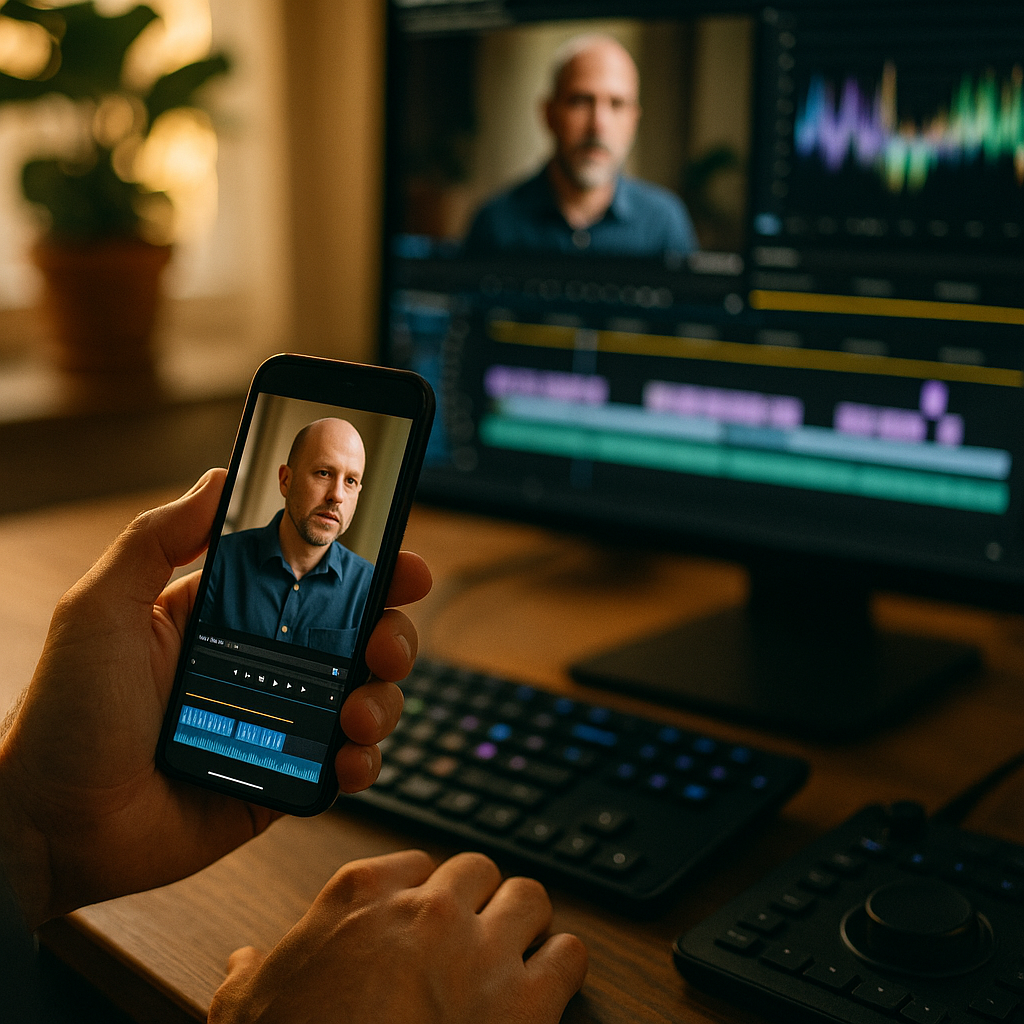
A 45 minute interview and a 9 second TikTok clip live in the same universe now, whether your production team likes it or not. Vertical video editing has quietly become the skill that determines whether your expensive sit-down content gets watched or scrolled past in under a second. Brands spending five figures on founder interviews are leaving most of that value on the cutting room floor.
The question isn’t whether to reformat long form content anymore. It’s whether your team knows how to do it fast enough to matter.
Why Long Form Interviews Are Wasted If They Stay Long Form
Think about the last executive interview or product deep dive your brand filmed. Chances are it lived once on YouTube, maybe got embedded on a landing page, and then quietly died in a content archive. That’s a bad return on a shoot that likely involved lighting, a producer, talent prep, and a full day of scheduling.
TikTok, Reels, and Shorts changed the math. A single 30 minute interview can yield 8 to 15 vertical cuts if you edit with intent from the start. That’s not a stretch, it’s standard practice at agencies now running lean content operations. The shift mirrors what we’ve covered in the multi platform master edit workflow, where one shoot day feeds a dozen deliverables instead of one.
A single long form interview, cut correctly, can generate two to three weeks of vertical native content without a single additional shoot day.
The catch: a straight crop of a horizontal interview reads as exactly that. Flat, static, and clearly repurposed. Native vertical cuts need their own pacing logic, not just a reframed aspect ratio.
What Makes a Cut Feel “TikTok Native” Instead of Just Cropped
Native cuts do a few things horizontal interviews never bother with. They open on the payoff, not the setup. They use on-screen text as a second narrative track, not just captions for accessibility. And they cut on energy, not on topic completeness.
- Cold open on conflict or claim: Start with the most quotable or contrarian sentence in the interview, then let context fill in behind it.
- Text overlays that lead, not follow: Bold key phrases a half second before the speaker says them so the eye and ear reinforce each other.
- Jump cuts every 2 to 4 seconds: Long form interviews breathe. TikTok native cuts don’t get that luxury.
- Face-forward framing: Reframe for the 9:16 canvas so the subject’s eyes sit in the upper third, not centered like a webcam shot.
This isn’t about disrespecting the source material. It’s about respecting the platform’s attention economics. Data from Sprout Social has repeatedly shown that short vertical video drives the highest engagement rate of any format across major platforms, and that gap widens every time TikTok tweaks its recommendation algorithm.
The Three Second Rule Still Runs the Show
Editors who came up cutting broadcast packages sometimes resist this, but the data hasn’t moved: if the first three seconds don’t earn a stop, the rest of the cut doesn’t matter. Pull the best soundbite, lead with it, and build backward. It sounds backwards to interview producers used to a chronological narrative arc. It isn’t optional anymore.
Building a Repeatable Clipping Workflow (Not a One-Off Hack)
The brands winning at this treat interview reformatting as a system, not a scramble. Here’s roughly what that system looks like in practice.
- Transcript-first tagging. Run the raw interview through a transcription tool and flag timestamps where the speaker says something quotable, controversial, or data-backed. This is the same discipline behind timestamp chaptering for long form video, just applied upstream of the edit.
- Clip triage. Sort flagged moments into three buckets: hook-worthy standalone clips, clips that need a text setup, and clips only useful as B-roll or supporting cutaways.
- Template-based assembly. Use a fast-turn editing template so junior editors aren’t reinventing pacing decisions on every clip. Tools built for this, similar to what we outlined in CapCut speed edit templates, cut editing time dramatically without sacrificing quality.
- Platform-specific export. A cut built for TikTok’s native player behaves differently than one destined for LinkedIn or Instagram Reels. Captions, safe zones, and even pacing should flex per platform.
- Rights and reuse tracking. If the interview subject is a creator or external partner, make sure usage rights cover vertical repurposing across every platform you plan to post on. This is exactly the gap a UGC rights registry is built to close.
Skip step five and you’re one legal email away from pulling every clip you just spent a week producing. It happens more often than brands admit.
Is AI Clipping Software Actually Good Enough Yet?
Short answer: it’s good enough to save time, not good enough to replace judgment. Tools like Opus Clip, Descript, and various TikTok-native editors can auto-detect “highlight” moments in long form footage using transcript analysis and speech pattern detection. They’re genuinely useful for a first pass.
Where they fall short is context. An AI tool doesn’t know that your brand’s legal team flagged a specific claim as risky, or that a competitor mention needs to be cut for partnership reasons. It also can’t judge tone the way a human editor can when a clip technically works but feels off-brand. Treat AI clipping as a rough cut generator, not a final export tool.
AI-assisted clipping can cut first-draft turnaround by 60 to 70 percent, but human review still catches the brand risk and tone issues automated tools miss.
This mirrors the caution brands are applying elsewhere in AI-assisted content, including AI voice clone dubbing, where the efficiency gains are real but the oversight requirement never disappears.
Compliance Doesn’t Take a Break Because the Clip Is Short
Fifteen seconds of vertical video carries the same disclosure obligations as a fifteen minute interview. If the original long form piece involved a paid creator relationship, every derivative clip needs the same #ad or #sponsored disclosure per FTC endorsement guidelines. Brands sometimes assume that because a clip is “just a repurpose,” the compliance requirements reset. They don’t.
Platform-specific disclosure tools matter here too. TikTok’s branded content toggle, for instance, needs to be applied per upload, not inherited from the source video. Review TikTok’s branded content policies before your team starts batch-uploading a week’s worth of clipped content, especially if multiple team members are exporting from the same source file.
Where This Fits Into the Bigger Content Ops Picture
Vertical clipping doesn’t exist in isolation. It’s most efficient when it’s built into the broader creator content pipeline from the brief stage forward, not bolted on after the interview wraps. Brands running structured TikTok creator ops already plan for multi-cut deliverables when they draft the original shoot brief, which saves the reformatting headache entirely.
There’s also a distribution angle worth planning for early. Interview clips that perform well on TikTok often have a second life as bite size video series content on other platforms, extending the shelf life of a single shoot day well past its original campaign window. According to eMarketer, short-form video continues to capture a growing share of total video ad spend, which means the brands with a repeatable clipping system are compounding an advantage that’s only going to matter more.
None of this requires a bigger production budget. It requires a workflow that treats the interview as raw material for a dozen assets instead of one finished video.
The Next Step
Before your next interview shoot, build the vertical clipping plan into the brief itself: identify quote targets, assign a same-week clipping deadline, and confirm usage rights cover every platform you intend to post on. That single change turns one expensive shoot day into a month of native content instead of a single video nobody rewatches.
Frequently Asked Questions
How many vertical clips can you realistically get from one long form interview?
Most 30 to 45 minute interviews yield 8 to 15 usable vertical clips when tagged and edited with intent, though quality matters more than hitting a specific number.
Do TikTok native cuts need different aspect ratio settings than Instagram Reels?
Both use a 9:16 canvas, but safe zones for text and UI overlap differ slightly, so it’s worth checking each platform’s current spec sheet rather than assuming one export fits all.
Can AI clipping tools fully replace manual video editing for this format?
Not yet. AI tools speed up rough cut selection significantly but still miss brand risk, tone, and compliance nuances that require human review before publishing.
Do disclosure requirements change for a short clip pulled from sponsored long form content?
No. Every derivative clip from paid or sponsored content carries the same FTC disclosure obligations as the original piece, regardless of length.
What’s the biggest mistake brands make when repurposing interviews for vertical platforms?
Cropping the horizontal footage without re-editing pacing, hooks, or captions for vertical viewing behavior, which almost always underperforms compared to native-style cuts.
Top Influencer Marketing Agencies
The leading agencies shaping influencer marketing in 2026
Agencies ranked by campaign performance, client diversity, platform expertise, proven ROI, industry recognition, and client satisfaction. Assessed through verified case studies, reviews, and industry consultations.
Moburst

-
2

The Shelf
Boutique Beauty & Lifestyle Influencer AgencyA data-driven boutique agency specializing exclusively in beauty, wellness, and lifestyle influencer campaigns on Instagram and TikTok. Best for brands already focused on the beauty/personal care space that need curated, aesthetic-driven content.Clients: Pepsi, The Honest Company, Hims, Elf Cosmetics, Pure LeafVisit The Shelf → -
3

Audiencly
Niche Gaming & Esports Influencer AgencyA specialized agency focused exclusively on gaming and esports creators on YouTube, Twitch, and TikTok. Ideal if your campaign is 100% gaming-focused — from game launches to hardware and esports events.Clients: Epic Games, NordVPN, Ubisoft, Wargaming, Tencent GamesVisit Audiencly → -
4

Viral Nation
Global Influencer Marketing & Talent AgencyA dual talent management and marketing agency with proprietary brand safety tools and a global creator network spanning nano-influencers to celebrities across all major platforms.Clients: Meta, Activision Blizzard, Energizer, Aston Martin, WalmartVisit Viral Nation → -
5

The Influencer Marketing Factory
TikTok, Instagram & YouTube CampaignsA full-service agency with strong TikTok expertise, offering end-to-end campaign management from influencer discovery through performance reporting with a focus on platform-native content.Clients: Google, Snapchat, Universal Music, Bumble, YelpVisit TIMF → -
6

NeoReach
Enterprise Analytics & Influencer CampaignsAn enterprise-focused agency combining managed campaigns with a powerful self-service data platform for influencer search, audience analytics, and attribution modeling.Clients: Amazon, Airbnb, Netflix, Honda, The New York TimesVisit NeoReach → -
7

Ubiquitous
Creator-First Marketing PlatformA tech-driven platform combining self-service tools with managed campaign options, emphasizing speed and scalability for brands managing multiple influencer relationships.Clients: Lyft, Disney, Target, American Eagle, NetflixVisit Ubiquitous → -
8

Obviously
Scalable Enterprise Influencer CampaignsA tech-enabled agency built for high-volume campaigns, coordinating hundreds of creators simultaneously with end-to-end logistics, content rights management, and product seeding.Clients: Google, Ulta Beauty, Converse, AmazonVisit Obviously →