


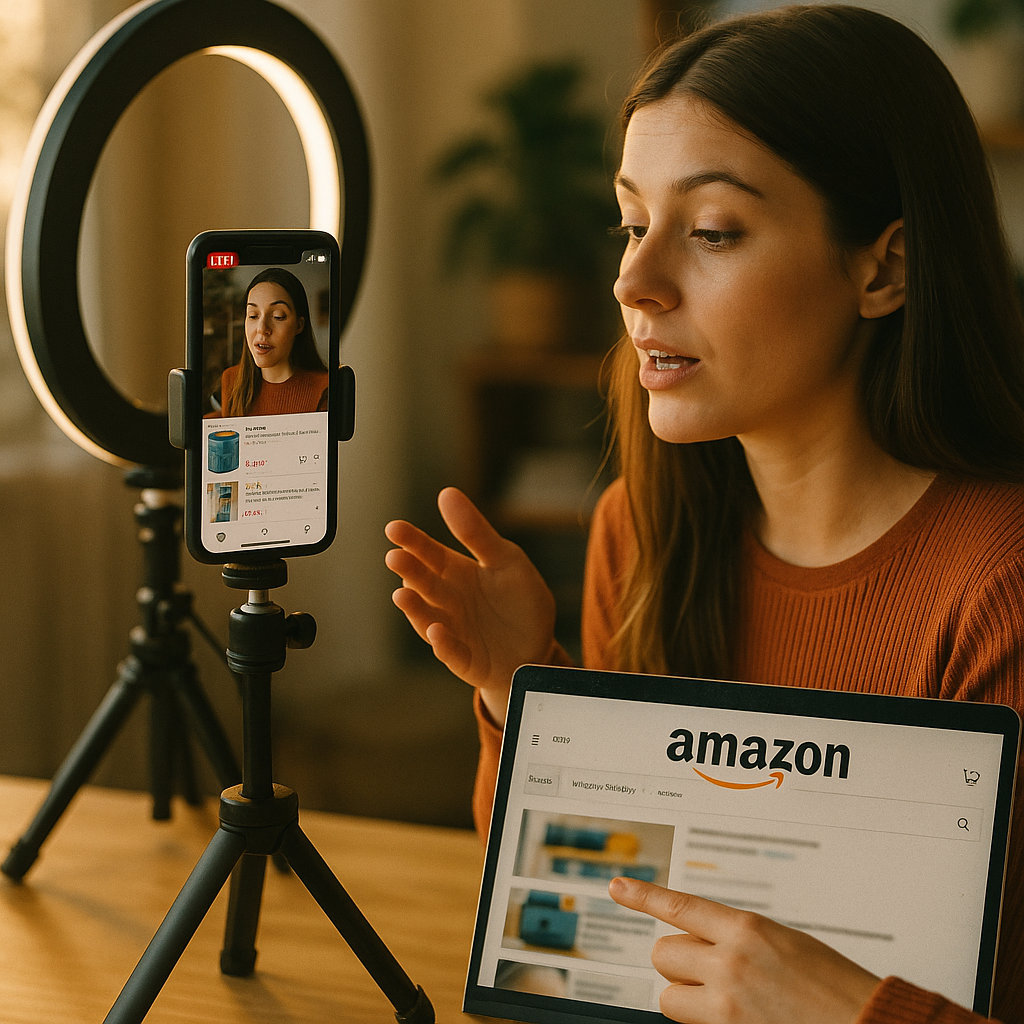
Amazon Live streams now push traffic directly onto product detail pages, and brands running creator segments see conversion rates that make typical banner ads look embarrassing. Amazon Live Creator integration is no longer a nice-to-have side channel. It is becoming a core storefront acquisition tool, and the brands treating it like an afterthought are leaving revenue on the table.
Here is the uncomfortable part: most brand teams still bolt Amazon Live onto their influencer program as an afterthought, using it as a clip repository rather than a sales engine. That gap is exactly where the opportunity sits.
Why Amazon Live Deserves Its Own Line Item
Amazon Live lets creators broadcast directly to shoppers who are already primed to buy. Unlike TikTok or Instagram, where you’re fighting for attention against unrelated content, Amazon Live viewers arrived with purchase intent baked in. They searched a product category, clicked into a live stream, and stayed because someone credible is showing them the thing they were already considering.
That context changes everything about how you should brief creators, measure performance, and allocate budget. A stream that gets 400 concurrent viewers but drives a 12% add-to-cart rate beats a stream with 4,000 viewers and a 1% rate, every time. Yet plenty of brands still pay creators based on reach projections instead of storefront conversion, which is backwards for a shoppable-first platform.
Brands running structured Amazon Live creator programs report conversion rates 3 to 5 times higher than standard sponsored product ads, according to seller community benchmarks shared across Amazon’s own creator resources.
Turning UGC Into a Storefront Asset, Not Just a Post
The real leverage isn’t the live stream itself. It’s what happens to that footage afterward. Amazon’s Creator Connections program and the Amazon Influencer Program both allow creators to repurpose live segments into on-demand video that lives permanently on product pages, in Posts, and inside Storefronts. That’s the shift brands need to internalize: a single live session can generate weeks of evergreen shoppable content if you plan the shoot with reuse in mind.
Practically, that means briefing creators to record clean, modular segments during the live stream itself. Ask for a 30-second unboxing moment, a 45-second “why I switched to this” testimonial, and a direct-to-camera FAQ answer, all within the same broadcast. You edit those clips into standalone video assets afterward. One stream, five pieces of storefront-ready UGC. This is the same logic brands apply when they treat content signal optimization as a repeatable system rather than a one-off campaign.
What Actually Converts on a Product Page
- Demonstration over description. Shoppers on Amazon already have the spec sheet. They want to see the product used in a context that mirrors their own.
- Creator credibility signals. A short line like “I’ve used this brand’s skincare line for six months” outperforms generic enthusiasm.
- Objection handling. Clips that answer “does this actually work for X” convert better than pure aesthetic content.
- Native captions. Many shoppers browse muted. If your creator’s key selling point lives only in audio, you’re losing half your audience.
Building the Creator Brief for Live Commerce
A brief built for Instagram Reels will fail on Amazon Live. The audience mindset is different, the session length is different, and the call to action needs to be more direct without feeling like a hard sell. Your brief should specify segment structure, not just talking points.
Structure a 45-minute live session into distinct blocks: a 5-minute intro establishing the creator’s relationship with the brand, three 10-minute product deep dives with live Q&A, and a closing 5-minute recap with a clear discount or bundle callout. This mirrors the pacing brands use for series-based content strategy, where repetition and structure build trust over a single session rather than relying on one viral moment.
Give creators a “must-hit” list of three product benefits and two objection-handling talking points, but let them improvise the delivery. Overscripted live commerce reads as inauthentic, and Amazon shoppers, much like TikTok Shop audiences, are quick to detect a forced pitch.
Attribution: The Part Everyone Gets Wrong
Amazon’s native reporting inside Creator Connections shows views, engagement, and some click-through data, but it stops short of the granular, cross-session attribution that performance marketers expect. If a shopper watches a live stream on mobile, closes the app, and completes the purchase two days later on desktop, that connection often gets lost in standard reporting.
This is the same attribution gap brands have been fighting across every platform that blends organic UGC with paid amplification. The fix isn’t unique to Amazon. Brands solving this on Shopify have already built the playbook worth borrowing from, as detailed in closing attribution gaps and in the broader cross-platform reconciliation work covered in creator commerce attribution guides. Apply the same logic to Amazon Live: use unique promo codes per creator, track post-live sales lift over a 7-day and 14-day window, and treat view-through conversion as a directional signal rather than a hard number.
If you’re only counting sales that happen during the live window, you’re undercounting real impact by a wide margin. Most conversion happens in the 48 hours after the stream ends, when the product page video keeps working without a creator on camera.
Compensation Models That Actually Reward Sales
Flat fees make sense for reach-driven platforms. Amazon Live is not one of those platforms. It’s a conversion channel, and your compensation model should reflect that.
A hybrid model works best for most mid-market brands: a modest base fee to cover the creator’s production time (lighting, setup, rehearsal), plus a commission tier tied to attributed sales through the Amazon Influencer Program’s standard affiliate structure. Top-performing creators in beauty and home goods categories are already earning meaningful commission income this way, which means the incentive structure exists. Brands just need to lean into it rather than treating Amazon Live as a flat-rate content shoot.
This mirrors the shift happening across category-specific bidding strategies, where brands are moving away from blanket rates toward performance-tiered structures, similar to what’s outlined in category CPA optimization approaches for TikTok Shop. The channel is different, but the underlying principle, pay for outcomes not exposure, holds steady.
Vetting Creators for Live Commerce Specifically
Not every creator who performs well on TikTok or Instagram translates to live commerce. Live selling requires comfort with real-time Q&A, quick pivots when a viewer asks an unexpected question, and the ability to sustain energy for 30 to 60 minutes without a script. Look for creators who have run QVC-style formats before, or who’ve done Instagram Live shopping segments, as a proxy for readiness.
Run a low-stakes test stream before committing to a paid campaign. Fifteen minutes, no paid promotion, just to see how the creator handles the format. It’s the cheapest insurance you’ll buy all quarter.
Compliance and Disclosure Still Apply
Amazon Live creators are still subject to FTC disclosure requirements, and the live, unscripted nature of the format makes it easier for disclosure to get buried or skipped entirely. Build disclosure language into your brief as a non-negotiable line item, not a suggestion. Require creators to state the paid partnership verbally within the first two minutes of the stream and to keep the on-screen disclosure banner active throughout.
This isn’t just regulatory box-checking. Brands that get flagged for weak disclosure practices face reputational damage that outlasts any single campaign, and Amazon itself has tightened enforcement around sponsored content labeling across its creator programs. Treat compliance the same way you’d treat it on any other platform, whether that’s the governance frameworks retailers use in vendor governance or the disclosure standards baked into early platform testing.
Measuring What Matters
Skip the vanity metrics. Concurrent viewer count feels good in a recap deck, but it doesn’t pay rent. Track these instead:
- Add-to-cart rate during and after the stream. This is your clearest intent signal.
- Attributed sales via unique promo code or affiliate link, measured over a 14-day window.
- Repeat viewer rate if you’re running a recurring creator series, since loyal viewers convert at higher rates over time.
- Product page dwell time lift on pages featuring the creator’s on-demand video versus pages without it.
According to data referenced by eMarketer, live shopping formats across major platforms continue to show stronger purchase intent signals than static video ads, and Amazon’s retail-native context amplifies that further because the purchase friction is nearly zero. Benchmarking your Amazon Live results against your existing creator briefing frameworks gives you a useful apples-to-apples comparison for where to shift budget next quarter.
Frequently Asked Questions
Get your next step from the section below, then move straight into a test campaign. Pick two creators, run one live session each this month, and measure the 14-day attributed sales lift before scaling the budget. That single data point will tell you more than any deck full of reach projections.
FAQs
What is Amazon Live Creator integration?
It refers to the process of connecting creators through Amazon’s Creator Connections or Amazon Influencer Program to run live shopping broadcasts and produce shoppable video that lives permanently on product detail pages and Storefronts.
How is Amazon Live different from TikTok Shop or Instagram Live shopping?
Amazon Live viewers arrive with existing purchase intent since they’re already browsing product categories on a retail platform, whereas TikTok and Instagram audiences are typically in a discovery or entertainment mindset first.
How should brands compensate creators for Amazon Live sessions?
A hybrid model works best: a modest flat fee for production time combined with a commission tied to attributed sales through Amazon’s affiliate structure, rewarding creators for actual conversion rather than just appearance time.
Can Amazon Live footage be reused after the broadcast ends?
Yes. Brands should brief creators to record modular, reusable segments during the live session, such as unboxings, testimonials, and FAQ answers, which can then be edited into standalone on-demand video for product pages.
What metrics matter most for Amazon Live performance?
Add-to-cart rate, attributed sales over a 14-day window, repeat viewer rate for recurring series, and product page dwell time lift matter far more than raw concurrent viewer counts.
Do FTC disclosure rules apply to Amazon Live streams?
Yes. Creators must clearly disclose paid partnerships, ideally within the first two minutes of a live stream and through an active on-screen banner, in line with standard FTC guidance on sponsored content.
Top Influencer Marketing Agencies
The leading agencies shaping influencer marketing in 2026
Agencies ranked by campaign performance, client diversity, platform expertise, proven ROI, industry recognition, and client satisfaction. Assessed through verified case studies, reviews, and industry consultations.
Moburst

-
2

The Shelf
Boutique Beauty & Lifestyle Influencer AgencyA data-driven boutique agency specializing exclusively in beauty, wellness, and lifestyle influencer campaigns on Instagram and TikTok. Best for brands already focused on the beauty/personal care space that need curated, aesthetic-driven content.Clients: Pepsi, The Honest Company, Hims, Elf Cosmetics, Pure LeafVisit The Shelf → -
3

Audiencly
Niche Gaming & Esports Influencer AgencyA specialized agency focused exclusively on gaming and esports creators on YouTube, Twitch, and TikTok. Ideal if your campaign is 100% gaming-focused — from game launches to hardware and esports events.Clients: Epic Games, NordVPN, Ubisoft, Wargaming, Tencent GamesVisit Audiencly → -
4

Viral Nation
Global Influencer Marketing & Talent AgencyA dual talent management and marketing agency with proprietary brand safety tools and a global creator network spanning nano-influencers to celebrities across all major platforms.Clients: Meta, Activision Blizzard, Energizer, Aston Martin, WalmartVisit Viral Nation → -
5

The Influencer Marketing Factory
TikTok, Instagram & YouTube CampaignsA full-service agency with strong TikTok expertise, offering end-to-end campaign management from influencer discovery through performance reporting with a focus on platform-native content.Clients: Google, Snapchat, Universal Music, Bumble, YelpVisit TIMF → -
6

NeoReach
Enterprise Analytics & Influencer CampaignsAn enterprise-focused agency combining managed campaigns with a powerful self-service data platform for influencer search, audience analytics, and attribution modeling.Clients: Amazon, Airbnb, Netflix, Honda, The New York TimesVisit NeoReach → -
7

Ubiquitous
Creator-First Marketing PlatformA tech-driven platform combining self-service tools with managed campaign options, emphasizing speed and scalability for brands managing multiple influencer relationships.Clients: Lyft, Disney, Target, American Eagle, NetflixVisit Ubiquitous → -
8

Obviously
Scalable Enterprise Influencer CampaignsA tech-enabled agency built for high-volume campaigns, coordinating hundreds of creators simultaneously with end-to-end logistics, content rights management, and product seeding.Clients: Google, Ulta Beauty, Converse, AmazonVisit Obviously →