


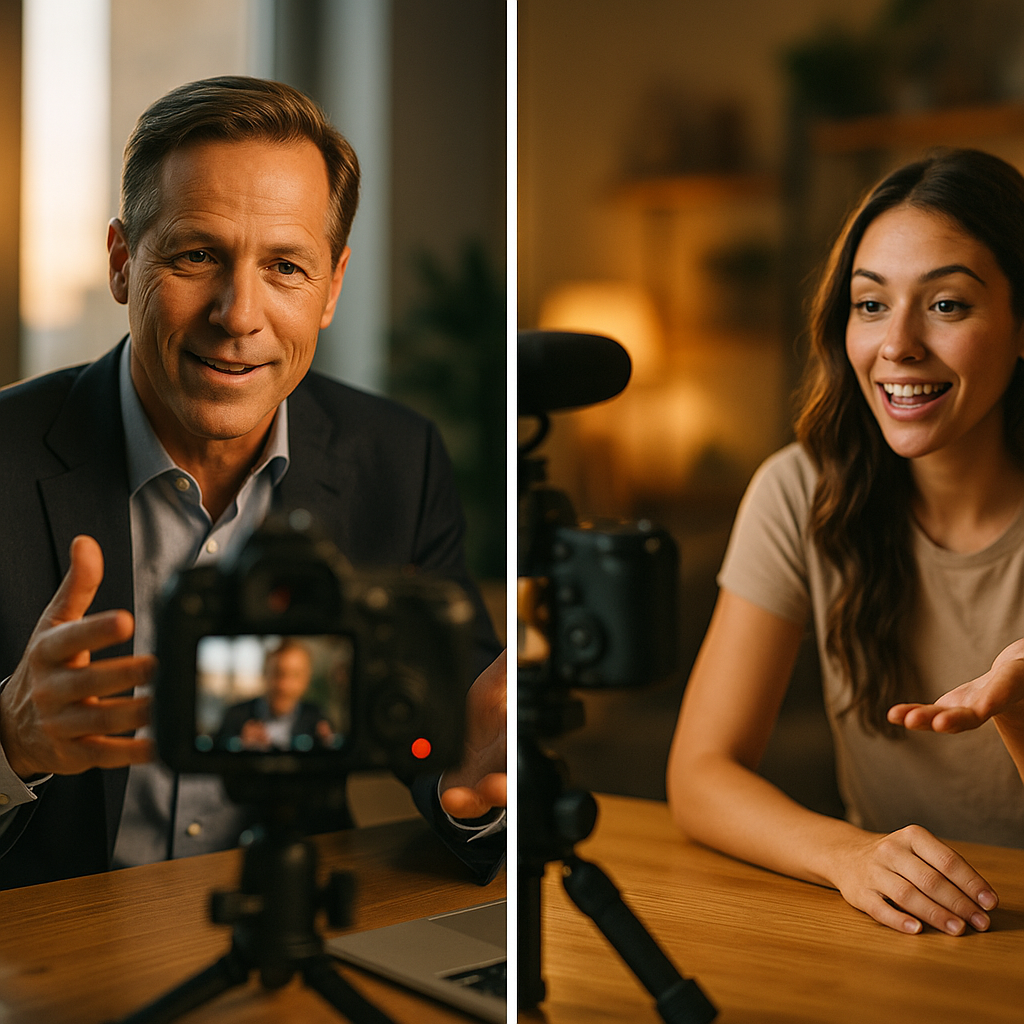
A CEO filming on an iPhone in a parking lot now outperforms a $40,000 produced campaign with a hired creator. That is not a hot take, it is what media buyers are seeing across verticals as founder-led video becomes the highest-converting format in paid and organic social. The question brands are asking in 2026 isn’t whether to try it, it’s why they waited this long.
The Trust Math Has Changed
Audiences got tired of polished. They got tired of disclosed partnerships that read like legal boilerplate. And they got tired of creators who clearly never used the product before the brand deal landed in their inbox. Founder-led video sidesteps all of that because the person on screen has something a hired creator never will: actual skin in the game.
When a founder talks about a manufacturing delay, a pricing decision, or a product flaw they fixed, viewers read it as accountability. When a hired creator says the same thing, viewers read it as a script. That distinction is the entire reason executive faces are pulling better watch time and conversion rates than paid talent right now.
Viewers don’t trust polish anymore, they trust proximity to the decision maker. A founder on camera is proximity. A hired creator is a proxy.
What the Numbers Are Actually Showing
Several agency benchmarks circulating this year point to founder or executive-fronted ads converting at meaningfully higher rates on cold traffic than equivalent creator-fronted ads, particularly in DTC, fintech, and B2B SaaS. eMarketer has flagged the broader shift toward “authentic founder content” as one of the fastest-growing ad creative categories heading into this year, and Sprout Social’s engagement research consistently shows that posts featuring identifiable company leadership outperform brand-account-only content on nearly every platform.
Part of this is algorithmic. Platforms reward watch-through and comment velocity, and founder content tends to generate both because it feels like a conversation rather than an ad. Part of it is cultural. We’ve entered a period where “who made this and why should I believe them” matters more than production value.
This is the same dynamic covered in our earlier piece on founder-led video as a trust asset, which laid out why CEOs on camera started outperforming brand accounts in the first place. What’s new in 2026 is the direct comparison brands are now running internally: founder video versus hired creator video, same product, same budget tier, same funnel stage.
Why Hired Creators Are Losing Ground
This isn’t an argument that creators don’t work. They absolutely do, and multi-creator strategies still drive reach that founder content can’t match on its own. But something has shifted in how audiences weigh the two.
- Disclosure fatigue. FTC-mandated disclosures are now so ubiquitous that “paid partnership” tags barely register, and in some cases actively suppress trust, a dynamic the FTC’s endorsement guidance was never designed to solve but inadvertently accelerated.
- Interchangeability. Audiences can tell when a creator is running the same hook format for three different brands in a week. It cheapens the message, even when the creator is genuinely good at their job.
- Rising costs without rising differentiation. Mid-tier creator rates have climbed while output has become more templated, thanks in part to agencies standardizing briefs across rosters. Brands are paying more for content that looks increasingly similar across competitors.
- No compounding brand equity. When a creator moves on, their audience relationship goes with them. When a founder builds an audience, that equity stays inside the company permanently.
Compare that to the operational discipline behind something like employee-generated content pilots, where brands are testing internal voices before committing to paid creator spend. The logic is the same: internal credibility is cheaper and often more durable than rented credibility.
Operational Reality: Founders Still Need a System
None of this means founders should just grab a phone and wing it. The brands winning with this format have built lightweight production systems around their executives, not full agency setups, but enough structure to keep output consistent and on-brand.
That usually looks like a recurring filming cadence (weekly or biweekly), a standing list of topics pulled from sales calls and customer support tickets, and a fast editing turnaround so content stays topical. Several brands have adapted the discipline used in job-specific creative briefs to founder content specifically, matching the founder’s appearance to the funnel stage rather than treating every video as a generic brand moment.
There’s also a growing practice of pairing founder clips with comment reply videos, where the founder directly addresses skepticism in the comments section. It’s a low-cost format that reinforces the exact thing audiences are craving: a real person responding to real doubt, in real time.
Where Hired Talent Still Wins
Founder-led video isn’t a replacement for every use case. It works best at the consideration and retention stages, where trust is the bottleneck. It works less well for top-of-funnel reach and discovery, where creator networks still offer scale a single executive can’t replicate.
Smart brands are running both in parallel: founders for trust-building and retention content, hired creators for reach and top-of-funnel discovery, often stitched together using formats like multi-creator collab challenges to extend distribution. The mistake is treating founder video as a nice-to-have side project instead of a funnel-stage-specific asset with its own budget and cadence.
Founder video wins trust. Creator video wins reach. The brands outperforming in 2026 are the ones who stopped treating these as competing budgets and started treating them as complementary funnel stages.
The Risk Side Nobody Talks About
Putting a founder on camera is not without exposure. Executives say things creators are trained not to say, and a single off-the-cuff comment can become a PR problem faster than a creator post ever could, because it’s directly attributed to leadership. Legal and comms teams need to be looped in earlier than most marketing teams expect, particularly around claims substantiation, which the FTC treats the same way whether the speaker is a hired influencer or the CEO.
There’s also a succession risk. If the founder leaves, retires, or becomes a liability, the brand has built its trust equity around a single face. Some companies are mitigating this by developing a small bench of executives (founder plus a VP of product or head of customer success) who rotate through video content, so the format survives any one person’s departure.
Platform risk matters too. A format built entirely around one person’s face on one platform is fragile if that platform changes its algorithm or a competitor’s format becomes the new template audiences expect. Diversifying across formats, including lower-key formats like silent vlogs or live Q&A sessions, gives brands more than one lever to pull.
How to Start Without Overbuilding
Brands overthink this far more than necessary. A reasonable starting point looks like four to six founder videos filmed in a single afternoon, each addressing one real customer question, cut down to under ninety seconds, and posted over a month. Measure watch-through rate and comment sentiment before scaling spend behind any of it.
Once the format proves itself organically, move budget into paid amplification on the top one or two performing clips rather than producing net-new paid creative from scratch. This mirrors the approach brands use with stitch compilation reviews: let the organic signal tell you what’s worth paying to scale, instead of guessing upfront. Meta’s ad platform and TikTok’s ad manager both make it straightforward to boost organic posts that are already proving themselves, which is a far lower-risk spend path than commissioning a new creator campaign on a hypothesis.
Next step: pick one unscripted founder question from last week’s sales or support calls, film a 60-second answer this week, and measure it against your best-performing hired-creator post from the last quarter before deciding where next month’s content budget goes.
FAQs
What makes founder-led video outperform hired creator content?
Audiences respond to proximity to the decision maker. A founder discussing real product decisions reads as accountable, while the same message from a hired creator reads as scripted, which affects watch time, comment engagement, and conversion rates on cold traffic.
Does founder-led video replace the need for hired creators?
No. Founder video performs best at the consideration and retention stages of the funnel, while hired creators still offer reach and discovery at scale that a single executive can’t replicate. Most effective strategies run both in parallel.
What are the main risks of putting executives on camera?
Unscripted comments can create PR or compliance exposure faster than creator content because they’re directly attributed to leadership, and building all trust equity around one person creates succession risk if that executive leaves the company.
How often should a founder post video content?
Most brands start with a weekly or biweekly filming cadence, producing several short clips in a single session to maintain consistency without demanding constant executive time.
How do you measure whether founder-led video is working?
Track watch-through rate and comment sentiment on organic posts first. Only move budget into paid amplification once specific clips prove themselves organically, rather than commissioning new paid creative from scratch.
Top Influencer Marketing Agencies
The leading agencies shaping influencer marketing in 2026
Agencies ranked by campaign performance, client diversity, platform expertise, proven ROI, industry recognition, and client satisfaction. Assessed through verified case studies, reviews, and industry consultations.
Moburst

-
2

The Shelf
Boutique Beauty & Lifestyle Influencer AgencyA data-driven boutique agency specializing exclusively in beauty, wellness, and lifestyle influencer campaigns on Instagram and TikTok. Best for brands already focused on the beauty/personal care space that need curated, aesthetic-driven content.Clients: Pepsi, The Honest Company, Hims, Elf Cosmetics, Pure LeafVisit The Shelf → -
3

Audiencly
Niche Gaming & Esports Influencer AgencyA specialized agency focused exclusively on gaming and esports creators on YouTube, Twitch, and TikTok. Ideal if your campaign is 100% gaming-focused — from game launches to hardware and esports events.Clients: Epic Games, NordVPN, Ubisoft, Wargaming, Tencent GamesVisit Audiencly → -
4

Viral Nation
Global Influencer Marketing & Talent AgencyA dual talent management and marketing agency with proprietary brand safety tools and a global creator network spanning nano-influencers to celebrities across all major platforms.Clients: Meta, Activision Blizzard, Energizer, Aston Martin, WalmartVisit Viral Nation → -
5

The Influencer Marketing Factory
TikTok, Instagram & YouTube CampaignsA full-service agency with strong TikTok expertise, offering end-to-end campaign management from influencer discovery through performance reporting with a focus on platform-native content.Clients: Google, Snapchat, Universal Music, Bumble, YelpVisit TIMF → -
6

NeoReach
Enterprise Analytics & Influencer CampaignsAn enterprise-focused agency combining managed campaigns with a powerful self-service data platform for influencer search, audience analytics, and attribution modeling.Clients: Amazon, Airbnb, Netflix, Honda, The New York TimesVisit NeoReach → -
7

Ubiquitous
Creator-First Marketing PlatformA tech-driven platform combining self-service tools with managed campaign options, emphasizing speed and scalability for brands managing multiple influencer relationships.Clients: Lyft, Disney, Target, American Eagle, NetflixVisit Ubiquitous → -
8

Obviously
Scalable Enterprise Influencer CampaignsA tech-enabled agency built for high-volume campaigns, coordinating hundreds of creators simultaneously with end-to-end logistics, content rights management, and product seeding.Clients: Google, Ulta Beauty, Converse, AmazonVisit Obviously →