


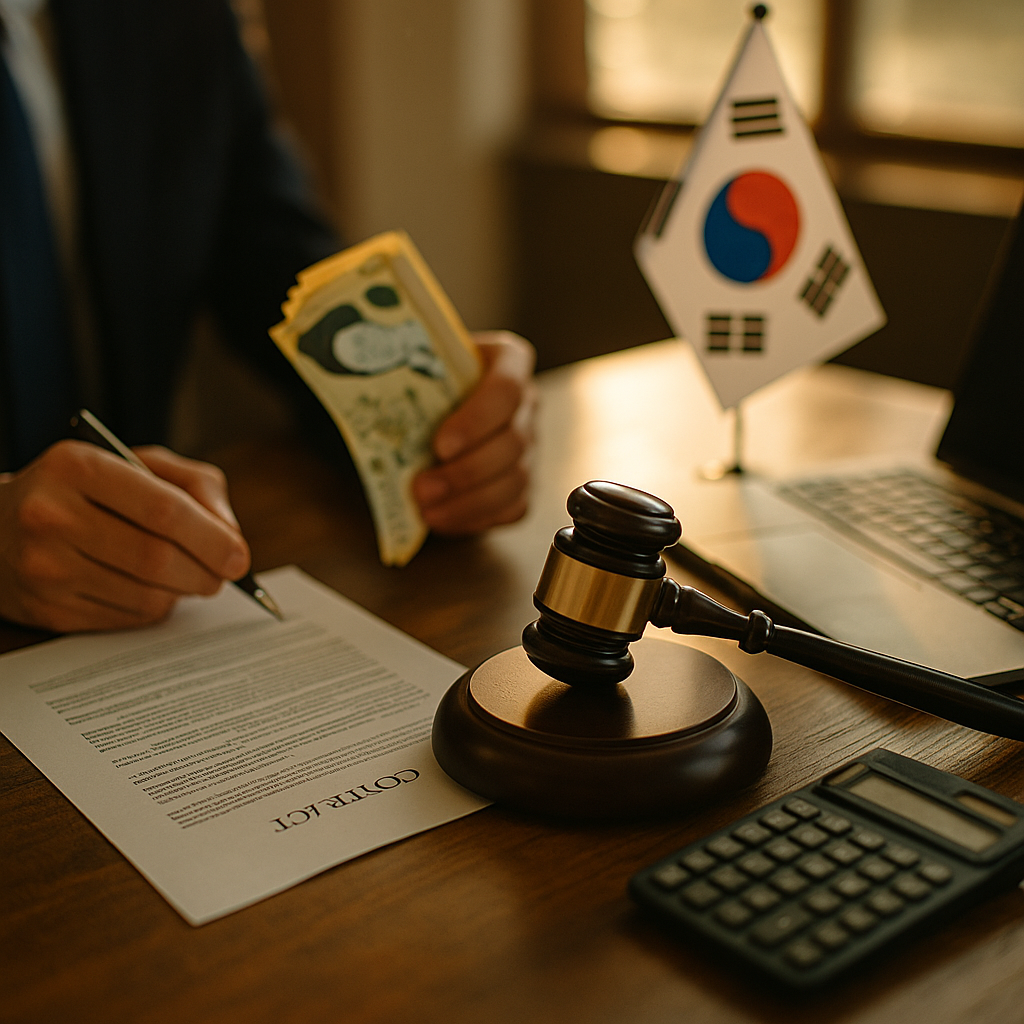
Imagine a brand penalty that grows by the day, every day, until someone fixes the problem. That’s the mechanism inside South Korea’s new Fair Trade Commission penalty bill, and it’s about to upend how agencies structure creator contracts across the region. The South Korea FTC penalty bill doesn’t just raise the cost of noncompliance. It changes the incentive structure entirely, turning a one-time fine into a ticking meter that punishes slow response more than the original violation.
For marketers used to treating disclosure violations as a flat-fee cost of doing business, that’s a genuinely different risk calculus.
What the Bill Actually Changes
South Korea’s FTC has historically issued lump-sum penalties for undisclosed sponsorships, misleading claims, or deceptive advertising involving creators. Those fines, while not trivial, were predictable. Legal and compliance teams could model them, price them into campaign budgets, and move on.
The new bill introduces daily accruing penalties for brands and agencies that fail to correct a violation after formal notice. Instead of a single payment, noncompliant parties face a running clock, similar in spirit to enforcement models already used in parts of the EU and increasingly discussed in the US. The longer a brand takes to pull down an undisclosed post, correct a misleading claim, or update a contract that violates disclosure rules, the more expensive it gets.
That’s a structural shift. It rewards speed and punishes bureaucratic lag, which is exactly where most global brands struggle when managing creator programs across multiple markets and time zones.
A flat fine is a budget line. A daily fine is a liability that compounds while your legal team is still in the approval chain.
Why Daily Fines Hit APAC Contracts Harder
Most APAC creator agreements were written for a single-market, single-penalty environment. They assume a violation gets flagged, someone issues a takedown request, and the matter resolves within a reasonable window. Daily penalty structures break that assumption.
Consider a mid-size beauty brand running a regional campaign across South Korea, Japan, and Southeast Asia with the same creator brief and the same disclosure language. If that disclosure language doesn’t meet South Korea’s updated standard, and a violation is flagged, every day the post stays live without correction adds to the bill. Multiply that across a roster of fifteen or twenty creators, and the exposure stops looking like a rounding error and starts looking like a line item a CFO will ask about.
This isn’t just a South Korea problem either. We’ve already covered how China’s creator data rules are tightening brand liability in a similar direction, and how state AG enforcement is outpacing federal FTC action in the US. The pattern across jurisdictions is consistent: regulators are moving from reactive fines to mechanisms that force faster remediation. Brands operating across APAC without a unified response protocol are going to get caught in the gap between jurisdictions.
The Contract Clauses That No Longer Hold Up
Here’s where it gets operational. Most influencer agreements in the region still rely on a handful of standard clauses that were never built for a daily penalty regime:
- “Reasonable efforts” takedown language. A clause requiring a creator to remove noncompliant content “within a reasonable timeframe” is useless when the brand is being billed per day. Contracts need hard deadlines, measured in hours, not vague commitments.
- Single-party indemnification. Many contracts put the compliance burden entirely on the creator, assuming the brand’s only exposure is reputational. Under a daily fine structure, the brand is on the hook financially regardless of who drafted the caption.
- No escalation ladder. Few contracts define what happens if a creator is unreachable, on vacation, or simply slow to respond. That gap is exactly where daily penalties accumulate fastest.
- Vague disclosure templates. Boilerplate hashtag disclosure language (“#ad” or “#sponsored”) doesn’t automatically satisfy South Korea’s evolving standards, which have specific placement and visibility requirements.
We dug into the specifics of this shift in our earlier piece on the Korea daily penalty bill and the creator data deal gap, which breaks down how data handling obligations compound the exposure further. Worth a read if you’re negotiating any data-sharing terms alongside sponsorship terms in the region.
Who’s Liable When a Creator Reposts After Termination?
This is the question that keeps coming up in client calls, and it’s not hypothetical. A creator relationship ends, the contract terminates, but old sponsored content stays live because nobody built in a post-termination takedown obligation. Under a daily penalty model, that oversight becomes expensive fast.
Brands need explicit survival clauses that extend disclosure and takedown obligations beyond the contract term. If a creator’s old content violates updated disclosure standards, someone has to own the removal, and the contract has to specify who, with what deadline, and what happens if they don’t comply. Leaving this ambiguous is no longer a minor drafting oversight. It’s a direct financial liability.
Indemnification Needs a Rewrite, Not a Patch
Indemnification clauses in creator contracts have historically been an afterthought, often copied from generic vendor agreements with minimal adaptation. That won’t survive contact with a daily penalty regime.
Brands should push for mutual indemnification structured around response time, not just fault. If a creator fails to correct a flagged post within the agreed window, the financial responsibility for accruing penalties should shift to them, with clear documentation requirements. If the brand’s own legal or compliance team causes the delay, the brand absorbs that cost. This isn’t about assigning blame after the fact. It’s about building a contract that actively discourages delay from either party, because delay is now the single biggest cost driver.
This mirrors a broader trend we’ve tracked in creator contract design. Our analysis of creator franchise IP contracts found a similar shift: ownership and liability clauses that used to be vague are getting rewritten with specific timeframes and financial triggers attached. The same logic applies here, just with a regulatory penalty instead of a licensing dispute as the trigger.
If your standard contract template doesn’t name a response deadline in hours, you’re negotiating for a world that no longer exists.
What Brands and Agencies Should Do Now
None of this requires panicking or pulling out of the South Korean market. It does require updating templates before the next campaign cycle, not after a compliance letter arrives. A few practical steps:
- Audit existing contracts for vague remediation language. Replace “reasonable efforts” and similar soft commitments with hard, hour-based deadlines for content correction or removal.
- Build a jurisdiction-specific disclosure matrix. What satisfies FTC guidance in the US won’t automatically satisfy South Korea’s requirements. Document the differences and brief creators accordingly, rather than relying on a single global template.
- Establish a 24-hour escalation protocol. Identify who on the brand side and the agency side owns compliance response, and make sure that person (or team) is reachable outside normal business hours. Daily penalties don’t pause for weekends.
- Revisit indemnification splits. Shift language toward shared, time-based liability rather than one-sided responsibility.
- Add survival clauses. Make sure disclosure and takedown obligations explicitly extend past contract termination.
Agencies managing multi-market rosters should also consider centralizing compliance monitoring rather than leaving it to individual account teams. Tools that track disclosure status and flag at-risk posts in real time are becoming less of a nice-to-have and more of a basic cost-control measure, especially as regulatory data on influencer marketing spend continues to climb according to eMarketer’s ongoing market sizing work.
It’s also worth benchmarking how other regions are handling similar enforcement shifts. The EU’s approach to AI-generated and sponsored content labeling offers a useful comparison point, and our EU AI ad rules compliance checklist walks through a similar audit process that translates well to the APAC context, even though the regulatory bodies differ.
The Bigger Pattern Here
South Korea isn’t acting in isolation. Regulators across multiple markets are converging on the idea that flat fines don’t change behavior fast enough. Daily accrual models, escalating penalty tiers, and mandatory correction windows are showing up in enforcement discussions well beyond South Korea’s borders. The US FTC has signaled similar interest in faster enforcement mechanisms, even if the legislative path looks different.
For brands running regional or global creator programs, the lesson is the same regardless of which regulator writes the rule: contracts built around slow, single-penalty assumptions are becoming a liability in their own right. Speed of correction is now a contractual term, not just an operational nicety. According to recent industry surveys compiled by Sprout Social, compliance concerns already rank among the top reasons brands pause or cancel creator partnerships, and that pressure is only going to increase as enforcement mechanisms get sharper.
Next Step
Pull your current South Korea or regional creator contract template today and check for a hard, hour-based takedown deadline and a post-termination survival clause. If either is missing, that’s your first fix, and it should happen before your next campaign brief goes out, not after a penalty notice lands.
FAQs
What is South Korea’s new FTC penalty bill?
It’s a legislative change that allows South Korea’s Fair Trade Commission to impose daily accruing fines on brands and agencies that fail to correct flagged advertising or disclosure violations after formal notice, rather than issuing a single flat penalty.
How does this differ from previous FTC enforcement in South Korea?
Previously, violations typically resulted in a one-time lump-sum fine. The new structure adds a daily penalty for every day a violation remains uncorrected, which significantly raises the cost of slow remediation.
Does this bill apply to brands based outside South Korea?
Yes, if the brand is running campaigns targeting South Korean consumers or working with creators publishing content visible in that market, the enforcement mechanism can apply regardless of where the brand is headquartered.
What contract clauses should brands update first?
Prioritize takedown deadline language, indemnification terms tied to response time, and survival clauses that extend disclosure obligations beyond contract termination. These are the areas most exposed under a daily penalty model.
Could this model spread to other APAC markets?
It’s plausible. Regulators in several markets have shown interest in faster enforcement mechanisms, and South Korea’s approach could become a reference point for neighboring jurisdictions updating their own advertising and disclosure rules.
Top Influencer Marketing Agencies
The leading agencies shaping influencer marketing in 2026
Agencies ranked by campaign performance, client diversity, platform expertise, proven ROI, industry recognition, and client satisfaction. Assessed through verified case studies, reviews, and industry consultations.
Moburst

-
2

The Shelf
Boutique Beauty & Lifestyle Influencer AgencyA data-driven boutique agency specializing exclusively in beauty, wellness, and lifestyle influencer campaigns on Instagram and TikTok. Best for brands already focused on the beauty/personal care space that need curated, aesthetic-driven content.Clients: Pepsi, The Honest Company, Hims, Elf Cosmetics, Pure LeafVisit The Shelf → -
3

Audiencly
Niche Gaming & Esports Influencer AgencyA specialized agency focused exclusively on gaming and esports creators on YouTube, Twitch, and TikTok. Ideal if your campaign is 100% gaming-focused — from game launches to hardware and esports events.Clients: Epic Games, NordVPN, Ubisoft, Wargaming, Tencent GamesVisit Audiencly → -
4

Viral Nation
Global Influencer Marketing & Talent AgencyA dual talent management and marketing agency with proprietary brand safety tools and a global creator network spanning nano-influencers to celebrities across all major platforms.Clients: Meta, Activision Blizzard, Energizer, Aston Martin, WalmartVisit Viral Nation → -
5

The Influencer Marketing Factory
TikTok, Instagram & YouTube CampaignsA full-service agency with strong TikTok expertise, offering end-to-end campaign management from influencer discovery through performance reporting with a focus on platform-native content.Clients: Google, Snapchat, Universal Music, Bumble, YelpVisit TIMF → -
6

NeoReach
Enterprise Analytics & Influencer CampaignsAn enterprise-focused agency combining managed campaigns with a powerful self-service data platform for influencer search, audience analytics, and attribution modeling.Clients: Amazon, Airbnb, Netflix, Honda, The New York TimesVisit NeoReach → -
7

Ubiquitous
Creator-First Marketing PlatformA tech-driven platform combining self-service tools with managed campaign options, emphasizing speed and scalability for brands managing multiple influencer relationships.Clients: Lyft, Disney, Target, American Eagle, NetflixVisit Ubiquitous → -
8

Obviously
Scalable Enterprise Influencer CampaignsA tech-enabled agency built for high-volume campaigns, coordinating hundreds of creators simultaneously with end-to-end logistics, content rights management, and product seeding.Clients: Google, Ulta Beauty, Converse, AmazonVisit Obviously →