


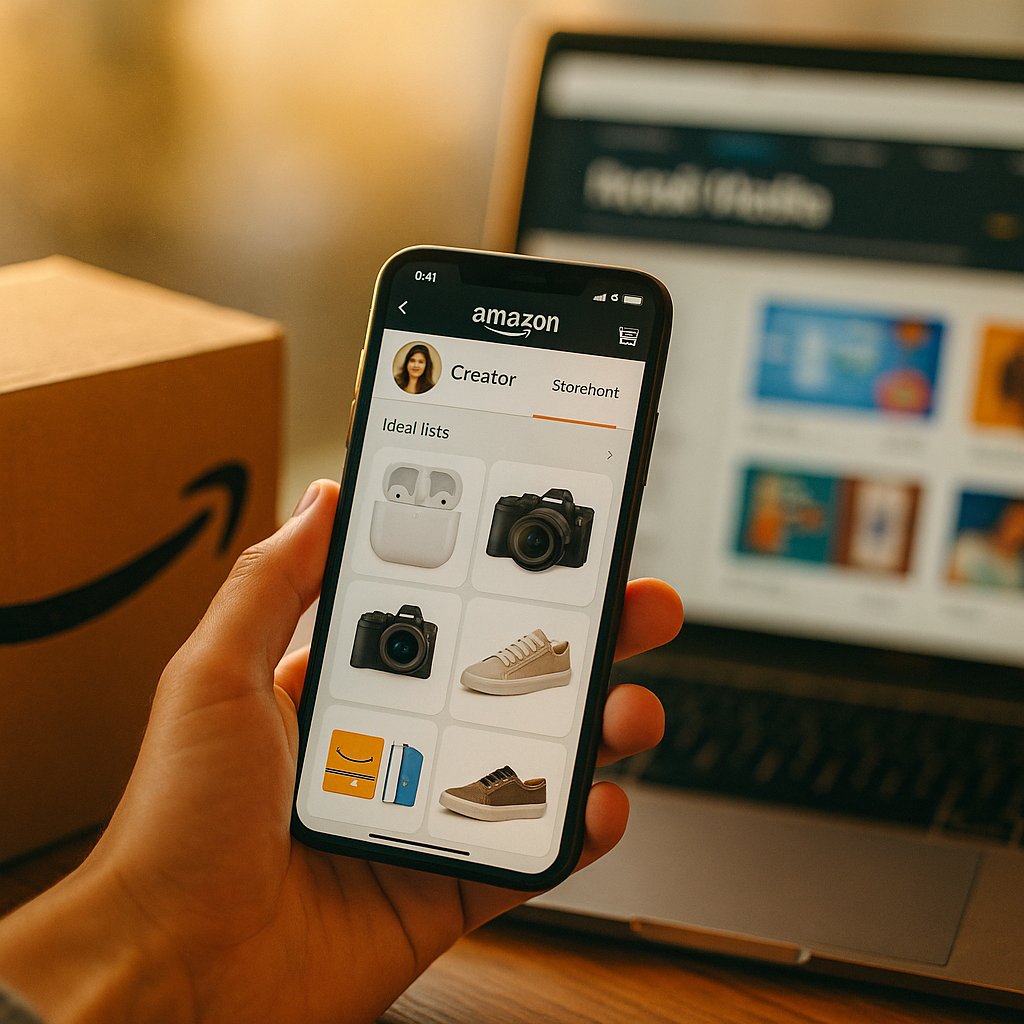
Amazon’s influencer program now touches more product listings than its entire sponsored display network did five years ago. That is not a stray fact. It is a signal that the company with the deepest first-party purchase data on the planet has decided creators, not banner ads, are the next lever for retail media growth. If you run brand budgets and you have not audited your Amazon creator strategy this quarter, you are already behind.
Retail media was supposed to be the clean, measurable alternative to social advertising. Then everyone realized clean and measurable does not mean effective at the top of funnel. Amazon’s answer has been to quietly expand its creator tools, storefront features, and commission structures until the line between “influencer marketing” and “retail media” basically disappeared. This piece breaks down what that expansion actually looks like, why it matters for brand strategy, and what operational changes marketers need to make now.
What Amazon Is Actually Building
Amazon Influencer Program started as a side door. Creators got a storefront, an affiliate link, and a small commission. It was never going to compete with the production value of a TikTok Shop live or the reach of an Instagram Reel. But Amazon was not trying to win on content quality. It was trying to win on purchase proximity.
The expansion over the past two years has pushed in three directions: richer creator storefronts with curated collections, deeper integration between creator content and product detail pages (those video modules you now see embedded directly on PDPs), and a commission structure that increasingly favors creators who drive repeat purchase behavior rather than one-off clicks. Amazon also opened up Inspire, its shoppable content feed, to more creators and brands, effectively building a TikTok-style discovery layer inside an app people already use to buy things.
That last point is the strategic crux. Amazon does not need to convince anyone to download a new app or learn a new behavior. The purchase intent already exists. What it lacked was the discovery and trust layer that creators provide. Now it is buying that layer, piece by piece, through program incentives rather than outright acquisition.
Amazon’s advantage was never content quality. It is the fact that every creator video sits one click away from an actual add-to-cart button, with Amazon’s own fulfillment and return policy backing the purchase.
Why This Counts as Retail Media, Not Just Influencer Marketing
Retail media has traditionally meant sponsored product placements, display ads on retailer sites, and off-site retargeting powered by purchase data. Creator content sat in a separate budget line, usually managed by a different team with different KPIs. Amazon’s expansion collapses that separation.
When a creator’s video runs inside a sponsored placement, informed by the same first-party data that targets a sponsored product ad, the distinction between “content” and “media” stops being useful. Brands are effectively paying for creator-produced ad units that get served with retail media precision. That is a meaningful shift in how budgets should be categorized and measured, and it echoes a broader trend covered in our analysis of how AI search is rerouting retail media spend toward more conversion-adjacent formats.
It also changes who controls the relationship. In traditional influencer marketing, the brand or agency owns the creator relationship and the platform is just distribution. In Amazon’s model, the platform increasingly mediates the relationship through its own commission structures, storefront tools, and discovery algorithm. Brands lose a degree of control in exchange for proximity to purchase.
The Attribution Problem Gets Easier, Not Harder
Here is the part that should make performance marketers sit up. One of the chronic headaches in influencer marketing has been attribution. A creator posts on Instagram, the viewer researches on Google, then buys three days later on a desktop browser with no tracking link in sight. Multi-touch attribution models try to patch this, usually badly. Our piece on why last-click attribution fails creator-driven journeys covers this gap in detail.
Amazon sidesteps a chunk of that problem because the content, the product page, and the checkout flow all live inside the same ecosystem. A creator’s Amazon storefront link produces a clean attribution chain that most social platforms cannot match without third-party tracking pixels and a prayer. For brands tired of defending creator ROI to finance teams, that is a genuinely attractive proposition. It is also why benchmarking creator CAC by platform increasingly needs an Amazon-specific column, not a generic “social” bucket.
Who Benefits and Who Gets Squeezed
Not every brand category gains equally here. Consumables, supplements, beauty, and home goods, categories with high repeat purchase rates and straightforward product demonstrations, are the clearest winners. These are the same categories already proving the model on TikTok Shop, where our coverage of the supplement category’s wins on trust and margin shows how creator-led commerce rewards simple, demonstrable value propositions.
Fashion and higher-consideration electronics face more friction. Amazon’s storefront format favors quick demonstration over narrative or aspiration, and purchase decisions in those categories often need more nurturing than a 90-second unboxing can provide. If your category depends on brand storytelling over functional proof, Amazon’s creator layer will supplement your strategy, not replace your existing creator partnerships on Instagram or YouTube.
Agencies that specialize in Amazon-specific creator strategy are becoming their own niche, much like we have seen specialist shops emerge around AI search optimization, detailed in our report on agency acquisition activity tied to AEO and GEO demand. Expect consolidation here too, as holding companies realize Amazon creator management requires different skills than a standard TikTok or Instagram campaign.
What This Means for Platform Allocation
Marketing leaders are already juggling TikTok Shop, Instagram, YouTube, and now a more aggressive Amazon. The honest answer is that most brands do not have a clean framework for splitting budget across these channels based on actual performance data, as our research on CMOs who cannot measure ROI despite rising spend makes painfully clear.
Amazon’s pitch is simple: better attribution, built-in fulfillment trust, and purchase intent that is already warm. TikTok Shop’s pitch is reach, discovery, and lower CAC in the right categories, something we unpacked in our piece on creators claiming the majority of TikTok Shop GMV. These are not competing strategies so much as complementary stages of the same funnel. Use TikTok and Instagram for discovery and cultural relevance, let Amazon’s creator storefronts catch the bottom-funnel searcher who is already comparing products and reading reviews.
The operational challenge is that most teams still budget and staff these channels in silos. Someone owns “social influencer,” someone else owns “Amazon retail media,” and they rarely talk. That structure made sense when the channels were genuinely distinct. It makes a lot less sense now.
Compliance Is Not Optional Here
Amazon’s creator program sits squarely inside FTC disclosure requirements, and the agency has been increasingly active on influencer endorsement enforcement. Any creator posting affiliate links or Amazon storefront content needs clear, conspicuous disclosure, not a buried hashtag. Brands that manage creator relationships through Amazon’s program still bear reputational and in some cases legal exposure if disclosure practices slip, so this is not a “the platform handles it” situation. Review the FTC’s endorsement guidelines directly rather than relying on secondhand summaries, and build disclosure audits into your creator onboarding checklist the same way you would for any other platform.
There is also a data governance angle worth flagging. Amazon’s creator tools pull from first-party purchase data in ways that raise the same questions UK and EU marketers have been asking about consent and data use elsewhere. If your legal team has not reviewed how creator commission tracking interacts with customer data policies, that is a gap worth closing before scale, not after an audit flags it. The ICO’s guidance on marketing data is a reasonable starting reference point for UK-facing programs.
The AI Layer Nobody Is Talking About Yet
Amazon’s product search is increasingly influenced by AI-generated summaries and recommendation layers, not unlike the shift happening across Google search that we covered in the AI search surge forcing creator funnel rebuilds. As Amazon leans further into generative shopping assistants, creator content becomes training and ranking fodder for those AI layers, not just standalone marketing assets.
That means the creator content you produce for Amazon storefronts may increasingly influence what Amazon’s AI shopping assistant recommends to other shoppers, independent of your paid media spend. Brands that treat Amazon creator content as a one-off campaign asset rather than an evergreen, optimizable library are leaving value on the table. This is the same logic driving interest in reusable creative libraries that cut production costs, applied now to retail media rather than social.
Practical Steps for the Next Two Quarters
- Audit your current Amazon presence. Most brands have an underused storefront and no formal creator sourcing strategy for it. Fix the basics before chasing new tools.
- Unify your attribution model. Pull Amazon creator performance data into the same dashboard as your TikTok and Instagram metrics. Siloed reporting hides where your real ROI is coming from.
- Reassign budget ownership. If one team owns “influencer” and another owns “retail media,” merge the planning process even if the execution stays separate.
- Build a compliance checklist specific to Amazon creator content. Disclosure rules apply regardless of which platform hosts the link.
- Treat creator content as a long-term asset. With AI shopping assistants increasingly surfacing creator content, evergreen quality matters more than campaign-cycle thinking.
For a broader view of how platform consolidation is reshaping creator economics generally, our coverage of platform consolidation signals offers useful context on where this trend is headed industry-wide. Benchmarking tools like eMarketer’s retail media forecasts and Statista’s creator economy data are worth monitoring quarterly as Amazon’s numbers start showing up in broader industry reports.
Frequently Asked Questions
Is Amazon’s influencer program the same as retail media advertising?
Not exactly, but the lines are blurring fast. Amazon’s creator tools now integrate with sponsored placements and first-party purchase data in ways that function like retail media even though the content originates from creators rather than traditional ad units.
Which product categories see the best results from Amazon creator content?
Consumables, supplements, beauty, and home goods tend to perform best because they suit quick demonstration formats and benefit from repeat purchase behavior, which Amazon’s commission structure increasingly rewards.
How does Amazon creator attribution compare to social platforms?
Amazon’s closed-loop ecosystem, where content, product pages, and checkout all live in one place, produces cleaner attribution than most social platforms, which typically require third-party tracking to connect content exposure to purchase.
Do FTC disclosure rules apply to Amazon influencer content?
Yes. Any creator using affiliate links or Amazon storefront content must follow FTC endorsement guidelines with clear, conspicuous disclosure, and brands share responsibility for ensuring compliance.
Should brands shift budget from TikTok Shop to Amazon?
Most evidence points toward complementary use rather than replacement. TikTok and Instagram tend to drive discovery, while Amazon’s creator storefronts capture bottom-funnel intent from shoppers already comparing products.
Next step: Pull your last two quarters of Amazon storefront performance, line it up against your TikTok Shop and Instagram creator metrics, and find out which channel is actually closing the sale. That single comparison will tell you more about where to shift budget next quarter than any forecast report will.
Top Influencer Marketing Agencies
The leading agencies shaping influencer marketing in 2026
Agencies ranked by campaign performance, client diversity, platform expertise, proven ROI, industry recognition, and client satisfaction. Assessed through verified case studies, reviews, and industry consultations.
Moburst

-
2

The Shelf
Boutique Beauty & Lifestyle Influencer AgencyA data-driven boutique agency specializing exclusively in beauty, wellness, and lifestyle influencer campaigns on Instagram and TikTok. Best for brands already focused on the beauty/personal care space that need curated, aesthetic-driven content.Clients: Pepsi, The Honest Company, Hims, Elf Cosmetics, Pure LeafVisit The Shelf → -
3

Audiencly
Niche Gaming & Esports Influencer AgencyA specialized agency focused exclusively on gaming and esports creators on YouTube, Twitch, and TikTok. Ideal if your campaign is 100% gaming-focused — from game launches to hardware and esports events.Clients: Epic Games, NordVPN, Ubisoft, Wargaming, Tencent GamesVisit Audiencly → -
4

Viral Nation
Global Influencer Marketing & Talent AgencyA dual talent management and marketing agency with proprietary brand safety tools and a global creator network spanning nano-influencers to celebrities across all major platforms.Clients: Meta, Activision Blizzard, Energizer, Aston Martin, WalmartVisit Viral Nation → -
5

The Influencer Marketing Factory
TikTok, Instagram & YouTube CampaignsA full-service agency with strong TikTok expertise, offering end-to-end campaign management from influencer discovery through performance reporting with a focus on platform-native content.Clients: Google, Snapchat, Universal Music, Bumble, YelpVisit TIMF → -
6

NeoReach
Enterprise Analytics & Influencer CampaignsAn enterprise-focused agency combining managed campaigns with a powerful self-service data platform for influencer search, audience analytics, and attribution modeling.Clients: Amazon, Airbnb, Netflix, Honda, The New York TimesVisit NeoReach → -
7

Ubiquitous
Creator-First Marketing PlatformA tech-driven platform combining self-service tools with managed campaign options, emphasizing speed and scalability for brands managing multiple influencer relationships.Clients: Lyft, Disney, Target, American Eagle, NetflixVisit Ubiquitous → -
8

Obviously
Scalable Enterprise Influencer CampaignsA tech-enabled agency built for high-volume campaigns, coordinating hundreds of creators simultaneously with end-to-end logistics, content rights management, and product seeding.Clients: Google, Ulta Beauty, Converse, AmazonVisit Obviously →