


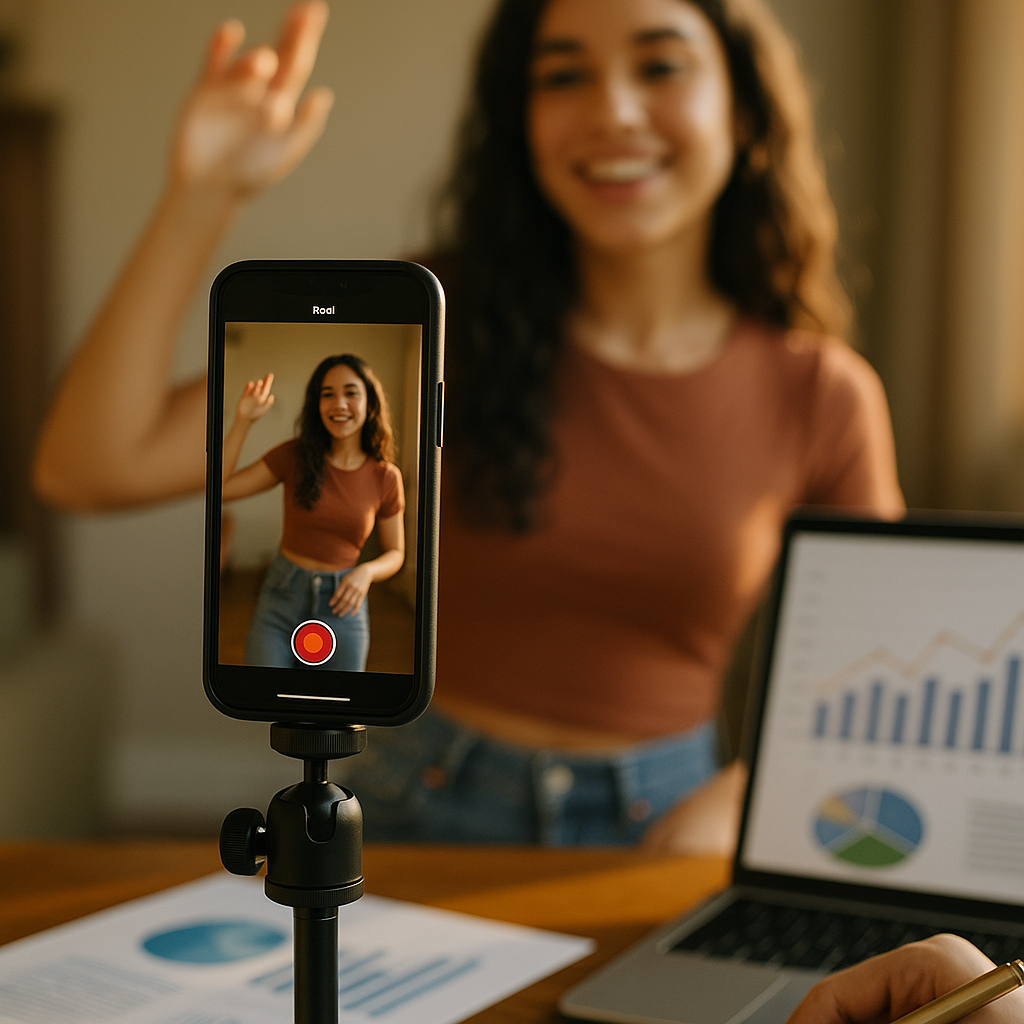
A single 30-second Reel from a creator with 150,000 followers now costs more than a 15-second national TV spot did a decade ago, relatively speaking, once you account for conversion rate. That’s not a typo. Brands across retail, beauty, and fintech are quietly paying $5,000 and up for a single mid tier Reels placement, and the math is starting to make sense even to the finance teams who used to balk at it. The question isn’t whether the Reels premium is real. It’s whether your brand can justify paying it without a seat-of-the-pants gut check.
The $5,000 Number Isn’t Random
Ask five agencies where the $5,000 mid tier fee came from and you’ll get five slightly different answers, but they converge on the same logic. A creator with 100,000 to 500,000 followers on Instagram, posting a branded Reel with decent production value, a scripted hook, and usage rights for paid amplification, typically lands in the $3,500 to $7,500 range depending on vertical. Beauty and fashion sit at the high end. B2B and home goods sit lower. The $5,000 figure has become the de facto midpoint because it bundles three things brands actually need: organic reach, a usable asset for paid media, and a built-in audience that already trusts the creator’s recommendations.
Compare that to boosting a brand-produced video with zero creator involvement. You’ll pay less per view upfront, sure. But you lose the social proof that makes a viewer stop scrolling in the first place. Meta’s own advertising data has repeatedly shown that creator-fronted content outperforms branded-only creative on watch time and click-through, which is exactly why Meta’s business platform keeps pushing partnership ads and branded content tools deeper into its ad stack.
Mid tier creators deliver the rare combination of statistically meaningful reach and audience trust that neither celebrity talent nor nano creators can replicate at scale.
Why Reels Specifically Command a Premium Over Feed or Stories
Instagram has spent the better part of two years reallocating distribution toward Reels, and that shift shows up directly in CPMs. Brands that moved budget out of static feed posts have seen the shift firsthand, something we broke down in detail in our feed to Reels budget shift analysis. The short version: Instagram’s algorithm now treats Reels as the primary discovery surface, meaning a well-performing Reel reaches far beyond a creator’s existing follower count. Feed posts, by contrast, mostly reach people who already follow the account.
That discovery multiplier is the real reason brands pay more for Reels than for any other Instagram format. A mid tier creator’s Reel can realistically reach two to four times their follower count if the algorithm favors it, something that almost never happens with a static carousel. Add Instagram’s recent originality scoring changes, which reward first-posted, non-reused content, and the incentive to pay for genuinely original creator work goes up again. We covered the mechanics of that shift in our Instagram originality update guide, and it’s a useful read if your creative team is still repurposing TikTok-native content onto Reels without edits.
The Celebrity Tier Problem
Top tier creators and celebrity talent still command headlines, and sometimes headlines are exactly what a launch needs. But the ROI math rarely holds up for recurring, always-on influencer programs. A celebrity post might cost $50,000 to $250,000 and generate a burst of impressions, most of which come from an audience that isn’t particularly primed to buy anything specific. Mid tier creators, by contrast, tend to have narrower, more engaged niches. A home organization creator with 220,000 followers converts better on a storage bin brand than a reality TV star with two million followers ever will, because the audience intent is already aligned.
This is the uncomfortable truth agencies don’t always say out loud to clients who want the celebrity logo on their media plan: reach without relevance is just an expensive impression count.
What Brands Actually Get for $5,000
Breaking down a typical mid tier Reels contract helps explain where the money goes. It’s rarely just “one video.”
- Production and concepting: The creator writes the hook, shoots multiple takes, and edits in their native style, which is part of what makes it convert. A brand-scripted ad read performs worse than creator-led framing almost every time.
- Usage rights: Most $5,000 contracts now include 30 to 90 days of paid usage rights, letting the brand run the Reel as a Spark Ad or Partnership Ad with the creator’s handle attached, which boosts trust signals in the ad unit itself.
- Whitelisting access: Some deals bundle in access to the creator’s ad account for direct boosting, a feature that didn’t widely exist five years ago and now adds real line-item value.
- Remix and stitch permissions: With Instagram’s Remix feature maturing, brands increasingly negotiate rights that let other creators build on the original Reel, extending its lifecycle well past the initial post. We go deeper on structuring those terms in our Reels Remix rights guide.
Strip any one of those elements out and the $5,000 price tag starts to look inflated. Keep them all in, and it’s arguably underpriced relative to the equivalent paid media spend needed to generate the same reach and conversion rate organically.
The Risk Side Nobody Budgets For
Here’s where B2B marketing leads need to slow down. Paying a premium fee doesn’t eliminate compliance risk, it just raises the stakes if something goes wrong. The FTC has been increasingly active on influencer disclosure enforcement, and a $5,000 Reel that gets flagged for inadequate disclosure can cost far more in brand reputation damage than the original fee. Review the FTC’s endorsement guidelines before any contract gets signed, not after a campaign launches.
There’s also a platform-level risk brands underestimate: algorithmic demotion. TikTok and Instagram have both tightened enforcement against engagement bait, undisclosed partnerships, and repurposed content, and a Reel that trips those filters won’t get the reach you paid for regardless of creator tier. Our algorithmic demotion compliance guide is written for TikTok specifically, but the underlying principle, that platforms now actively suppress content that violates originality or disclosure norms, applies just as much to Instagram’s Reels ecosystem.
A $5,000 Reel that gets algorithmically suppressed for disclosure violations delivers zero ROI, regardless of how well-produced it is.
How Agencies Are Pricing Negotiations Now
Smart brands aren’t just accepting the $5,000 rate card. They’re structuring deals around performance tiers: a base fee plus a bonus triggered by view thresholds or conversion benchmarks tracked through UTM links or platform-native shopping tags. This hybrid model, borrowed heavily from TikTok Shop’s affiliate commission structures, is becoming standard practice on Instagram too, especially for brands running shoppable Reels through Instagram Checkout. If you’re newer to performance-based creator pricing, our GMV velocity formula breakdown explains the underlying logic, even though it’s framed around TikTok Shop specifically.
Agencies with mature influencer programs are also benchmarking spend against industry data rather than negotiating creator by creator. Sprout Social’s and eMarketer’s ongoing research on creator marketing benchmarks and influencer spend forecasts gives procurement teams a defensible range to point to internally, which matters a lot when a CFO asks why a single Instagram post costs more than a month of paid search.
Is the Premium Sustainable, or a Bubble?
Reasonable people disagree here. Some media buyers argue that as more brands chase mid tier creators, rates will climb further before platforms introduce more supply (more creators hitting that 100K to 500K follower band) or more automated pricing tools that compress fees. Others point to TikTok Shop’s AI-driven creator matching as a preview of where Instagram is headed too: platforms increasingly want to standardize and automate creator discovery and pricing, which could pull rates down over time rather than up. Our look at AI creator pool scaling is worth a read if you’re trying to anticipate where Instagram’s own creator marketplace tools might head next.
For now, though, demand is outpacing supply in the mid tier specifically. Micro creators are abundant and cheap. Celebrity talent is abundant and expensive but inefficient. The 100K to 500K follower band, with established engagement patterns and enough scale to matter, remains comparatively scarce, and scarcity is exactly what’s propping the $5,000 fee up.
Making the Internal Case
If you’re the person who has to defend this line item to a VP of marketing or a finance team unfamiliar with creator economics, frame it around three numbers: cost per thousand reached, engagement rate relative to paid media benchmarks, and conversion lift from creator-tagged versus brand-only content. Pull those three metrics from your last three campaigns. If the mid tier Reel outperforms your branded paid media on all three, the $5,000 fee defends itself. If it doesn’t, you don’t have a pricing problem, you have a creator selection problem, and no fee adjustment will fix that.
Next step: audit your last five Reels partnerships against cost-per-engaged-view and conversion lift before your next renewal cycle, and use that data, not the rate card, to decide whether $5,000 is a premium worth paying again.
Frequently Asked Questions
Why do mid tier creators charge around $5,000 for a single Instagram Reel?
The fee typically bundles production, creative concepting, 30 to 90 days of paid usage rights, and sometimes whitelisting access for the brand’s ad account. It reflects both the creator’s audience trust and the algorithmic reach advantage Reels currently get over other Instagram formats.
Is the Reels premium worth it compared to boosting brand-made content?
In most cases yes, because creator-fronted content consistently outperforms branded-only creative on watch time, click-through, and conversion, largely due to built-in social proof that branded content lacks.
How does follower count relate to the $5,000 fee?
Creators in the 100,000 to 500,000 follower range are considered mid tier and most commonly priced near $5,000 depending on vertical, engagement rate, and whether usage rights are included.
What risks should brands watch for when paying premium Reels fees?
Disclosure compliance under FTC guidelines and algorithmic demotion from undisclosed partnerships or reused content are the two biggest risks that can erase ROI regardless of the fee paid.
Are performance-based pricing models replacing flat Reels fees?
Many agencies now negotiate a base fee plus performance bonuses tied to view thresholds or conversion benchmarks, a hybrid model increasingly common across Instagram and TikTok Shop alike.
Top Influencer Marketing Agencies
The leading agencies shaping influencer marketing in 2026
Agencies ranked by campaign performance, client diversity, platform expertise, proven ROI, industry recognition, and client satisfaction. Assessed through verified case studies, reviews, and industry consultations.
Moburst

-
2

The Shelf
Boutique Beauty & Lifestyle Influencer AgencyA data-driven boutique agency specializing exclusively in beauty, wellness, and lifestyle influencer campaigns on Instagram and TikTok. Best for brands already focused on the beauty/personal care space that need curated, aesthetic-driven content.Clients: Pepsi, The Honest Company, Hims, Elf Cosmetics, Pure LeafVisit The Shelf → -
3

Audiencly
Niche Gaming & Esports Influencer AgencyA specialized agency focused exclusively on gaming and esports creators on YouTube, Twitch, and TikTok. Ideal if your campaign is 100% gaming-focused — from game launches to hardware and esports events.Clients: Epic Games, NordVPN, Ubisoft, Wargaming, Tencent GamesVisit Audiencly → -
4

Viral Nation
Global Influencer Marketing & Talent AgencyA dual talent management and marketing agency with proprietary brand safety tools and a global creator network spanning nano-influencers to celebrities across all major platforms.Clients: Meta, Activision Blizzard, Energizer, Aston Martin, WalmartVisit Viral Nation → -
5

The Influencer Marketing Factory
TikTok, Instagram & YouTube CampaignsA full-service agency with strong TikTok expertise, offering end-to-end campaign management from influencer discovery through performance reporting with a focus on platform-native content.Clients: Google, Snapchat, Universal Music, Bumble, YelpVisit TIMF → -
6

NeoReach
Enterprise Analytics & Influencer CampaignsAn enterprise-focused agency combining managed campaigns with a powerful self-service data platform for influencer search, audience analytics, and attribution modeling.Clients: Amazon, Airbnb, Netflix, Honda, The New York TimesVisit NeoReach → -
7

Ubiquitous
Creator-First Marketing PlatformA tech-driven platform combining self-service tools with managed campaign options, emphasizing speed and scalability for brands managing multiple influencer relationships.Clients: Lyft, Disney, Target, American Eagle, NetflixVisit Ubiquitous → -
8

Obviously
Scalable Enterprise Influencer CampaignsA tech-enabled agency built for high-volume campaigns, coordinating hundreds of creators simultaneously with end-to-end logistics, content rights management, and product seeding.Clients: Google, Ulta Beauty, Converse, AmazonVisit Obviously →