


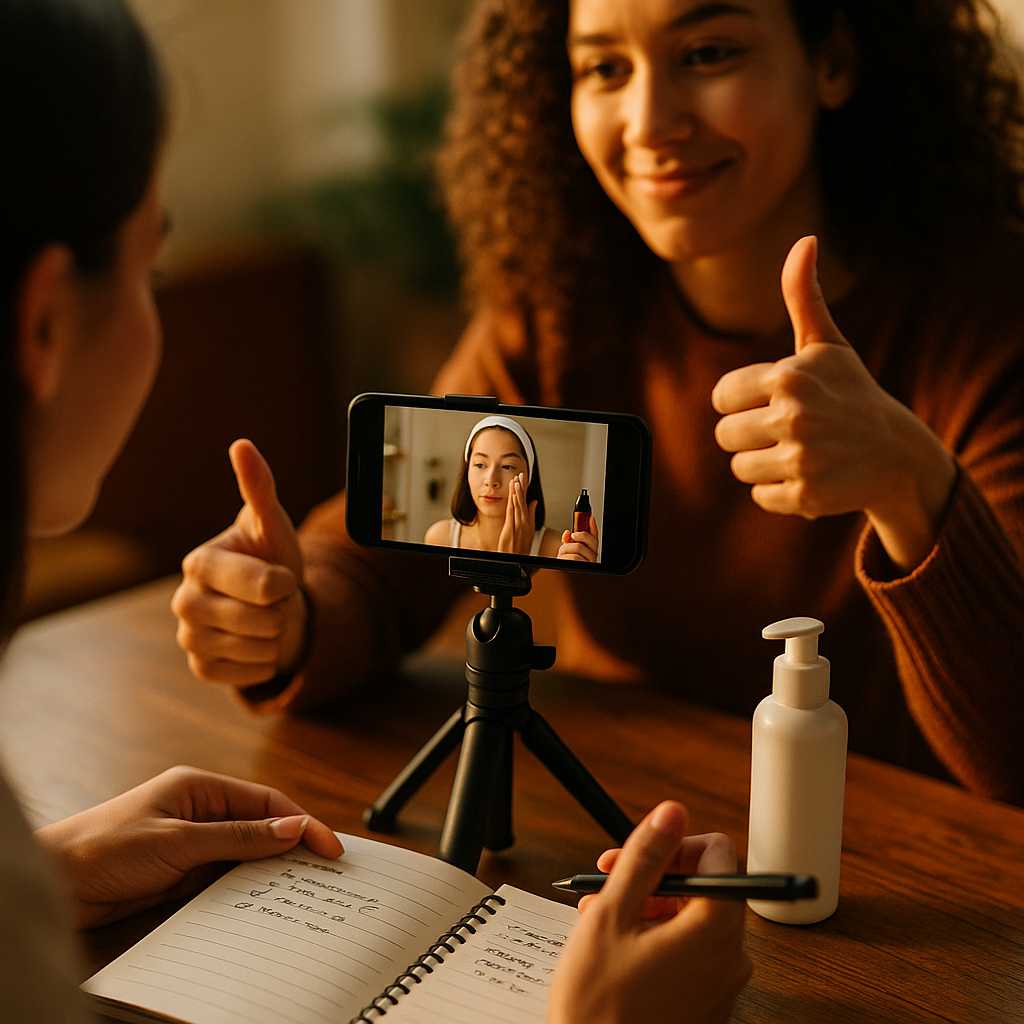
73% of consumers say they trust peer recommendations over branded content, yet most “review” videos still feel like ads wearing a disguise. That gap is exactly why the Rate My Routine format has become one of the highest-performing peer review content styles on TikTok and Instagram right now. Done right, it doesn’t just entertain. It converts skeptics into buyers by making judgment feel earned, not purchased.
Rate My Routine content works because it mimics something every marketer secretly envies: unsolicited, specific feedback. A creator shows their actual skincare shelf, workout split, or desk setup, and another creator (or the audience) scores it. No brand voiceover. No forced CTA. Just a structured critique that happens to feature your product in frame. The format borrows credibility from the review genre while sidestepping the stiffness of a formal testimonial.
Why This Format Outperforms Standard Reviews
Traditional influencer reviews ask viewers to trust a single verdict. Rate My Routine content asks viewers to trust a process. The creator walks through each item, assigns a rating, explains the reasoning, and often disagrees with part of the routine. That friction is the point. A routine that gets a perfect score on everything reads as scripted. A routine that gets dinged on two products and praised on three feels like reality.
Peer review content performs best when it includes at least one point of mild criticism. A flawless rating sequence triggers skepticism faster than it builds trust.
This mirrors what we’ve seen in myth busting reels, where correcting a false claim builds more authority than simply confirming one. Audiences reward creators who show their work, not just their conclusion.
Scripting the Format Without Killing the Authenticity
Here’s the paradox every brand strategist has to manage: you need a script to hit compliance and messaging goals, but the moment it sounds scripted, the format collapses. The solution isn’t to write dialogue. It’s to write structure.
A working Rate My Routine brief usually includes:
- A fixed rating scale. 1 to 10, letter grades, or a simple “keep/toss” binary. Consistency across a series builds a recognizable format viewers return to.
- Mandatory criteria, flexible commentary. Tell the creator to address ingredients, price, and results. Don’t tell them what to say about each.
- A built-in disagreement beat. Ask the creator to flag one thing they’d change or wouldn’t repurchase, even if it’s minor.
- A natural product placement window. Your product should appear in the middle of the routine, not first (looks paid) or last (looks like an afterthought).
Brands that over-script this format tend to make the same mistake: they write the rating itself. “Rate this a 9/10 and mention the clean ingredient list.” That’s a giveaway. Let the creator land on their own number. If your product is genuinely good, it’ll score well without coaching, and if it doesn’t, that’s information you need before you scale the campaign, not after.
Casting Matters More Than Script Here
You can write the tightest brief in the world and still get a flat video if the creator doesn’t have a pre-existing review voice. This format depends on the creator having some credibility as a critic, not just as a face. Look for creators who already post comparison or ranking content organically. Check their comment sections for engagement phrases like “finally someone said it” or “I needed this ranking.” That’s your signal the audience already trusts their judgment.
Nano and micro creators tend to overperform here because their “routines” read as genuinely personal rather than curated for reach. For scaling this across a roster, the casting logic overlaps heavily with what we outlined in nano creator ensemble casts: smaller audiences, higher perceived authenticity, lower risk per placement.
The Compliance Layer Brands Can’t Skip
Peer review content sits in a gray zone that regulators are watching closely. If a creator is rating your product as part of a paid partnership, that relationship still needs disclosure under FTC endorsement guidelines, even if the rating itself is unscripted and candid. The informal tone of this format doesn’t exempt it from the same rules governing any sponsored post.
Build disclosure into the brief as a non-negotiable, not an afterthought. A simple “Includes #ad or #partner tag” line in the contract keeps legal exposure low without disrupting the authentic feel of the video. For UK-facing campaigns, the ICO guidance on influencer marketing data practices is worth a periodic review, particularly if your routines involve any data capture through affiliate links or QR codes.
Where the Format Breaks Down
Not every category suits Rate My Routine content. It works best for multi-step categories: skincare, supplements, fitness gear, desk setups, home office tech. It struggles with single-SKU products that don’t fit into a “routine” at all. Forcing a one-product brand into this format usually results in a creator padding the video with unrelated items just to hit the structure, which dilutes your placement and wastes the slot.
It also breaks down when brands demand rating consistency across creators. If you’re running this format with ten creators and all ten rate your product a 9 or 10, audiences notice the pattern within a single scroll session. Variance is a feature, not a bug. A spread of 7s, 8s, and the occasional 6 with an honest critique is what makes the whole series credible.
A campaign where every creator scores the same product identically is a red flag to audiences, not a proof point. Variance signals authenticity; uniformity signals a brief.
Measuring What Actually Matters
Views and likes tell you reach. For this format specifically, track three things instead: saves, comment sentiment, and click-through on any pinned link. Saves matter because viewers treat these videos as reference material, something to revisit before a purchase decision, similar to the behavior pattern seen in comparison grid carousels. Comment sentiment matters more than volume. A video with 200 comments debating the rating is doing more trust-building work than one with 2,000 comments of generic praise.
If you’re running this as a pinned-comment campaign with shoppable links, the scripting principles from shoppable pinned comments apply directly: place the link reference naturally inside the routine’s middle section, not bolted onto the caption.
Industry benchmarks from eMarketer and Sprout Social consistently show peer-style review content outperforming polished branded video on engagement rate, often by a factor of two to three times, which is the data point that should be anchoring your next budget conversation with finance.
A Quick Brief Template You Can Steal
For teams building their first Rate My Routine brief, keep it to five lines:
- Rating scale (pick one, stay consistent across the series)
- 3 to 5 products/steps to cover, ours placed third or fourth
- One required moment of critique or hesitation
- Disclosure requirement, stated explicitly
- Delivery window and raw footage request for repurposing
Requesting raw footage matters here. Even a “flop” take where the creator fumbles a line can become usable B-roll for a behind-the-scenes clip later, extending the value of a single shoot well past its original post.
FAQs
Frequently Asked Questions
What is the Rate My Routine content format?
It’s a peer review style video where a creator walks through a multi-step routine (skincare, fitness, desk setup) and assigns ratings to each product or step, creating a structured but unscripted-feeling critique that builds audience trust.
How do you script this format without making it feel fake?
Script the structure, not the dialogue. Set a fixed rating scale, required talking points, and a built-in moment of critique, but let the creator choose their own words and final score.
Does Rate My Routine content need an FTC disclosure?
Yes. Any paid partnership requires clear disclosure under FTC endorsement guidelines, regardless of how informal or unscripted the review tone appears on camera.
What products work best for this format?
Multi-step categories like skincare, supplements, fitness gear, and tech setups perform best. Single-SKU products often struggle because they don’t naturally fit a “routine” structure.
How should brands measure success for this content type?
Prioritize saves, comment sentiment, and click-through on pinned links over raw view counts, since this format is primarily a trust and reference tool rather than a pure reach play.
The next time a creative team pitches Rate My Routine content, hand them a brief with a fixed scale and one required critique, then get out of the way. The trust this format builds comes from what you don’t script, not what you do.
Top Influencer Marketing Agencies
The leading agencies shaping influencer marketing in 2026
Agencies ranked by campaign performance, client diversity, platform expertise, proven ROI, industry recognition, and client satisfaction. Assessed through verified case studies, reviews, and industry consultations.
Moburst

-
2

The Shelf
Boutique Beauty & Lifestyle Influencer AgencyA data-driven boutique agency specializing exclusively in beauty, wellness, and lifestyle influencer campaigns on Instagram and TikTok. Best for brands already focused on the beauty/personal care space that need curated, aesthetic-driven content.Clients: Pepsi, The Honest Company, Hims, Elf Cosmetics, Pure LeafVisit The Shelf → -
3

Audiencly
Niche Gaming & Esports Influencer AgencyA specialized agency focused exclusively on gaming and esports creators on YouTube, Twitch, and TikTok. Ideal if your campaign is 100% gaming-focused — from game launches to hardware and esports events.Clients: Epic Games, NordVPN, Ubisoft, Wargaming, Tencent GamesVisit Audiencly → -
4

Viral Nation
Global Influencer Marketing & Talent AgencyA dual talent management and marketing agency with proprietary brand safety tools and a global creator network spanning nano-influencers to celebrities across all major platforms.Clients: Meta, Activision Blizzard, Energizer, Aston Martin, WalmartVisit Viral Nation → -
5

The Influencer Marketing Factory
TikTok, Instagram & YouTube CampaignsA full-service agency with strong TikTok expertise, offering end-to-end campaign management from influencer discovery through performance reporting with a focus on platform-native content.Clients: Google, Snapchat, Universal Music, Bumble, YelpVisit TIMF → -
6

NeoReach
Enterprise Analytics & Influencer CampaignsAn enterprise-focused agency combining managed campaigns with a powerful self-service data platform for influencer search, audience analytics, and attribution modeling.Clients: Amazon, Airbnb, Netflix, Honda, The New York TimesVisit NeoReach → -
7

Ubiquitous
Creator-First Marketing PlatformA tech-driven platform combining self-service tools with managed campaign options, emphasizing speed and scalability for brands managing multiple influencer relationships.Clients: Lyft, Disney, Target, American Eagle, NetflixVisit Ubiquitous → -
8

Obviously
Scalable Enterprise Influencer CampaignsA tech-enabled agency built for high-volume campaigns, coordinating hundreds of creators simultaneously with end-to-end logistics, content rights management, and product seeding.Clients: Google, Ulta Beauty, Converse, AmazonVisit Obviously →