


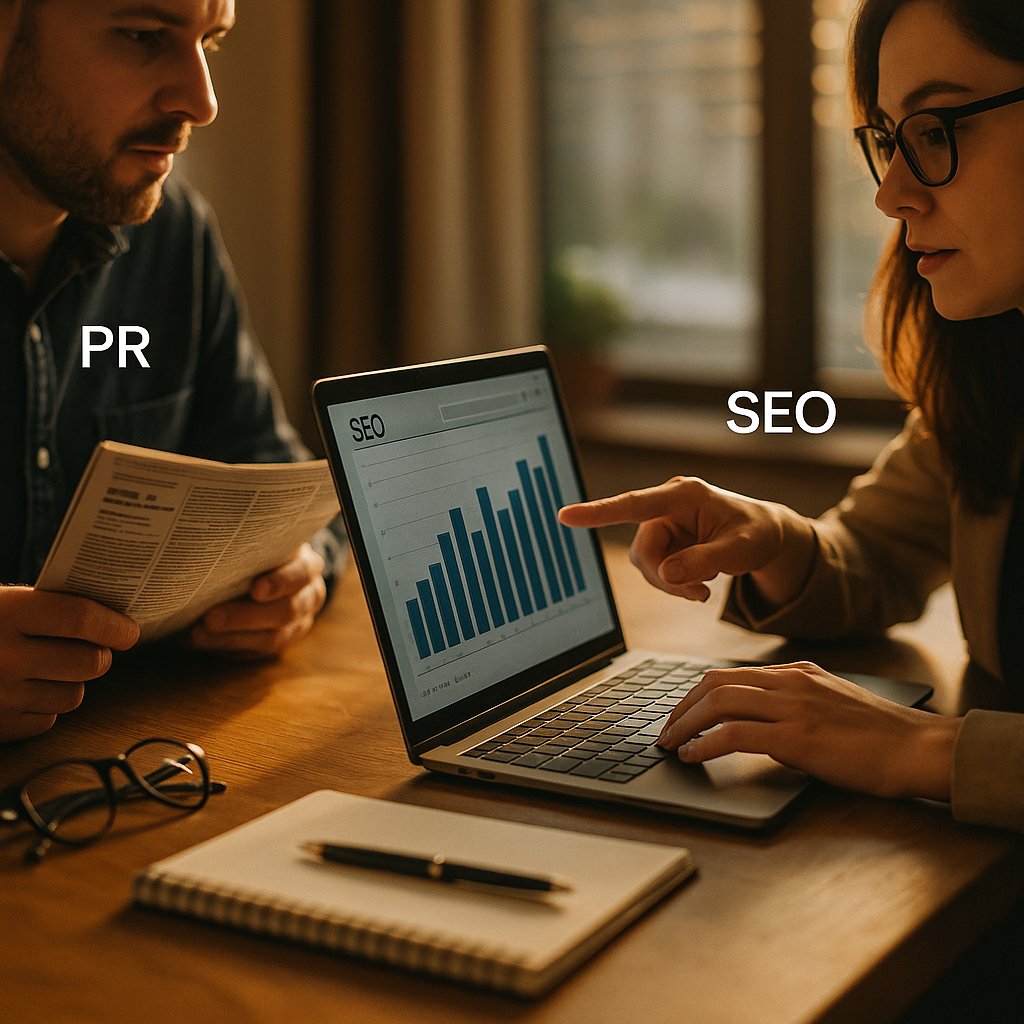
Eighty-four percent. That’s the share of brand mentions AI answer engines pull from earned media, independent reviews, forums, and creator content rather than anything a brand paid to place. If your SEO budget still assumes Google’s blue links drive discovery, you’re optimizing for a channel that’s quietly losing relevance. Earned media is the new SEO, and the brands that haven’t noticed are already behind.
Why AI Engines Prefer Earned Media Over Paid Placement
Large language models trained on trust signals do something marketers didn’t expect: they treat third-party validation as a stronger relevance signal than brand-controlled copy. A sponsored listicle or a polished press release reads as promotional. A Reddit thread arguing about which skincare serum actually works, or a creator’s unscripted comparison video, reads as evidence. Models like those behind ChatGPT, Perplexity, and Google’s AI Overviews are built to synthesize consensus, and consensus doesn’t come from a brand’s own website copy.
This is the core finding behind our earlier report on how AI cites earned media at a rate that’s reshaping PR budgets industry-wide. Paid placements still have a role, but they’re no longer the shortcut to visibility they once were in traditional search.
When 84 percent of AI citations trace back to unpaid, third-party content, the old SEO playbook of keyword density and backlink purchases stops being the growth lever it used to be.
The Mechanics: How Citation Share Actually Works
AI citation share isn’t a vanity metric. It’s a measurable proxy for how often a brand, product, or claim gets surfaced when a user asks an AI engine a question in your category. Think of it as the new “position one” ranking, except there’s no single winner. A single AI answer might cite five or six sources, and your brand either appears in that mix or it doesn’t.
What drives inclusion? Three things, roughly in order of weight:
- Volume of independent mentions. The more places your product gets discussed organically (review sites, forums, comparison videos, niche blogs), the more training and retrieval data exists to pull from.
- Specificity and recency. Vague praise (“great product”) carries less weight than specific, dated claims (“cut my onboarding time by 40 percent in Q3”).
- Source diversity. A dozen mentions from a dozen different domains beats a dozen mentions from one creator’s content farm.
This is a structural shift from keyword-matching SEO to something closer to reputation management at scale. For a deeper look at how this is forcing attribution models to change, see our coverage of zero-click AI answers and what they mean for measuring funnel impact when there’s no click to track.
What This Means for the SEO Team’s Job Description
SEO specialists who spent careers optimizing meta descriptions and chasing Domain Authority now need a different skill set entirely. The job is shifting toward something closer to digital PR and community strategy: seeding product truth into the places AI models actually crawl and weight. That means Reddit, G2, Trustpilot, YouTube comments, niche Discord servers, and creator content, not just owned blog posts.
Practically, this means SEO and influencer marketing teams, which used to operate in separate lanes with separate budgets, now need to merge their reporting. A creator’s unboxing video isn’t just top-of-funnel awareness content anymore. It’s potential AI training data that could surface your brand in a ChatGPT answer six months from now.
Is Reach Still the Right Metric to Chase?
Short answer: no, not on its own. Reach tells you how many eyeballs saw something. It says nothing about whether that content will get cited, quoted, or referenced by an AI model synthesizing an answer for a high-intent buyer. Our analysis on how reach no longer predicts sales makes a similar point: vanity metrics are losing correlation with both revenue and now, AI visibility.
What matters more is what you might call “citation density”: how often a specific claim about your brand shows up verbatim or near-verbatim across independent sources. A single viral post with ten million views might generate zero AI citations if it’s all emotional reaction and no specific product claim. Meanwhile, fifty micro-reviews each mentioning a concrete use case can build a citation moat that reach alone never could.
This echoes what we found when covering the micro influencer engagement gap: smaller creators often produce more specific, more trusted, and ultimately more citable content than celebrity partnerships built for scale.
Where PR, SEO, and Influencer Budgets Collide
For years, PR, SEO, and influencer marketing lived in different budget lines, often reporting to different stakeholders with different KPIs. The 84 percent citation share finding makes that separation look increasingly indefensible. If AI engines treat creator reviews, press coverage, and forum discussion as functionally equivalent signals of brand credibility, then brands need a unified strategy for generating all three.
Some agencies are already restructuring around this. Instead of separate SEO and influencer teams, they’re building “earned visibility” pods that manage seeding, monitoring, and measurement across every channel an AI model might crawl. This isn’t just theoretical. Platform ROI claims are already facing CFO scrutiny, and finance leaders want a single, defensible story about why creator spend drives discoverability, not three disconnected reports that don’t talk to each other.
The brands winning AI citation share aren’t the ones with the biggest ad budgets. They’re the ones with the most diverse, most specific, most independently verified mentions across the open web.
A Practical Framework for Earning Citations
So what does an earned-media-first strategy actually look like in practice? A few things that are working right now for brands tracking this seriously:
- Prioritize product seeding over broad awareness campaigns. Get the product into hands that will produce specific, detailed commentary, not just impressions.
- Treat review platforms as owned-adjacent infrastructure. G2, Capterra, Trustpilot, and category-specific forums deserve dedicated resourcing, not an afterthought intern task.
- Diversify creator tiers deliberately. A mix of niche, micro, and mid-tier creators produces more unique domains and voices than a handful of big-name partnerships, which helps with the source diversity AI models reward.
- Monitor citation share like you’d monitor rank. Tools are emerging to track how often your brand appears in AI-generated answers across categories. Treat this as a new KPI dashboard, not a side experiment.
- Keep claims specific and dated. Encourage reviewers and creators to mention concrete outcomes, numbers, and timeframes rather than generic praise.
This kind of unpaid-mention strategy is exactly what we unpacked in our piece on how AI search rewards unpaid mentions, which found that brands shifting budget toward organic creator relationships saw measurable gains in AI-surfaced visibility within a single quarter.
Risk and Compliance Don’t Disappear, They Just Change Shape
One thing brand legal teams need to internalize fast: earned media strategies still carry disclosure obligations. If a brand is seeding product to creators in exchange for review consideration, that’s still a material connection under FTC guidelines, even if the content later gets cited by an AI model rather than ranked by Google. The compliance conversation doesn’t go away just because the destination channel changed. If anything, it gets more complicated, because tracking where AI-cited content originated and whether it followed disclosure rules is harder than auditing a standard sponsored post.
Brands already juggling this tension should look at how creator commerce is outpacing compliance more broadly. The same gap applies here: the speed of AI adoption is outpacing the legal frameworks built to govern how brand mentions get sourced and disclosed.
What Brands Should Measure Instead of Rankings
Traditional SEO gave marketers a clean, if imperfect, scoreboard: keyword rank, organic traffic, backlink count. AI citation share doesn’t offer that same clarity yet, and tooling is still catching up. But a few measurement practices are emerging as best practice:
- Run recurring prompts across major AI engines (ChatGPT, Perplexity, Gemini, Claude) for your core category terms and log which brands and sources get cited.
- Track the ratio of owned-content citations versus earned-content citations over time. A rising earned share is a leading indicator of growing organic trust.
- Audit which specific pieces of content (a review, a comparison video, a forum thread) are driving citations, then double down on the format and platform that’s working.
Platforms like Sprout Social and research from eMarketer are starting to build frameworks around this exact measurement gap, and marketers should expect more formal tooling here within the next few budget cycles.
Next Step: Build an Earned Visibility Audit Before Your Next Budget Cycle
Don’t wait for a formal AI citation tracking tool to roll out before you act. Run a manual audit now: ask ChatGPT and Perplexity ten category questions, log who gets cited, and compare that list against your current PR and creator roster. The gap between who’s cited and who you’re paying is your next strategy brief.
FAQs
What does “AI citation share” actually mean for a brand?
It refers to how often a brand, product, or specific claim gets referenced when AI engines like ChatGPT or Perplexity answer a category-related question. A higher citation share means your brand shows up more often in AI-generated responses, which is becoming a meaningful discovery channel alongside traditional search.
Why do AI models favor earned media over paid content?
AI models are trained to synthesize consensus and treat independent, third-party validation as more trustworthy than brand-controlled messaging. Paid placements often read as promotional, while reviews, forums, and creator content read as evidence, which earns more weight in how these systems generate answers.
Does this mean SEO is dead?
Not dead, but transformed. Traditional tactics like keyword density and backlink building matter less, while digital PR, review management, and creator seeding matter more. The underlying goal, getting found when someone searches, hasn’t changed. The mechanics of how to achieve it have shifted significantly.
How can brands track their AI citation share?
Dedicated tools are still maturing, but brands can manually audit this by running recurring prompts across major AI engines for their core category terms and logging which sources get cited. Several marketing analytics platforms are beginning to build formal tracking dashboards for this exact purpose.
Do disclosure rules still apply to content that AI engines cite?
Yes. If a brand provided product, payment, or other consideration to a creator or reviewer, FTC disclosure requirements still apply regardless of whether that content eventually gets surfaced by an AI engine or a traditional search result. Compliance obligations don’t disappear just because the discovery channel changed.
Should brands shift budget from paid search to earned media strategies?
Most brands should rebalance rather than fully shift. Paid search still drives bottom-funnel conversion in many categories, but given that 84 percent of AI citations trace to earned sources, under-investing in reviews, PR, and creator seeding leaves a growing discovery gap that paid spend alone can’t close.
FAQs
Visible FAQ content above mirrors the structured data below for search engine parsing.
Top Influencer Marketing Agencies
The leading agencies shaping influencer marketing in 2026
Agencies ranked by campaign performance, client diversity, platform expertise, proven ROI, industry recognition, and client satisfaction. Assessed through verified case studies, reviews, and industry consultations.
Moburst

-
2

The Shelf
Boutique Beauty & Lifestyle Influencer AgencyA data-driven boutique agency specializing exclusively in beauty, wellness, and lifestyle influencer campaigns on Instagram and TikTok. Best for brands already focused on the beauty/personal care space that need curated, aesthetic-driven content.Clients: Pepsi, The Honest Company, Hims, Elf Cosmetics, Pure LeafVisit The Shelf → -
3

Audiencly
Niche Gaming & Esports Influencer AgencyA specialized agency focused exclusively on gaming and esports creators on YouTube, Twitch, and TikTok. Ideal if your campaign is 100% gaming-focused — from game launches to hardware and esports events.Clients: Epic Games, NordVPN, Ubisoft, Wargaming, Tencent GamesVisit Audiencly → -
4

Viral Nation
Global Influencer Marketing & Talent AgencyA dual talent management and marketing agency with proprietary brand safety tools and a global creator network spanning nano-influencers to celebrities across all major platforms.Clients: Meta, Activision Blizzard, Energizer, Aston Martin, WalmartVisit Viral Nation → -
5

The Influencer Marketing Factory
TikTok, Instagram & YouTube CampaignsA full-service agency with strong TikTok expertise, offering end-to-end campaign management from influencer discovery through performance reporting with a focus on platform-native content.Clients: Google, Snapchat, Universal Music, Bumble, YelpVisit TIMF → -
6

NeoReach
Enterprise Analytics & Influencer CampaignsAn enterprise-focused agency combining managed campaigns with a powerful self-service data platform for influencer search, audience analytics, and attribution modeling.Clients: Amazon, Airbnb, Netflix, Honda, The New York TimesVisit NeoReach → -
7

Ubiquitous
Creator-First Marketing PlatformA tech-driven platform combining self-service tools with managed campaign options, emphasizing speed and scalability for brands managing multiple influencer relationships.Clients: Lyft, Disney, Target, American Eagle, NetflixVisit Ubiquitous → -
8

Obviously
Scalable Enterprise Influencer CampaignsA tech-enabled agency built for high-volume campaigns, coordinating hundreds of creators simultaneously with end-to-end logistics, content rights management, and product seeding.Clients: Google, Ulta Beauty, Converse, AmazonVisit Obviously →