


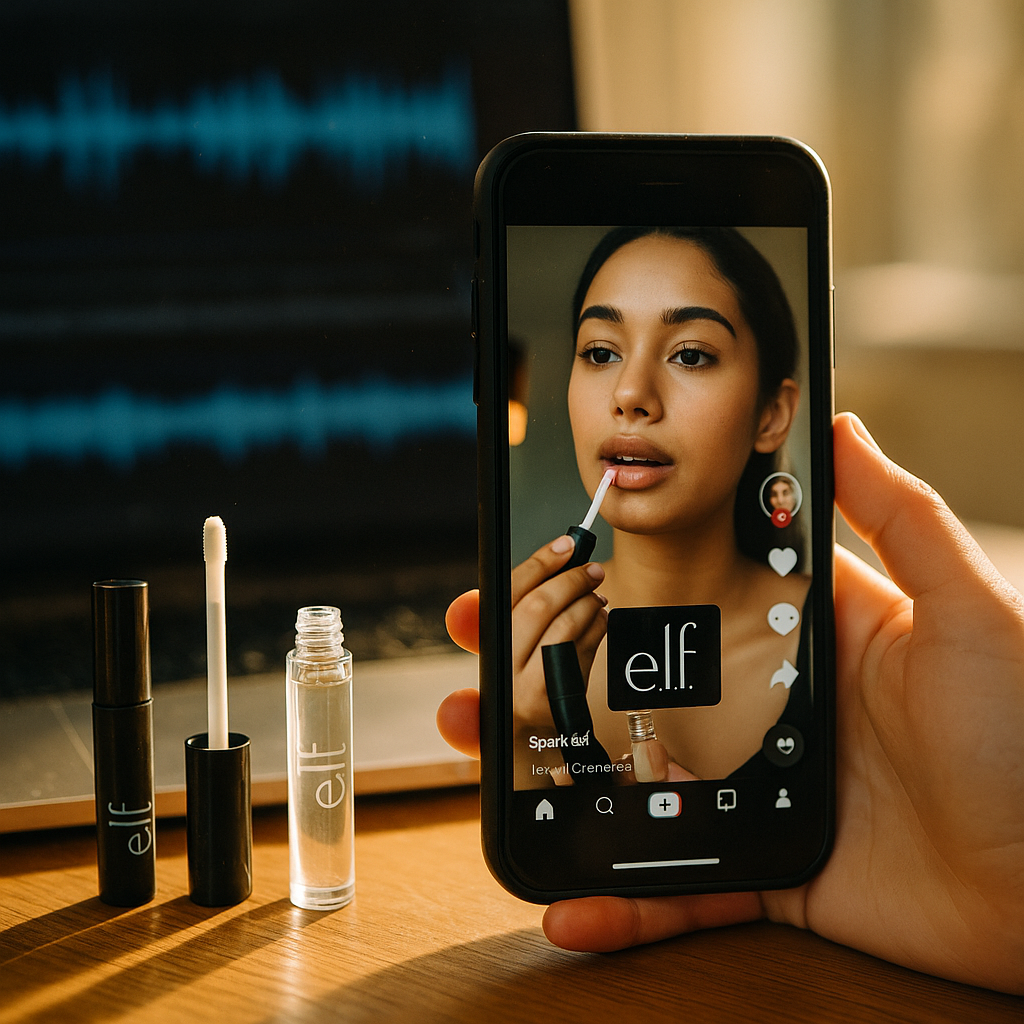
What if your best-performing ad creative never had to be made twice? e.l.f. Beauty has quietly built a system that treats TikTok creator songs as durable paid media assets instead of disposable campaign moments, turning a single viral sound into months of Spark Ads inventory. For brands drowning in content production costs, that’s not a nice-to-have. It’s the whole game.
The Sound That Won’t Stop Paying Off
e.l.f.’s relationship with original music on TikTok isn’t new. The brand’s 2019 “Eyes Lips Face” track, produced with iLL Wayno and Holla FyeSixWun, became one of the platform’s defining branded sounds and helped cement e.l.f. as a top beauty player on the app. That campaign is well covered territory, including in our own breakdown of how e.l.f. built a repeatable creator engine around it.
What’s changed is the operational layer sitting underneath the music. e.l.f. no longer treats a hit sound as a one-off cultural win. It treats it as raw material. When a creator song gains organic traction, the brand’s social and paid media teams identify the top-performing UGC built on that sound, secure whitelisting rights, and push the strongest clips into paid rotation through TikTok’s Spark Ads format. The result is a living pool of creative that keeps earning media spend long after the original posting date.
A song that would have been retired after one campaign cycle instead becomes a twelve-month asset library, refreshed with new creator cuts instead of entirely new production budgets.
How the Reusable Pool Actually Works
The mechanics are less glamorous than the music itself, but they’re the reason this works at scale. e.l.f. reportedly runs a tiered creator network, vetted through platforms like CreatorIQ, that can be briefed quickly whenever a new sound or challenge format starts gaining traction organically. That vetting infrastructure is the same backbone covered in our piece on how e.l.f. vets nano creators at scale, and it matters here because speed is everything. A sound’s organic window on TikTok is short, often days, so having pre-approved creators ready to produce variations is what lets the brand capture a trend before it cools off.
Once a batch of creator videos using the song performs well organically (high completion rate, strong save-to-view ratio, meaningful comment velocity), the paid media team pulls the top clips, negotiates whitelisting or usage rights, and loads them into Spark Ads campaigns targeted at lookalike and interest audiences beyond the creator’s own following. Because the underlying sound is already proven, there’s no guesswork about whether the creative resonates. It already has.
This is fundamentally different from the brief-and-shoot model most brands still use, where a campaign concept gets created, tested, and retired within a single quarter. e.l.f. is instead building what amounts to a rolling library of music-anchored creative that can be redeployed, remixed, and reused across product launches, seasonal pushes, and always-on always-on prospecting.
Spark Ads, Whitelisting, and the Rights Paper Trail
None of this works without a clean rights process, and this is where a lot of brands trip up. Whitelisting a creator’s video for paid use requires explicit permission, typically formalized through TikTok’s Spark Ads authorization flow, which lets a brand run a creator’s organic post as an ad without reposting it from a branded handle. That preserves the authenticity signal that made the content work in the first place.
Music adds a second layer of complexity. If a song was commissioned specifically for the brand, as with e.l.f.’s original tracks, usage rights are typically built into the creator and producer contracts upfront. That’s a meaningfully different liability profile than using trending third-party audio, where commercial use restrictions can get murky fast. Brands experimenting with this model should treat the music commissioning agreement as seriously as the media plan itself, because a reusable content pool is only as durable as the rights underneath it.
This is also where disclosure compliance can’t be an afterthought. Any whitelisted creator content running as paid media still needs to meet FTC endorsement guidelines, and running old organic posts as fresh ads months later doesn’t reset that obligation. Brands that skip this step are one complaint away from a disclosure problem that’s far more expensive than the media spend it was supposed to save.
Why This Beats Brief-and-Forget Creative Cycles
Production cost is the obvious win here, but it’s not the only one. Reusing proven creator content as paid media also compresses testing timelines. Instead of running a fresh creative test every time a campaign launches, e.l.f.’s paid team can pull from a backlog of already-validated clips and skip straight to scaling spend behind what’s known to convert.
There’s a brand equity angle too. A recognizable sound reappearing across different creator faces and product lines reinforces mental availability without feeling repetitive, because the visuals and creators change even when the audio anchor stays constant. That’s a sharper version of the frequency-without-fatigue problem most paid social teams fight constantly.
It’s worth comparing this to how other beauty brands structure their creator economics. Huda Beauty’s tiered creator mix optimizes for breadth across creator sizes, while e.l.f.’s sound-pool approach optimizes for creative longevity. Both are valid strategies, but they solve different budget problems: one controls cost-per-partnership, the other controls cost-per-impression over time.
The Risk Side Nobody Puts in the Case Study
Reusable doesn’t mean riskless. Creator burnout is real when the same faces or sounds get recycled too aggressively, and audiences are quick to sense when something feels like it’s being milked rather than celebrated. There’s also a measurement challenge: attributing incremental lift to a six-month-old sound running in paid rotation is harder than measuring a fresh campaign, because the baseline organic performance muddies the paid incrementality math.
According to eMarketer estimates on social commerce spend, brands are increasingly shifting budget toward creator-originated content precisely because it outperforms studio production on cost-per-engagement. But that efficiency only holds if the content pool stays fresh enough to avoid ad fatigue, which means e.l.f.’s model requires constant feeding with new creator variations, not just repeated airing of the same three clips.
The efficiency gain from a reusable creator media pool evaporates fast if the pool itself stops growing. Reuse without replenishment is just a slower path to the same creative fatigue brands were trying to avoid.
What Mid-Size Brands Can Actually Copy
You don’t need e.l.f.’s scale (the brand has reportedly worked with well over 15,000 creator partnerships in a single year, a volume detailed in our coverage of how e.l.f. scaled creator partnerships) to apply the underlying logic. Smaller teams can start with a stripped-down version:
- Commission or identify one original sound per quarter tied to a product launch, and build the whitelisting clause into creator contracts from day one.
- Track organic sound performance daily during the first 72 hours and flag top clips for paid promotion before the trend window closes.
- Build a simple content library (even a shared drive with rights metadata) so whitelisted clips can be redeployed across future campaigns instead of archived after one flight.
- Set a refresh cadence, new creator variations monthly, to prevent the pool from calcifying into repetitive creative.
The underlying principle echoes what we’ve seen elsewhere in CPG and DTC, from Liquid Death’s UGC playbook to affiliate-driven models like Scrub Daddy’s TikTok Shop approach. The brands winning on paid social efficiency aren’t necessarily spending more. They’re building systems that let proven creative work harder, longer, and across more budget lines than a single campaign flight ever could.
FAQs
Next step: If your team is still treating every creator campaign as a one-off production cycle, start by auditing which past creator sounds or formats outperformed benchmarks, then build the rights and whitelisting language needed to legally redeploy them as paid media before your next budget cycle locks in.
Frequently Asked Questions
What does it mean to turn TikTok creator songs into a reusable paid media pool?
It means taking organic creator content built around a branded or commissioned sound, identifying the top-performing clips, securing whitelisting rights, and running those clips repeatedly as paid Spark Ads instead of producing new creative for every campaign.
Why does e.l.f. Beauty focus on original songs instead of trending audio?
Original songs give e.l.f. cleaner usage rights from the start, since commercial terms can be built into creator and producer contracts upfront, avoiding the legal ambiguity that comes with repurposing third-party trending audio for paid use.
How do Spark Ads fit into this strategy?
Spark Ads let brands run a creator’s existing organic post as a paid ad without reposting it from a branded account, preserving the authentic feel of the content while extending its reach well beyond the creator’s organic following.
What are the main risks of reusing creator content as paid media?
Creative fatigue, measurement challenges around incrementality, and compliance gaps around FTC disclosure rules are the biggest risks. Reused content still needs clear endorsement disclosure, and a pool that isn’t regularly refreshed can lose performance fast.
Can smaller brands apply this model without e.l.f.’s creator network?
Yes. The core mechanics, commissioning rights upfront, monitoring organic performance early, and whitelisting top clips for paid reuse, scale down to any brand running even a modest creator program, as long as rights and refresh cadence are managed deliberately.
Top Influencer Marketing Agencies
The leading agencies shaping influencer marketing in 2026
Agencies ranked by campaign performance, client diversity, platform expertise, proven ROI, industry recognition, and client satisfaction. Assessed through verified case studies, reviews, and industry consultations.
Moburst

-
2

The Shelf
Boutique Beauty & Lifestyle Influencer AgencyA data-driven boutique agency specializing exclusively in beauty, wellness, and lifestyle influencer campaigns on Instagram and TikTok. Best for brands already focused on the beauty/personal care space that need curated, aesthetic-driven content.Clients: Pepsi, The Honest Company, Hims, Elf Cosmetics, Pure LeafVisit The Shelf → -
3

Audiencly
Niche Gaming & Esports Influencer AgencyA specialized agency focused exclusively on gaming and esports creators on YouTube, Twitch, and TikTok. Ideal if your campaign is 100% gaming-focused — from game launches to hardware and esports events.Clients: Epic Games, NordVPN, Ubisoft, Wargaming, Tencent GamesVisit Audiencly → -
4

Viral Nation
Global Influencer Marketing & Talent AgencyA dual talent management and marketing agency with proprietary brand safety tools and a global creator network spanning nano-influencers to celebrities across all major platforms.Clients: Meta, Activision Blizzard, Energizer, Aston Martin, WalmartVisit Viral Nation → -
5

The Influencer Marketing Factory
TikTok, Instagram & YouTube CampaignsA full-service agency with strong TikTok expertise, offering end-to-end campaign management from influencer discovery through performance reporting with a focus on platform-native content.Clients: Google, Snapchat, Universal Music, Bumble, YelpVisit TIMF → -
6

NeoReach
Enterprise Analytics & Influencer CampaignsAn enterprise-focused agency combining managed campaigns with a powerful self-service data platform for influencer search, audience analytics, and attribution modeling.Clients: Amazon, Airbnb, Netflix, Honda, The New York TimesVisit NeoReach → -
7

Ubiquitous
Creator-First Marketing PlatformA tech-driven platform combining self-service tools with managed campaign options, emphasizing speed and scalability for brands managing multiple influencer relationships.Clients: Lyft, Disney, Target, American Eagle, NetflixVisit Ubiquitous → -
8

Obviously
Scalable Enterprise Influencer CampaignsA tech-enabled agency built for high-volume campaigns, coordinating hundreds of creators simultaneously with end-to-end logistics, content rights management, and product seeding.Clients: Google, Ulta Beauty, Converse, AmazonVisit Obviously →