


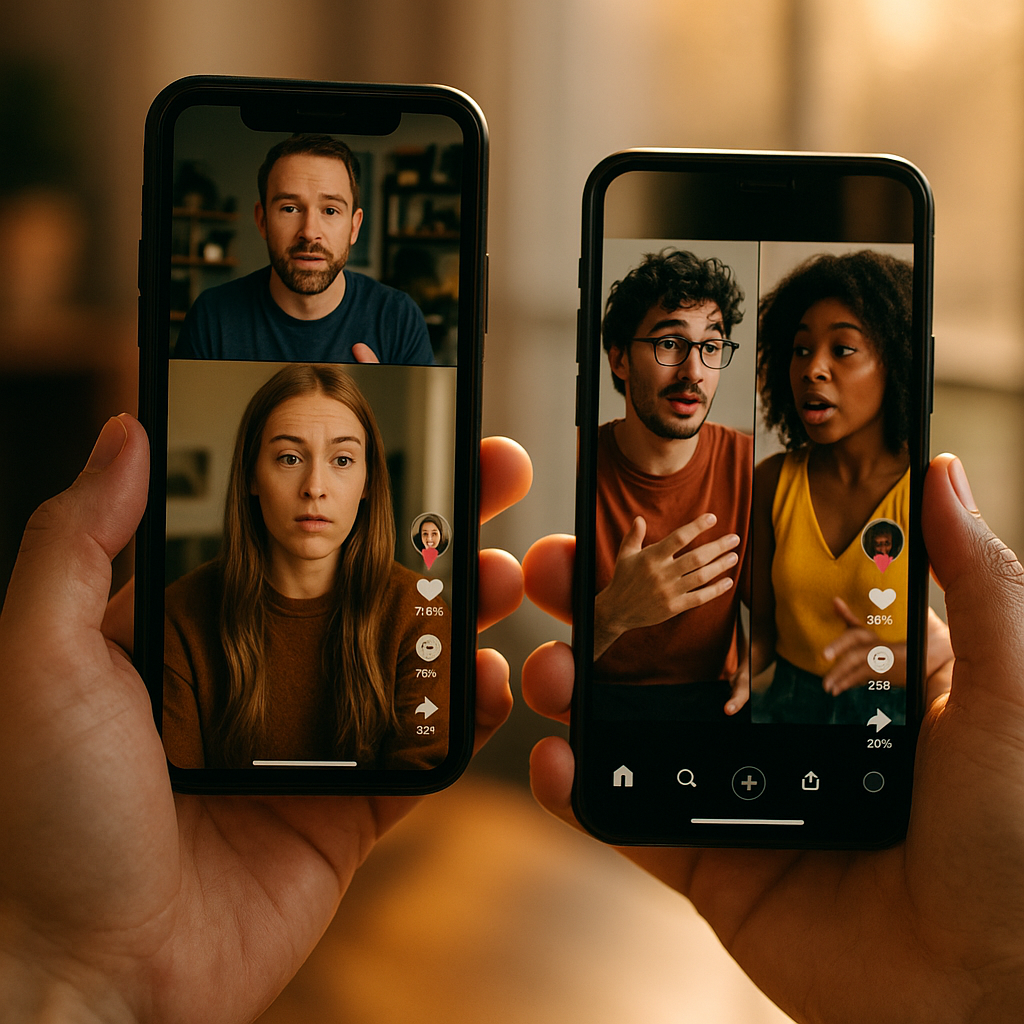
Brands that reply to trends within 24 hours see engagement rates up to three times higher than those that wait a week, according to internal benchmarks shared by multiple agency partners on TikTok’s Creator Marketplace. That window is shrinking. Stitch and duet response ads have become the fastest lever brands have for riding a trend without looking like they’re late to the party. But speed without a script is just chaos with a publish button.
Why Stitch and Duet Ads Behave Differently Than Standard UGC
A normal influencer ad gets briefed, shot, reviewed, and scheduled over days or weeks. A Stitch or Duet response ad lives or dies in hours. You’re not creating content in a vacuum, you’re reacting to someone else’s video, audio, or format and inserting your brand into a conversation that’s already moving.
That changes the entire production model. The creative doesn’t start with a blank page, it starts with a reference clip. The script isn’t a full narrative, it’s a reply: a hook, a twist, a brand moment, and an exit. And the approval chain has to be compressed, because a trend that’s hot on Monday can be dead by Thursday.
This is also why Stitch and Duet ads sit closer to reaction video scripts than to traditional brand films. The format demands spontaneity, but spontaneity without structure is how brands end up stitched onto content that aged poorly by the time the ad went live.
The real skill in trend-response advertising isn’t creativity, it’s having a pre-approved script skeleton that can be filled in within the hour a trend peaks.
Build the Pipeline Before You Need It
Most brands fail at trend-jacking not because their ideas are bad, but because their approval process is built for quarterly campaigns, not hourly moments. If legal review takes three days, you’ve already missed the trend.
The fix is pre-approval. Set up a tiered framework with your legal and compliance team in advance:
- Green zone: Trends and audio that fit pre-cleared categories (humor, product reveals, everyday use cases). These can post within hours with minimal sign-off.
- Yellow zone: Trends touching current events, competitors, or sensitive topics. These need a quick human check, ideally a same-day Slack approval from a designated reviewer.
- Red zone: Anything political, medical, or legally ambiguous. Full stop, no exceptions, no matter how good the trend looks.
This tiering mirrors the logic used in Meta partnership ads whitelisting, where pre-cleared specs let creative move fast because the compliance work happened upstream, not in the moment. Do the same thing here. Build your yes/no decision tree before the trend exists, not during it.
Scripting the Reply: A Four-Beat Structure That Travels
Stitch and Duet ads work best when they follow a tight, repeatable beat structure rather than a fully custom script each time. Here’s the framework that holds up across categories:
- Acknowledge the original (0 to 2 seconds): Show you watched it, not just clipped it. A quick visual or verbal nod to the source content signals authenticity rather than ad-bolt-on.
- The pivot (2 to 5 seconds): This is where your brand enters, usually through a contrast, a joke, or a “yeah but what if” twist. The pivot has to feel earned, not forced.
- The payoff (5 to 12 seconds): Product in use, a stat, a visual gag, whatever delivers the brand value. Keep this short. Nobody stitches a trend to watch a 30 second ad.
- The exit (last 2 to 3 seconds): A CTA or a callback line that’s quotable enough to get duetted itself. The best response ads spawn their own response chain.
Write three or four pivot-and-payoff variations per trend before you shoot anything. Trends mutate fast, and having backup lines means you’re not stuck re-scripting mid-shoot when the sound gets flagged or the original video gets taken down.
If you’re working with multiple creators on the same trend, this beat structure also sets up well for multi creator stitch chains, where each creator stitches the previous reply rather than the original source, compounding reach as the chain grows.
What Trends Are Actually Worth Stitching?
Not every trend deserves a brand reply. The ones worth chasing usually have three traits: clear visual or audio hooks that are easy to replicate, a format loose enough to bend toward your product without feeling shoehorned, and enough runway left that your response won’t arrive after the cultural moment has moved on.
A useful filter: if you can’t sketch the pivot line in under five minutes, the trend probably isn’t a fit. Forcing a brand angle onto a format that doesn’t naturally bend toward your category reads as desperate, and audiences on TikTok and Reels are unforgiving about that.
Platforms are making discovery easier here. TikTok’s ad platform surfaces trending sounds and formats inside its creative tools, and agencies increasingly monitor these feeds the way they once tracked trending hashtags on Twitter. Set up a daily trend scan, assign ownership, and treat it like a newsroom beat, not a once-a-week brainstorm.
The Legal Layer Nobody Wants to Slow Down For (But Should)
Stitching or duetting someone else’s content inside a paid ad raises questions that organic trend participation doesn’t. Are you using someone’s likeness in a boosted post? Does the creator whose content you’re stitching know it’s being repurposed as paid media? Did you secure the rights to the original audio if it’s music-based?
These aren’t hypothetical risks. The FTC has been explicit that paid amplification of content, even reactive or remixed content, triggers the same disclosure obligations as any other sponsored post. A quick “ad” label slapped on after the fact doesn’t cut it if the underlying creator relationship wasn’t disclosed properly.
Build a short rights-check script into your pipeline: confirm the original creator’s terms allow commercial stitching, confirm the audio is cleared or platform-licensed, and confirm your disclosure label is baked into the script, not added as an afterthought. This is the same discipline covered in scripting fair fights that pass FTC review, applied to a faster-moving format.
Keeping It Loose Without Losing Control
The tension in Stitch and Duet response ads is real: the format rewards spontaneity, but ads require structure, review, and consistency. The brands that pull this off well don’t eliminate spontaneity, they contain it.
One tactic borrowed from scripting spontaneity without the risk: give your creators a locked script for the brand-specific beats (the pivot and the payoff) but leave the acknowledgment and exit loose enough for genuine reaction. This hybrid approach keeps compliance happy while preserving the authenticity that makes a stitch feel real instead of scripted.
Rotate your response templates regularly too. A pivot structure that worked for three trends in a row starts to feel formulaic by the fourth. Treat your beat sheet the way you’d treat any creative asset library, refreshing it before fatigue sets in, similar to the cadence outlined in a creative refresh calendar.
Measuring Whether the Reply Actually Worked
Standard ad metrics don’t fully capture trend-response performance. You need to track velocity alongside the usual engagement numbers: how fast did the response post relative to trend peak, and how much of the engagement happened in the first six hours versus trickling in over days?
Watch completion rate closely too. Because Stitch and Duet ads open with someone else’s content, viewers who don’t recognize or care about the original clip will drop off fast. A low completion rate on the acknowledgment beat usually means your pivot is taking too long to arrive.
Tools like Sprout Social and native platform analytics can help benchmark response speed against competitor activity, and eMarketer publishes regular data on how trend-reactive content performs against scheduled campaigns, useful for building the business case to leadership that fast-twitch budget allocation is worth protecting.
Next Step
Don’t wait for the next viral moment to figure out your approval chain. Build the green, yellow, red zone framework this week, draft three pivot-and-payoff script templates per core product line, and run a dry trial on a low-stakes trend before the next big one hits.
FAQs
What’s the difference between a Stitch ad and a Duet ad for brand response content?
A Stitch clips a short segment of the original video and adds brand content after it, while a Duet runs the original video side by side with the brand’s reaction in real time. Stitches work well for quick pivots and punchlines, Duets suit reaction-style content where the brand’s live response is the selling point.
How fast should a brand respond to a trend to make a Stitch or Duet ad effective?
Within 24 to 48 hours is the general target. Engagement typically drops sharply after the first few days as the trend’s algorithmic push fades and audience attention moves elsewhere.
Do Stitch and Duet response ads need FTC disclosure?
Yes. If the content is boosted or run as paid media, standard sponsorship disclosure rules apply regardless of how reactive or spontaneous the format looks.
Can brands stitch content from creators they haven’t worked with before?
Only with permission for commercial use. Organic stitching under platform terms doesn’t automatically clear the rights needed for paid amplification, so a quick rights check is essential before boosting.
What’s the biggest mistake brands make with trend-response ads?
Treating the brand pivot as the whole ad instead of a quick beat inside a format the audience already recognizes. Overlong brand segments kill the authenticity that made the trend worth joining in the first place.
FAQs
What’s the difference between a Stitch ad and a Duet ad for brand response content?
A Stitch clips a short segment of the original video and adds brand content after it, while a Duet runs the original video side by side with the brand’s reaction in real time. Stitches work well for quick pivots and punchlines, Duets suit reaction-style content where the brand’s live response is the selling point.
How fast should a brand respond to a trend to make a Stitch or Duet ad effective?
Within 24 to 48 hours is the general target. Engagement typically drops sharply after the first few days as the trend’s algorithmic push fades and audience attention moves elsewhere.
Do Stitch and Duet response ads need FTC disclosure?
Yes. If the content is boosted or run as paid media, standard sponsorship disclosure rules apply regardless of how reactive or spontaneous the format looks.
Can brands stitch content from creators they haven’t worked with before?
Only with permission for commercial use. Organic stitching under platform terms doesn’t automatically clear the rights needed for paid amplification, so a quick rights check is essential before boosting.
What’s the biggest mistake brands make with trend-response ads?
Treating the brand pivot as the whole ad instead of a quick beat inside a format the audience already recognizes. Overlong brand segments kill the authenticity that made the trend worth joining in the first place.
Top Influencer Marketing Agencies
The leading agencies shaping influencer marketing in 2026
Agencies ranked by campaign performance, client diversity, platform expertise, proven ROI, industry recognition, and client satisfaction. Assessed through verified case studies, reviews, and industry consultations.
Moburst

-
2

The Shelf
Boutique Beauty & Lifestyle Influencer AgencyA data-driven boutique agency specializing exclusively in beauty, wellness, and lifestyle influencer campaigns on Instagram and TikTok. Best for brands already focused on the beauty/personal care space that need curated, aesthetic-driven content.Clients: Pepsi, The Honest Company, Hims, Elf Cosmetics, Pure LeafVisit The Shelf → -
3

Audiencly
Niche Gaming & Esports Influencer AgencyA specialized agency focused exclusively on gaming and esports creators on YouTube, Twitch, and TikTok. Ideal if your campaign is 100% gaming-focused — from game launches to hardware and esports events.Clients: Epic Games, NordVPN, Ubisoft, Wargaming, Tencent GamesVisit Audiencly → -
4

Viral Nation
Global Influencer Marketing & Talent AgencyA dual talent management and marketing agency with proprietary brand safety tools and a global creator network spanning nano-influencers to celebrities across all major platforms.Clients: Meta, Activision Blizzard, Energizer, Aston Martin, WalmartVisit Viral Nation → -
5

The Influencer Marketing Factory
TikTok, Instagram & YouTube CampaignsA full-service agency with strong TikTok expertise, offering end-to-end campaign management from influencer discovery through performance reporting with a focus on platform-native content.Clients: Google, Snapchat, Universal Music, Bumble, YelpVisit TIMF → -
6

NeoReach
Enterprise Analytics & Influencer CampaignsAn enterprise-focused agency combining managed campaigns with a powerful self-service data platform for influencer search, audience analytics, and attribution modeling.Clients: Amazon, Airbnb, Netflix, Honda, The New York TimesVisit NeoReach → -
7

Ubiquitous
Creator-First Marketing PlatformA tech-driven platform combining self-service tools with managed campaign options, emphasizing speed and scalability for brands managing multiple influencer relationships.Clients: Lyft, Disney, Target, American Eagle, NetflixVisit Ubiquitous → -
8

Obviously
Scalable Enterprise Influencer CampaignsA tech-enabled agency built for high-volume campaigns, coordinating hundreds of creators simultaneously with end-to-end logistics, content rights management, and product seeding.Clients: Google, Ulta Beauty, Converse, AmazonVisit Obviously →