


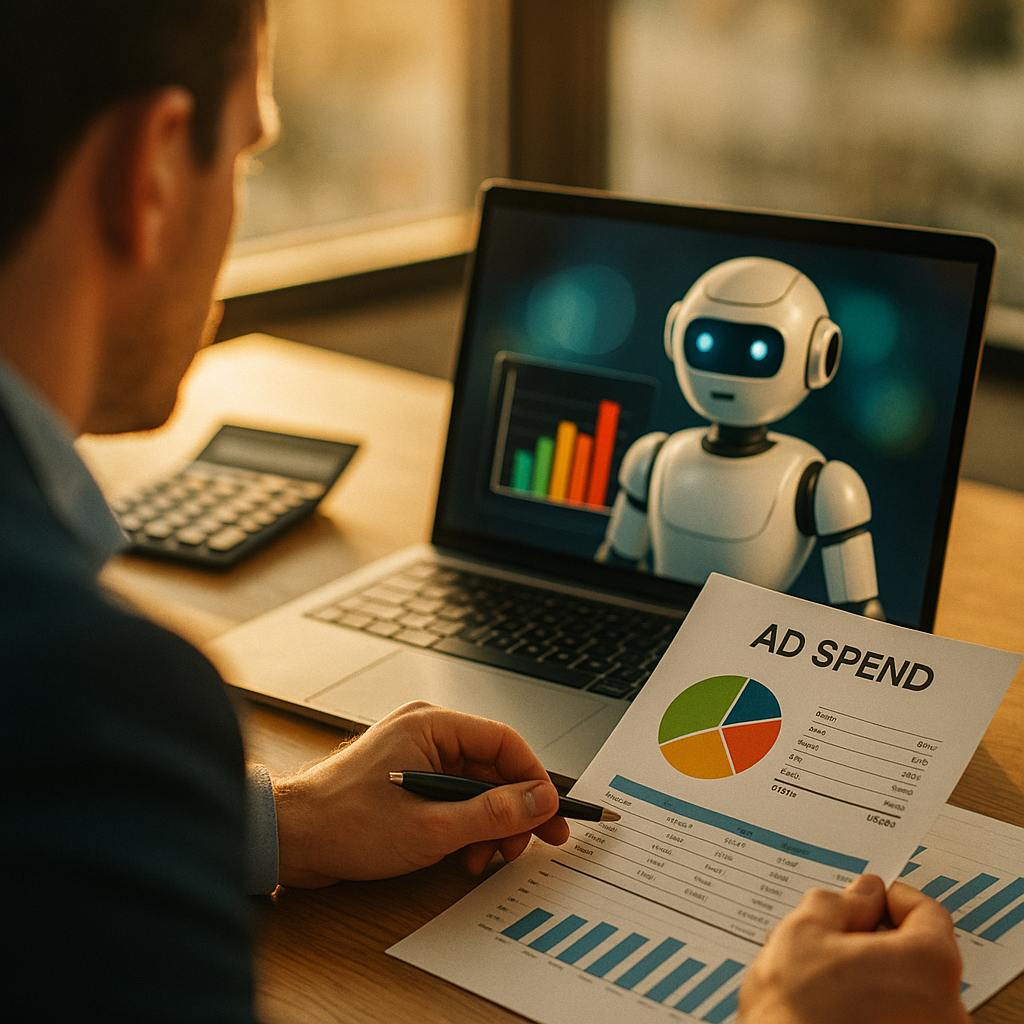
Here’s an uncomfortable number: a growing share of mid-market brands now let AI media buying agents approve creator ad spend without a human touching the final click. Nobody disputes the efficiency gain. But when one of those agents greenlights a six-figure boost on content that turns out to be undisclosed, fraudulent, or brand-unsafe, liability allocation becomes the question nobody budgeted time to answer. Who eats that loss? The platform vendor? The agency? Your CMO?
The New Liability Gap Nobody Underwrote
Traditional media buying had a clean chain of custody. A human planner approved spend, a human trafficker executed it, and if something went wrong, you could trace the decision to a name and a Slack thread. Agentic systems break that chain. The agent ingests creator performance signals, makes a probabilistic call, and allocates budget in milliseconds. No one “approved” the spend in the way your legal team’s indemnification language assumes.
That matters because most influencer contracts, agency MSAs, and platform terms of service were written for a world where approval meant a person clicked a button. Now the button clicks itself. Insurance policies, vendor agreements, and FTC disclosure obligations haven’t caught up.
If your contracts still define “approval” as a human action, an AI agent’s decision may fall into a liability vacuum that neither your agency nor your vendor has contractually accepted.
Who’s Actually Liable When an Algorithm Pulls the Trigger?
In practice, liability tends to settle on whoever has the thinnest contract language, not whoever had the most control. That’s a dangerous default for brands. A few scenarios worth running through your legal team:
- The agent approves spend on a creator with undisclosed sponsorship history. The FTC doesn’t care that an algorithm made the call. The brand is still on the hook under existing FTC guidance on endorsements.
- The agent misreads engagement data inflated by bot traffic and allocates budget to a creator with a fake audience. This echoes problems covered in our piece on fake follower liability, except now a machine made the purchasing decision instead of a buyer who could have caught the red flag.
- The agent whitelists an ad variation using creator likeness beyond the usage window negotiated in the original contract, a risk we detailed in our breakdown of usage rights expiration.
In each case, the brand’s exposure doesn’t disappear because a vendor’s software made the decision. It just gets harder to trace and harder to defend in front of a regulator or a plaintiff’s attorney.
Three Failure Modes Brands Are Already Hitting
Failure mode one: the orphaned approval. Spend gets authorized, nobody can say definitively why, and the audit trail dead-ends in a vendor’s black box model. We’ve written extensively about this in our coverage of agentic media buying audit trails, and it remains the single biggest operational blind spot in programmatic creator spend right now.
Failure mode two: the contractual mismatch. Your agency’s master service agreement says the agency is liable for “approved” placements. Your AI vendor’s terms say the vendor is only liable for “system availability,” not decision quality. Neither document anticipated an autonomous approval layer sitting between them. Guess who’s left holding the bag? Usually the brand, because indemnification clauses tend to flow uphill toward whoever has the deepest pockets and the least specific contract language.
Failure mode three: the disclosure gap compounding at scale. When an AI matching tool selects creators and an AI buying agent funds the content simultaneously, disclosure compliance checks that used to happen manually at the human review stage simply vanish. Our analysis of AI creator matching tools and the FTC disclosure gap found this exact pattern: automation speeds up creator selection and ad funding, but compliance review doesn’t automatically speed up with it.
Building a Liability Allocation Framework That Holds Up
You can’t eliminate the risk of autonomous approval errors. You can allocate it intelligently before the next campaign launches. A workable framework has four components.
- Define “approval” explicitly in every vendor and agency contract. Specify whether an AI agent’s action constitutes binding approval, and under what confidence threshold or spend ceiling a human must co-sign.
- Require decision logging as a contractual deliverable, not a nice-to-have. If your vendor can’t produce a timestamped rationale for why the agent approved a given creator and spend level, you have no way to dispute liability after the fact.
- Carve out indemnification language specific to algorithmic decisions. Generic indemnification clauses written for human error don’t automatically extend to model error, data drift, or training set bias. Name it directly.
- Build a spend ceiling tier. Below a certain dollar threshold, autonomous approval runs. Above it, a human reviews. This single rule resolves more disputes than any amount of post-incident legal maneuvering.
Industry data backs the urgency here. eMarketer has tracked a steady climb in AI-assisted media buying adoption among mid-market advertisers, and Statista survey data on marketing automation shows trust in fully autonomous budget decisions still lags well behind adoption of the tools themselves. Translation: brands are turning the automation on faster than they’re building the guardrails around it.
Contract Clauses to Add Before the Next Campaign
Legal teams often ask what language actually moves the needle. A few clauses worth drafting into your next renewal cycle:
- An “algorithmic decision disclosure” clause requiring vendors to flag when spend was approved without human review.
- A “model change notification” clause requiring advance notice when a vendor retrains or swaps the underlying approval model, since model drift changes risk profile without changing the contract.
- A shared liability cap tied to spend tier, so small autonomous decisions carry proportionally smaller exposure for the vendor and larger self-insurance for the brand, while large decisions flip that ratio.
This isn’t theoretical housekeeping. It mirrors the same discipline brands have had to apply to commission structures, where misaligned incentives created disclosure risk, as we outlined in our piece on commission based creator payouts. Liability follows incentive structure. If your AI vendor has no financial stake in getting the approval right, your contract needs to manufacture that stake artificially.
What Regulators Are Signaling
Regulators haven’t issued AI-specific media buying rules yet, but the direction is clear enough to plan around. The FTC has repeatedly stated that automated tools don’t shift legal responsibility for deceptive advertising away from the brand benefiting from it. The UK’s ICO has taken a similar stance on automated decision-making more broadly, emphasizing that accountability for algorithmic outcomes sits with the deploying organization, not the software provider.
That should settle any lingering assumption that “the AI did it” functions as a defense. It doesn’t, and treating your AI media buying agent as a liability shield rather than a liability source is the single most expensive mistake available to marketing leadership right now.
Regulators consistently assign accountability to whoever deploys the automated system, not whoever built it. Your contracts need to reflect that reality, not fight it.
Where This Intersects With Creator Classification and Compliance
Liability allocation for AI buying agents doesn’t sit in isolation. It overlaps with existing compliance workstreams your team already owns: creator classification, COPPA exposure on youth-adjacent content, and nano creator compliance at scale. If you haven’t audited how your nano creator compliance checklist accounts for AI-approved spend specifically, that’s a gap worth closing in the same review cycle. Treating AI liability as a standalone legal project, separate from the compliance infrastructure you’ve already built, just creates duplicate work and inconsistent standards across teams.
Platforms are aware of this tension too. Meta’s and LinkedIn’s advertising policy teams have both published guidance encouraging advertisers to maintain human oversight checkpoints in automated campaign management, even as they push adoption of their own AI buying tools. Worth reviewing directly: Meta Business and LinkedIn Business both maintain current policy documentation on this.
Next step: pull your current AI media buying vendor contract this week and check whether “approval” is defined as a human action anywhere in it. If it isn’t, that’s your liability gap, and it’s the first thing to fix before your next campaign cycle starts.
FAQs
Who is legally liable when an AI agent approves creator ad spend that violates FTC disclosure rules?
The brand benefiting from the advertising typically retains primary liability, regardless of whether a human or an AI agent approved the spend. Regulators have consistently held that automated tools don’t transfer legal responsibility away from the advertiser.
Can a contract with an AI media buying vendor shift liability away from the brand?
Partially. Indemnification clauses can shift financial responsibility for vendor error, but they rarely eliminate the brand’s regulatory exposure, since agencies like the FTC hold the advertiser accountable regardless of contractual arrangements between brand and vendor.
What should a spend approval threshold look like for autonomous AI agents?
Most brands set a dollar ceiling below which the AI agent can approve spend independently, and above which a human reviewer must co-sign. The exact threshold depends on campaign risk level, creator vetting maturity, and historical error rates from the specific AI tool in use.
Do AI media buying agents need to log their decision rationale?
Yes. Without timestamped decision logs explaining why an agent approved a given spend or creator, brands have no way to dispute liability after an incident or demonstrate reasonable oversight to a regulator.
How does liability allocation differ between agency-managed and in-house AI buying tools?
Agency-managed tools usually fall under the agency’s master service agreement, which may or may not specifically address algorithmic decisions. In-house tools put liability squarely on the brand’s internal teams, making explicit contract language with the AI vendor even more critical.
Top Influencer Marketing Agencies
The leading agencies shaping influencer marketing in 2026
Agencies ranked by campaign performance, client diversity, platform expertise, proven ROI, industry recognition, and client satisfaction. Assessed through verified case studies, reviews, and industry consultations.
Moburst

-
2

The Shelf
Boutique Beauty & Lifestyle Influencer AgencyA data-driven boutique agency specializing exclusively in beauty, wellness, and lifestyle influencer campaigns on Instagram and TikTok. Best for brands already focused on the beauty/personal care space that need curated, aesthetic-driven content.Clients: Pepsi, The Honest Company, Hims, Elf Cosmetics, Pure LeafVisit The Shelf → -
3

Audiencly
Niche Gaming & Esports Influencer AgencyA specialized agency focused exclusively on gaming and esports creators on YouTube, Twitch, and TikTok. Ideal if your campaign is 100% gaming-focused — from game launches to hardware and esports events.Clients: Epic Games, NordVPN, Ubisoft, Wargaming, Tencent GamesVisit Audiencly → -
4

Viral Nation
Global Influencer Marketing & Talent AgencyA dual talent management and marketing agency with proprietary brand safety tools and a global creator network spanning nano-influencers to celebrities across all major platforms.Clients: Meta, Activision Blizzard, Energizer, Aston Martin, WalmartVisit Viral Nation → -
5

The Influencer Marketing Factory
TikTok, Instagram & YouTube CampaignsA full-service agency with strong TikTok expertise, offering end-to-end campaign management from influencer discovery through performance reporting with a focus on platform-native content.Clients: Google, Snapchat, Universal Music, Bumble, YelpVisit TIMF → -
6

NeoReach
Enterprise Analytics & Influencer CampaignsAn enterprise-focused agency combining managed campaigns with a powerful self-service data platform for influencer search, audience analytics, and attribution modeling.Clients: Amazon, Airbnb, Netflix, Honda, The New York TimesVisit NeoReach → -
7

Ubiquitous
Creator-First Marketing PlatformA tech-driven platform combining self-service tools with managed campaign options, emphasizing speed and scalability for brands managing multiple influencer relationships.Clients: Lyft, Disney, Target, American Eagle, NetflixVisit Ubiquitous → -
8

Obviously
Scalable Enterprise Influencer CampaignsA tech-enabled agency built for high-volume campaigns, coordinating hundreds of creators simultaneously with end-to-end logistics, content rights management, and product seeding.Clients: Google, Ulta Beauty, Converse, AmazonVisit Obviously →