


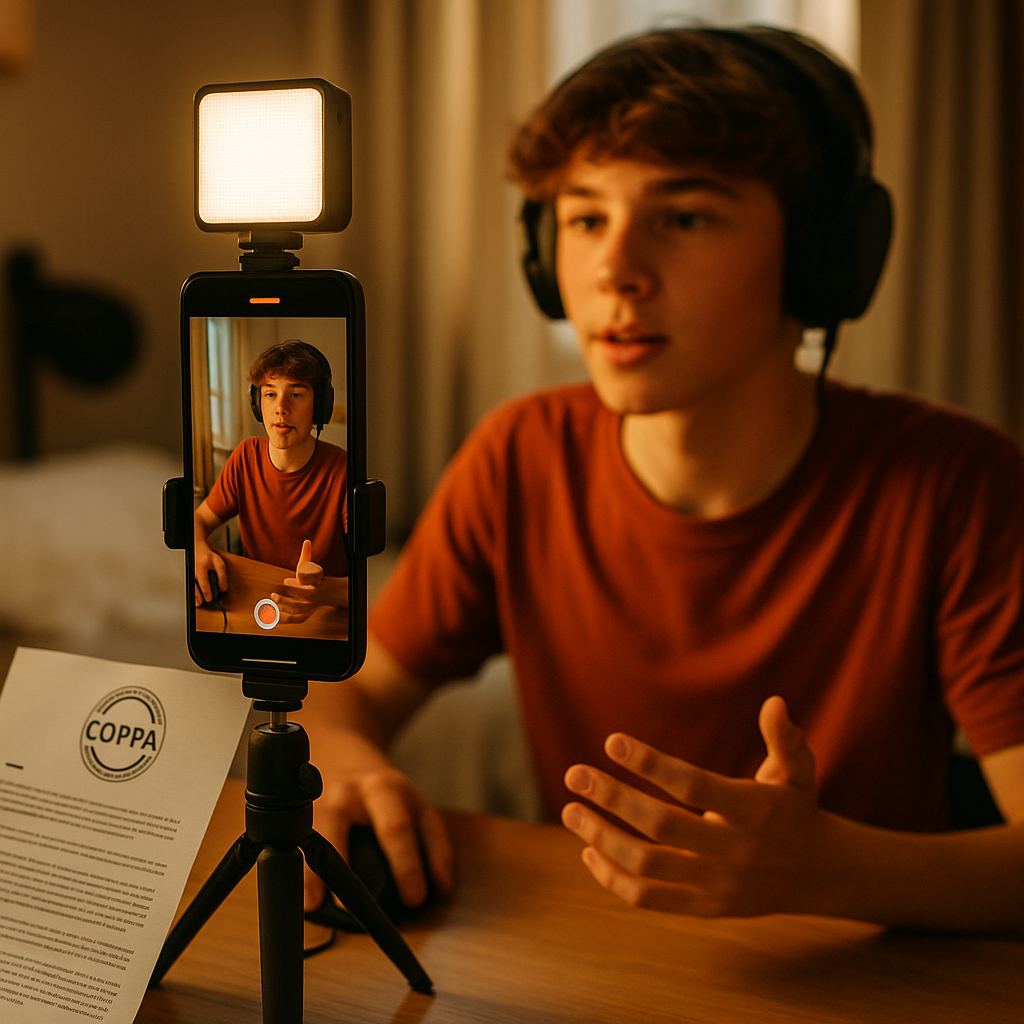
COPPA protects kids under 13. It says nothing about the 42 million American teenagers between 13 and 17 who spend an average of four to five hours a day on platforms where creators are paid to sell them things. If your legal team thinks “we’re COPPA compliant” is the finish line for compliance rules for creator campaigns targeting teen audiences, you’ve got a gap wide enough to drive an FTC investigation through.
The COPPA Floor Isn’t the Ceiling
COPPA (the Children’s Online Privacy Protection Act) regulates data collection from kids under 13. Full stop. That’s the entire scope. Once a creator’s audience skews 13 to 17, COPPA has nothing to say about it, which is exactly why so many brand safety teams get a false sense of security.
Teens aren’t unprotected, though. They’re protected by a messier patchwork: the FTC Act’s general unfairness and deception authority, state-level kids’ design codes, platform-specific minor policies, and (for anyone running campaigns in the UK or EU) frameworks like the ICO’s Children’s Code and the EU Digital Services Act. None of these line up neatly with each other. That’s the operational headache.
COPPA ends at age 13. Brand liability for deceptive advertising to minors does not. Treating the two as the same thing is the single most common compliance mistake in teen-facing creator marketing.
We’ve covered the mechanics of COPPA exposure in sponsored content before, including how the YouTube COPPA settlement reshaped brand liability expectations and how child audience risk gets triggered even when a campaign wasn’t designed for kids. The teen question is the natural next layer, and it’s less understood.
Where the Real Exposure Lives: State Codes Teens Fall Into
This is the part most brand teams miss. California’s Age-Appropriate Design Code Act, Maryland’s Kids Code, and similar bills moving through other state legislatures define “children” as anyone under 18, not under 13. That means a sponsored TikTok or YouTube campaign aimed at 15- to 17-year-olds can fall squarely under state design-code obligations even when it clears COPPA with room to spare.
These laws generally require:
- Default privacy settings set to the highest protection level for known or reasonably knowable minor users
- Data protection impact assessments before launching features or campaigns likely to reach minors
- Restrictions on using a minor’s personal data for targeted advertising, including the data a creator’s own analytics tools collect
- Limits on “dark pattern” design elements, a category that increasingly includes certain giveaway and urgency mechanics common in influencer promotions
Enforcement is uneven right now, but uneven doesn’t mean absent. State attorneys general have shown they’re willing to use these statutes as leverage, and litigation around teen mental health and social media design (several state suits against Meta and others) has put every brand that advertises near teen audiences on notice. If your influencer program touches California or Maryland audiences at all, and most national campaigns do, these rules apply whether or not your campaign was “intended” for teens.
For a broader view of how this patchwork interacts with federal privacy proposals, our breakdown of the SECURE Data Act compliance playbook is a useful companion read, since several of its provisions overlap directly with teen data handling.
Platform Rules for Minors Don’t Match Each Other
Here’s a fun exercise: try to build one creative brief that satisfies TikTok, Instagram, and YouTube’s teen protection policies simultaneously. You’ll find they don’t agree on much.
TikTok restricts direct messaging, limits ad targeting for users under 18, and disables certain features (like downloads and duets) by default for younger accounts. Instagram’s teen account settings default to private, restrict sensitive content, and limit who can message a teen user, with parental supervision tools layered on top. YouTube separates content into “made for kids” and general audience buckets, which changes what data can be collected and what ad formats are even available. None of these frameworks were built with branded content in mind first; they were retrofitted onto existing ad infrastructure, which is why gaps appear at the edges.
Practically, this means a single multi-platform teen campaign needs platform-specific compliance review, not a single blanket policy. A disclosure format that satisfies TikTok’s branded content policies may not fully address Meta’s teen safety requirements, and vice versa. Agencies running campaigns across all three need a checklist per platform, not one master document.
This is also where creator selection matters more than most briefs acknowledge. A creator whose audience is 60% verified over-18 still might have a teen-heavy comment section, repost network, or algorithmic reach into younger feeds. Our piece on creator identity graphs digs into why audience verification at the platform level often lags behind actual reach patterns, which is precisely the blind spot that creates teen-exposure risk nobody planned for.
What About Data? The Consent Problem Nobody Solves
Teen data consent is the part of this conversation brands most want to skip, probably because the answer is uncomfortable: in most U.S. jurisdictions, a 15-year-old can legally consent to data collection in ways a 12-year-old cannot. That asymmetry is intentional under COPPA’s design, but it creates a soft spot. Marketers sometimes treat “not a kid” as synonymous with “can be marketed to like an adult.” That’s not how several state laws read it.
Promo codes, affiliate links, and tracking pixels embedded in creator content collect behavioral data regardless of the viewer’s age. If a meaningful share of that audience is 13 to 17, that data collection may trigger heightened consent and retention obligations under state frameworks even without a single COPPA violation. We’ve written about this exact mechanism in the context of promo code tracking pixels, and the same logic extends to teen audiences specifically. If you can’t document who saw the data collection disclosure and whether consent was appropriately handled, you can’t defend the program if a regulator asks.
Marketers rarely get sued for targeting teens on purpose. They get sued for failing to document what they knew about audience age and when they knew it.
Retention policy ties directly into this. If your program can’t produce, on demand, which creator posts reached verified minor audiences and what data those posts collected, you’re exposed regardless of intent. The framework in our creator content retention policy guide is built around exactly this kind of audit trail requirement, and it applies with extra weight once teens enter the audience mix.
Giveaways, Contests, and the Teen Trap
Teen audiences love contests. Brands love contests because they drive engagement cheaply. That combination is a compliance minefield.
Sweepstakes and giveaway mechanics that require purchase, excessive data submission, or parental-consent-free entry from a known or likely-minor audience can violate both state lottery laws and emerging design-code restrictions on “addictive” engagement mechanics aimed at minors. The rules governing legal structure of influencer giveaways already carry risk for adult audiences; add a teen skew and the stakes multiply. Our influencer giveaway rules breakdown covers the baseline legal structure every brand should have in place before layering on teen-specific restrictions like age-gating entry forms and avoiding data collection beyond what’s operationally necessary.
A Practical Checklist for Teen-Adjacent Campaigns
Forget trying to build a perfect single policy. Build a repeatable review process instead. For any creator campaign where audience data, creator content history, or category (gaming, beauty, fashion, mobile apps) suggests meaningful teen reach, run through this before launch:
- Pull the creator’s actual audience age breakdown from the platform, not an estimate from a media kit
- Confirm which state and platform-specific minor protections apply based on where the audience actually lives, not just where the brand is headquartered
- Audit every tracking pixel, promo code, and data capture mechanism in the campaign for teen-specific consent requirements
- Age-gate any contest, giveaway, or data collection form that could plausibly draw under-18 entrants
- Document the review. If a regulator or litigator asks in eighteen months, you need a paper trail, not a memory
This last point can’t be overstated. The FTC has repeatedly signaled it expects documented process, not just good intentions, when evaluating advertising practices aimed at or reasonably likely to reach minors. A clean audit trail is often the difference between a warning letter and a consent decree.
Next Step
Pull your current creator roster’s audience age data this week, not next quarter, and flag every program with meaningful 13-to-17 reach for a compliance review before your next campaign brief goes out. The gap between “COPPA compliant” and “teen compliant” is where the next wave of enforcement is headed.
Frequently Asked Questions
Does COPPA apply to teenagers aged 13 to 17?
No. COPPA’s scope is limited to children under 13. Teens aged 13 to 17 fall outside COPPA entirely, but they’re still covered by other protections, including state design-code laws, platform minor policies, and general FTC unfairness and deception authority.
What state laws regulate advertising to teens?
California’s Age-Appropriate Design Code Act and Maryland’s Kids Code both define “children” as under 18, extending privacy and design obligations to teen audiences. Several other states have similar bills advancing through their legislatures, so brands running national campaigns should assume multi-state exposure.
Can brands use promo codes and tracking pixels with teen-facing creator content?
Yes, but the data collected may trigger heightened consent and retention obligations under state privacy frameworks if the audience is a known or reasonably knowable minor population. Brands should document consent mechanisms and limit data collection to what’s operationally necessary.
Do platform teen safety settings satisfy legal compliance requirements?
Not automatically. Platform features like Instagram’s teen accounts or TikTok’s under-18 restrictions reduce certain risks but don’t substitute for a brand’s own compliance review of data collection, disclosure, and contest mechanics within a campaign.
What’s the biggest compliance mistake brands make with teen-adjacent campaigns?
Assuming COPPA compliance covers all minor-related risk. Most exposure for teen audiences actually comes from state privacy law, undocumented data collection practices, and giveaway mechanics that weren’t age-gated.
Top Influencer Marketing Agencies
The leading agencies shaping influencer marketing in 2026
Agencies ranked by campaign performance, client diversity, platform expertise, proven ROI, industry recognition, and client satisfaction. Assessed through verified case studies, reviews, and industry consultations.
Moburst

-
2

The Shelf
Boutique Beauty & Lifestyle Influencer AgencyA data-driven boutique agency specializing exclusively in beauty, wellness, and lifestyle influencer campaigns on Instagram and TikTok. Best for brands already focused on the beauty/personal care space that need curated, aesthetic-driven content.Clients: Pepsi, The Honest Company, Hims, Elf Cosmetics, Pure LeafVisit The Shelf → -
3

Audiencly
Niche Gaming & Esports Influencer AgencyA specialized agency focused exclusively on gaming and esports creators on YouTube, Twitch, and TikTok. Ideal if your campaign is 100% gaming-focused — from game launches to hardware and esports events.Clients: Epic Games, NordVPN, Ubisoft, Wargaming, Tencent GamesVisit Audiencly → -
4

Viral Nation
Global Influencer Marketing & Talent AgencyA dual talent management and marketing agency with proprietary brand safety tools and a global creator network spanning nano-influencers to celebrities across all major platforms.Clients: Meta, Activision Blizzard, Energizer, Aston Martin, WalmartVisit Viral Nation → -
5

The Influencer Marketing Factory
TikTok, Instagram & YouTube CampaignsA full-service agency with strong TikTok expertise, offering end-to-end campaign management from influencer discovery through performance reporting with a focus on platform-native content.Clients: Google, Snapchat, Universal Music, Bumble, YelpVisit TIMF → -
6

NeoReach
Enterprise Analytics & Influencer CampaignsAn enterprise-focused agency combining managed campaigns with a powerful self-service data platform for influencer search, audience analytics, and attribution modeling.Clients: Amazon, Airbnb, Netflix, Honda, The New York TimesVisit NeoReach → -
7

Ubiquitous
Creator-First Marketing PlatformA tech-driven platform combining self-service tools with managed campaign options, emphasizing speed and scalability for brands managing multiple influencer relationships.Clients: Lyft, Disney, Target, American Eagle, NetflixVisit Ubiquitous → -
8

Obviously
Scalable Enterprise Influencer CampaignsA tech-enabled agency built for high-volume campaigns, coordinating hundreds of creators simultaneously with end-to-end logistics, content rights management, and product seeding.Clients: Google, Ulta Beauty, Converse, AmazonVisit Obviously →