


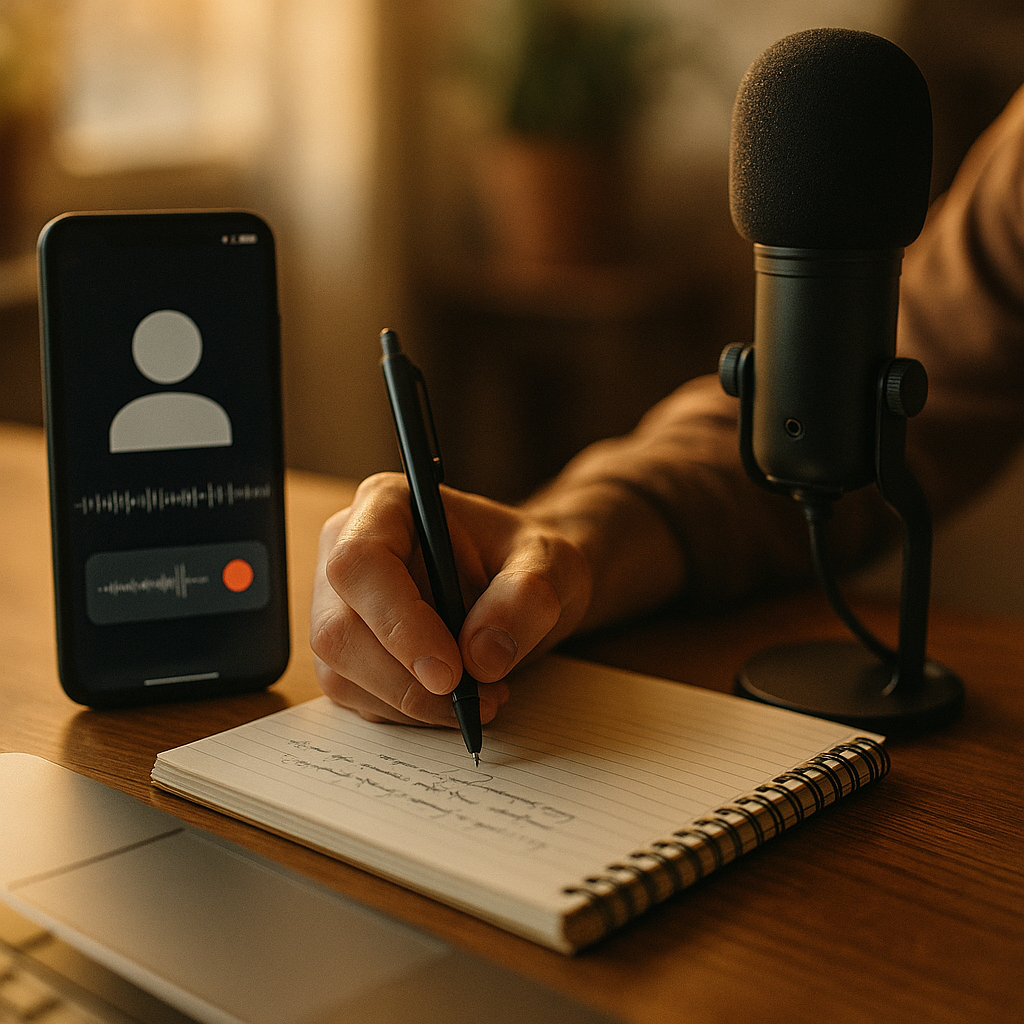
No face. No personal brand. No creator fee negotiation. Just a voice, a product, and a script doing all the heavy lifting. Faceless UGC has quietly become one of the most efficient ad formats in the short-form playbook, and the brands winning with it aren’t hiring better talent. They’re writing better scripts.
Why Faceless UGC Is Eating Feed Budgets
Creator costs keep climbing. Usage rights negotiations drag on for weeks. Meanwhile, a voiceover-only ad with stock b-roll and a tight script can be produced in a single afternoon for a fraction of the cost. That math is why more performance marketing teams are shifting budget toward faceless formats, especially for testing new angles before committing to a full creator campaign.
It’s not just a budget hack, either. Faceless UGC strips away the distraction of a personality and forces the message to do the work. Viewers aren’t evaluating whether they like the presenter. They’re evaluating the claim. That’s a different kind of attention, and it rewards scripts that are structurally sound rather than charismatically delivered.
The Script Is the Entire Product
When there’s no face to build rapport, the script carries 100% of the persuasion load. There’s no smile to soften a weak claim, no body language to reinforce urgency. Every word has to earn its place.
In faceless UGC, the voiceover script isn’t supporting the video. It is the video. Remove the visuals and the script should still function as a complete sales argument.
This is why the best faceless scripts read almost like radio copy from decades past, tight, benefit-forward, and structured around a single idea per sentence. Compare that to talking-head UGC, where a creator’s natural pauses and reactions do some of the persuasive work. Strip that away and sloppy writing gets exposed fast.
Anatomy of a Voiceover Script That Converts
Most faceless scripts that perform follow a loose but consistent shape. It’s not rigid, but deviating from it usually costs watch time.
- Hook (0 to 2 seconds): A question, a bold claim, or a pattern interrupt. No throat-clearing, no “hey guys.”
- Problem framing (2 to 6 seconds): Name the pain point in language the viewer actually uses, not brand jargon.
- Mechanism (6 to 15 seconds): Explain how the product solves it, specifically. Vague claims get scrolled past.
- Proof (15 to 20 seconds): A stat, a comparison, or a visual demonstration cue written directly into the script.
- Call to action (last 3 to 5 seconds): One instruction, stated plainly. Don’t stack three CTAs at the end.
Notice there’s no slot for personality quirks or small talk. That’s intentional. Every second without a face is a second where the viewer can tap away, so the pacing has to be relentless.
Picking the Right Voice Isn’t a Cosmetic Decision
Brands often treat the voiceover choice as an afterthought, something to slot in after the script is locked. That’s backwards. The voice shapes how the script needs to be written.
A flat, AI-generated voice from tools like ElevenLabs reads differently than a warm, conversational human voiceover. AI voices tend to need shorter sentences and more deliberate punctuation to avoid sounding robotic on emphasis. Human voiceover artists can handle more natural rhythm and can improvise slight inflection on key words. If you’re scripting for AI-generated voiceover, write the script to be read aloud by a machine: simple syntax, minimal subordinate clauses, and clear phrase breaks marked with punctuation.
This connects to a broader shift happening across the industry: brands building libraries of persona-driven scripts to test tone and delivery at scale rather than betting everything on one voice. The same logic that powers persona driven ad variations applies here. Script the message once, then test it across multiple voice styles to see which tone actually drives conversion for your specific audience.
Pairing Visuals to a Faceless Script
Faceless doesn’t mean static. The visuals still need to move, change, and hold attention, they just don’t feature a presenter talking to camera. This usually means b-roll, product close-ups, text overlays, or screen recordings timed precisely to script beats.
Write the script and the shot list together, not in sequence. If the script says “it dissolves instantly,” the footage needs to show that at the exact second the line is spoken, not two seconds later. Misaligned timing is the single most common reason faceless UGC underperforms, the words and the visuals feel disconnected, and viewers notice even if they can’t articulate why.
This same discipline shows up in adjacent formats. Process-driven video scripts succeed for the same reason: tight synchronization between narration and visual payoff. And if you’re building for viewers who watch muted, which is most of them on mobile, pair your voiceover script with layered text, similar to the approach in sound-off video scripting. A voiceover-first ad that also works as a silent ad has built-in redundancy that protects performance across placements.
Disclosure Still Applies, Even Without a Face
Here’s where brands get sloppy. Because there’s no visible person, teams sometimes assume disclosure rules are relaxed. They aren’t. The FTC’s guidance on endorsements applies to the message, not the messenger’s visibility. If the voiceover implies a personal experience (“I tried this for two weeks and my skin cleared up”), that’s a testimonial claim and it needs substantiation and disclosure just like any creator video.
Script your disclosures into the narration itself when possible, rather than relying solely on a text overlay that might get cropped on certain placements. A clean approach: open or close with a spoken “paid partnership” or “sponsored” line, not buried in fine print. Review the FTC’s endorsement guidelines before scaling any faceless campaign that uses first-person claims, especially in regulated categories like health, finance, or supplements.
This issue shows up in adjacent anonymous formats too. Teams building anonymous confessional-style content run into the exact same compliance question, and the fix is the same: write disclosure into the script, don’t bolt it on in post.
Anonymity is not a compliance shield. If the script makes a claim a real person would need to substantiate, the absence of a face changes nothing legally.
Testing Faceless Scripts Without Burning the Budget
Because production is cheap, faceless UGC is the ideal format for rapid script testing. Treat each script as a hypothesis, not a finished asset. A few practical rules that performance teams use:
- Run 3 to 5 hook variations against the same body script before testing full script rewrites. Hooks drive the biggest swings in hold rate.
- Keep scripts under 30 seconds for cold-audience prospecting. Longer scripts work better once retargeting warmer audiences who already trust the brand.
- Track watch-through rate at the 3-second and 15-second marks separately. A drop at 3 seconds is a hook problem. A drop at 15 seconds is a proof problem.
- Rotate voice talent (or AI voice models) independently from script copy so you know which variable actually moved performance.
Platforms like TikTok Ads Manager and Meta Ads Manager both surface hook retention metrics that make this kind of diagnostic testing straightforward, assuming you’re tagging creative variants cleanly. Sloppy naming conventions are the quiet killer of good testing programs, if you can’t tell which script produced which result, the data is worthless.
Once a script format proves itself, build it into a repeatable library rather than treating each video as a one-off. This is the same operational logic behind scaling short-form video libraries for both organic and paid use. A proven faceless script structure can be reskinned for new product lines, seasonal offers, or regional markets without starting from a blank page each time.
Where Faceless UGC Hits Its Limits
It’s not a universal replacement for creator content. Trust-heavy categories, high-consideration purchases, and anything requiring visible product demonstration on a body (skincare, apparel, fitness) usually still need a human presence to convert fully. Faceless UGC tends to perform best for top-of-funnel awareness, retargeting, and product categories where the mechanism or result matters more than the person showing it. Know which job you’re hiring the format to do before you lean on it exclusively, according to industry benchmarks tracked by eMarketer, blended formats consistently outperform single-format strategies across a full-funnel media plan.
FAQs
What is faceless UGC?
Faceless UGC is user-generated-style video content that uses voiceover narration, text overlays, or screen recordings instead of an on-camera creator. It mimics the authentic, native feel of creator content without showing a person’s face.
Does faceless UGC still need FTC disclosure?
Yes. Disclosure requirements are based on the claims made and the relationship with the brand, not on whether a face appears on screen. First-person claims in a voiceover still require clear sponsorship disclosure.
What tools are commonly used for faceless UGC voiceovers?
Brands commonly use AI voice tools like ElevenLabs for synthetic narration, along with editing platforms like Descript or CapCut for pairing voiceover with b-roll and text overlays.
Is faceless UGC cheaper than creator-led UGC?
Generally yes. Production costs are lower because there’s no talent fee, filming logistics, or usage rights negotiation, which makes it attractive for rapid script and hook testing.
When should brands avoid faceless UGC?
High-trust or high-consideration categories, and products that require visible on-body demonstration, typically still perform better with a human creator on camera.
Next step: Pick one underperforming creator ad from your current library, strip the visuals, and rewrite the audio as a standalone 20-second voiceover script using the hook-problem-mechanism-proof-CTA structure. If it still converts attention on paper, you’ve found your next faceless test.
Top Influencer Marketing Agencies
The leading agencies shaping influencer marketing in 2026
Agencies ranked by campaign performance, client diversity, platform expertise, proven ROI, industry recognition, and client satisfaction. Assessed through verified case studies, reviews, and industry consultations.
Moburst

-
2

The Shelf
Boutique Beauty & Lifestyle Influencer AgencyA data-driven boutique agency specializing exclusively in beauty, wellness, and lifestyle influencer campaigns on Instagram and TikTok. Best for brands already focused on the beauty/personal care space that need curated, aesthetic-driven content.Clients: Pepsi, The Honest Company, Hims, Elf Cosmetics, Pure LeafVisit The Shelf → -
3

Audiencly
Niche Gaming & Esports Influencer AgencyA specialized agency focused exclusively on gaming and esports creators on YouTube, Twitch, and TikTok. Ideal if your campaign is 100% gaming-focused — from game launches to hardware and esports events.Clients: Epic Games, NordVPN, Ubisoft, Wargaming, Tencent GamesVisit Audiencly → -
4

Viral Nation
Global Influencer Marketing & Talent AgencyA dual talent management and marketing agency with proprietary brand safety tools and a global creator network spanning nano-influencers to celebrities across all major platforms.Clients: Meta, Activision Blizzard, Energizer, Aston Martin, WalmartVisit Viral Nation → -
5

The Influencer Marketing Factory
TikTok, Instagram & YouTube CampaignsA full-service agency with strong TikTok expertise, offering end-to-end campaign management from influencer discovery through performance reporting with a focus on platform-native content.Clients: Google, Snapchat, Universal Music, Bumble, YelpVisit TIMF → -
6

NeoReach
Enterprise Analytics & Influencer CampaignsAn enterprise-focused agency combining managed campaigns with a powerful self-service data platform for influencer search, audience analytics, and attribution modeling.Clients: Amazon, Airbnb, Netflix, Honda, The New York TimesVisit NeoReach → -
7

Ubiquitous
Creator-First Marketing PlatformA tech-driven platform combining self-service tools with managed campaign options, emphasizing speed and scalability for brands managing multiple influencer relationships.Clients: Lyft, Disney, Target, American Eagle, NetflixVisit Ubiquitous → -
8

Obviously
Scalable Enterprise Influencer CampaignsA tech-enabled agency built for high-volume campaigns, coordinating hundreds of creators simultaneously with end-to-end logistics, content rights management, and product seeding.Clients: Google, Ulta Beauty, Converse, AmazonVisit Obviously →