


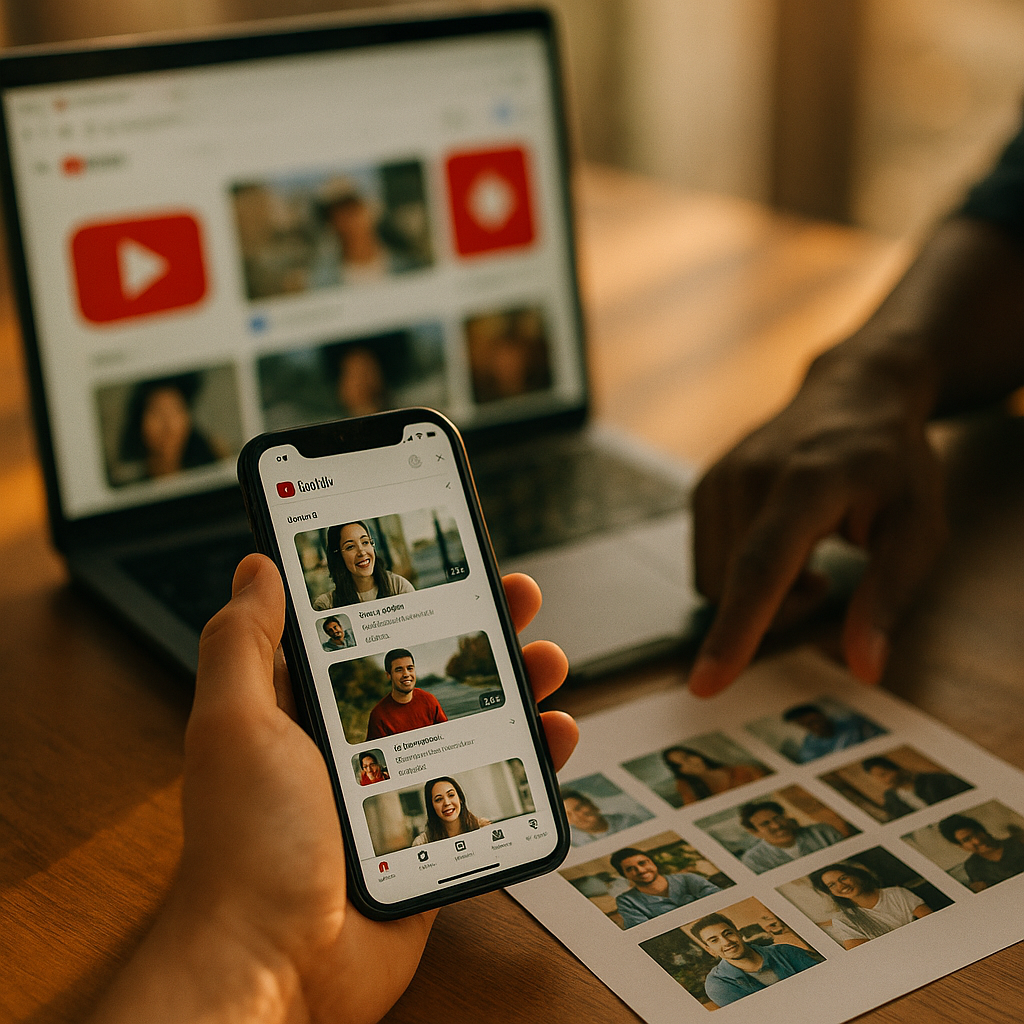
Less than 1% of YouTube channels ever crack 100,000 subscribers, yet some of the platform’s best performing brand partnerships now start with creators who haven’t hit that mark yet. YouTube’s Hype feature, a discovery tool built to surface small channels before they blow up, is quietly becoming the cheapest way for brands to get in early on talent that will cost five times more in a year. If you’re still waiting for creators to prove themselves at scale before signing a deal, you’re paying a premium for certainty that Hype is designed to remove.
What Is YouTube’s Hype Feature, Exactly?
Hype is YouTube’s answer to a problem every platform eventually faces: the algorithm rewards channels that already have momentum, which makes it nearly impossible for new creators to break through organically. Launched as a discovery mechanism for channels under 500,000 subscribers, Hype lets viewers “boost” videos from smaller creators using a limited number of weekly votes. Boosted videos earn a visible Hype badge, climb category and country leaderboards, and in many cases trigger a monetary bonus for the creator through YouTube’s funding pool.
For viewers, it’s a lightweight way to champion creators they like. For creators, it’s a rare shot at visibility without needing a viral hit. For brands, it’s something else entirely: a live, public signal of which small channels are gaining real audience trust before the CPMs catch up.
Why This Matters More Than Another Algorithm Tweak
Most platform discovery features get treated as creator-side news that brands skim past. That’s a mistake with Hype. The feature effectively publishes a ranked, real-time list of emerging talent segmented by category and geography. That’s sourcing data most brands pay agencies to assemble manually.
A channel appearing on a Hype leaderboard today is, by definition, a channel that hasn’t yet been priced by the broader market. That gap between visibility and valuation is exactly where brand ROI lives.
Compare this to how discovery works on other platforms. TikTok’s FYP signals reward watch time at massive scale, which means breakout creators are often already flooded with brand inquiries by the time a marketer notices them. Hype operates on a smaller, more filtered pool: channels under 500,000 subscribers, curated by category. That’s a narrower, more actionable hunting ground for teams trying to build relationships before the bidding war starts.
Spend five minutes with the data and the pattern repeats across categories, from finance explainers to niche beauty channels to gaming commentary.
The Mechanics Brands Need to Understand
You don’t need to game Hype to benefit from it, but you do need to understand how it ranks videos to read the signal correctly.
- Vote scarcity matters. Viewers get a capped number of Hype votes per week, so a channel accumulating boosts isn’t just getting algorithmic luck, it’s earning deliberate, finite viewer attention.
- Leaderboards are category and country specific. A top-ranked fitness channel in a mid-sized market might be exactly the regional voice a brand needs for a localized push, something covered in depth in our APAC market adaptation guide.
- The subscriber ceiling is the point. Once a channel crosses 500,000 subscribers, it ages out of Hype eligibility, which means the leaderboard is constantly refreshing with genuinely early-stage talent rather than creators who’ve simply slowed their growth.
- Badges are visible to all viewers. A Hype badge functions like a trust signal, similar in spirit to the review credibility dynamics we outlined in our Shorts review funnel guide.
Building the Brand Playbook: Four Moves to Make Now
Treat Hype the way a smart media buyer treats programmatic inventory before it gets expensive. Here’s the operational sequence.
1. Monitor leaderboards by category, not just by vertical you already work in. Set a recurring internal review (weekly is reasonable) of Hype rankings in your top three to five content categories. Assign this to whoever owns influencer sourcing, not as a side task but as a defined responsibility.
2. Build a tiered outreach tier below your usual minimum follower threshold. Most brands have a floor, often 50,000 or 100,000 subscribers, below which they don’t bother reaching out. Hype is precisely why that floor needs an exception. Our nano creator whitelisting playbook lays out a framework for structuring these smaller deals without blowing up your negotiation process.
3. Negotiate equity-style terms, not flat fees, for Hype-surfaced talent. Because these creators haven’t been priced by the open market yet, this is your window to offer performance bonuses, longer-term retainers, or usage rights packages instead of one-off flat payments. You’re buying optionality on a creator’s future growth, and the pricing should reflect that.
4. Pipe Hype-sourced creators into your existing content formats. Don’t reinvent your brief for these partnerships. If long-form product deep dives work for your category, route emerging Hype creators into the same structure outlined in our long form review pipeline guide.
Is Hype Actually a Reliable Signal, or Just Noise?
Fair question. Any system that lets audiences vote is vulnerable to coordinated gaming, and YouTube has already had to tune anti-manipulation safeguards into the feature. The honest answer is that Hype is a strong directional signal, not a guarantee. Treat a rising Hype rank as a reason to start a conversation, not as the sole basis for a six-figure retainer.
Cross-reference Hype momentum against other indicators before committing budget: comment sentiment, upload consistency, and whether the creator’s content aligns with brand safety standards. Tools like Sprout Social and standard YouTube Studio analytics can confirm whether a Hype bump is translating into durable watch time or just a short-term spike.
Industry data backs the caution. eMarketer has repeatedly flagged that early-stage creator partnerships carry higher variance in delivery quality than established talent, even when the discovery signal itself is sound. Build that variance into your expectations and your contract terms.
Compliance Still Applies, Even to Small Channels
It’s tempting to treat emerging creator deals as low-stakes because the budgets are smaller. They’re not low-stakes from a disclosure standpoint. FTC guidance on material connections applies regardless of channel size, and newer creators are statistically more likely to skip or mishandle disclosure requirements simply because they haven’t been through brand deal onboarding before.
Build disclosure training into your Hype-sourced creator onboarding from day one. Reference the FTC’s endorsement guidelines directly in your contract language rather than assuming creators already know the rules. If you’re also distributing this content on connected TV, check the rights considerations in our CTV rights and format guide before extending usage beyond YouTube itself.
Measuring ROI Without Overcomplicating It
You don’t need a new measurement framework for Hype-sourced partnerships. You need to apply your existing framework earlier in the creator lifecycle. Track cost per engaged view against your established benchmarks, but weight the comparison by subscriber count at time of signing, not at time of reporting. A creator who grows from 80,000 to 300,000 subscribers during your partnership should show a dramatically better cost-per-view trajectory than one you signed after they’d already plateaued.
HubSpot’s attribution modeling resources are useful here if you’re trying to connect early-stage creator spend to downstream conversion data, particularly for brands running always-on influencer programs rather than one-off campaigns.
Next Step
Set up a standing weekly review of YouTube’s Hype leaderboards in your top content categories, assign ownership to one person on your influencer team, and commit to reaching out to at least two emerging creators per month before your competitors notice them.
Frequently Asked Questions
What is YouTube’s Hype feature?
Hype is a discovery feature that lets viewers boost videos from channels under 500,000 subscribers, surfacing emerging creators through category and country leaderboards along with a visible Hype badge.
How can brands use Hype for influencer sourcing?
Brands can monitor Hype leaderboards by category to identify rising creators before they’re widely known, then negotiate early-stage partnerships at lower rates with performance-based terms instead of premium flat fees.
Does a Hype badge guarantee a creator is a good brand fit?
No. A Hype badge indicates strong viewer momentum, but brands should still vet content alignment, comment sentiment, and upload consistency before committing budget.
Are FTC disclosure rules different for small or emerging creators?
No. FTC endorsement guidelines apply regardless of channel size, so brands should build disclosure training into onboarding for any Hype-sourced creator partnership.
Why do channels lose Hype eligibility at 500,000 subscribers?
The subscriber cap keeps the leaderboard focused on genuinely early-stage talent, ensuring the feature continues surfacing new creators rather than channels that have already scaled.
Top Influencer Marketing Agencies
The leading agencies shaping influencer marketing in 2026
Agencies ranked by campaign performance, client diversity, platform expertise, proven ROI, industry recognition, and client satisfaction. Assessed through verified case studies, reviews, and industry consultations.
Moburst

-
2

The Shelf
Boutique Beauty & Lifestyle Influencer AgencyA data-driven boutique agency specializing exclusively in beauty, wellness, and lifestyle influencer campaigns on Instagram and TikTok. Best for brands already focused on the beauty/personal care space that need curated, aesthetic-driven content.Clients: Pepsi, The Honest Company, Hims, Elf Cosmetics, Pure LeafVisit The Shelf → -
3

Audiencly
Niche Gaming & Esports Influencer AgencyA specialized agency focused exclusively on gaming and esports creators on YouTube, Twitch, and TikTok. Ideal if your campaign is 100% gaming-focused — from game launches to hardware and esports events.Clients: Epic Games, NordVPN, Ubisoft, Wargaming, Tencent GamesVisit Audiencly → -
4

Viral Nation
Global Influencer Marketing & Talent AgencyA dual talent management and marketing agency with proprietary brand safety tools and a global creator network spanning nano-influencers to celebrities across all major platforms.Clients: Meta, Activision Blizzard, Energizer, Aston Martin, WalmartVisit Viral Nation → -
5

The Influencer Marketing Factory
TikTok, Instagram & YouTube CampaignsA full-service agency with strong TikTok expertise, offering end-to-end campaign management from influencer discovery through performance reporting with a focus on platform-native content.Clients: Google, Snapchat, Universal Music, Bumble, YelpVisit TIMF → -
6

NeoReach
Enterprise Analytics & Influencer CampaignsAn enterprise-focused agency combining managed campaigns with a powerful self-service data platform for influencer search, audience analytics, and attribution modeling.Clients: Amazon, Airbnb, Netflix, Honda, The New York TimesVisit NeoReach → -
7

Ubiquitous
Creator-First Marketing PlatformA tech-driven platform combining self-service tools with managed campaign options, emphasizing speed and scalability for brands managing multiple influencer relationships.Clients: Lyft, Disney, Target, American Eagle, NetflixVisit Ubiquitous → -
8

Obviously
Scalable Enterprise Influencer CampaignsA tech-enabled agency built for high-volume campaigns, coordinating hundreds of creators simultaneously with end-to-end logistics, content rights management, and product seeding.Clients: Google, Ulta Beauty, Converse, AmazonVisit Obviously →