


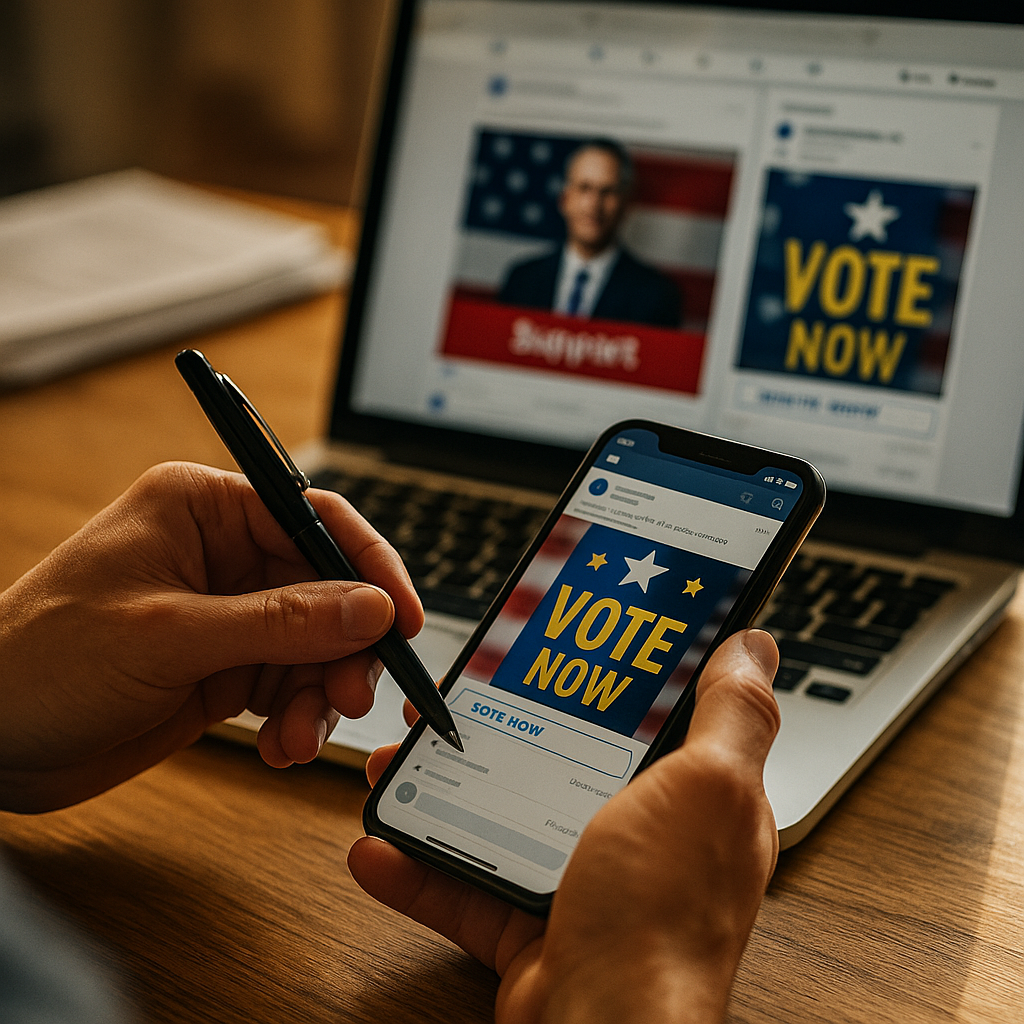
One wrong hashtag and a sponsored post about a ballot measure can trigger an FTC investigation, an FEC complaint, and a platform takedown, simultaneously. Political and issue advocacy disclosure rules for brand-sponsored creator content sit at the intersection of three regulatory regimes that rarely talk to each other, and most brand marketing teams are only prepared for one of them.
If your influencer program has ever touched a cause campaign, a corporate stance on legislation, or a nonprofit partnership tied to a ballot initiative, you are already operating in this space. Most teams just don’t realize it until legal flags it, or worse, until a regulator does.
Why “It’s Not a Political Ad” Doesn’t Save You
Marketers often assume political disclosure rules only apply to candidate endorsements. That’s a dangerous assumption. Issue advocacy, meaning sponsored content that takes a position on legislation, a ballot measure, a regulatory fight, or a contested social issue, triggers disclosure obligations even when no candidate’s name appears anywhere in the content.
A beverage brand funding creator posts opposing a sugar tax. A fintech company sponsoring influencers to talk about interest rate caps. An energy company paying creators to weigh in on pipeline permitting. None of these mention a candidate, yet all of them can qualify as issue advocacy under state election law, and in some cases under federal rules governing electioneering communications near an election date.
The FTC’s endorsement framework and campaign finance disclosure law are two separate systems with two separate enforcement bodies, and brands that comply with one often assume they’ve covered the other. They haven’t.
The Three Rulebooks You’re Actually Juggling
Here’s the structural problem: there isn’t one “political disclosure law” for sponsored creator content. There are at least three overlapping frameworks, and a single campaign can trip all of them.
- FTC endorsement guidelines: Require clear, conspicuous disclosure of any material connection between a brand and a creator, regardless of the subject matter. This is the baseline you already know from standard brand deals, covered extensively in our breakdown of state influencer disclosure laws.
- Federal and state campaign finance law: Governs paid communications that reference candidates or, in many states, ballot measures. These rules often require disclosure of the funding source, not just the sponsorship relationship, and the thresholds for “paid communication” are shockingly low in some states.
- Platform policy: Meta, TikTok, and YouTube each have their own definitions of political and issue content, and their enforcement is independent of whatever the law requires. TikTok, for instance, prohibits paid political advertising entirely, including issue ads, under its advertising policies, which means a technically legal campaign can still get your account suspended.
Each of these systems defines “political” and “issue” differently. A post that clears FTC scrutiny can still violate a state’s electioneering communication statute. A campaign that’s legally compliant at the federal level can still get flagged and removed by Meta’s political content review process under its advertising standards.
What Counts as “Issue Advocacy” Anyway?
This is where brand teams get tripped up, because the definition is broader than most people expect. Issue advocacy generally includes any sponsored content that:
- Takes a position on pending or recently passed legislation
- Advocates for or against a ballot measure or referendum
- Comments on a regulatory proceeding tied to the sponsoring brand’s industry
- Promotes a corporate stance on a socially contested issue (labor policy, environmental regulation, healthcare access) where a legislative or regulatory outcome is at stake
Notice what’s missing from that list: candidate names. You don’t need an election on the calendar to be subject to issue advocacy disclosure rules. Several states, including California and New York, have expanded “electioneering communication” definitions to capture ballot measure advocacy that runs at any point during an active signature-gathering or campaign period, not just the weeks before a vote.
A related pressure point: brands dabbling in ESG messaging through creators often don’t realize their sustainability claims can shade into issue advocacy, especially when the content touches pending environmental legislation. We’ve covered the adjacent compliance risk in our piece on ESG disclosure in sponsored content, and the overlap with political disclosure rules is growing, not shrinking.
State Disclosure Laws Are the Real Minefield
Federal rules get most of the attention, but state-level disclosure statutes are where brands actually get burned. Washington State’s Public Disclosure Commission, for example, requires reporting of payments to “commercial advertisers,” a category broad enough to sweep in creators paid to post about state ballot initiatives. California’s Political Reform Act has similar teeth. These laws often require the brand, not just the creator, to file disclosure reports identifying the payment, the amount, and the creator’s reach.
Miss that filing and you’re not looking at a warning letter. You’re looking at fines, and in some states, personal liability for the marketing executive who approved the campaign. This is a materially different risk profile than a standard FTC #ad violation, which typically results in a consent order rather than a monetary penalty for a first offense.
The compliance burden gets heavier when you’re running a multi-state campaign, since each state defines “political communication” differently and sets its own reporting thresholds. A creator post that requires no disclosure in Texas might trigger mandatory filing in Washington. Brands running national cause marketing campaigns through creators need a state-by-state legal review before launch, not after a complaint lands.
Platform Enforcement Moves Faster Than the Law
Here’s an uncomfortable truth: platforms will often act before regulators do, and their definitions of political content are deliberately broad to limit their own liability. Meta requires an “authorized by” disclaimer on any ad discussing social issues, elections, or politics, and its automated classifiers frequently flag content that brands never intended as political, including posts about healthcare costs, gun safety products, or climate adaptation.
YouTube’s policies on issue-based advertising require advertiser verification for certain content categories, and TikTok’s blanket ban on paid political and issue advertising means that even a perfectly legal, properly disclosed campaign can get pulled if the platform’s trust and safety team classifies it as issue advocacy. There’s no appeal process that moves fast enough to save a time-sensitive campaign tied to a legislative vote.
Platform takedown risk is often faster and more disruptive than regulatory risk, because a flagged post disappears in hours while an FTC or FEC inquiry can take months to even open.
This means your pre-launch review process needs a platform policy check that’s separate from your legal compliance check. They’re not the same gate, and treating them as one is how campaigns get pulled mid-flight.
Building a Disclosure Workflow That Actually Holds Up
Brands running cause marketing, advocacy partnerships, or any creator content touching legislation or ballot measures need a workflow that catches these issues before content goes live, not after. A few operational moves that actually reduce exposure:
- Tag content at the brief stage. If a creator brief mentions legislation, a ballot measure, a regulatory agency, or a contested social issue, route it through a political/issue compliance review before it goes to the creator at all.
- Separate the disclosure language. Standard #ad or #sponsored tags satisfy FTC rules but rarely satisfy state election disclosure requirements, which often mandate specific funding source language. Don’t assume one disclosure line covers both.
- Track state-by-state thresholds. Build a simple matrix of which states require issue advocacy disclosure and at what spend level. This overlaps with the multi-state exposure already covered in our analysis of state disclosure obligations for standard sponsored content.
- Retain everything. Briefs, contracts, approval chains, and published versions of every piece of advocacy-adjacent content need a retention policy that can survive an audit, similar to the framework outlined in our piece on content retention for FTC audits.
- Loop in platform policy, not just legal. A campaign can be legally sound and still violate Meta or TikTok’s ad policies. Check both before launch.
According to recent industry survey data compiled by eMarketer, brand spend on cause-aligned and advocacy-adjacent creator content has grown steadily as consumer trust in corporate political positioning becomes a factor in purchase decisions, per ongoing research from Statista. That growth means more brands are walking into this regulatory gap without realizing it, often through well-meaning ESG or community impact campaigns rather than overt political strategy.
There’s also a newer wrinkle worth watching: AI-generated spokesperson content used in advocacy campaigns carries its own disclosure layer, since synthetic endorsers raise additional transparency questions covered in our analysis of AI spokesperson disclosure requirements. If your advocacy campaign uses any AI-assisted content generation, that compliance layer stacks on top of everything else discussed here.
The Bottom Line for Brand Teams
Treat any creator content touching legislation, ballot measures, or contested regulatory issues as a distinct compliance category, not a variant of standard sponsored content review. The FTC, state election authorities, and the platforms each have veto power over your campaign, and satisfying one doesn’t satisfy the others. Build the state-by-state disclosure matrix now, before your next cause marketing brief goes out, not after a creator’s post triggers a complaint.
Frequently Asked Questions
Does FTC endorsement disclosure cover political and issue advocacy content?
No. FTC rules require disclosure of material connections between brands and creators regardless of topic, but they don’t satisfy separate state election law or campaign finance disclosure requirements that apply specifically to political and issue advocacy content.
What makes creator content “issue advocacy” instead of standard sponsored content?
Content qualifies as issue advocacy when it takes a position on pending legislation, a ballot measure, a regulatory proceeding, or a contested social issue tied to a legislative or regulatory outcome, even without mentioning a candidate by name.
Do state disclosure laws apply even if a campaign runs outside an election season?
Often yes. Several states define electioneering communication broadly enough to cover ballot measure advocacy during active signature gathering or campaign periods well before the actual vote, independent of a traditional election calendar.
Can a campaign be legally compliant but still get removed by a platform?
Yes. Platforms like Meta, TikTok, and YouTube enforce their own political and issue content policies independently of the law, and automated classifiers frequently flag content that is legally compliant but trips platform-specific definitions of political advertising.
Who is liable if a brand fails to file required state political disclosure reports?
In many states, liability extends beyond the creator to the sponsoring brand, and in some jurisdictions, to the specific marketing executive who approved the payment, making this a materially different risk category than standard FTC violations.
FAQs
Top Influencer Marketing Agencies
The leading agencies shaping influencer marketing in 2026
Agencies ranked by campaign performance, client diversity, platform expertise, proven ROI, industry recognition, and client satisfaction. Assessed through verified case studies, reviews, and industry consultations.
Moburst

-
2

The Shelf
Boutique Beauty & Lifestyle Influencer AgencyA data-driven boutique agency specializing exclusively in beauty, wellness, and lifestyle influencer campaigns on Instagram and TikTok. Best for brands already focused on the beauty/personal care space that need curated, aesthetic-driven content.Clients: Pepsi, The Honest Company, Hims, Elf Cosmetics, Pure LeafVisit The Shelf → -
3

Audiencly
Niche Gaming & Esports Influencer AgencyA specialized agency focused exclusively on gaming and esports creators on YouTube, Twitch, and TikTok. Ideal if your campaign is 100% gaming-focused — from game launches to hardware and esports events.Clients: Epic Games, NordVPN, Ubisoft, Wargaming, Tencent GamesVisit Audiencly → -
4

Viral Nation
Global Influencer Marketing & Talent AgencyA dual talent management and marketing agency with proprietary brand safety tools and a global creator network spanning nano-influencers to celebrities across all major platforms.Clients: Meta, Activision Blizzard, Energizer, Aston Martin, WalmartVisit Viral Nation → -
5

The Influencer Marketing Factory
TikTok, Instagram & YouTube CampaignsA full-service agency with strong TikTok expertise, offering end-to-end campaign management from influencer discovery through performance reporting with a focus on platform-native content.Clients: Google, Snapchat, Universal Music, Bumble, YelpVisit TIMF → -
6

NeoReach
Enterprise Analytics & Influencer CampaignsAn enterprise-focused agency combining managed campaigns with a powerful self-service data platform for influencer search, audience analytics, and attribution modeling.Clients: Amazon, Airbnb, Netflix, Honda, The New York TimesVisit NeoReach → -
7

Ubiquitous
Creator-First Marketing PlatformA tech-driven platform combining self-service tools with managed campaign options, emphasizing speed and scalability for brands managing multiple influencer relationships.Clients: Lyft, Disney, Target, American Eagle, NetflixVisit Ubiquitous → -
8

Obviously
Scalable Enterprise Influencer CampaignsA tech-enabled agency built for high-volume campaigns, coordinating hundreds of creators simultaneously with end-to-end logistics, content rights management, and product seeding.Clients: Google, Ulta Beauty, Converse, AmazonVisit Obviously →