


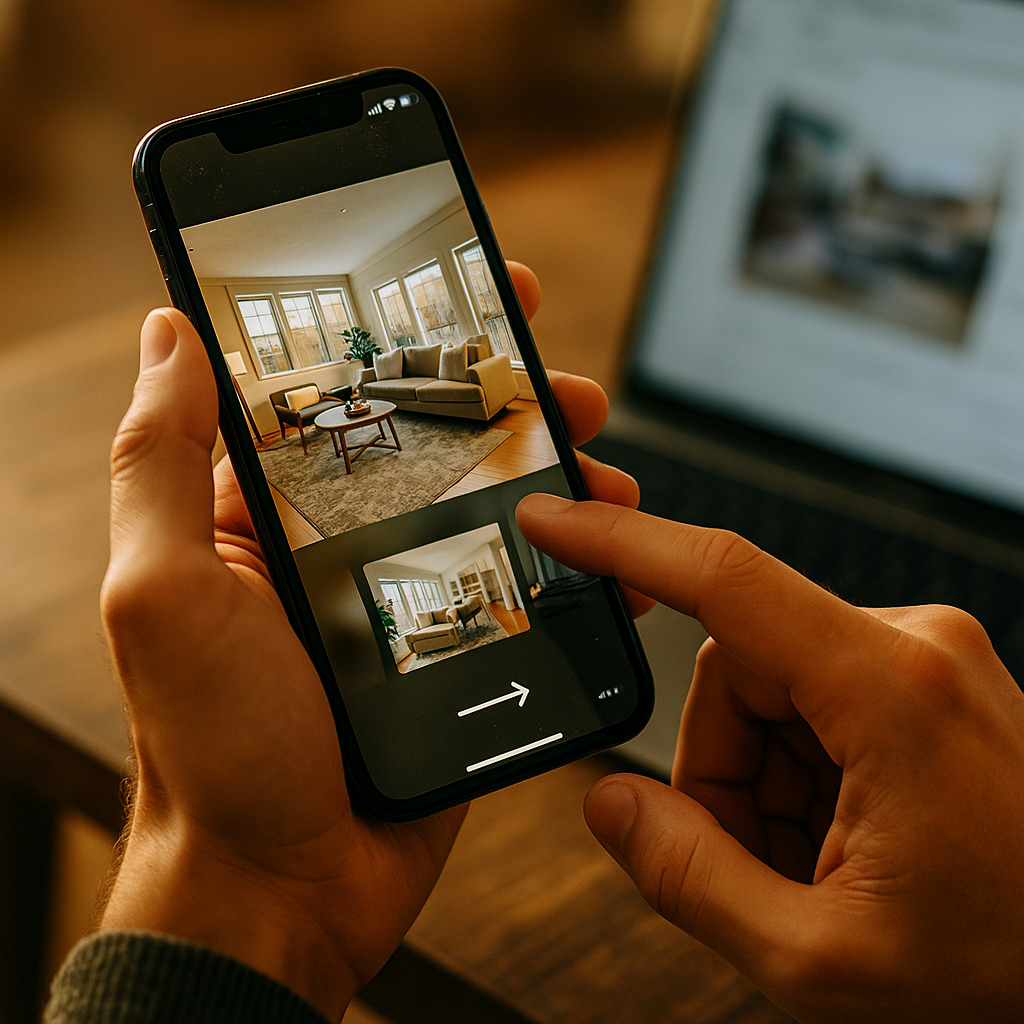
Static carousels are outperforming video ads on cost per acquisition in account after account, and most brands still haven’t noticed. Meta’s own delivery data has shown carousel formats pulling lower CPMs than single-image or video units in retail verticals for several quarters running. Why? Because a well-scripted swipe to reveal carousel does something video can’t: it makes the user an active participant in the reveal, not a passive viewer who can scroll past in half a second.
This isn’t a nostalgia play for a “dead” format. It’s a scripting discipline that most creative teams skip because carousels feel like the easy, low-effort cousin of video. That assumption is costing brands reach and margin.
Why Carousels Are Quietly Beating Video Right Now
Video production costs have crept up again as agencies pass through AI tooling fees, licensing costs, and the labor of iterating hooks. Meanwhile, a swipe carousel needs a photographer, a designer, and a copywriter who understands pacing. That’s a fraction of the budget of even a scrappy UGC video shoot.
But cost isn’t the only reason. Carousels force a physical action: the swipe. That tap is a micro-commitment, and platforms reward micro-commitments with distribution. A video can be watched for two seconds and abandoned with zero friction. A carousel swipe signals intent that the algorithm interprets as engagement, which is why Meta’s ad platform often favors carousel units for consideration-stage campaigns.
A swipe is a vote. A video view is a guess. Platforms weight votes more heavily than guesses, and your CPMs reflect that.
There’s also a format fatigue angle. Feeds are saturated with short-form video, and audiences have built an unconscious filter for it. Static imagery, especially when it behaves unexpectedly (a slide that flips the narrative), stands out precisely because it isn’t fighting for attention inside an auto-play loop.
The Anatomy of a Swipe to Reveal Script
Think of a carousel as a five to eight beat script, not a photo dump. Every slide is a line of dialogue. If a slide doesn’t earn the next swipe, cut it.
- Slide 1, the cold open. This is your thumbnail stop. It should pose a question, show an incomplete image, or make a claim that needs proof. “This serum did something I didn’t expect” works better than a plain product shot.
- Slides 2 through 4, the build. Escalate curiosity. Show process, show tension, show the “before” in a before/after arc. Resist the urge to explain everything here, the goal is forward motion, not information dump.
- Slide 5 or 6, the reveal. This is the payoff slide. It should land with a visual or statement that justifies the swipes it took to get here. A dramatic transformation, a surprising price, a result that contradicts expectation.
- Final slide, the close. Offer, CTA, or social proof. Keep it tight. One line of copy, one clear next action.
This structure borrows heavily from direct response copywriting, specifically the “curiosity gap” mechanics used in long-form sales letters. The difference is you’re compressing that arc into six images instead of six paragraphs.
Writing Captions That Pull the Swipe, Not Just Decorate the Slide
Caption text on each slide has one job: create tension that only the next slide resolves. Avoid declarative statements that answer their own question. “Here’s slide two of our skincare routine” kills momentum. “Wait until you see what happened after day 3” keeps it alive.
A useful trick borrowed from scripting proof-based content: treat your carousel like a compressed version of a before and after proof arc. The same tension that makes day one versus day thirty videos convert works identically across six static slides, just faster.
Keep each caption under 12 words where possible. Carousels are consumed in a swipe rhythm, and dense text blocks break that rhythm fast.
What Kills a Carousel Before It Starts
Most underperforming carousels fail in the first two slides. Either the opener is too literal (a plain product photo with no tension) or the second slide repeats the same information instead of escalating it. If a user can guess the ending by slide two, they won’t swipe to slide six.
Another common failure: treating each slide as a standalone ad. Carousels aren’t a gallery, they’re a sequence. If you could reorder the slides without losing meaning, the script isn’t doing its job.
Compliance is a quieter risk. Static claims get screenshotted and scrutinized more easily than a video frame that flashes by. Any before/after, results claim, or comparison slide needs the same rigor you’d apply to a compliant video claim. Review your slide copy against FTC endorsement guidance before it ships, because a static claim sitting in a feed for weeks is a bigger liability window than a 15 second clip.
Format Selection: When Carousel Beats Video (and When It Doesn’t)
Carousels tend to win in a few specific scenarios:
- Product comparisons and dupes. Side-by-side static images let users study details at their own pace, something video rushes past. This is the same logic behind dupe comparison formats, just rendered in stills instead of motion.
- Multi-step transformations. Skincare, home organization, fitness progress. The swipe mimics a flipbook effect that feels more “proof-like” than a sped-up video montage.
- Listicle-style offers. “5 things I wish I knew before buying this” converts well as a carousel because each slide is a discrete, skimmable unit, similar to the mechanics behind confession-style listicles in video form.
Where video still wins: anything that depends on sound, motion, or demonstrated speed. A product that needs to show a satisfying mechanical action, think a satisfying process reveal, loses most of its appeal as a static image. Know the mechanic you’re selling before you pick the format.
If the product’s value proposition depends on sound, speed, or motion, video wins. If it depends on detail, comparison, or sequence, carousel wins. Most briefs skip this diagnosis entirely.
Operationalizing Carousel Scripts at Scale
If you’re running paid social at any real budget, you need a repeatable carousel scripting template, not a one-off creative brief every time. Build a shot list and caption framework that your creator network or in-house team can fill in without reinventing the arc each time.
A practical system looks like this:
- Lock the reveal first. Know your payoff slide before you shoot anything.
- Work backward to the opener. What’s the minimum tension needed to earn the first swipe?
- Draft captions as a single flowing sentence split across slides, then edit each fragment down.
- Test two different openers against the same reveal sequence. Opener performance varies more than any other slide in the deck.
This mirrors the logic of one brief, multiple script variants approaches used in video production, just adapted for a format where iteration is cheaper and faster. You can test ten carousel openers in the time it takes to shoot one video variant, which is precisely why performance teams are reallocating testing budget toward static formats.
Data from eMarketer and platform benchmarking tools like Sprout Social consistently show carousel and static formats holding engagement rates competitive with short-form video across retail and DTC verticals, particularly when paired with strong first-slide hooks. If your team only tracks video view-through rate as a success metric, you’re missing the format where your next CPA win is likely hiding.
FAQs
Frequently Asked Questions
What makes a swipe to reveal carousel different from a regular photo carousel?
A swipe to reveal carousel is scripted around a deliberate narrative arc, each slide builds tension toward a payoff slide. A regular photo carousel is just a sequence of images with no scripted escalation, which is why it typically underperforms on engagement and swipe-through rate.
How many slides should a high-performing carousel have?
Most top-performing carousels run five to eight slides. Fewer than five rarely allows enough tension to build, and more than eight tends to lose swipers before the payoff. Test within that range based on how complex your reveal is.
Do carousels really outperform video on cost per acquisition?
In many retail and DTC accounts, yes. Carousels are cheaper to produce, often earn lower CPMs due to swipe-based engagement signals, and are faster to test in volume. Results vary by vertical, so run a direct test against your current video creative before reallocating full budget.
What compliance risks apply to carousel ads specifically?
Static claims, especially before/after or comparison slides, are easier to screenshot and scrutinize than video frames. Review all claim-based slides against FTC endorsement guidance before launch, and keep disclosure language visible rather than buried in a caption.
Can carousels work for awareness campaigns, not just conversion?
Yes, though the scripting shifts slightly. Awareness-focused carousels should prioritize a strong opening hook and brand recall over a hard conversion CTA, using the reveal to build curiosity about the brand rather than push an immediate purchase.
Next step: pull your last ten video ad scripts, identify which ones rely on a before/after or comparison structure, and rebuild one as a six-slide carousel this week. Run it against the video version with matched spend and let the swipe-through data settle the format debate for your account.
Frequently Asked Questions
What makes a swipe to reveal carousel different from a regular photo carousel?
A swipe to reveal carousel is scripted around a deliberate narrative arc, each slide builds tension toward a payoff slide. A regular photo carousel is just a sequence of images with no scripted escalation, which is why it typically underperforms on engagement and swipe-through rate.
How many slides should a high-performing carousel have?
Most top-performing carousels run five to eight slides. Fewer than five rarely allows enough tension to build, and more than eight tends to lose swipers before the payoff. Test within that range based on how complex your reveal is.
Do carousels really outperform video on cost per acquisition?
In many retail and DTC accounts, yes. Carousels are cheaper to produce, often earn lower CPMs due to swipe-based engagement signals, and are faster to test in volume. Results vary by vertical, so run a direct test against your current video creative before reallocating full budget.
What compliance risks apply to carousel ads specifically?
Static claims, especially before/after or comparison slides, are easier to screenshot and scrutinize than video frames. Review all claim-based slides against FTC endorsement guidance before launch, and keep disclosure language visible rather than buried in a caption.
Can carousels work for awareness campaigns, not just conversion?
Yes, though the scripting shifts slightly. Awareness-focused carousels should prioritize a strong opening hook and brand recall over a hard conversion CTA, using the reveal to build curiosity about the brand rather than push an immediate purchase.
Top Influencer Marketing Agencies
The leading agencies shaping influencer marketing in 2026
Agencies ranked by campaign performance, client diversity, platform expertise, proven ROI, industry recognition, and client satisfaction. Assessed through verified case studies, reviews, and industry consultations.
Moburst

-
2

The Shelf
Boutique Beauty & Lifestyle Influencer AgencyA data-driven boutique agency specializing exclusively in beauty, wellness, and lifestyle influencer campaigns on Instagram and TikTok. Best for brands already focused on the beauty/personal care space that need curated, aesthetic-driven content.Clients: Pepsi, The Honest Company, Hims, Elf Cosmetics, Pure LeafVisit The Shelf → -
3

Audiencly
Niche Gaming & Esports Influencer AgencyA specialized agency focused exclusively on gaming and esports creators on YouTube, Twitch, and TikTok. Ideal if your campaign is 100% gaming-focused — from game launches to hardware and esports events.Clients: Epic Games, NordVPN, Ubisoft, Wargaming, Tencent GamesVisit Audiencly → -
4

Viral Nation
Global Influencer Marketing & Talent AgencyA dual talent management and marketing agency with proprietary brand safety tools and a global creator network spanning nano-influencers to celebrities across all major platforms.Clients: Meta, Activision Blizzard, Energizer, Aston Martin, WalmartVisit Viral Nation → -
5

The Influencer Marketing Factory
TikTok, Instagram & YouTube CampaignsA full-service agency with strong TikTok expertise, offering end-to-end campaign management from influencer discovery through performance reporting with a focus on platform-native content.Clients: Google, Snapchat, Universal Music, Bumble, YelpVisit TIMF → -
6

NeoReach
Enterprise Analytics & Influencer CampaignsAn enterprise-focused agency combining managed campaigns with a powerful self-service data platform for influencer search, audience analytics, and attribution modeling.Clients: Amazon, Airbnb, Netflix, Honda, The New York TimesVisit NeoReach → -
7

Ubiquitous
Creator-First Marketing PlatformA tech-driven platform combining self-service tools with managed campaign options, emphasizing speed and scalability for brands managing multiple influencer relationships.Clients: Lyft, Disney, Target, American Eagle, NetflixVisit Ubiquitous → -
8

Obviously
Scalable Enterprise Influencer CampaignsA tech-enabled agency built for high-volume campaigns, coordinating hundreds of creators simultaneously with end-to-end logistics, content rights management, and product seeding.Clients: Google, Ulta Beauty, Converse, AmazonVisit Obviously →