


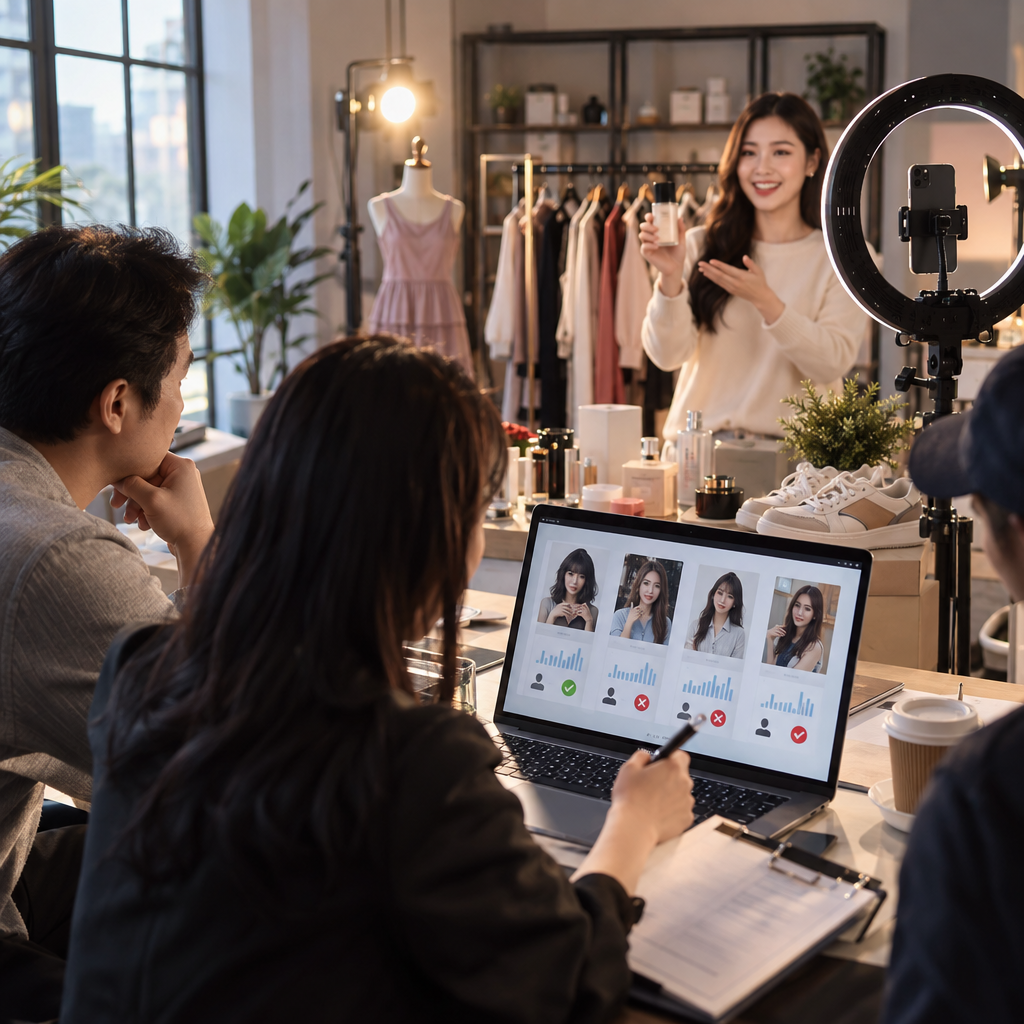
Under TikTok’s creator eligibility policy, an affiliate creator needs a minimum of 1,000 followers to sell products on the platform. Does that make them a safe bet for your livestream budget? No. Brands that treat it as a vetting shortcut end up paying for hosts who can’t convert, can’t withdraw commissions, or can lose permissions mid-campaign. Here is a better filter.
What the 1,000 follower rule actually says
Start with the source, because the secondary coverage is muddy. TikTok’s own US creator eligibility policy says affiliate creators must have a minimum of 1,000 followers and must self-apply. Those creators get access to the TikTok Shop Product Marketplace without needing a bind to a specific seller.
The same policy lists promoting products during TikTok LIVEs as one of the ways approved creators can monetize. So the follower minimum for affiliates is the gate to LIVE selling, and nothing more. It is not a separate “livestream threshold” with its own performance logic.
There are three creator types, and the thresholds differ:
- Affiliate creators: a minimum of 1,000 followers per the eligibility policy, self-applied, with marketplace access.
- Marketing creators: invited by your shop through a marketing creator bind. According to TikTok’s creator onboarding guide, there is no minimum follower requirement to self-sell, but promoting other sellers’ products through the marketplace requires at least 5,000 followers.
- Official Shop creators: bound to your shop, same account name as the shop, and no minimum follower count. They can only promote your products.
That second bullet matters. If you invite a 700-follower host as a marketing creator, they can sell your catalog but can’t pull in marketplace products. For a brand-owned program, that is often fine. For an agency running a multi-brand roster, it is a real constraint.
The follower count tells you whether a creator can get in the door. It says nothing about whether they can hold a room, hit a sell-through rate, or stay compliant for ninety days.
Why a low threshold creates a bigger vetting job for you
A low barrier widens the pool. More hosts means more variance, and variance is a cost you absorb when you build a roster. A creator who just crossed the minimum and a creator with hundreds of completed LIVE sessions look identical in the eligibility check.
So the eligibility gate is doing platform risk management. Your job is brand risk management. Different filters.
If you are sorting out who can host in the first place, our breakdown of livestream casting rules covers how eligibility and casting decisions interact. Here, the focus is what to screen for after the host clears the platform’s bar.
The five-point partner screen
1. Verification status
Ask hosts to confirm they have finished age and identity checks. TikTok’s policy says affiliate and marketing creators may be asked to confirm their age within 2 months of registration. It also says identity verification applies to those who registered for e-commerce permissions starting July 2025 or hadn’t finished it before then.
Here is the operational catch. The policy notes that while identity verification is in progress, product links may be hidden from viewers, and commission withdrawals depend on completing it. A host who hasn’t verified is a payout dispute waiting to happen, and possibly a stream with no clickable product.
2. Permission history
Eligibility requires no prior record of e-commerce permissions being revoked, and no association with accounts that had permissions revoked. Ask directly. Then ask whether the host shares login information with other accounts, since the policy also prohibits sharing the same or similar login details with high-violation shop accounts.
3. Stream quality against TikTok’s own rules
TikTok’s requirements for high-quality videos and LIVEs apply to both sellers and creators promoting products on TikTok Shop, so use them as your review standard for host replays. That is a direct brand risk. If your host spends 40 minutes chatting and 2 minutes on your serum, the stream can draw enforcement, not sales.
Request two or three past LIVE replays. Watch for product demonstration time, claim discipline, and how the host handles questions about ingredients or results.
4. Content policy fluency
Hosts must follow the TikTok Shop Content Policy, Community Guidelines and Creator Code of Conduct. Quiz them lightly on health claims, pricing statements and disclosure. If they hesitate, build training into your brief. Pricing is a particular trap, so read our FTC audit guide before scripting any price talk.
5. Sales signal, not just reach
Ask for GMV per session, average concurrent viewers, and conversion rate from recent LIVEs, ideally as screenshots from TikTok Shop’s creator tools. A smaller host with a loyal niche audience can outsell a much larger account with passive followers. We have seen this pattern across niche categories, but verify it with your own pilot data rather than trusting anecdotes, including ours.
Match the creator type to the campaign goal
Which bind should you offer? It depends on what you are optimizing.
- Dedicated hosts for a hero launch: use marketing creator binds. You control the roster and can see who is attached to your shop.
- Brand-owned channel: an Official Shop creator account makes sense when you want a consistent voice. Remember this account can’t use the affiliate marketplace and must match your shop’s legal entity when it is an organization account.
New hosts also face guardrails. TikTok describes a 30-day Early Stage Control Pilot for newly onboarded official and marketing creators, with a posting limit of a maximum of 3 product promotion videos per day. If your plan assumes a new host will flood the feed around launch week, that limit will bite. Build the schedule around it.
Budgeting around the threshold
Low-follower hosts rarely justify flat fees. Commission-led deals, with a modest guaranteed floor for proven performers, keep your downside capped. Once a host proves out, paid amplification through Spark Ads whitelisting can extend reach beyond their organic audience.
Also decide how you will treat viewer gifts. They can distort a host’s revenue picture and your sponsorship math, which our LIVE gifting ROI guide unpacks.
Run every new host through a two-stream pilot with a defined sell-through target before you commit to a recurring slot. Two streams reveal more than any media kit.
Red flags that should end the conversation
- The host won’t confirm identity verification or deflects questions about past permission removals.
- Past LIVEs barely touch the product on screen.
- Follower growth looks vertical with flat engagement, a common sign of purchased followers sitting right above the threshold.
- They want payment routed to a third party’s account rather than their own verified one.
Why does the last one matter? Because commissions are tied to the verified creator identity, and a mismatch is both a fraud signal and an accounting headache.
FAQs
Do creators need 1,000 followers to sell on TikTok Shop LIVE?
According to TikTok’s eligibility policy, affiliate creators in the US need at least 1,000 followers, and approved creators can promote products during LIVEs. Official Shop and marketing creators bound to your shop have no minimum follower count for self-selling, so a smaller host can still represent your brand if you invite them.
Is 1,000 followers enough to promote other brands’ products?
It depends on the creator type. Per TikTok’s eligibility policy, affiliate creators with at least 1,000 followers get marketplace access. Marketing accounts need at least 5,000 followers to promote other sellers’ products through the marketplace, according to TikTok’s creator onboarding guide, though they can self-sell your shop’s catalog with no minimum.
What verification should I check before booking a host?
Confirm they completed age confirmation and identity verification. Without it, product links may be hidden during verification and commission withdrawals can be blocked, which hurts both the stream and your payout process.
Can a creator lose LIVE selling access mid-campaign?
Yes. TikTok reviews creator accounts for compliance, and violations can restrict or remove e-commerce permissions. Build backup hosts into your schedule and include policy compliance clauses in your contract.
Should I prioritize follower count or past LIVE performance?
Past LIVE performance. Ask for GMV per session, concurrent viewers and conversion data. Follower count is only a eligibility signal, and our live selling GMV guide shows how to frame those benchmarks.
This week, build a one-page host scorecard covering verification, permission history, product demo time and GMV per stream, then pilot your next three hosts against it with two streams each.
Top Influencer Marketing Agencies
The leading agencies shaping influencer marketing in 2026
Agencies ranked by campaign performance, client diversity, platform expertise, proven ROI, industry recognition, and client satisfaction. Assessed through verified case studies, reviews, and industry consultations.
Moburst

-
2

The Shelf
Boutique Beauty & Lifestyle Influencer AgencyA data-driven boutique agency specializing exclusively in beauty, wellness, and lifestyle influencer campaigns on Instagram and TikTok. Best for brands already focused on the beauty/personal care space that need curated, aesthetic-driven content.Clients: Pepsi, The Honest Company, Hims, Elf Cosmetics, Pure LeafVisit The Shelf → -
3

Audiencly
Niche Gaming & Esports Influencer AgencyA specialized agency focused exclusively on gaming and esports creators on YouTube, Twitch, and TikTok. Ideal if your campaign is 100% gaming-focused — from game launches to hardware and esports events.Clients: Epic Games, NordVPN, Ubisoft, Wargaming, Tencent GamesVisit Audiencly → -
4

Viral Nation
Global Influencer Marketing & Talent AgencyA dual talent management and marketing agency with proprietary brand safety tools and a global creator network spanning nano-influencers to celebrities across all major platforms.Clients: Meta, Activision Blizzard, Energizer, Aston Martin, WalmartVisit Viral Nation → -
5

The Influencer Marketing Factory
TikTok, Instagram & YouTube CampaignsA full-service agency with strong TikTok expertise, offering end-to-end campaign management from influencer discovery through performance reporting with a focus on platform-native content.Clients: Google, Snapchat, Universal Music, Bumble, YelpVisit TIMF → -
6

NeoReach
Enterprise Analytics & Influencer CampaignsAn enterprise-focused agency combining managed campaigns with a powerful self-service data platform for influencer search, audience analytics, and attribution modeling.Clients: Amazon, Airbnb, Netflix, Honda, The New York TimesVisit NeoReach → -
7

Ubiquitous
Creator-First Marketing PlatformA tech-driven platform combining self-service tools with managed campaign options, emphasizing speed and scalability for brands managing multiple influencer relationships.Clients: Lyft, Disney, Target, American Eagle, NetflixVisit Ubiquitous → -
8

Obviously
Scalable Enterprise Influencer CampaignsA tech-enabled agency built for high-volume campaigns, coordinating hundreds of creators simultaneously with end-to-end logistics, content rights management, and product seeding.Clients: Google, Ulta Beauty, Converse, AmazonVisit Obviously →