


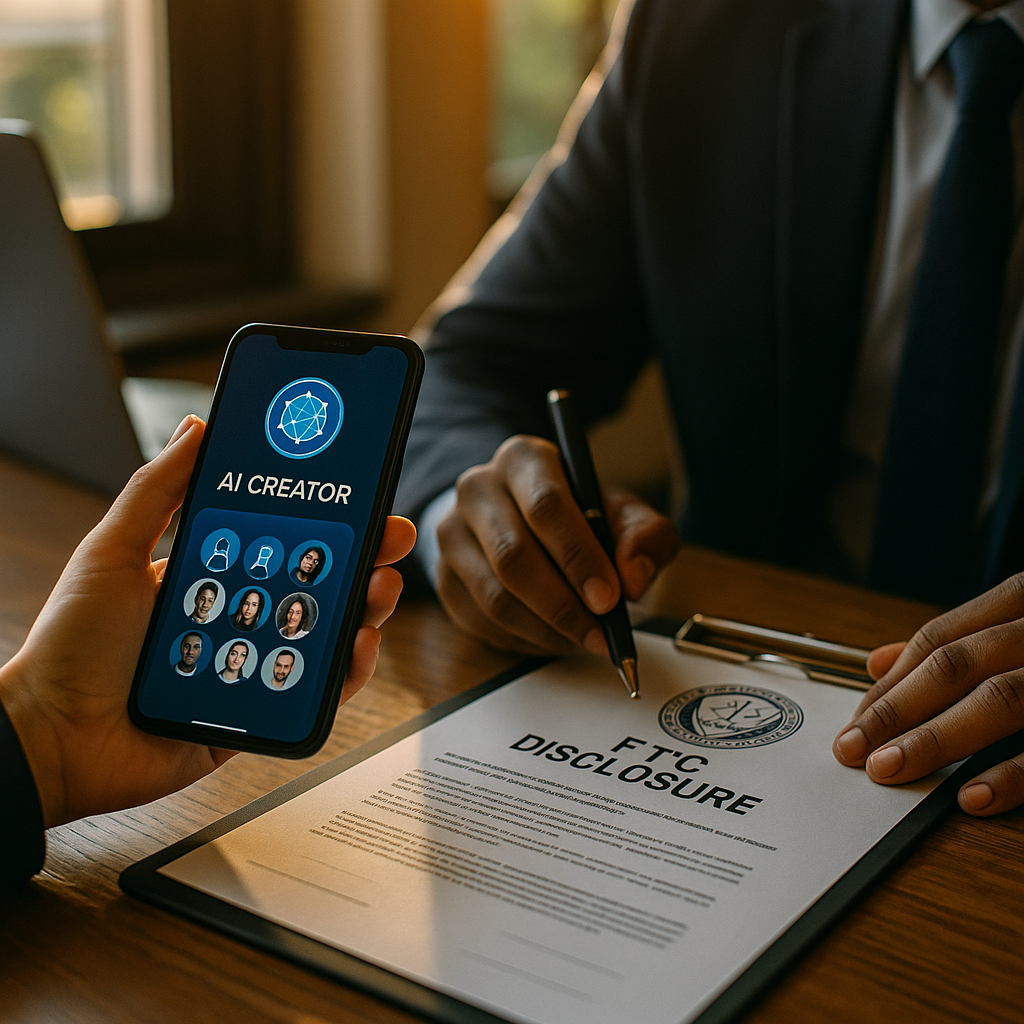
Who’s Liable When No Human Approved the Creator?
A 2026 survey by the Association of National Advertisers found that 41% of brands now use some form of automated creator matching, up from just 18% two years prior. The efficiency gains are real. But here’s the uncomfortable question: when an AI matching platform autonomously selects, contracts, and deploys a creator — and that creator publishes a sponsored post without proper FTC disclosure — who exactly is on the hook?
The answer, according to the FTC, is blunt: the brand. Automation doesn’t absolve responsibility. It just makes the liability chain harder to trace and easier to ignore.
The Automation Gap in FTC Enforcement
The Federal Trade Commission has been unambiguous. Its Endorsement Guides, updated in 2023 and actively enforced since, hold advertisers responsible for ensuring that material connections between brands and endorsers are clearly disclosed. The Commission doesn’t care whether a human marketing manager or an algorithm made the match. If a consumer can’t tell a post is sponsored, the brand that paid for it bears responsibility.
This matters enormously for platforms like CreatorIQ, Grin, AspireIQ, and a growing wave of AI-native tools that promise end-to-end campaign automation. These platforms can identify creators, negotiate rates, issue contracts, and even approve content — all without a brand marketer touching the workflow. That speed is intoxicating. It’s also a compliance minefield.
Automation compresses the time between creator selection and content publication to hours. Compliance review cycles, however, still operate on a human timeline. That mismatch is where violations happen.
Consider a real-world scenario. A DTC skincare brand uses an AI matching tool to activate 200 micro-creators for a product launch. The platform autonomously selects creators based on engagement metrics, audience demographics, and content style. Contracts are generated and e-signed through the platform. Briefs are issued. Content goes live. Seventeen of those creators fail to include adequate #ad or #sponsored disclosures. The brand’s CMO didn’t even know those creators existed until the posts were already indexed.
Under current FTC guidance, that CMO’s brand is still liable. Period. As we’ve explored in our deep dive on influencer disclosure failures, the legal precedent is settled: brands cannot outsource compliance obligations to intermediaries.
Does the Platform Share Liability?
Sometimes. But not in the way most brand teams assume.
The FTC can pursue any party in the endorsement chain — advertiser, agency, intermediary, or endorser. In practice, enforcement actions have overwhelmingly targeted brands and, in some cases, the creators themselves. Platforms that merely facilitate matching have largely avoided direct FTC action, though that enforcement posture could shift as AI-driven campaign tools gain market share.
The critical legal distinction is between a platform acting as a tool versus a platform acting as an agent. If the platform is simply a SaaS tool that the brand configures and controls, the brand retains full responsibility. If the platform operates with enough autonomy to be considered the brand’s agent — making material decisions about creator selection, messaging, and deployment — the platform may share liability under agency law principles.
This is precisely why understanding the AI advertising liability chain is non-negotiable for any brand using these tools. The contractual allocation of responsibility between brand and platform determines who pays when things go wrong.
Most platform Terms of Service aggressively disclaim liability for FTC compliance. Read the fine print. Nearly every major automated matching platform includes language stating that the brand is solely responsible for ensuring regulatory compliance of all campaign content. The platform provides the infrastructure; the brand owns the outcome.
Why “We Didn’t Know” Won’t Work as a Defense
Brand legal teams sometimes float the idea that lack of direct oversight constitutes a defense. If nobody at the brand reviewed or approved the content, how can the brand be held responsible for its deficiencies?
The FTC has pre-empted this argument explicitly. In its Endorsement Guides, the Commission states that advertisers must have “reasonable programs” to monitor and ensure compliance. Choosing to remove humans from the oversight loop doesn’t create a compliance safe harbor — it creates a compliance failure. Willful ignorance is worse than negligent oversight in the eyes of regulators.
This principle extends internationally. The UK’s Information Commissioner’s Office and the Advertising Standards Authority apply similar logic to automated influencer campaigns targeting UK audiences. The EU’s Digital Services Act further tightens requirements around algorithmic transparency in commercial content. Going fully autonomous with creator deployment doesn’t just create FTC risk; it creates multi-jurisdictional exposure.
For brands operating cross-border influencer programs, this layered regulatory landscape makes human checkpoints not just advisable but essential.
Building Compliance Into the Automation Layer
The solution isn’t to abandon AI matching platforms. They work. The efficiency gains — 60-70% reduction in campaign activation time, according to eMarketer research — are too significant to ignore. The solution is to architect compliance into the automated workflow rather than bolting it on after the fact.
Here’s what that looks like operationally:
- Mandatory disclosure injection at the contract layer. Every auto-generated creator contract should include non-negotiable FTC disclosure requirements with specific language mandates (#ad, #sponsored, Paid Partnership tags). If the platform can auto-generate a contract, it can auto-generate disclosure clauses.
- Pre-publication content scanning. AI tools that can match creators can also scan draft content for disclosure compliance before publication. Several platforms now offer NLP-based disclosure detection. Require it as a gate. No disclosure detected? Content doesn’t go live.
- Human-in-the-loop escalation triggers. Define thresholds that pull a human reviewer into the workflow. High-value campaigns, regulated product categories (supplements, finance, alcohol), creators with prior compliance violations — these should automatically trigger manual review.
- Audit logging. Every autonomous decision the platform makes — creator selection, contract issuance, content approval — should be logged with timestamps. If enforcement action occurs, these logs are your evidence of reasonable compliance efforts.
- Indemnification clauses with teeth. If the platform is making autonomous decisions, your contract with that platform should include mutual indemnification for FTC violations arising from the platform’s autonomous actions. Most platforms resist this. Push harder.
We’ve outlined complementary frameworks in our coverage of content approval workflows for AI-sponsored content, which details how to build pre-publication gates that don’t destroy campaign velocity.
The brands getting this right treat AI matching platforms like autonomous vehicles: incredibly useful, but requiring guardrails, monitoring systems, and a human ready to grab the wheel.
The Creator’s Role in the Equation
Creators bear their own FTC obligations. That hasn’t changed. A creator who fails to disclose a material connection can face individual enforcement action, regardless of how they were matched or contracted.
But here’s the operational wrinkle with fully automated systems: creators matched and deployed by AI often receive less onboarding, fewer compliance reminders, and weaker brand relationships than creators managed by human teams. The result is predictable. A Statista analysis of influencer marketing compliance found that campaigns using fully automated workflows had disclosure non-compliance rates roughly 2.5x higher than human-managed campaigns.
That stat alone should make every brand marketer pause before flipping the switch to full autonomy. The creator may share responsibility, but the brand absorbs the reputational damage and the bulk of any FTC penalty.
For guidance on how FTC compliance audits can catch these gaps before regulators do, our accountability framework provides a step-by-step approach.
What to Do Monday Morning
Audit every AI matching and deployment platform your organization currently uses. Map each platform’s level of autonomy against your compliance controls. Where the platform acts without human review, insert a disclosure verification gate — or accept, in writing, that your legal team has evaluated and is comfortable with the residual risk.
FAQs
Who is liable for FTC disclosure violations when an AI platform autonomously places a creator?
The brand that funds the campaign bears primary liability for FTC disclosure violations, regardless of whether a human or an AI system selected and deployed the creator. The FTC holds advertisers responsible for maintaining reasonable compliance programs, and using automated tools does not transfer that obligation to the platform provider.
Can an AI matching platform be held liable for FTC violations?
Potentially, yes. If the platform operates with sufficient autonomy to be considered the brand’s agent — making material decisions about creator selection, content approval, and deployment — it may share liability under both FTC enforcement and agency law principles. However, most platform Terms of Service disclaim this responsibility, placing the compliance burden squarely on the brand.
What compliance safeguards should brands require from AI creator matching platforms?
Brands should require mandatory FTC disclosure language in all auto-generated contracts, pre-publication content scanning for disclosure compliance, human-in-the-loop escalation for high-risk campaigns, comprehensive audit logging of all autonomous decisions, and mutual indemnification clauses covering FTC violations caused by the platform’s autonomous actions.
Does removing human oversight from a creator campaign reduce or increase brand liability?
It increases liability exposure. The FTC requires advertisers to implement reasonable monitoring programs for endorsement compliance. Deliberately removing human oversight from the campaign workflow can be viewed as a failure to maintain such programs, potentially resulting in higher penalties during enforcement actions.
Are creators still personally responsible for FTC disclosures in AI-matched campaigns?
Yes. Creators retain individual responsibility for properly disclosing material connections with brands, regardless of how the partnership was initiated. However, data shows that creators in fully automated campaigns exhibit significantly higher non-compliance rates due to reduced onboarding and fewer compliance touchpoints, which circles back to brand liability for inadequate monitoring.
Top Influencer Marketing Agencies
The leading agencies shaping influencer marketing in 2026
Agencies ranked by campaign performance, client diversity, platform expertise, proven ROI, industry recognition, and client satisfaction. Assessed through verified case studies, reviews, and industry consultations.
Moburst

-
2

The Shelf
Boutique Beauty & Lifestyle Influencer AgencyA data-driven boutique agency specializing exclusively in beauty, wellness, and lifestyle influencer campaigns on Instagram and TikTok. Best for brands already focused on the beauty/personal care space that need curated, aesthetic-driven content.Clients: Pepsi, The Honest Company, Hims, Elf Cosmetics, Pure LeafVisit The Shelf → -
3

Audiencly
Niche Gaming & Esports Influencer AgencyA specialized agency focused exclusively on gaming and esports creators on YouTube, Twitch, and TikTok. Ideal if your campaign is 100% gaming-focused — from game launches to hardware and esports events.Clients: Epic Games, NordVPN, Ubisoft, Wargaming, Tencent GamesVisit Audiencly → -
4

Viral Nation
Global Influencer Marketing & Talent AgencyA dual talent management and marketing agency with proprietary brand safety tools and a global creator network spanning nano-influencers to celebrities across all major platforms.Clients: Meta, Activision Blizzard, Energizer, Aston Martin, WalmartVisit Viral Nation → -
5

The Influencer Marketing Factory
TikTok, Instagram & YouTube CampaignsA full-service agency with strong TikTok expertise, offering end-to-end campaign management from influencer discovery through performance reporting with a focus on platform-native content.Clients: Google, Snapchat, Universal Music, Bumble, YelpVisit TIMF → -
6

NeoReach
Enterprise Analytics & Influencer CampaignsAn enterprise-focused agency combining managed campaigns with a powerful self-service data platform for influencer search, audience analytics, and attribution modeling.Clients: Amazon, Airbnb, Netflix, Honda, The New York TimesVisit NeoReach → -
7

Ubiquitous
Creator-First Marketing PlatformA tech-driven platform combining self-service tools with managed campaign options, emphasizing speed and scalability for brands managing multiple influencer relationships.Clients: Lyft, Disney, Target, American Eagle, NetflixVisit Ubiquitous → -
8

Obviously
Scalable Enterprise Influencer CampaignsA tech-enabled agency built for high-volume campaigns, coordinating hundreds of creators simultaneously with end-to-end logistics, content rights management, and product seeding.Clients: Google, Ulta Beauty, Converse, AmazonVisit Obviously →