


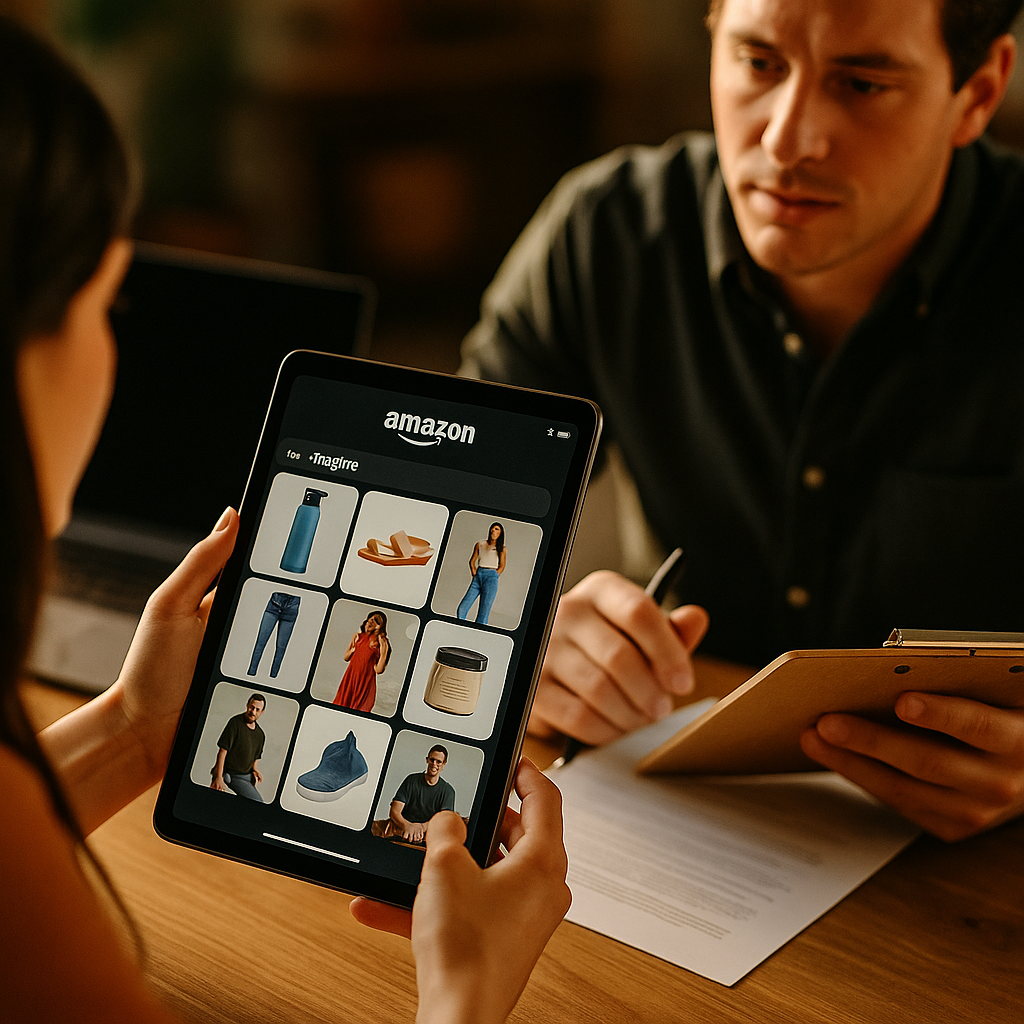
Fewer than 18 months in, Amazon has already rewritten the rules of its shoppable short-video feed three times. If your creator briefs still reference the Amazon Inspire playbook from launch week, you’re optimizing for a feed that no longer exists. The ranking logic, creative formats, and conversion signals have all moved. Brands that haven’t adjusted are leaving reach — and revenue — on the table.
What Actually Changed Since Launch
Inspire launched as Amazon’s answer to TikTok Shop: a vertical, swipeable video feed baked into the shopping app, designed to turn browsing into buying without leaving the ecosystem. Early briefs treated it like a repurposing channel. Brands dumped TikTok cutdowns into Inspire and called it a strategy.
That worked for about a year. Then Amazon quietly shifted its ranking model to prioritize watch-through rate and add-to-cart velocity over raw view counts, similar to the shift we’ve tracked on other short-video feeds rewarding retention over volume. Content that looked native to Amazon — product-first, price-visible, review-adjacent — started outperforming polished brand ads by wide margins.
Internal creator reports circulating in Amazon’s influencer forums suggest videos with visible star ratings or “customers say” overlays now see 30-40% higher click-through to product pages than videos without them — a signal brands can’t ignore when briefing creative.
The second major shift: Amazon began weighting creator credibility scores tied to affiliate conversion history, not just follower count or engagement rate. A mid-tier creator with a strong track record of driving actual purchases now outranks a larger creator with vanity engagement. This mirrors what we’ve seen in trust-based distribution models forcing vetting overhauls elsewhere in the industry.
Third, and most operationally disruptive: Inspire now surfaces content contextually within product detail pages, not just the standalone feed. A video that ranks well on a competitor’s PDP as a “customers also watched” suggestion can outperform its native feed placement by a factor of three. Briefs written only for the feed are missing this distribution layer entirely.
Why Your Old Briefs Are Underperforming
Here’s the uncomfortable truth: most brands are still briefing Inspire content like it’s paid social. Fifteen-second hooks. Aspirational lifestyle framing. A CTA at the end instead of throughout. That approach made sense when the feed rewarded scroll-stopping creative above everything else.
It doesn’t work anymore.
Amazon’s own short-video ad benchmarks from competing platforms and Amazon’s internal creator guidance both point the same direction: shoppable feeds increasingly reward utility over polish. Viewers on Inspire are already in a buying mindset. They didn’t open Amazon to be entertained. They opened it to decide whether to click “buy now.”
That changes what a good brief looks like. Instead of “showcase the product in an aspirational setting,” briefs now need to specify: show the product being opened, show the label, show the price point on screen, show a real use-case within the first three seconds. Sounds unglamorous. It converts.
We covered a similar rebrief moment when Amazon’s algorithm first shifted last year — see our breakdown on how to rebrief creators after algorithm changes. Playbook 2.0 builds directly on that, but goes further into format-specific requirements and measurement.
The New Brief Checklist
- Lead with the product, not the hook. Show packaging or the item itself within the first two seconds. Amazon’s feed penalizes videos with slow reveals.
- Bake in social proof. Reference reviews, ratings, or “verified purchase” language on screen. This isn’t optional flavor anymore — it’s a ranking input.
- Design for PDP reuse. Ask creators to shoot a version without feed-specific text overlays so the video performs equally well when surfaced on product pages.
- Specify price transparency. Videos that mention or show price convert measurably better. Vague “link in bio”-style CTAs underperform on Inspire’s native checkout flow.
- Require a mid-video CTA, not just an end-card. Because viewers can tap to buy at any point, briefs should instruct creators to reinforce the purchase action twice, not once.
Creator Selection: Follower Count Is the Wrong Filter
Brands still sourcing Inspire creators the way they’d source a TikTok campaign are misallocating budget. Follower size correlates weakly with Inspire performance. Conversion history — measurable through Amazon’s affiliate dashboard — correlates strongly.
Ask any creator you’re vetting for their historical click-to-purchase rate on past Inspire content, not just their average views. Most established Amazon affiliates will share this data because it’s their strongest sales pitch.
This is a smaller, less flashy creator pool than what most influencer marketing teams are used to sourcing from. It requires different vetting infrastructure — similar to the trust-scoring shifts we’ve seen forcing shoppable platforms to be compared on conversion mechanics rather than audience size alone.
Nano and micro creators with tight, purchase-motivated audiences are punching above their weight on Inspire specifically because Amazon’s model rewards conversion density. If you’re running a program that treats Inspire like a scaled awareness play, you’re fighting the algorithm’s actual incentive structure. Our piece on turning nano creator UGC into paid media is a useful companion read here — the amplification logic transfers directly to Inspire’s ecosystem.
Measurement: What to Actually Track Now
Vanity metrics were always a weak signal on Inspire. Now they’re borderline useless. Views and likes tell you almost nothing about whether a video is earning algorithmic favor or converting.
Track these instead:
- Watch-through rate — Amazon weights completion heavily in feed ranking.
- Add-to-cart rate per view — the clearest proxy for creative-to-commerce fit.
- PDP surfacing frequency — whether your video is being pulled into “customers also watched” modules on product pages, which multiplies reach without additional spend.
- Repeat-creator conversion consistency — whether a given creator’s videos convert reliably across multiple SKUs, which signals audience trust rather than one-off virality.
Most brands don’t have this instrumented yet. If your reporting still centers on impressions and engagement rate, you’re reporting on a version of Inspire that no longer determines success. According to eMarketer’s retail media commerce data, shoppable video formats across platforms are increasingly judged on conversion-adjacent metrics rather than reach, and Amazon is arguably the most aggressive mover in that direction among major retailers.
Compliance Still Matters — Maybe More Than Before
Disclosure requirements haven’t changed, but enforcement has tightened. Amazon has gotten stricter about creators clearly identifying paid or affiliate relationships within Inspire content, echoing the broader regulatory pressure documented by the FTC’s endorsement guidelines. Brands running Inspire campaigns without airtight disclosure language in their briefs are exposed, both to platform penalties and regulatory risk.
This isn’t new territory for teams who’ve adapted to labeling requirements on other platforms — the logic tracks closely with what we outlined in paid partnership labeling rules throttling reach elsewhere. Build disclosure into the brief as a non-negotiable line item, not an afterthought creators bolt on.
A Quick Gut Check for Your Next Brief
Before you send your next Inspire brief, ask three questions. Does it prioritize product visibility over brand aesthetics? Does it require creators to share prior conversion data? Does it specify a version optimized for PDP surfacing, not just the feed? If you answered no to any of these, you’re briefing for the platform that existed at launch, not the one live today.
Inspire isn’t a static channel, and it never will be. Amazon iterates on retail media faster than almost any other platform because the commercial incentive to get it right is enormous — Statista’s e-commerce data consistently shows Amazon capturing outsized share of U.S. online retail spend, and Inspire is a direct lever on that number. Brands that treat their briefs as living documents, revisited quarterly, will keep pace. Brands that set it and forget it will keep wondering why performance quietly erodes.
The next likely shift, based on Amazon’s pattern of iteration, is deeper integration between Inspire content and Amazon’s retail advertising stack — meaning creative that works in both organic and paid placements will win twice. Start briefing for that dual-purpose reuse now, before it becomes the default expectation.
FAQs
What is Amazon Inspire and how is it different from TikTok Shop?
Amazon Inspire is a shoppable short-video feed built into the Amazon Shopping app, allowing users to discover products through creator and brand videos and purchase without leaving the app. Unlike TikTok Shop, Inspire content is deeply tied to existing product listings, reviews, and Amazon’s retail advertising ecosystem, and increasingly surfaces on product detail pages, not just the standalone feed.
Why is my Inspire content underperforming compared to launch?
Amazon has shifted its ranking model to prioritize watch-through rate, add-to-cart velocity, and creator conversion history over raw views and engagement. Content briefed for the original launch-era feed, which rewarded polished, aspirational creative, now underperforms against product-first, utility-driven videos.
How should brands choose creators for Inspire campaigns now?
Prioritize creators with documented affiliate conversion history over follower count. Ask for historical click-to-purchase data before onboarding. Nano and micro creators with purchase-motivated audiences frequently outperform larger creators on Inspire specifically because Amazon’s algorithm rewards conversion density over reach.
What metrics matter most for measuring Inspire performance?
Track watch-through rate, add-to-cart rate per view, PDP surfacing frequency, and repeat-creator conversion consistency. Impressions and likes are weak indicators of algorithmic favor or actual sales impact on this platform.
Do disclosure rules apply differently on Amazon Inspire?
No, the same FTC endorsement guidelines apply, but Amazon has tightened enforcement around clear disclosure of paid and affiliate relationships within Inspire content. Brands should treat disclosure language as a mandatory brief requirement, not an optional add-on.
FAQs
What is Amazon Inspire and how is it different from TikTok Shop?
Amazon Inspire is a shoppable short-video feed built into the Amazon Shopping app, allowing users to discover products through creator and brand videos and purchase without leaving the app. Unlike TikTok Shop, Inspire content is deeply tied to existing product listings, reviews, and Amazon’s retail advertising ecosystem, and increasingly surfaces on product detail pages, not just the standalone feed.
Why is my Inspire content underperforming compared to launch?
Amazon has shifted its ranking model to prioritize watch-through rate, add-to-cart velocity, and creator conversion history over raw views and engagement. Content briefed for the original launch-era feed, which rewarded polished, aspirational creative, now underperforms against product-first, utility-driven videos.
How should brands choose creators for Inspire campaigns now?
Prioritize creators with documented affiliate conversion history over follower count. Ask for historical click-to-purchase data before onboarding. Nano and micro creators with purchase-motivated audiences frequently outperform larger creators on Inspire specifically because Amazon’s algorithm rewards conversion density over reach.
What metrics matter most for measuring Inspire performance?
Track watch-through rate, add-to-cart rate per view, PDP surfacing frequency, and repeat-creator conversion consistency. Impressions and likes are weak indicators of algorithmic favor or actual sales impact on this platform.
Do disclosure rules apply differently on Amazon Inspire?
No, the same FTC endorsement guidelines apply, but Amazon has tightened enforcement around clear disclosure of paid and affiliate relationships within Inspire content. Brands should treat disclosure language as a mandatory brief requirement, not an optional add-on.
Top Influencer Marketing Agencies
The leading agencies shaping influencer marketing in 2026
Agencies ranked by campaign performance, client diversity, platform expertise, proven ROI, industry recognition, and client satisfaction. Assessed through verified case studies, reviews, and industry consultations.
Moburst

-
2

The Shelf
Boutique Beauty & Lifestyle Influencer AgencyA data-driven boutique agency specializing exclusively in beauty, wellness, and lifestyle influencer campaigns on Instagram and TikTok. Best for brands already focused on the beauty/personal care space that need curated, aesthetic-driven content.Clients: Pepsi, The Honest Company, Hims, Elf Cosmetics, Pure LeafVisit The Shelf → -
3

Audiencly
Niche Gaming & Esports Influencer AgencyA specialized agency focused exclusively on gaming and esports creators on YouTube, Twitch, and TikTok. Ideal if your campaign is 100% gaming-focused — from game launches to hardware and esports events.Clients: Epic Games, NordVPN, Ubisoft, Wargaming, Tencent GamesVisit Audiencly → -
4

Viral Nation
Global Influencer Marketing & Talent AgencyA dual talent management and marketing agency with proprietary brand safety tools and a global creator network spanning nano-influencers to celebrities across all major platforms.Clients: Meta, Activision Blizzard, Energizer, Aston Martin, WalmartVisit Viral Nation → -
5

The Influencer Marketing Factory
TikTok, Instagram & YouTube CampaignsA full-service agency with strong TikTok expertise, offering end-to-end campaign management from influencer discovery through performance reporting with a focus on platform-native content.Clients: Google, Snapchat, Universal Music, Bumble, YelpVisit TIMF → -
6

NeoReach
Enterprise Analytics & Influencer CampaignsAn enterprise-focused agency combining managed campaigns with a powerful self-service data platform for influencer search, audience analytics, and attribution modeling.Clients: Amazon, Airbnb, Netflix, Honda, The New York TimesVisit NeoReach → -
7

Ubiquitous
Creator-First Marketing PlatformA tech-driven platform combining self-service tools with managed campaign options, emphasizing speed and scalability for brands managing multiple influencer relationships.Clients: Lyft, Disney, Target, American Eagle, NetflixVisit Ubiquitous → -
8

Obviously
Scalable Enterprise Influencer CampaignsA tech-enabled agency built for high-volume campaigns, coordinating hundreds of creators simultaneously with end-to-end logistics, content rights management, and product seeding.Clients: Google, Ulta Beauty, Converse, AmazonVisit Obviously →