


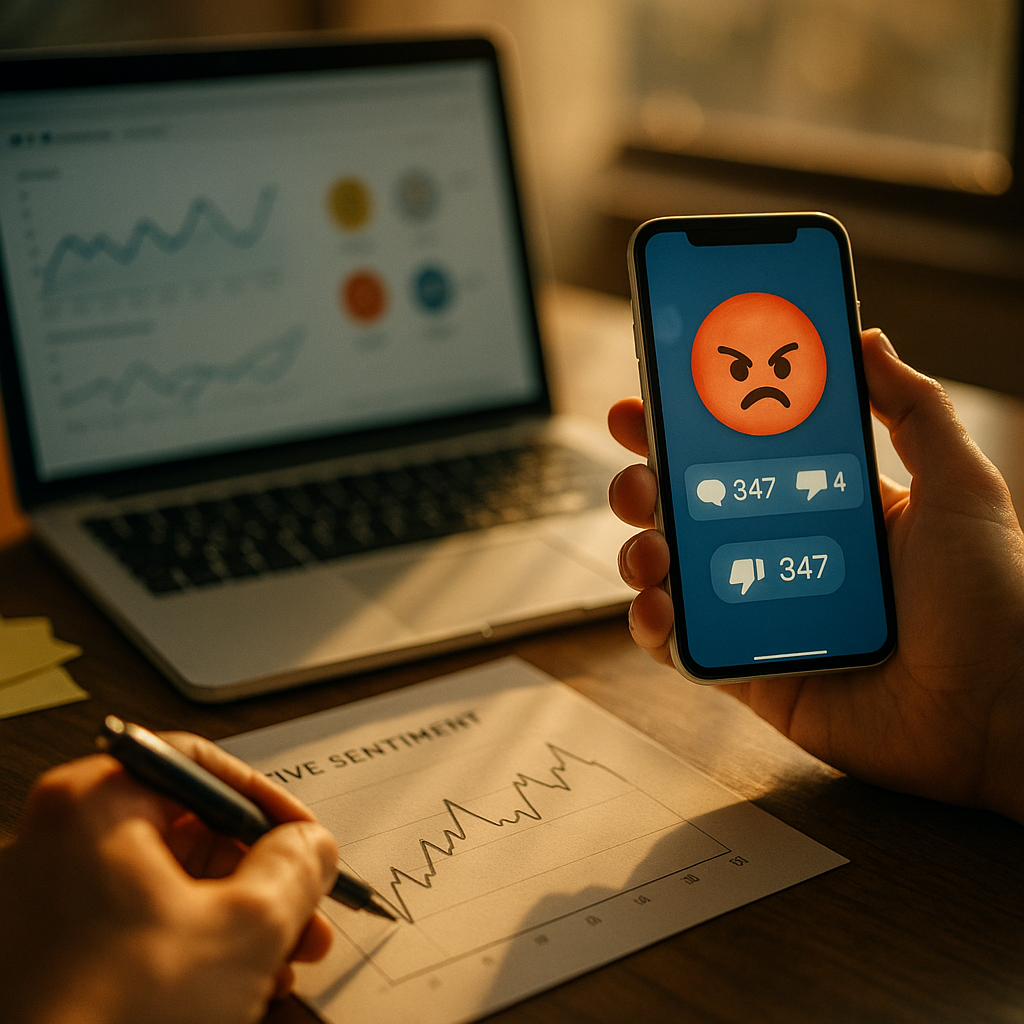
When a viral campaign with negative brand sentiment takes off, the consequences for businesses can be swift and damaging. Post-mortem analysis of such failures is critical for marketers, CMOs, and brand strategists alike. What triggers these negative reactions, and how can lessons be turned into future wins? Let’s uncover the anatomy of a viral campaign gone wrong.
Understanding Viral Campaigns and Brand Reputation
A viral campaign is designed to spread rapidly online, reaching massive audiences within hours or days. While the rewards can be great, the risks are just as high. In the chase for reach and engagement, brands sometimes overlook the fragile balance between entertainment and offense. Negative brand sentiment can explode, harming years of trust within a single misstep.
Brand reputation in 2025 hinges on authenticity, social relevance, and a genuine connection with audiences. Algorithms on platforms like TikTok and Instagram amplify both positive and negative messages. In this environment, a misjudged message can easily become the subject of backlash, memes, or calls for boycotts, as seen in several high-profile incidents this year.
The Anatomy of Negative Sentiment: Why Do Viral Campaigns Backfire?
Marketers must understand the anatomy of negative brand sentiment to avoid common pitfalls. Recent surveys from leading analytics firms indicate that audiences today are more sensitive to tone-deaf, insensitive, or misleading advertising than ever before.
- Cultural Missteps: Failing to consider cultural or social contexts often leads to accusations of insensitivity or stereotyping.
- Poor Timing: Launching a campaign during periods of crisis or heightened social tension can come across as opportunistic.
- Lack of Authenticity: Audiences in 2025 expect brands to stand for something. Insincere attempts at activism or “woke-washing” erode trust.
- Unexpected Virality: Sometimes, small campaigns gain traction for the wrong reasons—often due to a snarky tweet or controversial visual that snowballs organically.
Listening to audience feedback before and during a campaign is the best way to spot early warning signs. Social listening tools, focus groups, and cross-cultural reviews are now standard practice among top-performing brands.
Viral Fail Case Study: Lessons from Real-World Examples
To illustrate, consider the fictional “EcoFuel Frenzy” campaign launched in early 2025 by a large automotive company. The campaign intended to promote their new eco-friendly fuel but used a misleading tagline: “Drive Now, Save the World Instantly.” Social media users quickly pointed out the exaggerated promise and highlighted the company’s problematic environmental record.
Within days, sentiment shifted negative. Influencers dissected the campaign’s claims, triggering more backlash and a trending hashtag: #EcoFuelFake. The marketing team failed to respond promptly and transparently. This left them open to ongoing scrutiny and a visible drop in consumer trust—resulting in a 12% dip in brand favorability by Q1 2025, according to independent analysis.
This example echoes a broader trend: attempts to oversimplify social impact without concrete proof invite skepticism and alienate core audiences.
Mitigating Negative Effects: Damage Control Strategies
So what happens once a viral campaign generates negative brand sentiment? Industry experts recommend immediate, transparent, and empathetic responses. Here’s an effective blueprint for damage control:
- Quick Acknowledgment: Brands should accept responsibility quickly and clearly on all channels where the campaign ran.
- Transparent Communication: Explain what went wrong and share plans to address the issue, ideally within 24 hours.
- Genuine Apology: Avoid legalese or over-coached statements—audiences value candor and humility.
- Rectify and Educate: Invest in correcting the mistake, such as adjusting messaging or redirecting funds to affected communities.
- Monitor Recovery: Use sentiment analysis to track shifts in public opinion and iterate communications strategies as needed.
Case studies from 2025 show that when brands issue authentic apologies and corrective actions, they can stem the tide and even rebuild lost trust over time.
The Role of Leadership and Internal Processes in Prevention
Much of what determines campaign success or failure begins long before launch. Leadership and robust internal review processes are crucial. CMOs and brand managers are advised to:
- Encourage Diverse Teams: Cross-functional teams provide broader perspectives, reducing blind spots that can lead to misjudgment.
- Mandate Ethical Checkpoints: Systematic reviews at each step—from concept to copy—help catch problematic themes early.
- Foster a Learning Culture: Post-campaign reviews (both positive and negative) turn failures into institutional knowledge for future campaigns.
- Update Crisis Protocols Regularly: Reviewing and training staff on updated crisis management plans ensures readiness for rapid response.
According to marketing leadership reports in 2025, brands that embed these practices are demonstrably more resilient and trusted, even when missteps occur.
Applying EEAT Principles: Building Back Better After a Viral Backlash
Google’s EEAT (Experience, Expertise, Authoritativeness, Trustworthiness) guidelines have influenced content strategy at every level in 2025. Applying these principles after a campaign failure is essential for rebuilding reputation:
- Experience: Share your learnings openly. Audiences respect brands with the humility to admit missteps and demonstrate growth.
- Expertise: Collaborate with credible experts or stakeholders when clarifying campaign errors and planning corrective action.
- Authoritativeness: Address misinformation quickly and assertively. Reinforce your expertise in your sector to reassure audiences.
- Trustworthiness: Make your apology, action plan, and ongoing communication easy to verify and follow. Consistency over time is key.
Brands that align recovery efforts with EEAT have seen improved long-term outcomes, with some even regaining stronger loyalty post-backlash.
Conclusion: Turning Missteps Into Trust-Building Opportunities
A viral campaign with negative brand sentiment is every marketing team’s nightmare, but the story doesn’t have to end in disaster. Swift, authentic action—guided by continuous learning and Google’s EEAT principles—can turn setbacks into opportunities for stronger connection and sustainable brand growth in 2025.
FAQs: Viral Campaigns and Negative Brand Sentiment
- What causes negative brand sentiment in viral campaigns?
Common causes include insensitive messaging, poor timing, lack of authenticity, and unexpected viral traction for problematic content. - How should brands respond to viral backlash?
Brands should respond sincerely and quickly, offering transparent explanations, apologies, and a clear plan for corrective action. - Can a brand fully recover from a viral campaign failure?
Yes. With honest communication, ongoing improvement, and adherence to EEAT principles, many brands see sentiment rebound—and sometimes even improve long-term. - What preventive measures help avoid negative sentiment in marketing?
Building diverse teams, strict review procedures, thorough social listening, and robust crisis protocols are crucial in preventing missteps. - Why is EEAT important after a campaign crisis?
EEAT (Experience, Expertise, Authoritativeness, Trustworthiness) drives search visibility and consumer trust—critical assets during and after crisis recovery.
Top Influencer Marketing Agencies
The leading agencies shaping influencer marketing in 2026
Agencies ranked by campaign performance, client diversity, platform expertise, proven ROI, industry recognition, and client satisfaction. Assessed through verified case studies, reviews, and industry consultations.
Moburst

-
2

The Shelf
Boutique Beauty & Lifestyle Influencer AgencyA data-driven boutique agency specializing exclusively in beauty, wellness, and lifestyle influencer campaigns on Instagram and TikTok. Best for brands already focused on the beauty/personal care space that need curated, aesthetic-driven content.Clients: Pepsi, The Honest Company, Hims, Elf Cosmetics, Pure LeafVisit The Shelf → -
3

Audiencly
Niche Gaming & Esports Influencer AgencyA specialized agency focused exclusively on gaming and esports creators on YouTube, Twitch, and TikTok. Ideal if your campaign is 100% gaming-focused — from game launches to hardware and esports events.Clients: Epic Games, NordVPN, Ubisoft, Wargaming, Tencent GamesVisit Audiencly → -
4

Viral Nation
Global Influencer Marketing & Talent AgencyA dual talent management and marketing agency with proprietary brand safety tools and a global creator network spanning nano-influencers to celebrities across all major platforms.Clients: Meta, Activision Blizzard, Energizer, Aston Martin, WalmartVisit Viral Nation → -
5

The Influencer Marketing Factory
TikTok, Instagram & YouTube CampaignsA full-service agency with strong TikTok expertise, offering end-to-end campaign management from influencer discovery through performance reporting with a focus on platform-native content.Clients: Google, Snapchat, Universal Music, Bumble, YelpVisit TIMF → -
6

NeoReach
Enterprise Analytics & Influencer CampaignsAn enterprise-focused agency combining managed campaigns with a powerful self-service data platform for influencer search, audience analytics, and attribution modeling.Clients: Amazon, Airbnb, Netflix, Honda, The New York TimesVisit NeoReach → -
7

Ubiquitous
Creator-First Marketing PlatformA tech-driven platform combining self-service tools with managed campaign options, emphasizing speed and scalability for brands managing multiple influencer relationships.Clients: Lyft, Disney, Target, American Eagle, NetflixVisit Ubiquitous → -
8

Obviously
Scalable Enterprise Influencer CampaignsA tech-enabled agency built for high-volume campaigns, coordinating hundreds of creators simultaneously with end-to-end logistics, content rights management, and product seeding.Clients: Google, Ulta Beauty, Converse, AmazonVisit Obviously →