


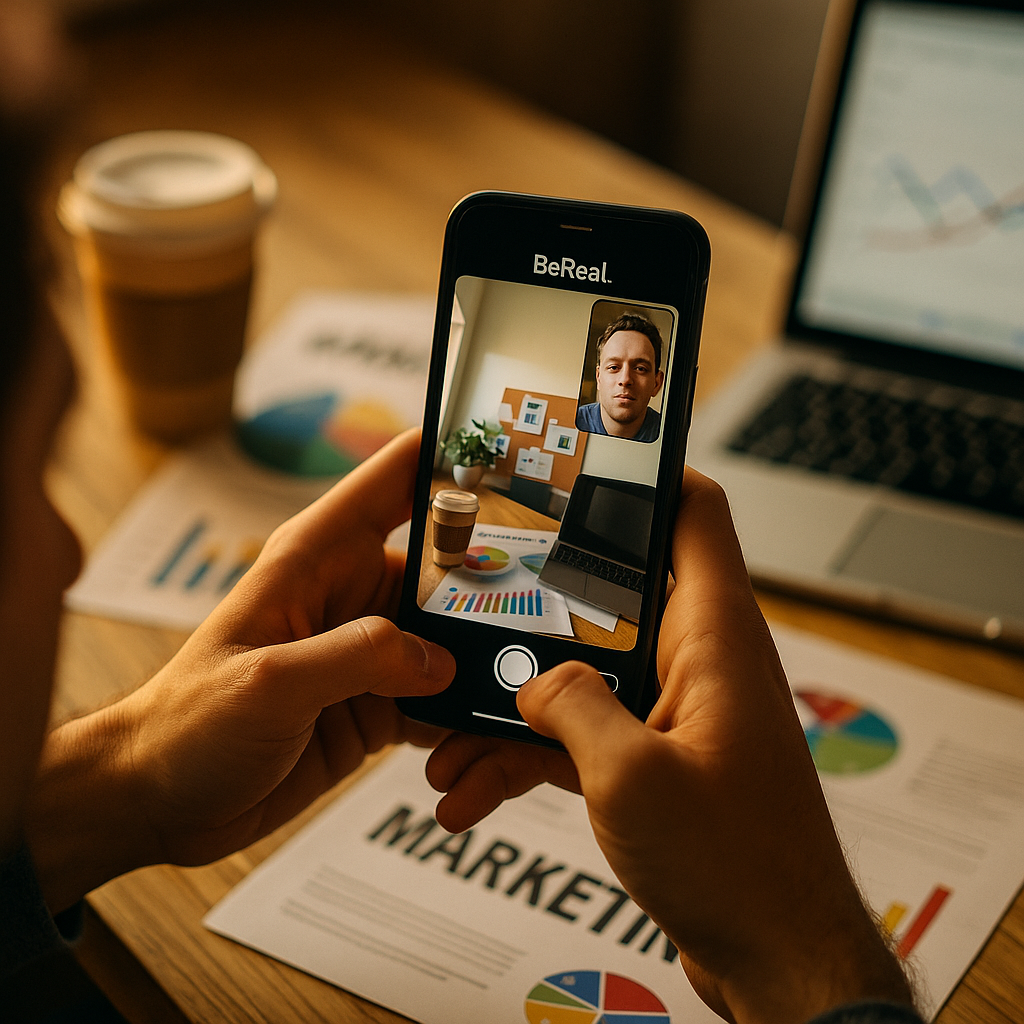
BeReal’s daily active users dropped by more than half from its 2022 peak, yet the brands still running campaigns on it report some of the highest engagement rates per post of any platform they use. That contradiction is the whole story. BeReal for brands in 2026 isn’t about reach anymore. It’s about whether a shrinking, hyper-engaged audience is worth the operational lift.
So can the casual format still convert? The honest answer: sometimes, for the right category, with the right structure. Let’s get into why.
The Audience Shrank, But It Didn’t Disappear
BeReal never recovered the mainstream momentum it had when every college student’s lock screen buzzed at a random moment each day. Voodoo, the app’s current owner, has quietly repositioned it as a smaller, more intentional community product rather than a mass-reach social network. That’s a very different pitch to brands than the one in 2022.
What’s left is a self-selecting group: people who still open the app enjoy the lack of filters, the lack of algorithmic feed games, and the lack of performance pressure. For brands, that’s a niche audience with unusually high trust in what they see, because there’s nothing to optimize around. No trending audio to chase. No thumbnail to A/B test. Just a two-minute window and a dual camera.
The brands still getting value from BeReal aren’t chasing impressions. They’re using it as a credibility signal, proof that a creator partnership wasn’t staged.
Why “Unfiltered” Still Has Commercial Value
Authenticity fatigue is real. Audiences have gotten sharp at spotting a sponsored post dressed up as a candid moment. BeReal’s format, two cameras firing at once, no retakes, no filters, makes staged content almost impossible to pull off convincingly. That constraint is actually the selling point.
Brands in beauty, fashion, and food have used this to their advantage by treating BeReal as a backstage pass rather than a storefront. Show the actual production chaos behind a product launch. Show what a creator’s desk looks like mid-campaign. Show the unglamorous five minutes before a photoshoot. This works because it can’t be faked at scale, and audiences know it.
Compare that to the polish expected on Instagram Reels or TikTok, where pacing and sound briefs are now table stakes for getting any algorithmic lift. BeReal doesn’t reward production value. It rewards timing and nerve.
What “Convert” Actually Means Here
Direct conversion on BeReal is close to zero. There’s no shoppable tag, no swipe-up link, no affiliate dashboard like the ones brands now rely on for TikTok Shop workflows. If your definition of conversion is last-click attribution, BeReal will fail every time.
But if conversion means trust lift, brand recall, or driving a smaller cohort toward a specific action off-platform (a code shared in the caption, a link in a creator’s bio elsewhere), it has a role. Think of it less like a performance channel and more like a qualitative research tool with a built-in audience. Several agencies now treat BeReal placements as the “proof of life” layer in a broader campaign, the unscripted companion piece to a polished TikTok or Reel.
For brands running structured creator drops on the platform, the mechanics matter more than the spontaneity myth suggests. Our BeReal creator drops guide breaks down how to brief creators for a format that technically can’t be briefed in the traditional sense, timing windows, disclosure placement, and what “authentic” actually needs to look like to pass FTC scrutiny.
Who Should Actually Bother in 2026
- Youth-skewing CPG and beauty brands with a Gen Z core audience that still has BeReal installed, even if they open it less often than before.
- Campus and local market activations where BeReal’s original college-centric user base still clusters.
- Brands already running a multi-platform creator program who want a low-cost authenticity layer, not a primary channel.
- Agencies pitching “unfiltered” or ethical marketing narratives, where the format itself supports the message.
If none of those describe your brand, skip it. Don’t force a platform fit that isn’t there just because the format is interesting.
The Compliance Angle Nobody Talks About
Here’s where BeReal gets genuinely tricky for brand teams. Disclosure on a two-minute, no-edit post is harder to manage than on a polished video with a caption you control start to finish. There’s no thumbnail to overlay a disclosure tag onto. There’s no editing window to insert #ad cleanly. Creators are posting in real time, often from their phones, with zero brand oversight at the moment of capture.
That’s a compliance risk, not just a creative quirk. The FTC’s endorsement guidelines still apply regardless of format, and “it posted too fast for us to review” isn’t a defense regulators accept. Brands running BeReal campaigns need pre-agreed disclosure language baked into the creator brief before the notification ever fires, not improvised in the caption after the fact.
This is the same discipline brands have had to build for other fast-moving, low-production formats. The FinTok compliance playbook is a useful reference point even outside finance, because the core problem, disclosure in unscripted content, is identical.
Budget Reality: Where BeReal Sits in the Mix
Nobody should be running a BeReal-first strategy in 2026. It’s a supplementary line item, and a small one. Most brands we’ve seen allocate budget here treat it the way they’d treat an experimental test tier, similar to how teams approach test budgets on smaller platforms like Clapper. You’re not expecting scale. You’re expecting signal.
A reasonable structure: 3 to 5 percent of a quarterly influencer budget, tied to a specific creator relationship you already trust, rather than a broad outreach campaign. This fits neatly into the kind of tiered thinking brands already apply to always-on budget splits, where experimental platforms get a capped, non-negotiable slice rather than open-ended spend.
If BeReal is more than 5 percent of your influencer budget in 2026, you’re either sitting on unusually strong first-party data proving it works, or you’re spending out of nostalgia.
What Measurement Actually Looks Like
Forget impressions as your north star metric here. BeReal doesn’t surface view counts the way TikTok or YouTube Shorts do. Measurement has to shift toward:
- Screenshot and share behavior, tracked manually or via creator self-reporting, since there’s no native analytics dashboard brands can pull from.
- Direct response lift on a specific code or phrase mentioned in the post, measured against a control period.
- Sentiment in comments, which on BeReal tends to be unusually candid compared to more performative platforms.
- Creator-reported engagement, since the app’s closed friend-group structure means a lot of activity happens outside what a brand can see.
This is manual, imperfect work. If your team is used to pulling clean dashboards the way programmatic creator APIs now allow on bigger platforms, BeReal will feel like a step backward. It is. That’s the trade-off for the authenticity premium.
Industry data backs up the caution here. eMarketer’s platform usage tracking has consistently shown BeReal outside the top tier of time-spent apps among younger users, and Statista’s social platform data tells a similar story on daily active user trends. None of that means the platform is dead. It means it’s a specialty tool, not a default channel.
How This Compares to Other “Authentic Format” Bets
BeReal isn’t the only platform betting on unfiltered content as a differentiator. Threads has leaned into reply-based authenticity, with brands rethinking engagement around its reply rate strategy rather than polished broadcast posts. Bluesky has built its pitch around a less algorithmically manipulated feed, which is why brands are approaching it with careful creator vetting rather than mass outreach.
The pattern across all three: smaller, more skeptical audiences who punish anything that feels like a traditional ad read. Brands that have built a muscle for restrained, low-polish creative on one of these platforms will find BeReal easier to execute well. If your team only knows how to brief glossy, algorithm-optimized content, BeReal will expose that gap fast.
The Bottom Line for Brand Teams
BeReal in 2026 isn’t a growth channel. It’s a trust mechanism for brands that already have an engaged, younger audience and a creator roster willing to show the unscripted version of a campaign. Treat it as a small, compliance-tight, trust-building layer inside a broader tiered distribution strategy, not a standalone bet. Keep the budget capped, the disclosure language locked before anyone posts, and your expectations tied to sentiment and lift rather than reach.
Test it for one quarter with a single creator relationship you trust completely. If the sentiment data and direct response numbers justify it, expand slightly. If they don’t, you’ve lost very little and learned something real about your audience’s appetite for unfiltered content.
FAQs
Is BeReal still worth using for brand marketing?
For most brands, no, not as a primary channel. For youth-focused brands with an engaged creator relationship and a tolerance for low-measurement campaigns, it can still deliver trust and sentiment value at low cost.
How do brands measure ROI on BeReal campaigns?
Through indirect signals: sentiment in comments, direct response lift tied to a code or phrase, creator-reported engagement, and screenshot or share behavior. There’s no native analytics dashboard, so most measurement is manual.
What are the compliance risks of running creator campaigns on BeReal?
The real-time, unscripted nature of the format makes disclosure harder to control than on edited content. Brands need pre-agreed disclosure language built into the creator brief before posting, since there’s no editing window to add it afterward. FTC endorsement guidelines still apply fully.
How much budget should brands allocate to BeReal?
Most brands treating it as an experimental layer allocate roughly 3 to 5 percent of their quarterly influencer budget, tied to a trusted creator relationship rather than broad outreach.
Which brand categories see the best results on BeReal?
Youth-skewing beauty, fashion, and CPG brands with a Gen Z core audience, along with campus or local market activations and agencies building ethical or unfiltered marketing narratives.
Visible FAQ
Is BeReal still worth using for brand marketing?
For most brands, no, not as a primary channel. For youth-focused brands with an engaged creator relationship and a tolerance for low-measurement campaigns, it can still deliver trust and sentiment value at low cost.
How do brands measure ROI on BeReal campaigns?
Through indirect signals: sentiment in comments, direct response lift tied to a code or phrase, creator-reported engagement, and screenshot or share behavior. There’s no native analytics dashboard, so most measurement is manual.
What are the compliance risks of running creator campaigns on BeReal?
The real-time, unscripted nature of the format makes disclosure harder to control than on edited content. Brands need pre-agreed disclosure language built into the creator brief before posting, since there’s no editing window to add it afterward. FTC endorsement guidelines still apply fully.
How much budget should brands allocate to BeReal?
Most brands treating it as an experimental layer allocate roughly 3 to 5 percent of their quarterly influencer budget, tied to a trusted creator relationship rather than broad outreach.
Which brand categories see the best results on BeReal?
Youth-skewing beauty, fashion, and CPG brands with a Gen Z core audience, along with campus or local market activations and agencies building ethical or unfiltered marketing narratives.
Top Influencer Marketing Agencies
The leading agencies shaping influencer marketing in 2026
Agencies ranked by campaign performance, client diversity, platform expertise, proven ROI, industry recognition, and client satisfaction. Assessed through verified case studies, reviews, and industry consultations.
Moburst

-
2

The Shelf
Boutique Beauty & Lifestyle Influencer AgencyA data-driven boutique agency specializing exclusively in beauty, wellness, and lifestyle influencer campaigns on Instagram and TikTok. Best for brands already focused on the beauty/personal care space that need curated, aesthetic-driven content.Clients: Pepsi, The Honest Company, Hims, Elf Cosmetics, Pure LeafVisit The Shelf → -
3

Audiencly
Niche Gaming & Esports Influencer AgencyA specialized agency focused exclusively on gaming and esports creators on YouTube, Twitch, and TikTok. Ideal if your campaign is 100% gaming-focused — from game launches to hardware and esports events.Clients: Epic Games, NordVPN, Ubisoft, Wargaming, Tencent GamesVisit Audiencly → -
4

Viral Nation
Global Influencer Marketing & Talent AgencyA dual talent management and marketing agency with proprietary brand safety tools and a global creator network spanning nano-influencers to celebrities across all major platforms.Clients: Meta, Activision Blizzard, Energizer, Aston Martin, WalmartVisit Viral Nation → -
5

The Influencer Marketing Factory
TikTok, Instagram & YouTube CampaignsA full-service agency with strong TikTok expertise, offering end-to-end campaign management from influencer discovery through performance reporting with a focus on platform-native content.Clients: Google, Snapchat, Universal Music, Bumble, YelpVisit TIMF → -
6

NeoReach
Enterprise Analytics & Influencer CampaignsAn enterprise-focused agency combining managed campaigns with a powerful self-service data platform for influencer search, audience analytics, and attribution modeling.Clients: Amazon, Airbnb, Netflix, Honda, The New York TimesVisit NeoReach → -
7

Ubiquitous
Creator-First Marketing PlatformA tech-driven platform combining self-service tools with managed campaign options, emphasizing speed and scalability for brands managing multiple influencer relationships.Clients: Lyft, Disney, Target, American Eagle, NetflixVisit Ubiquitous → -
8

Obviously
Scalable Enterprise Influencer CampaignsA tech-enabled agency built for high-volume campaigns, coordinating hundreds of creators simultaneously with end-to-end logistics, content rights management, and product seeding.Clients: Google, Ulta Beauty, Converse, AmazonVisit Obviously →