


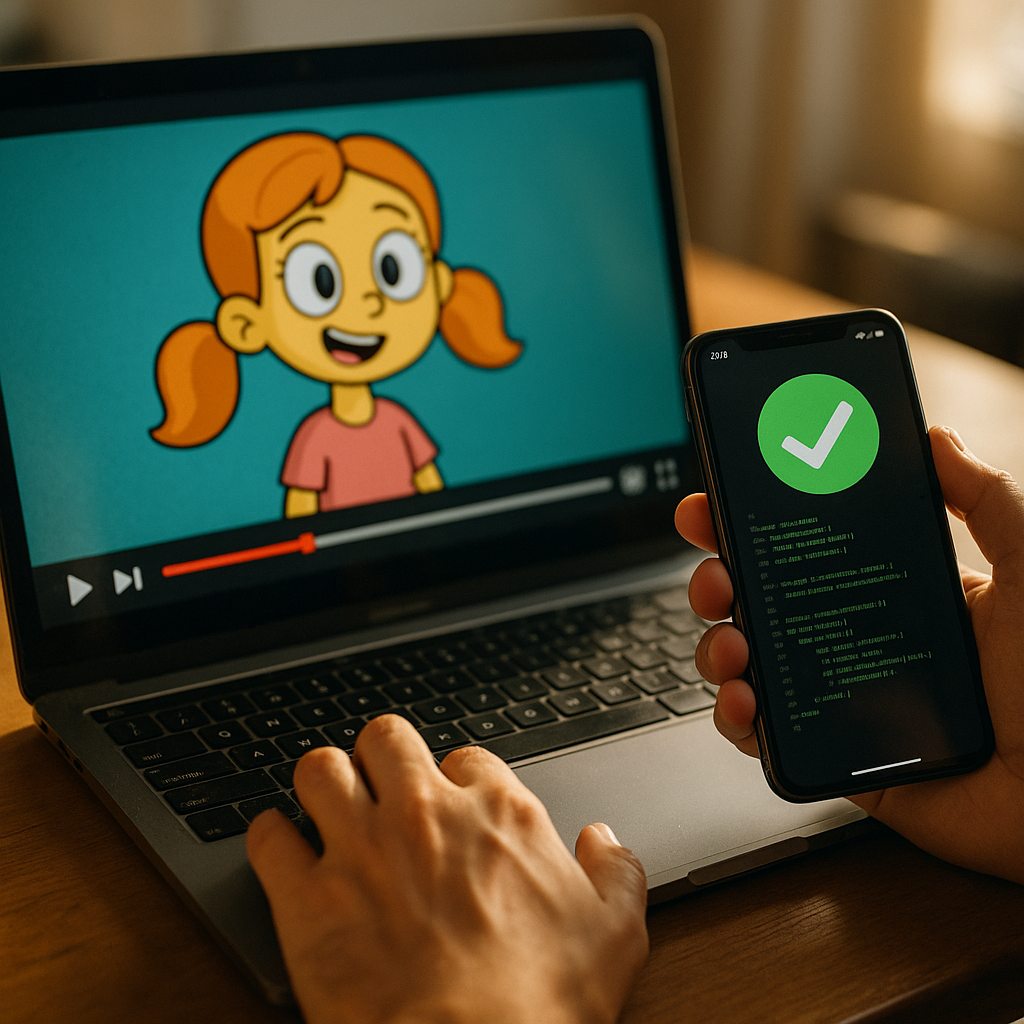
Seventy one percent of consumers say they can’t tell AI generated content from human made content anymore, according to recent Statista consumer surveys on synthetic media trust. Now add cartoon characters into that mix, and the compliance questions multiply fast. Scripting AI generated cartoon UGC isn’t a novelty format anymore, it’s a production line that brands are scaling without a shared rulebook. That gap is where legal exposure lives.
Animated UGC looks harmless. A cartoon mascot can’t be accused of misleading claims the way a human face can, right? Wrong. The FTC doesn’t care whether the mouth saying “clinically proven” belongs to a person or a pixel. The script is still the liability. This piece breaks down how to write, structure, and approve cartoon AI scripts so they scale without triggering takedowns, platform flags, or regulatory letters.
Why Brands Are Rushing Into Animated AI UGC
The economics are brutal in their simplicity. A single animated UGC asset can cost a fraction of a live action shoot, with no location fees, no model releases, no reshoots because a creator showed up with visible blemishes or a messy background. Tools like Runway, Pika, and various text to animation pipelines have made it possible to generate a 15 second cartoon spot in hours instead of weeks.
There’s also a format fatigue problem. Audiences have seen thousands of iPhone selfie UGC videos. A stylized cartoon character delivering the same testimonial hits differently, it reads as fresh, shareable, meme adjacent content rather than another paid ad. Brands running performance campaigns on TikTok and Meta have noticed engagement lifts simply from novelty.
But novelty wears off, and when it does, what’s left is the script. If the underlying claims are shaky, the animation style won’t save you from a platform rejection or a regulator’s attention. For a deeper comparison of when animated clips outperform traditional UGC in whitelisting workflows, see our breakdown on animated clips versus live action whitelisting.
The animation style is cosmetic. The script is the legal document. Treat it that way from the first draft, not after legal flags it.
The Disclosure Problem Nobody’s Solving Well
Here’s the uncomfortable truth: most cartoon UGC scripts skip disclosure entirely, or bury it in a corner of the frame for half a second. That’s not an oversight, it’s often a deliberate choice because disclosure feels like it breaks the “authentic” illusion animation is trying to create.
But the FTC’s endorsement guides apply regardless of whether the endorser is a cartoon fox or a human influencer. If the content implies a genuine recommendation, review, or experience, and it’s paid or sponsored, it needs clear and conspicuous disclosure. Review the FTC’s current endorsement guidance before you greenlight a single script, because enforcement has shifted toward holding brands accountable, not just creators.
The complication with animated content is that viewers don’t always register it as “sponsored” the way they do with a human creator talking into a ring light. A cartoon character feels like brand owned content by default, which actually makes disclosure more important, not less. If your audience assumes it’s an ad already, a disclosure tag reinforces trust. If they assume it’s organic entertainment, skipping disclosure is the riskier bet.
Practical fix: write the disclosure into the script itself, not as a bolt on text overlay. Have the character say “this video is sponsored by [Brand]” in dialogue, or build it into an opening card that’s part of the animation’s visual language. Treat it the same way you’d treat disclosure in anonymous TTS content, where the format tries to feel organic but the legal bar doesn’t move.
Scripting Structure: What Actually Works
Cartoon UGC scripts need a different rhythm than live action. Animation strips away the micro expressions, hesitations, and physical cues that make human testimonials feel credible. You have to engineer credibility through structure instead.
- Open with a relatable problem, not a product shot. Cartoon characters that launch straight into “I love this serum” read as scripted and robotic. Start with a scenario the viewer recognizes, dry skin, a cluttered desk, a bad morning routine.
- Keep claims specific and sourced. “Reduces redness in 2 weeks” needs a citation somewhere in your brief, even if it’s not on screen. Vague superlatives like “the best” or “instantly” are the fastest way to get flagged by platform ad review teams.
- Write dialogue for the ear, not the eye. Animated voiceover tends to be flatter than live performance. Short sentences. Natural pauses. Avoid stacking three claims in one breath, because TTS delivery makes dense claim lists sound like a legal disclaimer being read aloud, which, ironically, undercuts the disclaimer’s credibility.
- Build in a visual disclosure cue. A small persistent badge or watermark indicating “AI generated” or “sponsored content” that stays on screen for the full duration, not just the first two seconds.
Think of the script almost like you’d approach a persona driven recurring character format. Consistency matters. If your cartoon mascot makes a claim in one video and contradicts it in another, that inconsistency becomes evidence in any future dispute.
Claims Review: The Step Teams Keep Skipping
Marketing teams move fast on animated content because it feels low stakes. Nobody signed a model release, nobody’s reputation is on the line if the ad underperforms. That speed is exactly why claims review gets skipped, and it’s exactly where risk accumulates.
Build a simple two gate process before any cartoon script goes to production:
- Claims gate: Every factual statement in the script gets matched to a source document, a clinical study, an internal test result, a third party certification. If there’s no source, the line gets cut or softened to opinion language (“I noticed my skin felt smoother” instead of “clinically proven to reduce wrinkles”).
- Disclosure gate: Legal or compliance confirms the sponsorship disclosure is present, legible, and timed correctly per platform guidelines. Meta, TikTok, and YouTube each have slightly different requirements for how branded content tags need to appear, so check Meta’s branded content policies and TikTok’s ad guidelines directly rather than assuming one size fits all.
This isn’t bureaucracy for its own sake. It’s the difference between a campaign that scales cleanly across fifty variations and one that gets yanked mid flight because a platform’s automated review system caught an unsupported health claim buried in cartoon dialogue. The same discipline applies whether you’re reviewing an ingredient breakdown script or a fully animated mascot spot.
Platform Rules Differ, and That’s a Production Headache
Here’s something teams underestimate: each platform treats AI generated and animated content differently in its ad policies, and those policies keep shifting. TikTok requires labeling for AI generated content that depicts realistic scenes or people, but the rules get murkier for clearly stylized cartoon content that isn’t trying to pass as photorealistic. Meta has pushed toward broader AI disclosure requirements across its ad network, with specific tools for marking synthetic media.
The safest operational approach is to over disclose rather than rely on a platform’s current leniency. Policies tighten over time, rarely loosen. A script that includes clear disclosure language today won’t need retrofitting when enforcement catches up. Check Google’s ad policy support center for YouTube specific AI content labeling requirements if your distribution includes YouTube Shorts or in stream placements.
There’s also a retail media angle worth flagging. If your animated UGC is running inside Amazon, Walmart Connect, or Instacart ad environments, the review process is often stricter and slower than social platforms. Scripts that would sail through a TikTok review can bounce on a retail media platform for softer reasons, like implied comparative claims against competitors. Our guide on retail media ad review covers how to pre-clear video content for those stricter environments, and the same logic applies directly to cartoon UGC destined for product detail pages.
Where Animated UGC Fits in a Broader Content Library
Brands that treat cartoon UGC as a one-off novelty miss the bigger opportunity. These assets are cheap to produce in volume, which means they’re ideal candidates for building out a reusable content library that fuels both organic social and paid whitelisting campaigns. One well-scripted cartoon character can anchor dozens of variations testing different hooks, claims, and CTAs without ever reshooting.
That approach mirrors what we’ve covered in building short form video libraries for paid ROI. The difference with animation is production speed. You can generate claim variant testing at a scale live action simply can’t match, provided your claims review process keeps pace with your creative output. Speed without governance is how brands end up with forty live ad variations that all share the same unsupported claim.
Common Mistakes That Get Scripts Rejected
A few patterns show up repeatedly when cartoon UGC gets flagged or pulled:
- Implied medical or health claims without substantiation. Animated characters discussing supplements, skincare, or wellness products face the same FTC scrutiny as any other format, often more, because the playful tone can mask serious claims.
- Using children’s cartoon aesthetics to market adult products. This invites platform scrutiny around targeting and age appropriate content, even if the product itself is fine for general audiences.
- Omitting “results not typical” language when showing exaggerated outcomes. Animation makes it tempting to show dramatic before and after transformations that would never pass review in live action. The animated medium doesn’t exempt you from substantiation standards.
- Inconsistent disclosure across a character’s video series. If your mascot discloses sponsorship in episode one but not episode five, that inconsistency undermines your entire compliance position.
Think about how this plays out next to adjacent formats. A myth versus fact script succeeds because it corrects misinformation with sourced facts. A cartoon UGC script fails for the opposite reason: it introduces unsourced claims dressed up in a format that feels too light to scrutinize. Don’t let the medium lower your evidentiary bar.
Building an Approval Workflow That Doesn’t Bottleneck Creative
None of this works if compliance review takes three weeks and your creative team is trying to ship ten variations a week. The fix is template-based scripting. Build a master script skeleton with approved claim language, approved disclosure placement, and approved tone, then let creative swap hooks and scenarios within that skeleton. Legal reviews the skeleton once, not every single output.
This is the same operational logic brands use for sound off video scripts and text overlay formats, where structure gets pre-approved and only the surface level creative changes week to week. Apply it to cartoon UGC and you get the production speed AI promises without reintroducing the compliance bottleneck you were trying to escape.
Track performance against a simple dashboard: claim complexity score, disclosure visibility duration, platform rejection rate, and engagement rate. If rejection rates climb as claim complexity rises, that’s your signal to simplify scripts before scaling spend further.
Next Steps for Marketing Teams
Start with one cartoon UGC script, run it through a claims gate and a disclosure gate before it touches a single platform, then use that approved skeleton to scale ten variations instead of writing ten scripts from scratch. Brand safety in animated content isn’t a creative constraint, it’s the operational foundation that lets you scale without a takedown notice undoing a quarter’s worth of media spend.
Frequently Asked Questions
Does AI generated cartoon content need FTC disclosure the same way human UGC does?
Yes. The FTC’s endorsement guidelines apply to the message and the paid relationship behind it, not the medium delivering it. A cartoon character making a sponsored claim needs the same clear and conspicuous disclosure a human creator would use.
How do you fact check claims in an animated script when there’s no real person demonstrating the product?
Every factual statement should be matched to a source document before production, a clinical study, internal test data, or a certification. Treat the cartoon dialogue exactly like a live action testimonial script, because platforms and regulators do.
Which platforms are strictest about AI generated or animated UGC right now?
Policies vary and shift frequently, so always check current guidance directly. Retail media environments like Amazon and Walmart Connect tend to run stricter, slower reviews than social platforms, especially around comparative or performance claims.
Can animated UGC replace live action testimonials entirely?
Not entirely. Animated content works well for scale, testing, and novelty, but live action still builds a different kind of trust through visible human reaction. Most mature programs run both formats in parallel rather than choosing one.
What’s the biggest compliance mistake brands make with cartoon UGC scripts?
Treating the format as inherently low risk because it’s not photorealistic. Unsupported claims and missing disclosures carry the same regulatory exposure regardless of animation style.
Top Influencer Marketing Agencies
The leading agencies shaping influencer marketing in 2026
Agencies ranked by campaign performance, client diversity, platform expertise, proven ROI, industry recognition, and client satisfaction. Assessed through verified case studies, reviews, and industry consultations.
Moburst

-
2

The Shelf
Boutique Beauty & Lifestyle Influencer AgencyA data-driven boutique agency specializing exclusively in beauty, wellness, and lifestyle influencer campaigns on Instagram and TikTok. Best for brands already focused on the beauty/personal care space that need curated, aesthetic-driven content.Clients: Pepsi, The Honest Company, Hims, Elf Cosmetics, Pure LeafVisit The Shelf → -
3

Audiencly
Niche Gaming & Esports Influencer AgencyA specialized agency focused exclusively on gaming and esports creators on YouTube, Twitch, and TikTok. Ideal if your campaign is 100% gaming-focused — from game launches to hardware and esports events.Clients: Epic Games, NordVPN, Ubisoft, Wargaming, Tencent GamesVisit Audiencly → -
4

Viral Nation
Global Influencer Marketing & Talent AgencyA dual talent management and marketing agency with proprietary brand safety tools and a global creator network spanning nano-influencers to celebrities across all major platforms.Clients: Meta, Activision Blizzard, Energizer, Aston Martin, WalmartVisit Viral Nation → -
5

The Influencer Marketing Factory
TikTok, Instagram & YouTube CampaignsA full-service agency with strong TikTok expertise, offering end-to-end campaign management from influencer discovery through performance reporting with a focus on platform-native content.Clients: Google, Snapchat, Universal Music, Bumble, YelpVisit TIMF → -
6

NeoReach
Enterprise Analytics & Influencer CampaignsAn enterprise-focused agency combining managed campaigns with a powerful self-service data platform for influencer search, audience analytics, and attribution modeling.Clients: Amazon, Airbnb, Netflix, Honda, The New York TimesVisit NeoReach → -
7

Ubiquitous
Creator-First Marketing PlatformA tech-driven platform combining self-service tools with managed campaign options, emphasizing speed and scalability for brands managing multiple influencer relationships.Clients: Lyft, Disney, Target, American Eagle, NetflixVisit Ubiquitous → -
8

Obviously
Scalable Enterprise Influencer CampaignsA tech-enabled agency built for high-volume campaigns, coordinating hundreds of creators simultaneously with end-to-end logistics, content rights management, and product seeding.Clients: Google, Ulta Beauty, Converse, AmazonVisit Obviously →