


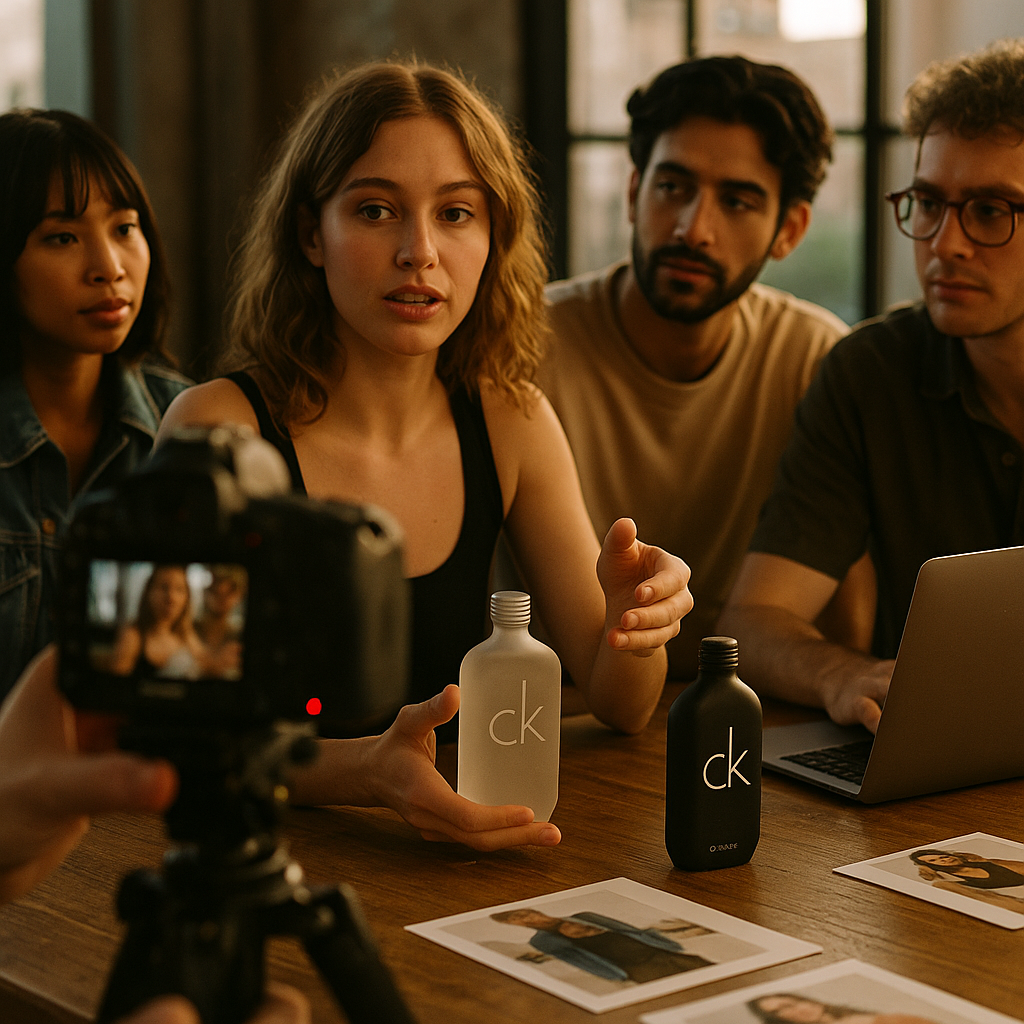
One beauty conglomerate just bet that owning creator relationships beats renting them campaign by campaign. Coty’s decision to expand Calvin Klein’s influencer advocacy unit signals a shift that every beauty brand should be watching: the move from transactional gifting programs toward structured, always-on creator ecosystems. If your influencer strategy still resets every quarter, this is the wake-up call.
What Coty Actually Did
Coty, the parent company behind Calvin Klein fragrance and beauty lines, expanded its dedicated influencer advocacy team tied to the brand. Rather than treating influencer marketing as a media line item managed through rotating agency briefs, the company built out an internal unit responsible for long-term creator relationships, content cadence, and advocacy depth across regions.
This isn’t a rebrand of an existing affiliate program. It’s a structural bet. Coty is putting headcount, budget, and reporting lines behind the idea that creators who stick around for twelve, eighteen, twenty-four months generate more trust equity than a fresh batch of names every launch cycle. The unit reportedly spans multiple markets, coordinating creator tiers from mid-size lifestyle talent down to nano advocates who post organically about fragrance layering and skincare routines.
It’s a logical follow-up to Coty’s broader attribution overhaul. The company has already been rethinking how it measures influencer spend against actual sales rather than vanity engagement, a shift covered in how Coty rebuilt influencer spend around sales attribution. Advocacy expansion and attribution rigor go hand in hand: you can’t justify a standing creator team without proof it moves product.
Brands that treat influencer relationships as vendor transactions get vendor-level output. Brands that build advocacy infrastructure get compounding trust, and compounding trust is what actually drives repeat purchase in beauty.
Why Beauty Brands Keep Getting This Wrong
Most beauty marketers still run influencer programs like flash sales. Launch a new serum, blast fifty seeding boxes, hope three creators post something usable, move on. It works, sort of, for a single spike. It does nothing for retention.
The math is brutal when you actually run it. Sourcing new creators for every campaign means paying discovery costs, negotiation costs, and briefing costs repeatedly, for relationships that dissolve the moment the invoice clears. According to Sprout Social, audiences trust recommendations from creators they recognize and follow consistently far more than one-off sponsored posts from unfamiliar faces. Familiarity is the whole game in beauty, where purchase decisions hinge on perceived credibility about skin type, tone match, and personal results.
Fragrance and skincare in particular suffer from short-term thinking. A single TikTok unboxing rarely proves a product works over time. Advocacy units solve this by giving creators multiple touchpoints across a product’s lifecycle: launch, restock, seasonal tie-in, ingredient education. That’s a narrative arc, not a one-off ad.
The Operational Shift: From Campaigns to Standing Teams
Building an advocacy unit is not the same as hiring more community managers. It requires a different org chart. Coty’s approach reportedly separates advocacy from paid media buying entirely, giving the team its own budget, its own creator CRM, and its own success metrics tied to retention and repeat engagement rather than single-post reach.
- Dedicated relationship owners: Named team members who manage the same 30-50 creators over time, not a rotating account manager pool.
- Tiered creator ladders: Clear paths from nano to mid-tier to ambassador, with escalating compensation and creative freedom.
- Separate budget lines: Advocacy spend isolated from campaign bursts so it survives quarterly budget cuts.
- Content rights baked in upfront: Usage terms negotiated once at onboarding, not renegotiated per post.
This structure mirrors what other categories have already proven out. Molson Coors saw engagement quadruple after centralizing its creator relationships instead of managing them through fragmented agency briefs, a pattern documented in how Molson Coors quadrupled engagement by centralizing creators. Beauty brands chasing similar gains should expect a similar org redesign, not just a bigger budget.
Where the Risk Actually Lives
Standing advocacy teams introduce compliance exposure that campaign-based models sidestep by virtue of being short-lived. When a creator posts about your brand for two years straight, disclosure fatigue sets in. Audiences start ignoring the #ad tag, and regulators notice inconsistency faster in long-running relationships than in single sponsored posts.
The FTC has been explicit that ongoing brand relationships require ongoing disclosure, not a one-time acknowledgment buried in an early post. Beauty brands running advocacy units need documented disclosure audits on a recurring schedule, not an annual check-the-box exercise. Build this into the unit’s operating rhythm from day one, because retrofitting compliance into an established creator roster is far more painful than baking it in at launch.
There’s also a brand safety dimension unique to beauty and personal care. Advocates who stay affiliated for years accumulate personal history, controversies, pivots, unrelated brand deals that might clash with your positioning. A rotating campaign roster limits exposure to any single creator’s long-term trajectory. A standing advocacy unit does not. That trade-off is worth naming explicitly in any internal business case.
How to Measure Advocacy Without Fooling Yourself
Engagement rate is a weak proxy for advocacy health. It tells you whether a post performed, not whether the relationship is compounding. Brands building advocacy infrastructure need a different scorecard.
- Creator retention rate: What percentage of your roster is still active after six, twelve, eighteen months?
- Content-to-conversion lag: How long does it take a piece of advocate content to influence a purchase, and does that window shrink over time as trust builds?
- Share of voice among repeat creators: Are your longest-tenured advocates generating a growing or shrinking share of total influencer-driven revenue?
- Cost per retained relationship: Total spend divided by creators still active past the twelve-month mark, a number that should trend down as the program matures.
Platforms like HubSpot and dedicated influencer CRM tools now support this kind of longitudinal tracking, tying creator IDs to attributed revenue across multiple campaigns rather than resetting the data with each new brief. If your current tech stack can’t answer “which creators drove repeat customers, not just first purchases,” that’s the gap to close before scaling an advocacy unit.
Estee Lauder’s parallel bet on AI-driven creator operations offers a useful comparison point here, particularly in how the company is rewiring internal workflows to support always-on creator management rather than campaign sprints, as detailed in Estee Lauder’s AI everywhere strategy. Two of the largest beauty players moving in the same direction within the same cycle is not a coincidence. It’s a signal.
Should Smaller Beauty Brands Copy This?
Not literally, and not immediately. Coty has the balance sheet to run a dedicated internal team with headcount that most indie and mid-tier beauty brands simply cannot justify. But the underlying principle scales down fine: pick fewer creators, commit longer, and stop treating every launch as a fresh discovery exercise.
A brand with a $200,000 annual influencer budget doesn’t need an advocacy department. It needs to stop spreading that budget across sixty one-off gifting sends and instead concentrate it on twelve to fifteen creators retained for a full year, with clear content cadence expectations and rights secured upfront. The mechanics of Coty’s model, tiered relationships, dedicated ownership, retention-based metrics, transfer down in principle even when the org chart doesn’t.
Smaller teams can also borrow structural lessons from other categories that solved similar scaling problems without enterprise headcount. Liquid Death’s micro-creator UGC model shows how a lean team can turn small creator relationships into trackable revenue without a standalone advocacy department, using tight tracking rather than headcount to scale trust.
What This Means for the Next Budget Cycle
If you’re planning next year’s influencer spend right now, the Coty move is a prompt to ask a harder question than “which creators should we book.” Ask instead: which creators do we want to still be working with in two years, and what would it take to keep them? That reframes budget conversations from campaign math to retention math, and retention math is what actually protects margin as acquisition costs keep climbing across every platform.
According to eMarketer, influencer marketing spend in beauty and personal care continues to outpace overall digital ad growth, which means the category is getting more crowded and more expensive to enter fresh each cycle. Standing relationships are becoming a genuine cost advantage, not just a brand-building nicety.
Takeaway
Coty’s expanded Calvin Klein unit is a signal, not an anomaly: beauty brands that convert influencer spend into standing relationships will out-retain and out-convert those still running campaign-by-campaign gifting. Audit your creator roster this quarter, identify the ten to twenty who’ve delivered consistent results, and build a retention plan around them before your competitors lock them into exclusive advocacy deals first.
FAQs
What is an influencer advocacy unit in beauty marketing?
It’s a dedicated internal team responsible for managing long-term creator relationships rather than one-off campaign bookings, typically owning budget, creator CRM, and retention metrics separately from standard paid media.
Why did Coty expand Calvin Klein’s advocacy program instead of running more campaigns?
Standing creator relationships build cumulative audience trust that single sponsored posts can’t replicate, and they reduce the repeated discovery and onboarding costs that come with constantly sourcing new talent for each launch.
How do smaller beauty brands apply this without a dedicated team?
Concentrate budget on a smaller group of retained creators instead of spreading it across many one-off sends, secure content rights upfront, and track retention rate alongside engagement to measure whether the relationships are compounding.
What compliance risks come with long-term creator advocacy?
Disclosure fatigue is the main risk, since ongoing brand relationships require ongoing FTC-compliant disclosure rather than a single early acknowledgment, and brands should audit disclosures on a recurring schedule rather than treating it as a one-time setup task.
What metrics matter most for measuring influencer advocacy success?
Creator retention rate, content-to-conversion lag, share of voice among repeat creators, and cost per retained relationship matter more than raw engagement rate, since they measure whether trust is compounding over time rather than whether a single post performed well.
Top Influencer Marketing Agencies
The leading agencies shaping influencer marketing in 2026
Agencies ranked by campaign performance, client diversity, platform expertise, proven ROI, industry recognition, and client satisfaction. Assessed through verified case studies, reviews, and industry consultations.
Moburst

-
2

The Shelf
Boutique Beauty & Lifestyle Influencer AgencyA data-driven boutique agency specializing exclusively in beauty, wellness, and lifestyle influencer campaigns on Instagram and TikTok. Best for brands already focused on the beauty/personal care space that need curated, aesthetic-driven content.Clients: Pepsi, The Honest Company, Hims, Elf Cosmetics, Pure LeafVisit The Shelf → -
3

Audiencly
Niche Gaming & Esports Influencer AgencyA specialized agency focused exclusively on gaming and esports creators on YouTube, Twitch, and TikTok. Ideal if your campaign is 100% gaming-focused — from game launches to hardware and esports events.Clients: Epic Games, NordVPN, Ubisoft, Wargaming, Tencent GamesVisit Audiencly → -
4

Viral Nation
Global Influencer Marketing & Talent AgencyA dual talent management and marketing agency with proprietary brand safety tools and a global creator network spanning nano-influencers to celebrities across all major platforms.Clients: Meta, Activision Blizzard, Energizer, Aston Martin, WalmartVisit Viral Nation → -
5

The Influencer Marketing Factory
TikTok, Instagram & YouTube CampaignsA full-service agency with strong TikTok expertise, offering end-to-end campaign management from influencer discovery through performance reporting with a focus on platform-native content.Clients: Google, Snapchat, Universal Music, Bumble, YelpVisit TIMF → -
6

NeoReach
Enterprise Analytics & Influencer CampaignsAn enterprise-focused agency combining managed campaigns with a powerful self-service data platform for influencer search, audience analytics, and attribution modeling.Clients: Amazon, Airbnb, Netflix, Honda, The New York TimesVisit NeoReach → -
7

Ubiquitous
Creator-First Marketing PlatformA tech-driven platform combining self-service tools with managed campaign options, emphasizing speed and scalability for brands managing multiple influencer relationships.Clients: Lyft, Disney, Target, American Eagle, NetflixVisit Ubiquitous → -
8

Obviously
Scalable Enterprise Influencer CampaignsA tech-enabled agency built for high-volume campaigns, coordinating hundreds of creators simultaneously with end-to-end logistics, content rights management, and product seeding.Clients: Google, Ulta Beauty, Converse, AmazonVisit Obviously →