


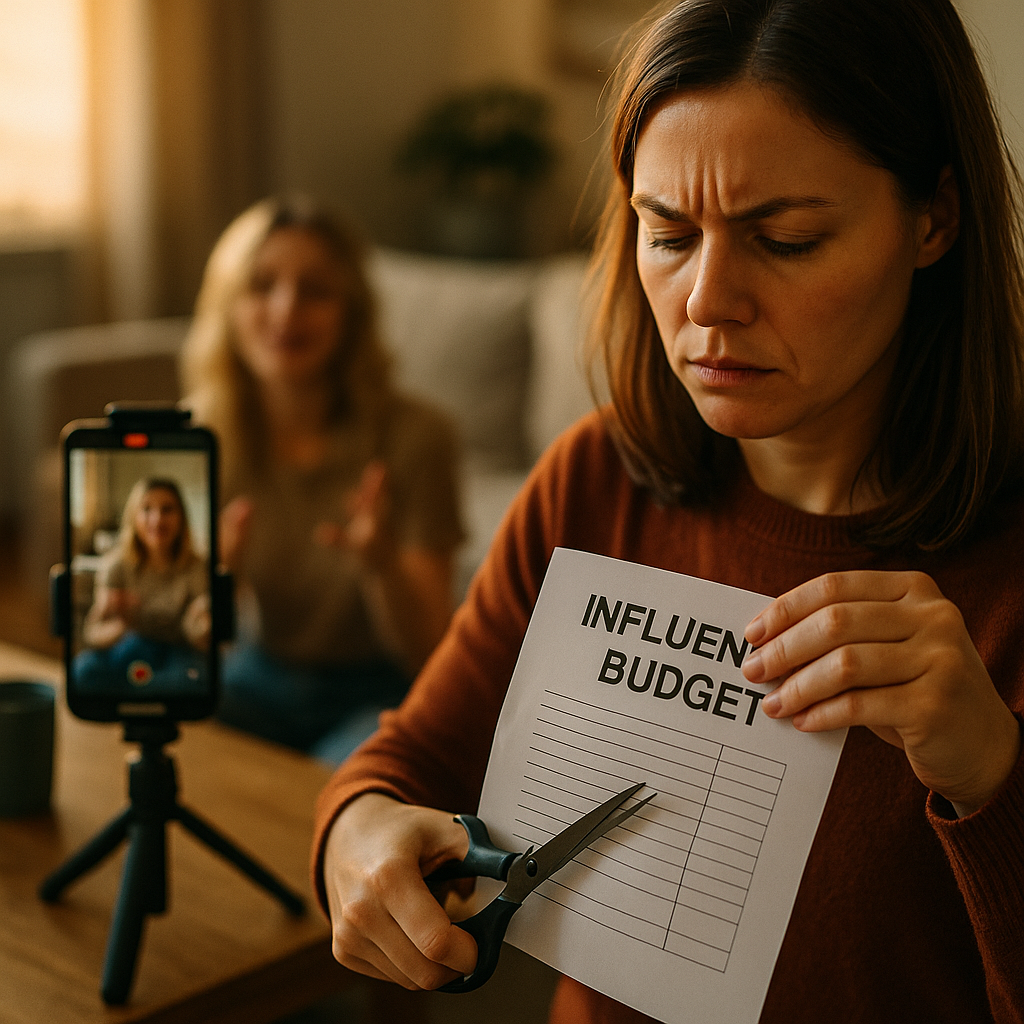
Zero. That’s what Go Zero, the reusable bottle brand, now spends on influencer marketing. Not “reduced.” Not “reallocated to nano-creators.” Zero. In a category that spent an estimated $34.6 billion globally last year, one brand just walked away from the table entirely, and the reasoning behind it should worry every CMO still buying reach by the pound.
This isn’t a story about influencer marketing dying. It’s a story about brands finally demanding proof that it works, and discovering, in some cases, that it doesn’t.
The Vanity Metric Problem, Quantified
For years, influencer budgets got justified with a familiar trio: impressions, reach, engagement rate. Numbers that look great in a slide deck and mean almost nothing on a P&L. Go Zero’s internal audit reportedly found that a majority of its influencer spend was going toward creators whose audiences overlapped heavily with existing customers, meaning the brand was paying to reach people who already knew about it.
That’s not growth marketing. That’s expensive preaching to the choir.
When a brand can’t draw a straight line from creator spend to incremental revenue, the budget isn’t a growth lever anymore. It’s a sunk cost dressed up as strategy.
The broader data backs up the skepticism. Marketing teams have struggled for years to prove attribution in influencer campaigns, and that gap hasn’t closed as fast as spend has grown. Brands have been buying vanity at scale, and only recently started asking why.
Why Now? The Convergence Brands Can’t Ignore
Three forces collided to make this the moment brands started cutting cords instead of contracts.
First, platform shifts fragmented the old playbook. As top creators shift to Instagram and force brands to rethink budgets, the safe, proven channel mix brands relied on for half a decade stopped being safe or proven. Every platform pivot resets the ROI math, and resetting math is exactly when finance teams start asking uncomfortable questions.
Second, discovery itself changed. Consumers increasingly find products through social commerce pathways that are now the default channel, not through a single influencer post. When TikTok Shop and similar mechanisms drive purchase behavior more directly than a sponsored story, the influencer becomes one node in a longer chain, not the whole funnel. That changes what you should even be measuring.
Third, and maybe most important, agencies started building the infrastructure to actually measure this stuff. The rise of dedicated data analysts at influencer agencies means brands finally have people whose job is to poke holes in campaign reporting instead of rubber-stamping it. Once you have someone internally asking “what did this actually convert?”, vanity spend gets exposed fast.
Go Zero didn’t stumble into this decision. It’s the logical endpoint of better measurement meeting mediocre results.
What the Data Actually Showed
Without full visibility into Go Zero’s internal dashboards, the pattern still matches what’s showing up industry-wide. Recent analysis of 4 million influencer collaborations exposed tool cracks in how brands track and attribute performance, revealing that a huge share of “successful” campaigns were measured using engagement metrics with no tie to sales, retention, or even brand lift.
Here’s the uncomfortable truth most brands don’t say out loud: engagement rate tells you a creator’s audience is loyal to the creator. It tells you almost nothing about whether that audience will buy your product.
- High engagement, low conversion is common among lifestyle and entertainment creators whose audiences follow for personality, not purchase intent.
- Follower overlap with existing customers wastes spend on audiences already converted.
- Platforms optimized for reach-based discovery often underperform against conversion-focused platforms built for performance, according to comparative platform data circulating among performance marketers.
Go Zero reportedly ran the numbers on cost-per-acquisition from influencer-driven traffic versus its paid social and retail media spend. Influencer CPA lost. Not by a little.
Is Killing the Budget Overkill?
Fair question. Zeroing out an entire channel is a blunt instrument, and most brands don’t need to go that far. Influencer marketing still works, when it’s structured around performance rather than exposure. The latest eMarketer forecasts still show creator-driven commerce growing, and Statista’s consumer research continues to show trust in creator recommendations outpacing trust in traditional advertising for younger demographics.
So why would a brand cut everything instead of optimizing?
Because optimization takes operational maturity most mid-size brands don’t have. Testing creator tiers, running incrementality studies, building attribution models that account for multi-touch influence, that’s resource-intensive work. It requires the kind of rigor described in pieces like testing frequency as the new KPI agencies can’t ignore. If a brand doesn’t have the team or tooling to do that well, cutting the whole channel and reallocating to something measurable can be the more rational, if more drastic, move.
Killing a budget entirely is rarely the “right” answer. It’s often the honest one, for brands that lack the infrastructure to fix the channel instead.
Go Zero apparently made a bet: better ROI from doubling down on paid search, retail media, and owned community than from trying to fix an influencer program riddled with attribution blind spots. That’s not an anti-influencer stance. It’s an anti-guesswork stance.
The Compliance Angle Nobody’s Talking About
There’s a second, quieter reason brands are pulling back: risk. FTC disclosure enforcement has tightened, and the FTC’s endorsement guidelines put real liability on brands, not just creators, when disclosures go missing. Add in region-specific data and advertising rules, and the operational overhead of running a compliant influencer program keeps climbing.
Brands managing multi-market campaigns are increasingly dealing with the same fragmentation described in sovereign AI rules splitting martech stacks by region. Global creator programs now require region-by-region compliance review, adding cost and legal exposure that rarely shows up in the original campaign budget. For a brand with thin margins on a $30-$50 reusable bottle, that overhead adds up fast relative to return.
Contrast that with the near-zero compliance burden of paid search or retail media, where disclosure isn’t even a variable. Suddenly the “safe” channel looks a lot more attractive on a spreadsheet.
What Smarter Brands Are Doing Instead
Most brands aren’t following Go Zero to zero. They’re doing something more surgical: consolidating vendors, demanding incrementality data, and shifting budget toward creators and platforms that can prove commerce impact, not just reach.
That shift shows up in the platform market itself. The $197B influencer platform market forecast increasingly favors tools built around payments, performance tracking, and commerce integration over pure discovery. Buyers are voting with their contracts, and vendor consolidation is reshaping how brands buy influencer services altogether.
Some practical moves brands are making right now:
- Shifting budget toward platforms proven to drive direct sales, like TikTok Shop, where beauty sales surges signal a discovery shift already underway.
- Prioritizing engagement quality over follower count, following data showing TikTok’s beauty algorithm favors engagement over followers.
- Building in-house measurement capability instead of relying solely on platform-reported metrics, addressing the marketing analytics talent shortage directly.
- Formalizing influencer program ownership, a trend reflected in the influencer manager role becoming a formal agency function.
Tools like Sprout Social’s analytics suite and platform-native reporting through TikTok’s business tools are increasingly used specifically to build the kind of attribution case Go Zero couldn’t make internally. The lesson isn’t “cut influencer spend.” It’s “cut spend you can’t defend in a budget review.”
Frequently Asked Questions
Why did Go Zero cut its entire influencer marketing budget?
Go Zero reportedly found that a large share of its influencer spend was reaching audiences that overlapped with existing customers, producing weak incremental return and a higher cost-per-acquisition than paid search or retail media.
Does this mean influencer marketing doesn’t work anymore?
No. Influencer marketing still drives measurable results for brands with strong attribution systems and clear performance benchmarks. The issue is spend justified by reach and engagement alone, without ties to sales or incrementality.
What is “vanity” influencer spend?
Vanity spend refers to influencer budget allocated based on surface-level metrics, like impressions, follower counts, or engagement rate, without evidence those metrics translate into sales, retention, or measurable brand lift.
Should other brands cut their influencer budgets too?
Not necessarily. Most brands are better served by tightening measurement and shifting budget toward conversion-focused platforms and creators, rather than eliminating the channel entirely. Full cuts tend to make sense only when a brand lacks the infrastructure to fix attribution gaps.
What should brands measure instead of engagement rate?
Cost-per-acquisition, incremental sales lift, audience overlap with existing customers, and direct conversion tracking through platforms like TikTok Shop offer far stronger signals of real performance than engagement or reach alone.
Go Zero’s decision isn’t a trend to copy blindly. It’s a warning to audit your own influencer spend before someone in finance does it for you.
Frequently Asked Questions
Why did Go Zero cut its entire influencer marketing budget?
Go Zero reportedly found that a large share of its influencer spend was reaching audiences that overlapped with existing customers, producing weak incremental return and a higher cost-per-acquisition than paid search or retail media.
Does this mean influencer marketing doesn’t work anymore?
No. Influencer marketing still drives measurable results for brands with strong attribution systems and clear performance benchmarks. The issue is spend justified by reach and engagement alone, without ties to sales or incrementality.
What is “vanity” influencer spend?
Vanity spend refers to influencer budget allocated based on surface-level metrics, like impressions, follower counts, or engagement rate, without evidence those metrics translate into sales, retention, or measurable brand lift.
Should other brands cut their influencer budgets too?
Not necessarily. Most brands are better served by tightening measurement and shifting budget toward conversion-focused platforms and creators, rather than eliminating the channel entirely. Full cuts tend to make sense only when a brand lacks the infrastructure to fix attribution gaps.
What should brands measure instead of engagement rate?
Cost-per-acquisition, incremental sales lift, audience overlap with existing customers, and direct conversion tracking through platforms like TikTok Shop offer far stronger signals of real performance than engagement or reach alone.
Top Influencer Marketing Agencies
The leading agencies shaping influencer marketing in 2026
Agencies ranked by campaign performance, client diversity, platform expertise, proven ROI, industry recognition, and client satisfaction. Assessed through verified case studies, reviews, and industry consultations.
Moburst

-
2

The Shelf
Boutique Beauty & Lifestyle Influencer AgencyA data-driven boutique agency specializing exclusively in beauty, wellness, and lifestyle influencer campaigns on Instagram and TikTok. Best for brands already focused on the beauty/personal care space that need curated, aesthetic-driven content.Clients: Pepsi, The Honest Company, Hims, Elf Cosmetics, Pure LeafVisit The Shelf → -
3

Audiencly
Niche Gaming & Esports Influencer AgencyA specialized agency focused exclusively on gaming and esports creators on YouTube, Twitch, and TikTok. Ideal if your campaign is 100% gaming-focused — from game launches to hardware and esports events.Clients: Epic Games, NordVPN, Ubisoft, Wargaming, Tencent GamesVisit Audiencly → -
4

Viral Nation
Global Influencer Marketing & Talent AgencyA dual talent management and marketing agency with proprietary brand safety tools and a global creator network spanning nano-influencers to celebrities across all major platforms.Clients: Meta, Activision Blizzard, Energizer, Aston Martin, WalmartVisit Viral Nation → -
5

The Influencer Marketing Factory
TikTok, Instagram & YouTube CampaignsA full-service agency with strong TikTok expertise, offering end-to-end campaign management from influencer discovery through performance reporting with a focus on platform-native content.Clients: Google, Snapchat, Universal Music, Bumble, YelpVisit TIMF → -
6

NeoReach
Enterprise Analytics & Influencer CampaignsAn enterprise-focused agency combining managed campaigns with a powerful self-service data platform for influencer search, audience analytics, and attribution modeling.Clients: Amazon, Airbnb, Netflix, Honda, The New York TimesVisit NeoReach → -
7

Ubiquitous
Creator-First Marketing PlatformA tech-driven platform combining self-service tools with managed campaign options, emphasizing speed and scalability for brands managing multiple influencer relationships.Clients: Lyft, Disney, Target, American Eagle, NetflixVisit Ubiquitous → -
8

Obviously
Scalable Enterprise Influencer CampaignsA tech-enabled agency built for high-volume campaigns, coordinating hundreds of creators simultaneously with end-to-end logistics, content rights management, and product seeding.Clients: Google, Ulta Beauty, Converse, AmazonVisit Obviously →