


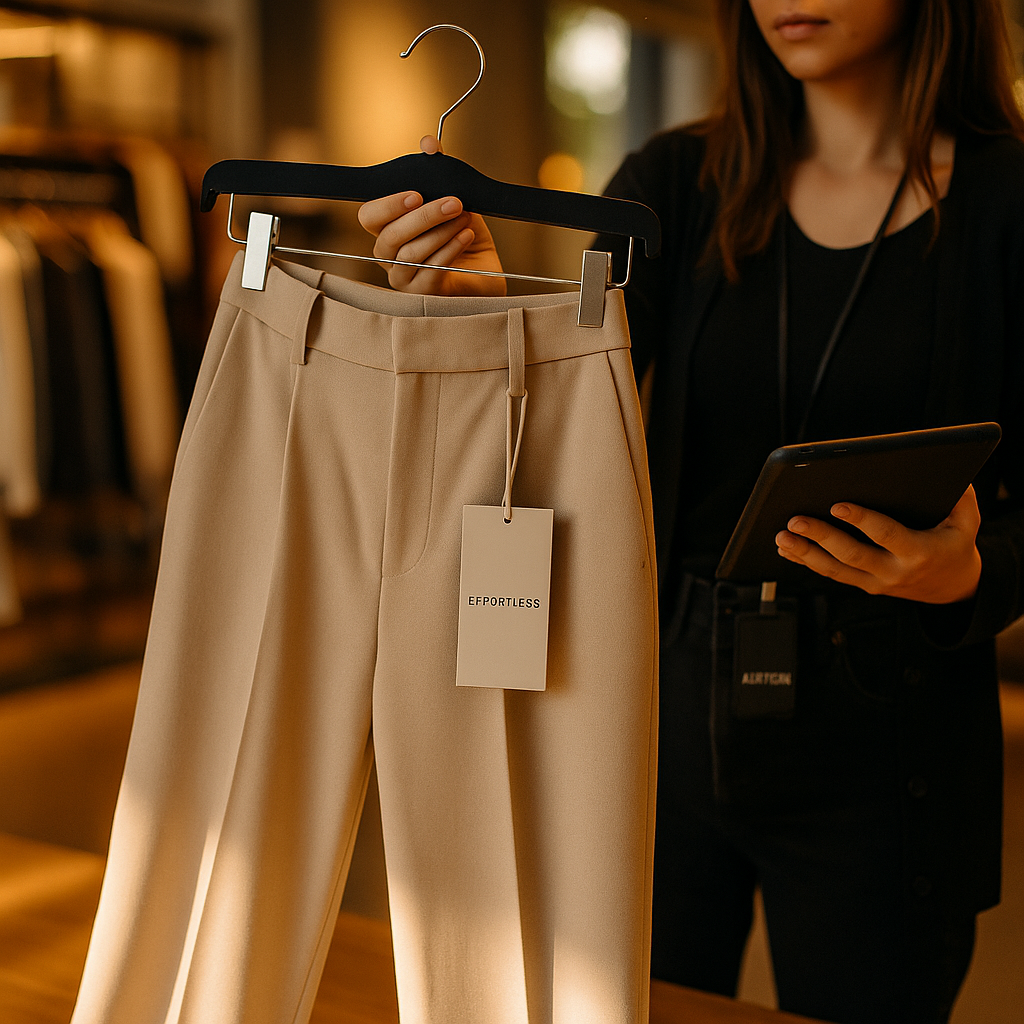
A pair of pants sold out four times in one quarter, and Aritzia never ran a single discount code. While most apparel brands chase Black Friday margins into the ground, Aritzia’s Effortless Pant became a full-price phenomenon by building demand through a structured creator ladder, not a sale banner. For anyone managing a brand’s influencer strategy, that’s the case study worth studying this year.
The Problem With Discounting Your Way to Sold-Out
Selling out is easy if you’re willing to torch margin to get there. Cut the price 30%, run paid social against it, watch the inventory move. That’s not a growth strategy, though. That’s a margin donation dressed up as a marketing win.
Aritzia took the harder, smarter road. The Effortless Pant, part of its Contour and Super Puff-adjacent core basics lineup, moved through nano, micro, mid-tier, and macro creators in sequence, each tier doing a distinct job in the funnel. No discount ever entered the equation. The pants sold at full price, restocked, sold out again, and generated the kind of organic search demand that makes a paid media team’s job easier for months.
Aritzia’s Effortless Pant sold out repeatedly at full price by treating creator tiers as a sequenced demand engine, not a scattershot gifting program.
This matters because apparel margins are thin and getting thinner. According to eMarketer, promotional cadence in US retail has become nearly constant, training consumers to wait for markdowns. Brands that can generate genuine scarcity-driven demand without a discount code are the ones protecting long-term brand equity.
What Makes a Nano-to-Macro Ladder Different From Standard Seeding
Most brands treat creator seeding as a single tier: send product to a batch of creators, hope for content, repeat. Aritzia’s approach was sequential and role-specific. Each rung of the ladder had a job:
- Nano-creators (1K-15K followers): Authentic first-wear content, unboxing, “does this run true to size” honesty that built trust signals before any paid spend touched the product.
- Micro-creators (15K-100K): Styling content, outfit repeats across multiple videos, positioning the pant as a wardrobe staple rather than a single-use trend piece.
- Mid-tier creators (100K-500K): Comparison and “why everyone’s wearing this” trend-framing content that pulled in viewers who’d already seen the pant mentioned elsewhere.
- Macro and mid-level talent (500K+): Validation-stage content once organic search volume and TikTok Shop mentions were already climbing, essentially confirming a trend already in motion rather than manufacturing one.
The sequencing is the whole point. Hitting macro first without the nano groundwork would have looked like paid promotion, because it would have been paid promotion with no grassroots backing. Consumers, especially the Gen Z and young millennial shoppers who make up Aritzia’s core base, can smell that from a scroll away.
This ladder structure isn’t unique to fashion. Vuori used a nearly identical nano-to-macro ladder to break into menswear, proving the model translates across categories when the sequencing is disciplined.
Why Nano-Creators Did the Heaviest Lifting
Here’s the counterintuitive part: the nano tier, the one with the smallest individual reach, generated the most durable trust. Aritzia reportedly seeded the Effortless Pant to several hundred nano-creators before any mid-tier or macro talent touched it. Why start small?
Because nano audiences convert on relationship, not reach. A creator with 8,000 followers who’s replied to every comment for two years has more purchase influence per follower than a macro creator with a million passive scrollers. That’s not a hunch, it’s a pattern repeated across categories. Liquid Death built its entire brand foundation on nano-creators, and Ryobi’s power tools division found the same channel outperformed its paid media stack, as detailed in Ryobi’s nano-creator seeding case study.
Nano-tier content also gave Aritzia’s team something priceless: unscripted product feedback at scale, before the pant hit wider visibility. Sizing quirks, fabric feel, styling limitations, all surfaced in comment sections weeks before any brand press release. That’s risk mitigation baked into the marketing motion itself.
The Micro-to-Mid Handoff: Where Trend Signals Get Manufactured
Once nano content established baseline trust, Aritzia’s team (or its agency partners, since Aritzia has historically leaned on external influencer marketing support for tiered campaigns) moved into micro and mid-tier activation. This stage is where “trend” starts to look real to an algorithm and to a consumer scrolling For You.
Micro-creators styled the pant into full outfit rotations. Mid-tier creators, often fashion-adjacent accounts with engaged niche audiences, framed it comparatively against other viral pants (think Abercrombie’s curve-love leggings or Zara’s TikTok-viral trousers). This comparison framing is a known conversion lever. Shoppers researching “best work pants” or “Aritzia dupe vs original” land directly in a decision-ready mindset, and organic search interest for the Effortless Pant spiked in step with this tier’s activity.
This is also where TikTok Shop and shoppable tagging entered the mix. Aritzia doesn’t run as aggressively on TikTok Shop as some DTC challengers, but creator content consistently linked back to product pages, and mid-tier creators’ “outfit of the day” formats drove meaningful click-through, based on the visible engagement patterns across the campaign’s public content.
The mid-tier handoff is the riskiest part of any creator ladder: move too fast and it looks manufactured, move too slow and a competitor claims the trend narrative first.
Macro Creators Closed the Loop, They Didn’t Open It
By the time larger creators and a handful of recognizable style influencers posted about the Effortless Pant, the product had already sold out once. That sequencing detail matters enormously for brand strategists evaluating budget allocation. Macro spend went toward amplifying an existing, provable trend, not gambling on manufacturing one from a cold start.
This is the opposite of how most brands allocate influencer budget. The typical playbook front-loads spend on macro or celebrity-adjacent talent, hoping reach alone converts. Aritzia inverted the funnel: cheap, high-trust nano activation first, expensive high-reach amplification last, once the product had organic proof points to point to.
The financial logic is straightforward. Macro placements cost significantly more per post, and per HubSpot’s influencer marketing benchmarks, ROI on macro-tier spend is notoriously harder to attribute directly to sales. Spending that budget on validation rather than discovery is a materially lower-risk use of dollars.
Sold Out Isn’t a Fluke, It’s Scarcity Engineering
Selling out repeatedly, restocking, and selling out again isn’t an accident of demand outpacing supply. It’s a deliberate scarcity mechanic that Aritzia has used across its most successful product lines, including the Super Puff and past denim launches. The Effortless Pant simply applied the creator-ladder version of the same principle.
Restock announcements themselves became content moments. Nano-creators posted “it’s back!” videos, mid-tier creators did restock hauls, and the cycle repeated with lower cost per cycle each time because the initial trust groundwork was already established. Compare this to a traditional markdown cycle, where each promotional period requires fresh paid spend to re-engage a price-trained audience.
Brands like Rhode have mastered a similar zero-discount, scarcity-first model, and Chubbies sold out an entire shorts run in 48 hours using comparable nano-first tactics. The pattern across categories is consistent: scarcity plus tiered trust beats discount plus paid reach, on both margin and brand equity metrics.
What Brands Should Actually Take From This
Replicating this isn’t about copying Aritzia’s exact creator count or budget split. It’s about respecting the sequence. Skipping the nano stage to save time is the most common mistake brand teams make when they try to fast-track a creator ladder, and it’s the one that collapses the whole model’s credibility.
For compliance and legal teams tracking creator relationships, sequencing also simplifies disclosure management. Nano-tier gifting arrangements, micro-tier paid partnerships, and macro-tier contracted placements each carry different FTC disclosure obligations, and staggering the tiers gives legal review teams breathing room instead of a compliance bottleneck at launch.
Measurement also gets cleaner with sequencing. Attribution tools like those tracked via Sprout Social’s influencer analytics can isolate which tier drove search lift, which drove conversion, and which drove pure amplification, something nearly impossible to parse when all tiers launch simultaneously.
Key Takeaway
Build the ladder in order: seed nano for trust, activate micro and mid-tier for trend signal, and save macro spend for amplifying proof that already exists. Skip a rung and you’re just buying reach, not demand.
Frequently Asked Questions
What is a nano-to-macro creator ladder?
It’s a sequenced influencer marketing structure where brands activate creator tiers in order of size, starting with nano-creators (1K-15K followers) for trust-building, moving through micro and mid-tier creators for trend signals, and finishing with macro creators to amplify demand that’s already been proven organically.
Why did Aritzia avoid discounting the Effortless Pant?
Discounting trains customers to wait for markdowns and erodes margin and brand equity. Aritzia used scarcity and tiered creator trust to drive full-price sell-throughs instead, protecting both revenue per unit and the brand’s premium positioning.
How long does a nano-to-macro creator campaign typically take to build momentum?
Timelines vary by category, but comparable case studies suggest four to eight weeks of nano and micro activation before mid-tier and macro amplification produces measurable lift, since organic trust signals need time to accumulate before they read as authentic at scale.
Can smaller brands afford to run a tiered creator ladder like this?
Yes. Nano-tier activation is typically the lowest-cost stage, often product-only gifting rather than paid fees, which makes the early rungs of the ladder accessible to smaller budgets. The macro stage, which carries the highest cost, only needs to be funded once organic proof already exists.
What’s the biggest risk in running a tiered creator strategy?
Skipping the nano stage. Brands that jump straight to macro or mid-tier creators without grassroots seeding often produce content that reads as paid promotion, undermining the authenticity the entire model depends on.
Top Influencer Marketing Agencies
The leading agencies shaping influencer marketing in 2026
Agencies ranked by campaign performance, client diversity, platform expertise, proven ROI, industry recognition, and client satisfaction. Assessed through verified case studies, reviews, and industry consultations.
Moburst

-
2

The Shelf
Boutique Beauty & Lifestyle Influencer AgencyA data-driven boutique agency specializing exclusively in beauty, wellness, and lifestyle influencer campaigns on Instagram and TikTok. Best for brands already focused on the beauty/personal care space that need curated, aesthetic-driven content.Clients: Pepsi, The Honest Company, Hims, Elf Cosmetics, Pure LeafVisit The Shelf → -
3

Audiencly
Niche Gaming & Esports Influencer AgencyA specialized agency focused exclusively on gaming and esports creators on YouTube, Twitch, and TikTok. Ideal if your campaign is 100% gaming-focused — from game launches to hardware and esports events.Clients: Epic Games, NordVPN, Ubisoft, Wargaming, Tencent GamesVisit Audiencly → -
4

Viral Nation
Global Influencer Marketing & Talent AgencyA dual talent management and marketing agency with proprietary brand safety tools and a global creator network spanning nano-influencers to celebrities across all major platforms.Clients: Meta, Activision Blizzard, Energizer, Aston Martin, WalmartVisit Viral Nation → -
5

The Influencer Marketing Factory
TikTok, Instagram & YouTube CampaignsA full-service agency with strong TikTok expertise, offering end-to-end campaign management from influencer discovery through performance reporting with a focus on platform-native content.Clients: Google, Snapchat, Universal Music, Bumble, YelpVisit TIMF → -
6

NeoReach
Enterprise Analytics & Influencer CampaignsAn enterprise-focused agency combining managed campaigns with a powerful self-service data platform for influencer search, audience analytics, and attribution modeling.Clients: Amazon, Airbnb, Netflix, Honda, The New York TimesVisit NeoReach → -
7

Ubiquitous
Creator-First Marketing PlatformA tech-driven platform combining self-service tools with managed campaign options, emphasizing speed and scalability for brands managing multiple influencer relationships.Clients: Lyft, Disney, Target, American Eagle, NetflixVisit Ubiquitous → -
8

Obviously
Scalable Enterprise Influencer CampaignsA tech-enabled agency built for high-volume campaigns, coordinating hundreds of creators simultaneously with end-to-end logistics, content rights management, and product seeding.Clients: Google, Ulta Beauty, Converse, AmazonVisit Obviously →